
A standard 1/2 horsepower garage door opener is the best choice for most residential doors, while a 3/4 horsepower model is necessary only for heavy, oversized, or carriage-style doors. If you have a standard sectional door made of light steel or aluminum, the smaller motor provides more than enough torque to operate the system safely. You should only upgrade to the stronger unit if your door exceeds the weight limits specified by your manufacturer, as unnecessary power adds extra stress to the hardware.
Comparing 1/2 vs 3/4 horsepower garage door openers
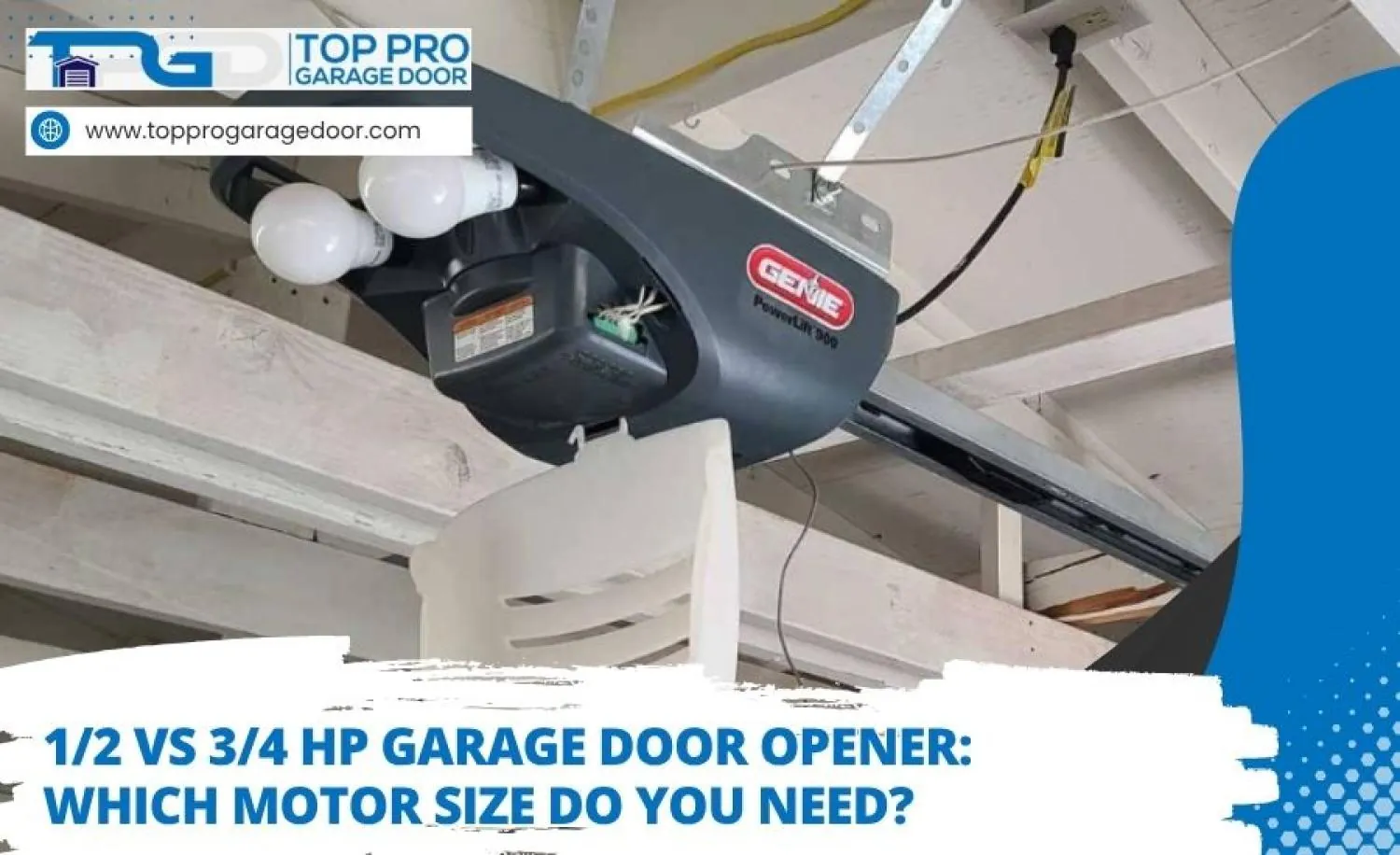
Choosing the right motor depends on your door’s material and size. While a stronger motor can lift more, it doesn’t necessarily make the door move faster, as most safety regulations limit the speed of residential doors to prevent accidents.
| Method | How long | Effort | Cost | Best for |
|---|---|---|---|---|
| 1/2 HP Motor | 10-15 years | Low | Low | Standard doors |
| 3/4 HP Motor | 10-15 years | Low | Medium | Heavy doors |
| DC Motor | 12-18 years | Low | High | Quiet operation |
Most homeowners find that the 1/2 horsepower option is the most cost-effective solution for standard suburban homes. If your door is made of solid wood or has multiple layers of insulation, the extra power of a 3/4 horsepower motor prevents the unit from straining during daily use. You should check the manual provided by your Underwriters Laboratories certified manufacturer to see the specific weight rating for your door model.
Operating with a 1/2 horsepower motor
This motor type is the industry standard for single-car and double-car sectional doors. It relies on a proven gear-driven or chain-drive system to move the door up and down.
- Inspect the door balance by disconnecting the opener and lifting the door halfway by hand; it should stay in place.
- Ensure the safety sensors are aligned at the bottom of the track, no more than 6 inches above the floor.
- Program your remote to the receiver while the door is in the fully closed position.
- Test the force settings by pressing the door lightly while it’s closing to ensure it reverses immediately.
This setup is ideal for light, modern doors where speed and reliability are the main goals. It isn’t for heavy wooden doors or doors with custom glass inserts, as the motor may overheat trying to lift the extra weight. If you notice the motor humming but the door not moving, you likely have a weight issue that requires professional adjustment.
Choosing a 3/4 horsepower motor

The 3/4 horsepower unit is built for heavy lifting and long-term durability under stress. It uses larger internal gears to handle the torque required for massive doors.
Verify that your horizontal tracks are level and free of debris, as high-torque motors can force a door out of alignment. If the door binds, the motor’s force settings may override the safety reverse, causing the door to buckle.
Mount the motor head securely to the ceiling joists using steel angle iron, ensuring no movement during operation.
Connect the belt or chain drive, keeping the tension tight enough to prevent sagging but loose enough to avoid snapping. If you can pull the chain more than half an inch away from the rail, it’s too loose.
Set the travel limits according to the manufacturer’s instructions, typically stopping 1 inch above the garage floor.
These motors are excellent for carriage-style doors or doors with high-density insulation. They aren’t for lightweight doors, as the extra power can actually cause damage if the safety reversal sensors aren’t perfectly calibrated. If your door weighs less than 200 pounds, stick to a 1/2 horsepower model to avoid premature wear on the cable drums. Always ensure your garage structure can support the added weight of these beefier motor housings.
High-performance DC motor systems
DC motors offer a different approach by using a variable-speed drive that starts and stops slowly. This reduces the mechanical shock that occurs every time the door moves, extending the lifespan of your hinges and rollers by years.
Install the battery backup unit, which is a standard feature on most modern DC-powered openers. If you live in an area with frequent power outages, this component provides a clear advantage over traditional AC units, which remain dead until the grid recovers.
Calibrate the soft-start and soft-stop settings to match the exact weight of your door. A door that’s too heavy will strain the motor, while one that’s too light can cause the chain to jump the track. If the door reverses mid-travel, increase the force setting by five percent until it completes the cycle smoothly.
Connect the Wi-Fi module if your model includes smart home integration for remote monitoring. This allows you to verify the door is closed from anywhere, preventing the security risk of leaving a garage open overnight.
Perform a monthly safety check to ensure the auto-reverse function triggers when the door hits a 2-inch block. These systems are ideal for garages located under bedrooms because they run significantly quieter than AC motors. Avoid these if you prioritize low upfront costs, as the initial purchase price is higher.
Which motor power fits your needs?
When you’re in a hurry, a standard 1/2 horsepower motor is the best choice because it’s easy to find at any local hardware store and uses universal parts. If you’re doing this for the first time, this same 1/2 horsepower model is recommended because the installation process is well-documented and less complex. When you want the best possible result regardless of cost, a DC-powered motor wins because it offers the quietest operation and the longest mechanical lifespan.
The trade-off is between raw lifting power and operational comfort. A 3/4 horsepower motor gives you the brute strength for heavy doors, but a DC motor gives you the smoothest ride. You must balance the physical requirements of your specific door against your desire for quiet, modern features.
If your door is made of solid wood or insulated steel, you need at least 3/4 horsepower to prevent the motor from stalling under the weight. Lighter, non-insulated aluminum doors function perfectly with 1/2 horsepower. If you choose one that’s too strong, you risk buckling your door panels during the acceleration phase. Always check the door weight rating on the manufacturer label before purchasing.
Rules for safe installation and use

Regardless of the model you pick, safety remains the priority. The most important step is checking your door’s balance; an unbalanced door will burn out any motor regardless of its horsepower rating. To test this, disconnect the opener and lift the door halfway manually. If the door drifts down or snaps upward, the springs are improperly calibrated and require professional adjustment before you attach the motor.
Always use a professional installer if you’re uncomfortable working with high-tension springs, which can cause severe injury if they snap during the process. Before starting, clear the floor of all tools and keep children away from the area.
Once installed, test the safety reverse system every three months by placing a roll of paper towels in the path of the door. The door must reverse instantly upon contact. If it does not, adjust the force settings immediately or call a service technician to inspect the tracks.
Many homeowners mistakenly assume the door will reverse based on weight, but the system relies on resistance sensors. If the door fails to stop, you risk crushing damage to objects or pets. Never attempt to adjust the tension on the torsion spring yourself, as this high-risk task requires specialized winding bars.
Related guides
Frequently asked questions
Can I install a 3/4 horsepower motor on a light door?
Yes, you can install a 3/4 horsepower motor on a light door, but it’s usually unnecessary. The extra power doesn’t help a light door move better or faster, and it may put more stress on the door panels if the safety settings aren’t perfectly calibrated. You’re better off using the money you save to purchase a higher-quality model with a battery backup or a quieter DC drive system.
How long does it take to replace a garage door opener?
It usually takes 3 to 5 hours for a person with basic tools to replace an existing opener. If you’re installing a new unit where none existed before, you should expect to spend at least one full day. This time includes mounting the new hardware to the ceiling, wiring the safety sensors, and programming the travel limits to ensure the door stops exactly where it should.
Is it safe to use a 1/2 horsepower motor for a solid wood door?
No, it’s generally not safe to use a 1/2 horsepower motor for a solid wood door. Solid wood doors are significantly heavier than steel or aluminum models and will cause the motor gears to strip or the unit to overheat during operation. You should verify the total weight of your door and match it against the manufacturer’s recommended lift capacity before making your final purchase.
What happens if the motor is too weak for my door?
The motor will struggle, hum loudly, and eventually fail prematurely if it’s too weak for your door. You’ll notice the door moving much slower than usual, and the internal plastic gears will likely crack under the constant strain. If you see the motor head shaking or hear grinding noises, it’s a sign that the weight of the door exceeds the motor’s actual lifting capacity.
How often should I check the door balance?
You should check your door balance at least twice a year to ensure the springs are doing the heavy lifting. If the door doesn’t stay balanced when placed halfway up, the motor is working harder than it should, which shortens its life. A balanced door should stay in place without drifting up or down, allowing the motor to simply guide the door along the track without bearing the full weight.
Is a more powerful motor faster?
No, a more powerful motor doesn’t increase speed, as most openers are limited to 7 to 8 inches per second. Extra horsepower is designed strictly for lifting heavier doors rather than increasing travel speed. To achieve faster operation, you must purchase a specific model equipped with a high-speed travel feature.
Conclusion
The choice of motor power depends entirely on the weight of your garage door and the material it’s made from. Always check the manufacturer’s specifications for your specific door before buying any unit to ensure it matches the weight requirements of your installation. Proper maintenance and regular safety checks will help your chosen opener last for many years of reliable service.

3 thoughts on “1/2 vs 3/4 Horsepower Garage Door Opener: Which One to Choose”