
The best choice for a residential garage door opener is often a matter of brand preference, as both LiftMaster and Chamberlain are manufactured by the Chamberlain Group. While they share core technology, the main difference lies in distribution and professional features. Choose dealer-sold brands for professional installation or retail versions for DIY projects.
LiftMaster and Chamberlain brand differences
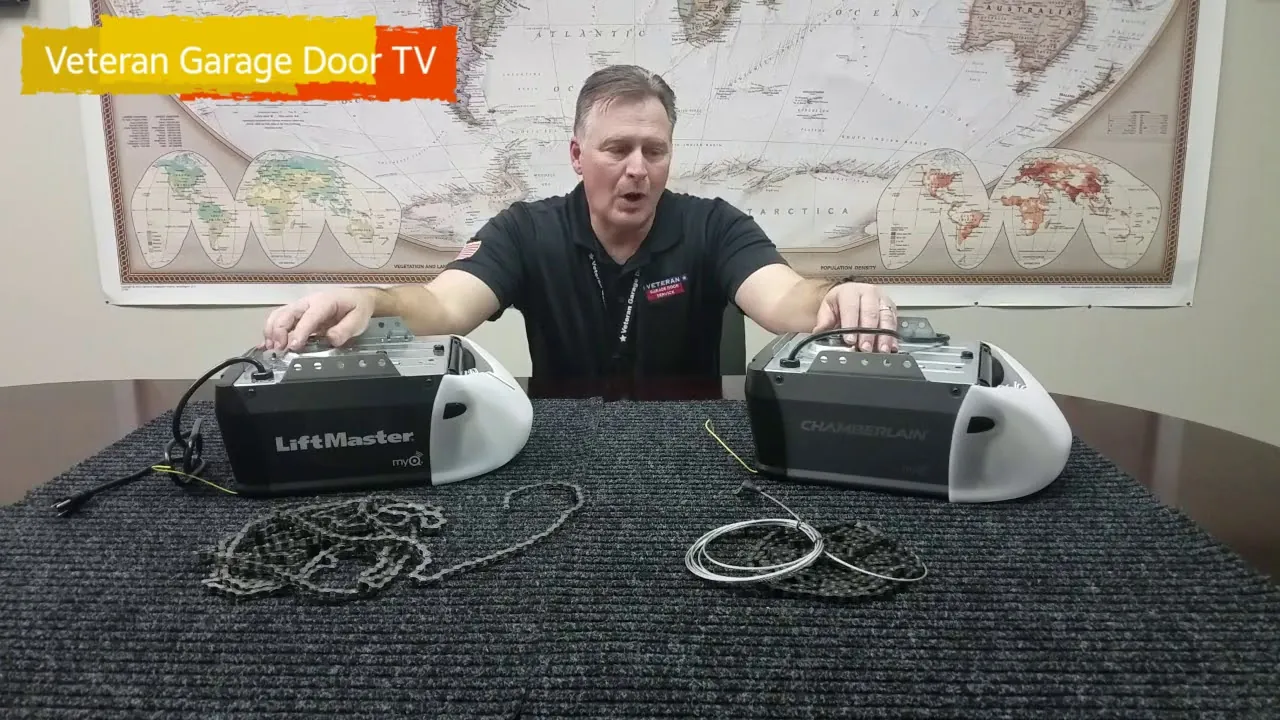
Choosing between these brands depends on your comfort with DIY work and your need for professional support. The following table breaks down the differences in distribution, features, and installation requirements to help you decide which path fits your project.
| Method | How long | Effort | Cost | Best for |
|---|---|---|---|---|
| Professional dealer unit | 3-5 hours | Low | High | Long-term support |
| Retail hardware store unit | 4-6 hours | High | Low | DIY enthusiasts |
| Smart home integrated unit | 2-4 hours | Medium | Medium | Tech-focused homes |
The professional dealer version offers added accessories, such as premium wall controls and battery backups, which are often standard in those models. Retail units are designed for quick installation with basic tools, but they may lack the heavy-duty rail components found in the professional versions.
If your garage door uses a heavy wood carriage, avoid standard retail kits. These often feature plastic gears that fail under the extra load, costing you a full replacement within two years. Instead, look for units with steel-reinforced drive chains.
If you prioritize silence, choose a belt-drive model regardless of the brand. Chain drives are cheaper but will vibrate through the walls of an attached garage every time the door moves. Check the door’s spring type before buying; if you have a torsion spring system, ensure the opener includes a soft-start feature to prevent the motor from jerking the door during the initial lift. Always verify the model matches your door’s weight to avoid premature motor burnout.
Professional dealer installation
This method involves buying a unit through a certified garage door professional. These units are built with modular components that allow for easier repairs if a specific part fails years down the road.
- Contact a local dealer to inspect your door and verify the required motor horsepower for your specific door weight.
- Schedule a site visit for the technician to hang the rail and secure the power head to your garage ceiling.
- Allow the professional to program the travel limits and force settings, as they have the specialized tools to calibrate the tension safely.
- Verify the safety reversal system by placing a wooden block in the path of the door to ensure it retracts immediately.
This approach is excellent for those who want a “set it and forget it” experience with a warranty backed by a local business. The primary weakness is the higher upfront cost, as you’re paying for both the premium product and the technician’s skilled labor. If you aren’t comfortable working with high-tension garage springs, never attempt to service the door hardware yourself, as the release of tension can cause severe injury.
Retail hardware store installation
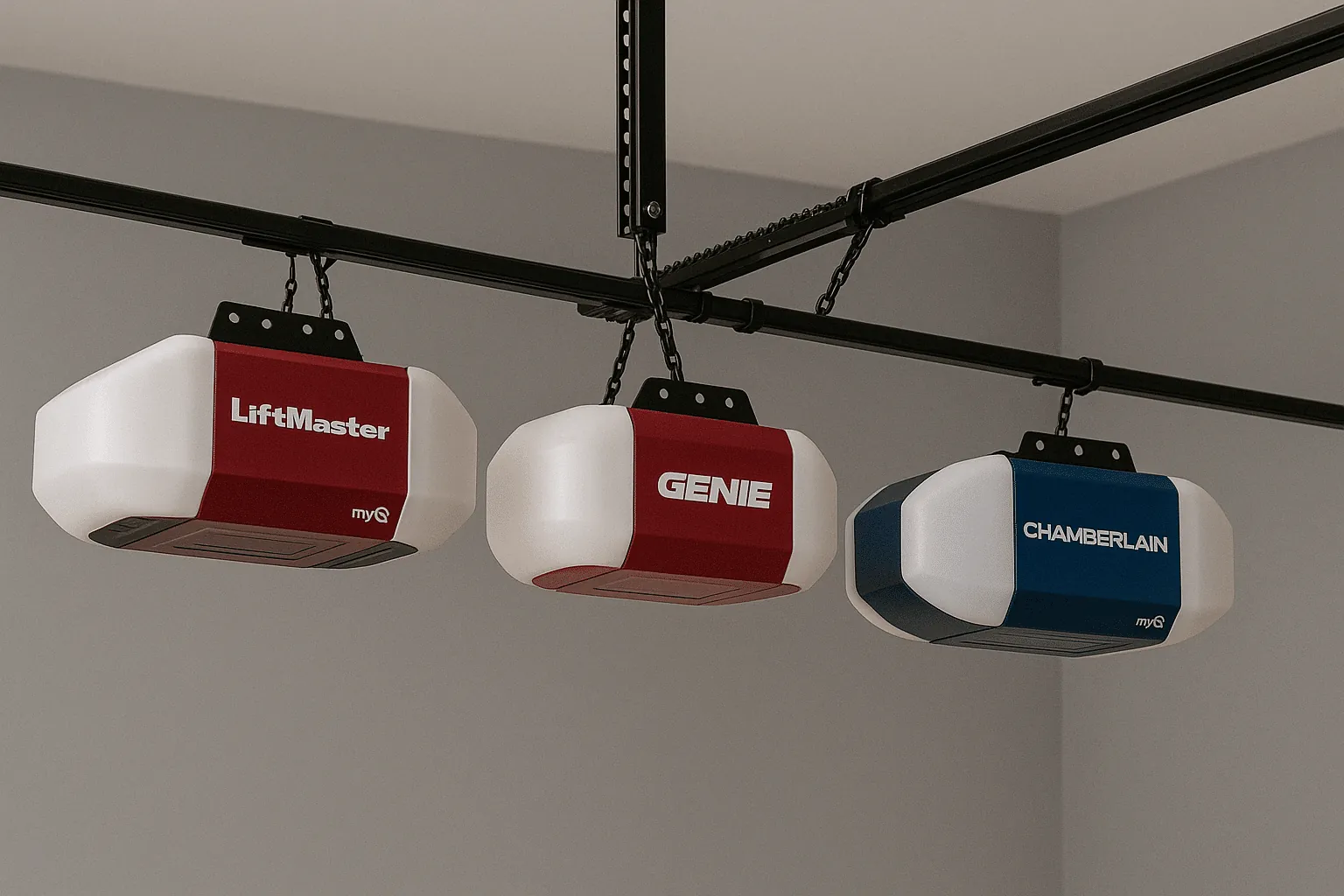
Buying a unit from a home improvement store is the most common path for homeowners who enjoy hands-on projects. These units come in complete boxes with every bolt and bracket needed for a standard installation.
- Measure your ceiling height to ensure you have enough clearance for the rail, which usually requires 2 inches of space above the door.
- Assemble the rail sections on the floor according to the manual provided, ensuring all locking pins are fully engaged.
- Use a sturdy ladder to mount the motor unit to the ceiling joists, using the provided vibration-dampening brackets to reduce noise.
- Connect the safety sensors at the base of the door tracks, aligning the infrared beams until the status light stops blinking.
These units are perfect for budget-conscious buyers who have basic mechanical skills and a reliable drill. A notable weakness is that retail units often use plastic internal gears to keep costs down, which may wear out faster than the metal-reinforced gears found in professional models. Always follow the manufacturer’s provided clearance requirements, as installing a rail in a tight space can cause the door to bind and damage the motor.
Smart home integrated solutions
Modern openers now feature built-in Wi-Fi and smartphone connectivity, allowing you to monitor and control your door from anywhere. This method is ideal for users who want to integrate their garage access with existing home security systems.
- Install the opener hardware using standard mounting steps, ensuring the motor unit is within range of your home Wi-Fi router.
- Download the manufacturer’s mobile application and follow the on-screen prompts to sync the unit to your home network.
- Configure your smartphone to send push notifications whenever the door opens or closes, providing a real-time log of activity.
- Set up temporary guest access codes if you need to let a delivery person or family member into the home remotely.
This method provides great convenience and security by letting you check if the door is closed while you’re away. The main limitation is that these systems rely on a stable internet connection; if your Wi-Fi signal is weak in the garage, the app features won’t function correctly. If you find the signal is dropping, you may need a Wi-Fi range extender to keep the unit connected to your home network.
Which brand suits your needs?
When you’re in a hurry, the retail hardware store model wins because you can drive to a local store and pick up a unit immediately. If you’re doing this for the first time, the professional dealer method is the best choice, as a technician handles the safety calibration and ensures the door is balanced.
If you want the best possible result whatever it takes, choose a professional-grade unit with a battery backup and wall-mounted silent drive motor, as these offer the longest lifespan and the quietest operation.
The trade-off is clear: you either pay more for the convenience and security of professional installation, or you save money by performing the labor yourself. If you choose the DIY route, you must be prepared to spend extra time troubleshooting and ensuring the door remains balanced over the years.
Most homeowners underestimate the tension in the torsion spring. If your door fails the manual lift test—meaning it doesn’t stay open halfway on its own—the spring is improperly calibrated. Don’t attempt to adjust this yourself. If the spring is off, call a pro immediately to avoid a catastrophic snap.
If you’re installing a new unit, check the rail material first. Steel rails handle daily wear better than plastic, which often cracks under heavy, insulated doors. Always remember that your garage door is the largest moving object in your home and requires regular maintenance to operate safely.
Factors to consider for every installation
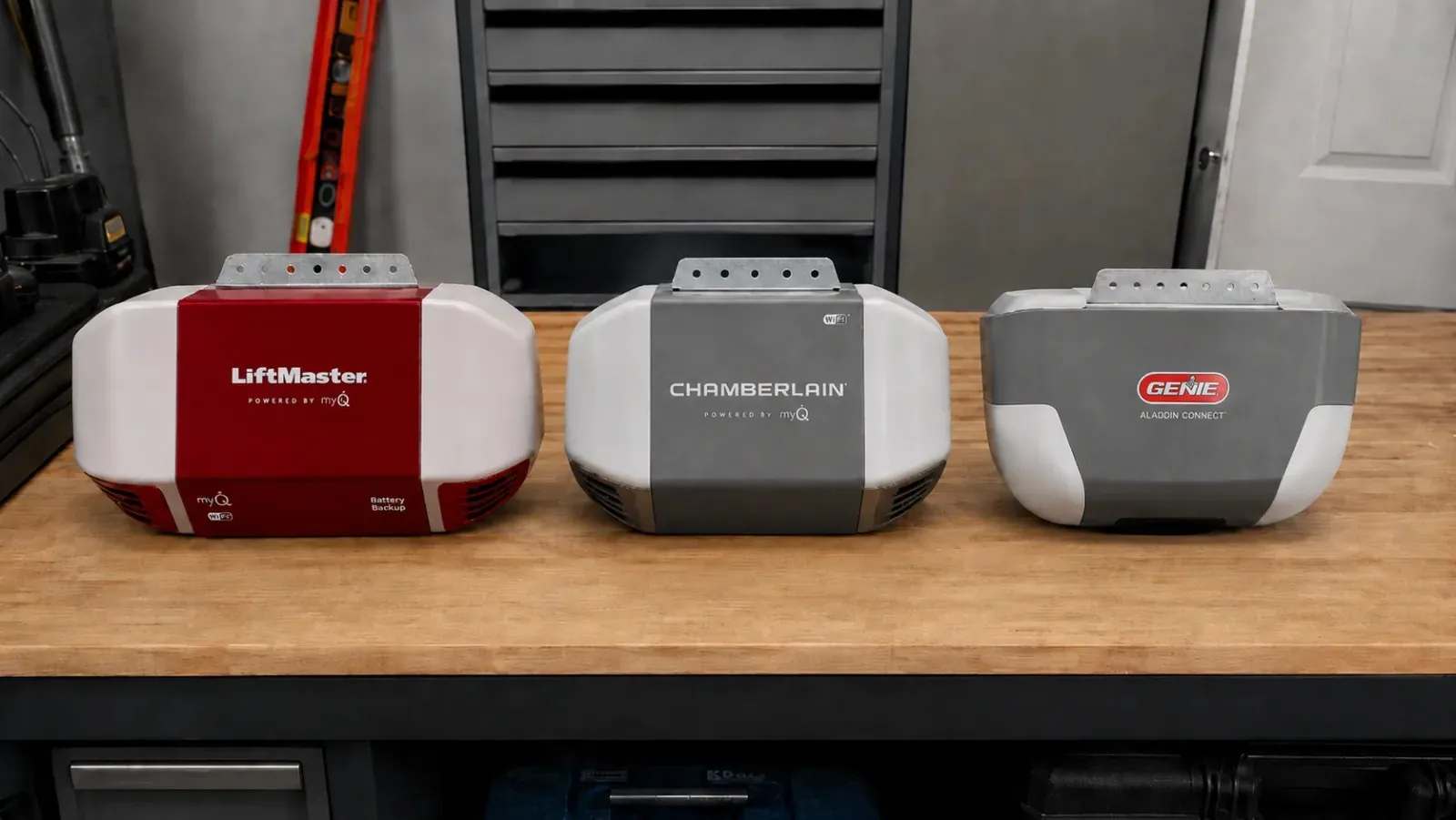
Regardless of the brand you choose, the physical safety of your garage system depends on strict adherence to installation standards. All modern residential garage door openers must meet the safety requirements defined by Underwriters Laboratories, which mandate that the door must reverse if it detects an obstruction. Before you start, check your existing garage door springs and cables for signs of fraying or rust, as these parts carry the true weight of the door.
If you aren’t comfortable working with high-tension cables or electrical wiring, you should hire a licensed contractor to handle the job. The most common mistake people make is ignoring the balance of the door itself; a motor should only be used to move a door that’s already balanced by its own springs.
If you can open your door halfway and it stays in place without drifting up or down, your spring system is likely in good health. If the door slams shut or flies open, the springs are improperly tensioned. Never use the opener to compensate for a heavy door. Always test the manual release handle first to ensure the door operates smoothly by hand.
Frequently asked questions
Can I install a garage door opener myself?
Yes, you can install most retail garage door openers yourself if you have basic mechanical skills and a helper. You’ll need a ladder, a power drill, and standard hand tools to secure the mounting brackets to your ceiling joists. If you aren’t confident working at heights or with electrical wiring, hire a professional.
How long does a garage door opener last?
Most residential openers last for a significant period with regular maintenance and light-to-moderate daily use. The lifespan depends heavily on the quality of the unit and the weight of your door; a heavy, wooden door will put more strain on the motor and gears than a lightweight steel door. Keeping the tracks clean and the chain or belt properly lubricated can help you maximize the unit’s longevity.
Is it safe to use a garage door without a battery backup?
Yes, it’s safe to operate your door without a battery backup, but you’ll lose the ability to open or close it electrically during a power outage. If you live in an area with frequent storms or power instability, a battery backup is a useful feature to ensure you aren’t locked out of your home. You must test the battery annually to ensure it still holds a charge.
How much clearance do I need above the door?
You generally need at least 2 inches of clearance above the highest point of the door’s travel for a standard rail installation. If your garage ceiling is lower than this, you may need to look for a low-clearance kit or a side-mount jackshaft opener that eliminates the ceiling rail entirely. Always measure the distance from the top of the door to the ceiling before you buy any new equipment.
What happens if I ignore the safety sensors?
The door will refuse to close if the safety sensors aren’t aligned or if they’re blocked by an object. This is a vital safety feature required by law to prevent the door from crushing people, pets, or property. If your door keeps reversing when you try to close it, check that the sensors are facing each other and that no dirt or cobwebs are blocking the infrared light path.
How often should I test the auto-reverse feature?
You should test the auto-reverse feature at least once every month to ensure the door reacts correctly to resistance. Place a small object, like a roll of paper towels, on the floor in the path of the door and press the button to close it. The door should hit the object, sense the pressure, and immediately reverse direction; if it does not, you must adjust the force settings immediately.
Conclusion
Ultimately, your decision depends on whether you value professional support or enjoy a weekend project. Once you’ve measured your garage space and checked your door’s weight, you’ll be ready to pick the right model. Don’t hesitate to reach out to a local installer if you’re unsure about the wiring process.

2 thoughts on “LiftMaster vs Chamberlain: Which Garage Door Opener Is Best”