
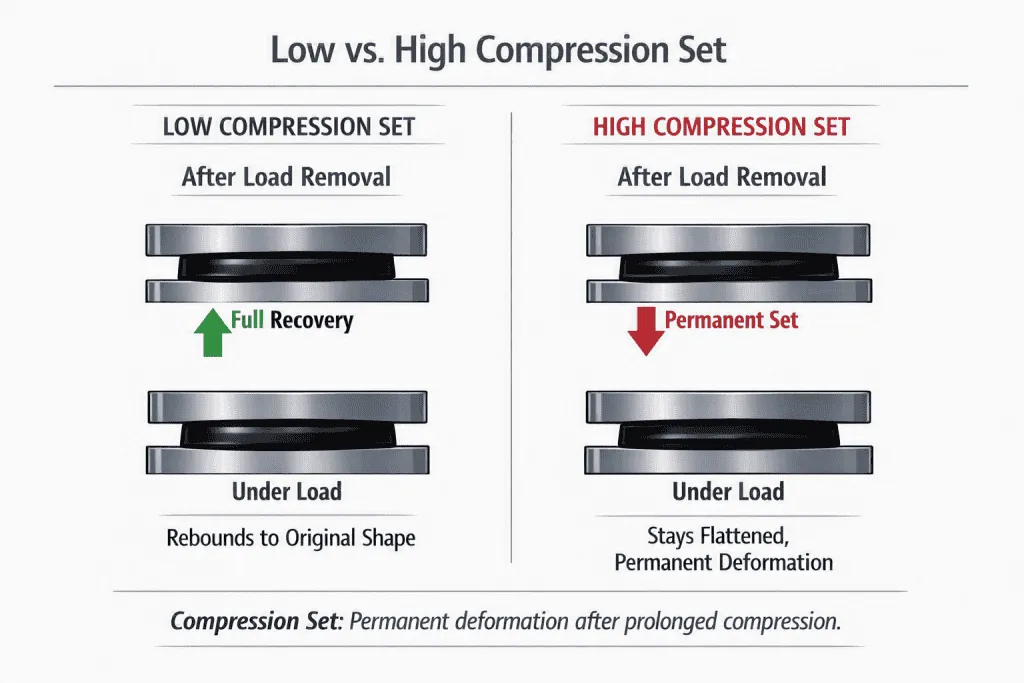
Compression set is the amount a rubber material fails to return to its original thickness after being squeezed for a long time. It’s a critical measurement because it shows how quickly a seal or gasket will lose its ability to prevent leaks under constant pressure. If the material doesn’t bounce back, it creates gaps that allow liquids or gases to escape your system.
Engineers look at this value to predict the life of rubber parts in machines, car engines, and home plumbing. If the material has a high percentage of set, you should replace it sooner; if it has a low percentage, it will last much longer under heavy loads.
Managing rubber performance
- Measure the original thickness of your rubber part using a digital caliper before it’s installed.
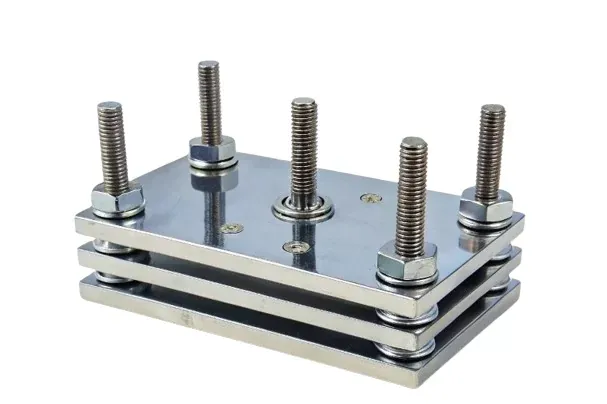
- Place the part in your application and tighten the fasteners to the manufacturer’s recommended torque setting.
- Remove the part after the specified test interval, typically 22, 70, or 168 hours, depending on the industry standard.
- Allow the part to cool at room temperature for 30 minutes before measuring the thickness again.
- Calculate the percentage of permanent deformation by comparing the final thickness to the original measurement.
Tip: Over-tightening bolts is a common mistake that forces the material beyond its elastic limit, causing it to fail much faster than the data sheet predicts.
Tip: Always consult the ASTM D395 standard for specific testing methods, as different rubber types like silicone or neoprene require different temperatures to get an accurate reading.
Factors influencing compression set
The time it takes for a material to reach its limit depends on the environment and the rubber compound itself.
| Situation | How long | What changes it | What to watch for |
|---|---|---|---|
| Room temperature | 22 hours | Ambient heat | Normal shape recovery |
| Hot engine block | 70 hours | High friction/heat | Faster permanent set |
| Cold storage | 168 hours | Low temperatures | Brittle cracking |
If the material remains flattened after you remove the pressure and wait for the recovery period, it has reached its end of life. Never try to reuse a gasket that shows visible thinning or indentation marks, as it can’t provide a reliable seal again.
Identifying material failure

You can tell a part is finished by looking for a permanent “memory” in the rubber. A fresh, healthy piece of rubber should feel springy and return to its round or flat shape immediately after you release it. If the material stays flat or deformed, it has lost its ability to push back against the mating surfaces.
Most industrial seals follow a threshold where a set value above 20% is considered a failure for critical high-pressure applications. If you’re unsure about your specific part, check the technical data sheet provided by the manufacturer. They list the maximum allowable set for their products. If your measurement exceeds their number, replace the part immediately to avoid a dangerous leak.
Mistakes that ruin seals
- Installing without lubrication: Using the wrong grease can cause rubber to swell or degrade, which increases the permanent set and ruins the seal’s fit. Always use a lubricant that’s compatible with your specific rubber compound, such as silicone grease for O-rings, rather than petroleum-based products.
- Ignoring temperature ratings: Rubber materials lose their elasticity quickly when used above their maximum temperature rating, leading to rapid, permanent flattening. Check the operating temperature of your environment against the material’s specification sheet to ensure they match.
- Reuse of old gaskets: People often think a gasket looks fine, but the internal structure has already lost its spring, meaning it will leak the moment it’s tightened again. Always install a new seal whenever you disassemble a connection to ensure the material provides the correct pressure.
Frequently asked questions
How long does a rubber seal last?
It lasts as long as the rubber retains its elasticity, which varies based on the pressure and heat of your specific environment. While some industrial seals are rated for thousands of hours, others in high-heat engines may need replacement depending on usage. You can check the manufacturer’s service manual for the expected replacement interval for your specific machine.
Is it safe to use a flattened gasket?
No, it isn’t safe because a flattened gasket no longer creates a tight seal, which can lead to leaks of oil, gas, or chemicals. These leaks can cause equipment damage or create fire hazards in your home or shop. If the rubber doesn’t spring back after you remove it, it has lost its integrity and must be replaced.
Why does heat increase compression set?
Heat accelerates the physical relaxation of the polymer chains, which prevents the material from returning to its original shape. When rubber is held in a compressed state at high temperatures, those bonds lock into the new, flat position. This permanent change is why seals in hot car engines fail much faster than those in cool, indoor pipes.
Can I fix a permanent set?
No, you can’t fix a permanent set because the internal structure of the rubber has physically changed during the compression process. Once the material has lost its elasticity, no amount of heating or stretching will restore its original sealing ability. The only solution for a seal that has taken a permanent set is to replace it with a new, unused part.
What happens if I ignore high compression set?
If you ignore it, the seal will eventually create a gap that lets fluid or pressure escape, potentially causing a system failure or a messy leak. This often happens slowly at first, but it can lead to a sudden blowout if the pressure behind the seal is high. Replacing the seal before it reaches this point prevents costly repairs to your equipment later.
How do I choose the right rubber for my job?
You choose it by matching the material’s temperature and chemical resistance ratings to the specific conditions of your project. If your application involves high heat, look for materials like Viton or silicone; if it involves water or air, EPDM is often sufficient. Always read the manufacturer’s technical data sheet to see how the material performs under the pressure you plan to use.
Conclusion
Proper maintenance of your seals ensures your equipment runs safely and without leaks. Always check the manufacturer’s guidelines for the specific rubber parts you use, as small differences in material composition lead to big differences in how long a seal will last. If you see signs of permanent deformation, replace the part to keep your system performing as it should.
