
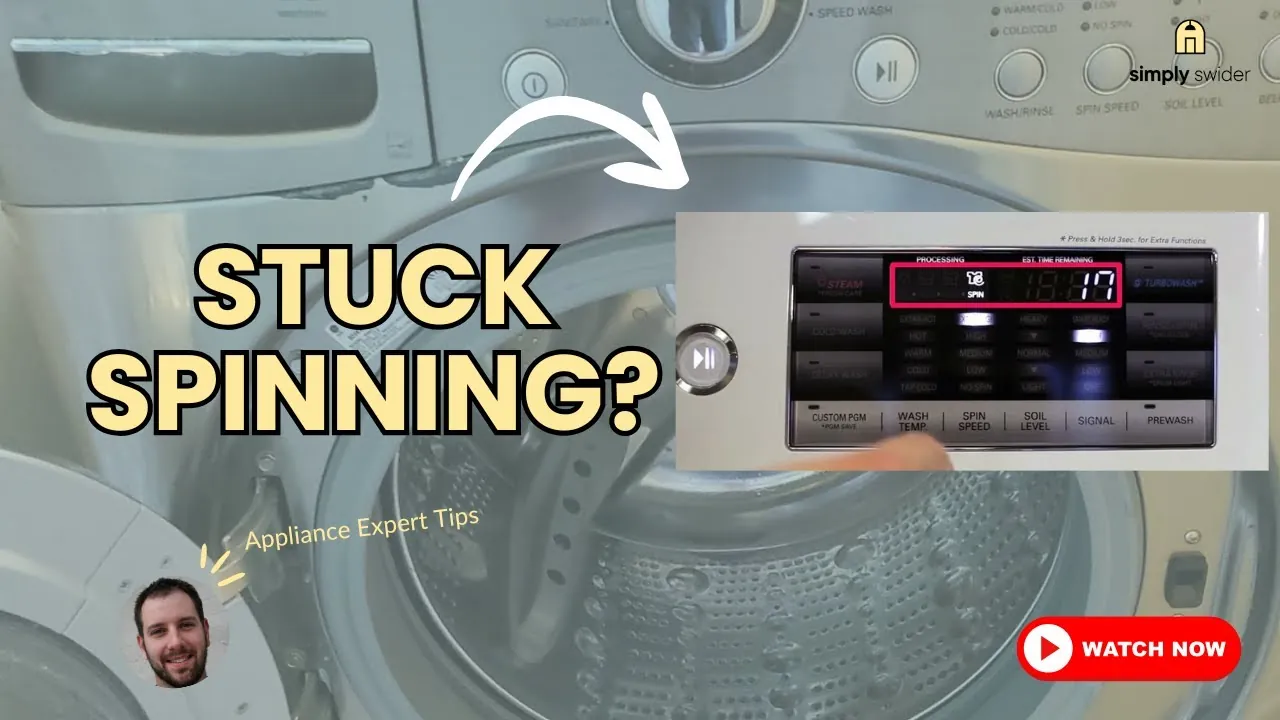
If your lg washer is stuck on spin cycle, it’s usually because the machine can’t balance the load or sense the water level correctly. This issue often triggers an “UE” or “uE” error code on your display, which means the drum is uneven and the machine is protecting itself from damage. You can often clear this by rearranging your clothes, but you should also check that your machine is perfectly level on the floor.
Why your washer can’t finish the spin

When your machine stays in the spin phase, it’s struggling to reach high speeds because the weight isn’t distributed evenly. LG machines use sensors to detect if the drum is wobbling too much; if the sensors feel a heavy imbalance, the washer will stop spinning to prevent the tub from hitting the sides. This is a safety feature, not a mechanical failure.
Another common reason is a clogged drain pump filter or a blocked drain hose. If the water doesn’t leave the drum fast enough, the machine won’t start its high-speed spin cycle. The computer waits for the water level sensor to signal that the tub is empty, but if the water remains, the cycle hangs indefinitely. You can find instructions on how to clear your specific model’s drain pump in the LG official owner’s manual for your unit.
Finally, the issue might be a worn-out suspension rod or a damaged drive belt. If the springs that hold the tub are weak, the machine will wobble even with a small load. If you notice the drum hangs lower on one side or moves easily by hand, the hardware might need a professional replacement.
Redistribute the wet clothes inside
If the load is uneven, stop the machine and open the door. Take out heavy items like towels or jeans and rearrange them so they’re spread out around the drum. Don’t try to wash just one heavy item, as it will always cause an imbalance; add a few smaller items to help balance the weight.
Aim for a mix of fabric weights in every cycle. If you’re washing a single heavy rug or a thick comforter, pair it with two or three medium-sized cotton towels to act as counterweights. This simple addition prevents the drum from oscillating wildly during the high-speed spin.
Once you have repositioned the items, close the door and restart the spin cycle. If the machine starts spinning smoothly, the problem was just the load distribution. If the machine continues to struggle or makes a loud banging noise, stop it immediately and remove the items.
This fix isn’t for mechanical failures; if you see smoke or smell burning rubber, unplug the unit and call a technician. Ignoring persistent thumping often leads to damaged suspension springs or a cracked outer tub.
Clear the drain pump filter
A blocked filter prevents the water from draining, which keeps the machine from entering the spin phase. Locate the small door on the bottom front of your washer and place a shallow pan underneath it to catch the water. Pull out the small drain tube, remove the plug, and let the water flow out completely before unscrewing the large circular filter cap.
Expect at least a quart of stagnant water to spill out even if the drum appears empty. If no water flows when you remove the tube, a dense clog of lint or a stray sock is likely blocking the drain hose itself. In this case, you must clear the obstruction from the hose before the filter will drain.
Clean any debris, coins, or lint from the filter and rinse it under warm water. Check the pump housing for any stuck objects that might stop the propeller from turning. Spin the small impeller with your finger; it should rotate freely without obstruction. If it feels gritty or jammed, use needle-nose pliers to remove the obstruction.
Once clean, screw the cap back on tightly to prevent leaks. If the filter is stuck or the threads seem damaged, don’t force it, as you could crack the plastic housing. A hairline fracture here will cause a flood during the next wash cycle.
Check the leveling of the unit
A washer that isn’t level will vibrate and trigger the spin sensor constantly. Use a bubble level on top of the machine to see if it sits flat on all four corners. If it rocks when you push on it, adjust the feet at the bottom by loosening the locking nut and turning the foot until it touches the floor firmly.
If you have a pedestal or a riser, ensure all bolts are tightened securely. Even a small gap of a few millimeters can cause the machine to fail the spin test. If the floor itself is uneven or made of flexible wood, you might need a rubber mat to dampen the movement. This requires a strong person to tilt the machine, so ask for help if you can’t lift the unit safely yourself.
Check for a “wobble” by pressing down on opposite diagonal corners. If the unit shifts, the foot is too short; extend it until the machine feels locked in place. Never extend the leveling feet more than two inches, as this drastically reduces stability. If the floor is sloped, use a heavy-duty leveling shim instead of over-extending the factory hardware.
Common mistakes to avoid
Filling the drum past the recommended capacity prevents clothes from tumbling freely. If you can’t fit your hand vertically between the top of the laundry and the drum ceiling, the load is too large. This restriction forces the machine to labor, often leading to a failed spin cycle.
Mixing heavy items like rugs or denim with lightweight shirts creates an unbalanced load. The heavy piece gathers water and shifts to one side, causing the machine to thump violently. If the unit vibrates excessively, stop the cycle immediately and redistribute the weight.
Ignoring error codes often leads to expensive repairs. Repeatedly restarting a machine that signals a drainage fault can burn out the drain pump motor. If the code persists after a hard reset, check the filter for debris before trying again.
Using too much detergent leaves a waxy residue on internal components. This buildup eventually clogs the pressure sensor tube, tricking the machine into thinking the drum is still full of water. Stick to two tablespoons of high-efficiency soap per load to avoid sensor failure.
How to stop it happening again
Changing your loading habits usually prevents the spin issue from coming back. The following table shows how to adjust your routine for better performance.
| If you’re doing this | Do this instead | Why |
|---|---|---|
| Washing single heavy items | Mix heavy and light items | Prevents drum imbalance |
| Filling the drum to the top | Fill only 3/4 of the drum | Allows clothes to shift |
| Using extra soap | Use the recommended amount | Prevents sensor clogging |
| Leaving the unit uneven | Use a level to adjust feet | Stops excessive vibration |
Most users fail by ignoring the machine’s internal balance sensor. If you hear a rhythmic thumping during the spin cycle, stop the wash immediately. A single heavy rug or a pair of water-logged jeans creates a massive centrifugal force that can crack the outer tub.
If your floor is wood rather than concrete, the vibration will worsen over time. Place a 3/4-inch plywood sheet under the unit to distribute the weight. If the machine still walks across the floor, check the locking nuts on the leveling feet. If they’re loose, the vibration will vibrate them down, causing the unit to tilt further after every load. Tighten these nuts against the base frame to lock your settings in place.
Related guides
- How to Repair a Foosball Table: Fix Stuck Rods in 2026
- How to Fix Power Recliner Stuck in Open Position: Easy Steps
Frequently asked questions
Can I fix a broken suspension rod myself?
Replacing suspension rods is a complex task requiring a trained technician to disassemble the heavy cabinet. This job involves handling heavy internal components that can be dangerous. Attempting this repair yourself may void your warranty or cause physical injury.
How do I know if the drain pump is dead?
A failed pump will cause a humming sound while the water remains trapped in the tub. If you have cleared all blockages and the water still sits, the motor has likely died. Check your circuit breaker first if the pump makes no sound at all.
Is it safe to run a spin cycle with no clothes?
Yes, you can safely run an empty spin cycle to test if the machine functions properly. If the cycle completes while empty but fails with a load, the issue relates to how you’re loading the drum. Ensure the door is locked before starting the test.
How long should a normal spin cycle take?
A standard spin cycle typically lasts between 10 and 15 minutes, depending on your settings and load weight. If your washer consistently exceeds 20 minutes, it’s likely struggling to balance the load or drain water. This indicates the load is too large for the machine.
What happens if I ignore the UE error?
Ignoring an error code causes the machine to repeatedly attempt rebalancing, which wastes water and electricity. This constant cycling puts excessive stress on the motor and suspension system, potentially leading to expensive repairs. Address the load or machine level immediately to prevent further damage.
Conclusion
Always make sure to unplug your washer before looking under the unit or removing any panels to check for loose parts. If you aren’t comfortable working with the drain filter or adjusting the leveling feet, it’s best to call a professional. Working on internal parts like the main board is for technicians only, as capacitors can hold an electrical charge even when the power is off.

1 thought on “LG Washer Stuck on Spin Cycle: Simple Fixes for UE Errors”