
Programmable logic controllers, traffic lights, washing machines, elevators and car wash systems run the background of your day. They all share a single job: reading sensors and switching outputs on or off in a set order. The uses of PLCs in everyday life applications come down to replacing old relay boards with one small computer that repeats its loop every few milliseconds. What separates them is scale — a home appliance controller handles five inputs, while a building system manages hundreds.
Common everyday PLC uses
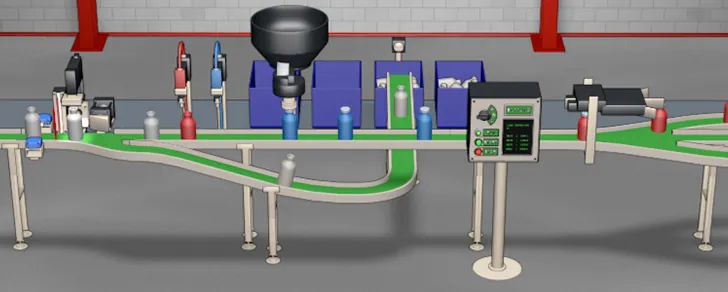
You don’t see these controllers because they sit inside metal boxes, but each type fits a different job. Here’s what runs the equipment you touch daily.
| Controller type | Best used for | Real example |
|---|---|---|
| Compact PLC | Single small machine | Home washing machine |
| Modular PLC | Building-wide control | Office elevator bank |
| Safety PLC | Emergency stops | Amusement park ride |
| Nano PLC | One simple repeating task | Automatic sliding door |
| Micro PLC | Small sensor loops | Greenhouse climate fan |
| Rack-mounted PLC | Large multi-step processes | Municipal water pump station |
Compact PLCs in home appliances
A compact PLC packs its processor, power supply and input/output points into one sealed box. It suits any standalone machine that doesn’t need extra modules added later. You’ll find them where space is tight and the task stays the same year after year.
- Fills a tub to an exact water level by reading a pressure sensor before starting the motor.
- Heats water to a target temperature and cuts power when the thermistor hits that number.
- Spins a drum at two different speeds based on whether the load is heavy or light.
- Locks the door until the water drains fully so you can’t open it mid-cycle.
If the machine has fewer than 20 inputs, a compact unit handles it; if it needs more, you’d step up to a modular one. A typical front-load washer runs about 12 digital inputs and 6 relay outputs.
Modular PLCs in elevators
A modular PLC separates its processor from its input cards, letting you add exactly as many points as the job demands. It suits systems spread across several floors where new sensors get added over time. Unlike a compact unit, it grows without swapping the whole brain.
- Calls the nearest available cab by comparing floor sensor signals in under 50 milliseconds.
- Keeps doors open for a set dwell time, usually 3 to 5 seconds, before closing them.
- Stops the car level with the floor within a quarter inch using encoder feedback.
- Switches to battery backup mode and parks at the ground floor during a power outage.
This setup costs more upfront because you buy the rack and cards separately, but you only pay for the points you actually use. An office building with four elevators might run 120 inputs across three racks. If the shaft wiring fails past the machine room, call a licensed elevator technician rather than opening the panels yourself.
Safety PLCs in amusement rides
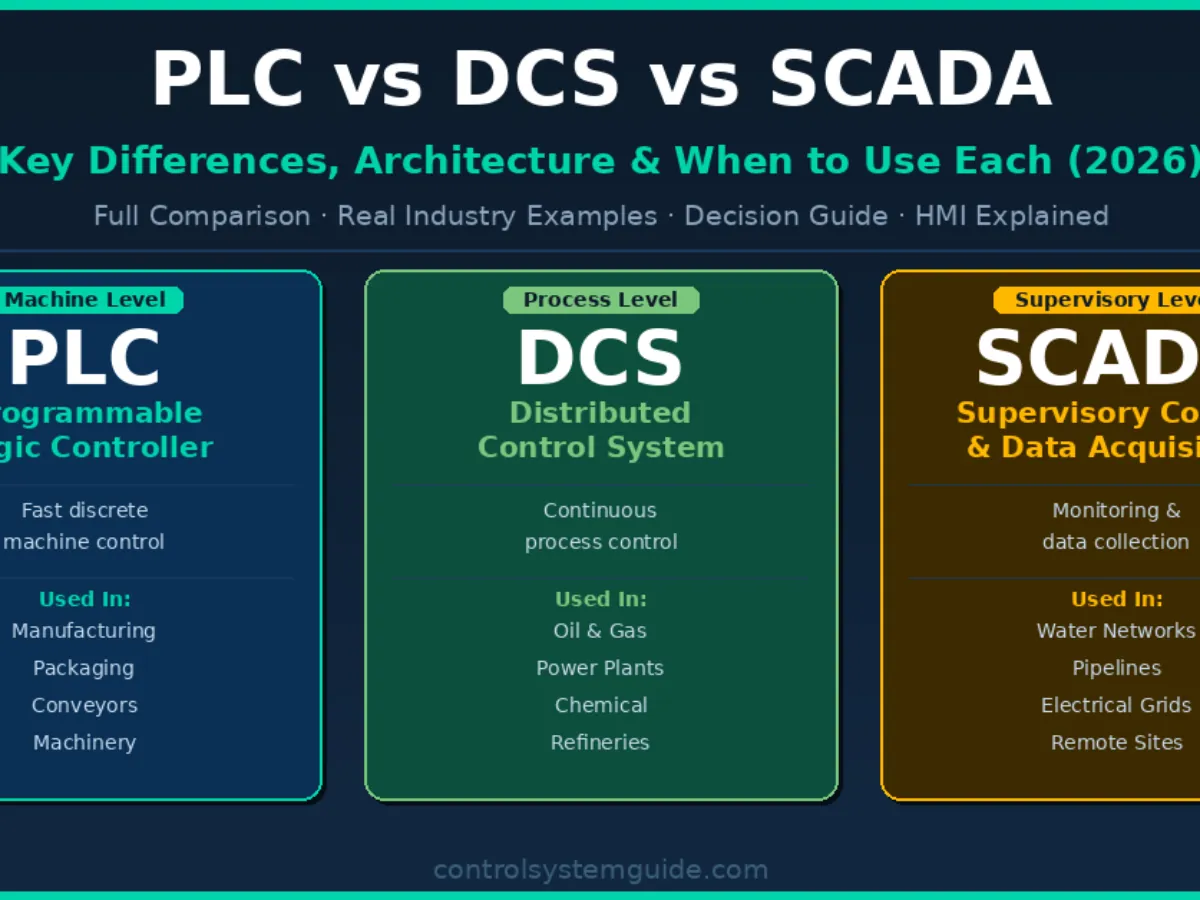
A safety PLC runs two processors that constantly check each other’s math. It suits any machine where a wrong output could hurt someone. These units follow standards like IEC 62061, which defines how safety functions must behave in machinery — Siemens publishes SIL ratings for safety controllers that meet this requirement.
- Cuts drive power instantly when a restraint sensor reads open.
- Monitors wind speed and pauses the cycle if gusts pass the posted limit.
- Requires two separate buttons pressed within half a second to start the ride.
- Logs every fault with a timestamp so inspectors can review the history.
The trade-off is price and complexity; a safety controller costs roughly three times more than a standard one of the same size. This isn’t for a backyard project or a basic conveyor belt. It belongs strictly where human injury is the failure mode.
Nano PLCs in automatic doors
A nano PLC handles one simple sequence with fewer than ten input/output points. It suits single-purpose devices that repeat the same motion all day without variation. Don’t reach for one if your process needs analog readings like temperature or pressure.
- Opens the glass panels when the infrared beam breaks.
- Holds them wide for 4 seconds, adjustable via a small dial on the front.
- Reverses direction immediately if the safety edge touches an object.
- Locks shut after business hours when the timer input goes high.
People often wire a basic door sensor straight to a relay instead of using a controller, then wonder why the door slams shut on slow walkers. That missing delay costs broken hinges and drafty lobbies. A nano unit gives you that timed hold-open without adding a full control cabinet.
Other PLCs you pass daily
These smaller categories handle tasks you walk past without noticing. Each one sits in a specific niche where the bigger types would be wasted.
- Micro PLCs manage greenhouse vents or small aquarium pumps where you need one analog temperature input and two relay outputs. Pick one if your sensor count stays under eight.
- Rack-mounted PLCs run municipal water treatment stages, handling hundreds of flow meters across a plant floor. Reach for these only when your I/O list passes fifty points.
- Soft PLCs turn a standard industrial PC into a controller, useful when you already have a touchscreen running the operator display. They rely on the host computer’s hardware staying powered.
- Pico PLCs replace simple timers in parking garage gates or coin-operated laundry valves. Use one when your entire program fits in under forty lines of ladder logic.
Picking the right controller
Your choice comes down to three things: how many sensors you’re reading, how fast the machine must react, and what happens if it fails. Count your inputs first. If you have under 15 points and no analog signals, a nano or compact unit covers it. If you’re reading temperatures or pressures alongside switches, you need a modular frame with analog cards.
Speed matters next. A car wash doesn’t care about a 100-millisecond scan time, but an elevator leveling at a floor needs under 20 milliseconds. Match the processor’s scan rate to your fastest moving part.
Finally, think about the cost of being wrong. If a failed output just stops a conveyor, a standard controller works fine. If it drops a roller coaster lap bar, you need a dedicated safety PLC with dual processors.
You can combine a safety unit for the emergency circuits with a standard compact PLC for the normal running sequence, keeping costs down while protecting people. The exact scan time your hardware supports is printed on the processor’s data sheet.
Frequently asked questions
Can a PLC run a home washing machine?
Yes, compact and nano PLCs run most modern washers. They handle fill valves, heaters and drum motors through relay outputs. You won’t find one labeled “PLC” on the parts diagram, but the sealed control board inside operates on the same ladder logic principles.
Why do elevators use PLCs instead of computers?
Elevators need deterministic timing, meaning the controller reacts in the exact same number of milliseconds every single cycle. Standard computers pause for updates or background tasks. A PLC scans its program continuously without interruption, keeping the car level with the floor safely.
How long does a PLC last in daily use?
Industrial PLCs typically run for a long duration before the capacitors or relays wear out. The lifespan depends on heat and vibration inside the enclosure. Check the manufacturer’s spec sheet for the rated operating hours at your site’s ambient temperature.
Is it safe to reprogram a PLC yourself?
Only if you’re working on a low-voltage hobby project or a non-critical timer. Reprogramming a controller tied to heavy machinery or public infrastructure without training risks injury and violates local electrical codes. Leave safety-critical logic to certified technicians.
What happens if a PLC loses power mid-cycle?
It stops all outputs immediately. When power returns, most controllers default to a safe state defined in their startup routine, like closing valves or braking motors. Battery-backed memory keeps the program intact so it resumes correctly.
Does a PLC need internet to work?
No, a PLC runs its logic locally using its own processor and memory. Internet is only added when operators want remote monitoring or data logging. The core control loop functions completely offline, which is why factories trust them.
How many inputs can one PLC handle?
A nano unit tops out around 10 points, while a large modular rack scales past 500. The limit depends on the specific processor model and how many expansion slots the chassis holds. Read the hardware manual for your exact ceiling.
Are Arduino boards the same as PLCs?
No. Arduinos are microcontrollers meant for prototyping and hobby electronics. PLCs carry industrial certifications, survive wider temperature ranges and use standardized programming languages like ladder logic. An Arduino lacks the electrical isolation needed near heavy motors.
Starting with your first PLC
Pick a single repeating task in your workspace, like turning on a fan when a switch flips, and write the ladder logic for it. Download the free simulation software from the manufacturer’s website and test the program before wiring anything. You’ll know it’s working when the simulated output lights up in the exact sequence you mapped out. Stop and consult a qualified electrician the moment your circuit involves mains voltage above 50V or connects to existing building wiring.
