
An orbital body is any celestial object—such as a planet, moon, asteroid, or artificial satellite—that travels along a curved, repeating path around a more massive central object due to the influence of gravity. Understanding how this motion works requires visualizing a delicate balance between forward momentum and the relentless pull of a central gravitational source, preventing the object from either flying off into deep space or crashing into the host body.
Key Takeaways
- Gravity acts as the invisible tether that keeps an orbital body in a stable, closed loop rather than letting it drift away.
- The shape of an orbit is rarely a perfect circle; it’s almost always an ellipse, which is a slightly flattened circle.
- Objects in orbit are technically in a state of constant “free fall,” moving fast enough sideways that they constantly miss the ground.
- Orbital speed must be precisely maintained; moving too slowly results in atmospheric drag or impact, while moving too fast leads to escape velocity.
- You can observe basic orbital mechanics at home by swinging a ball on a string, which simulates the tension of gravity.
Defining the Orbital Body
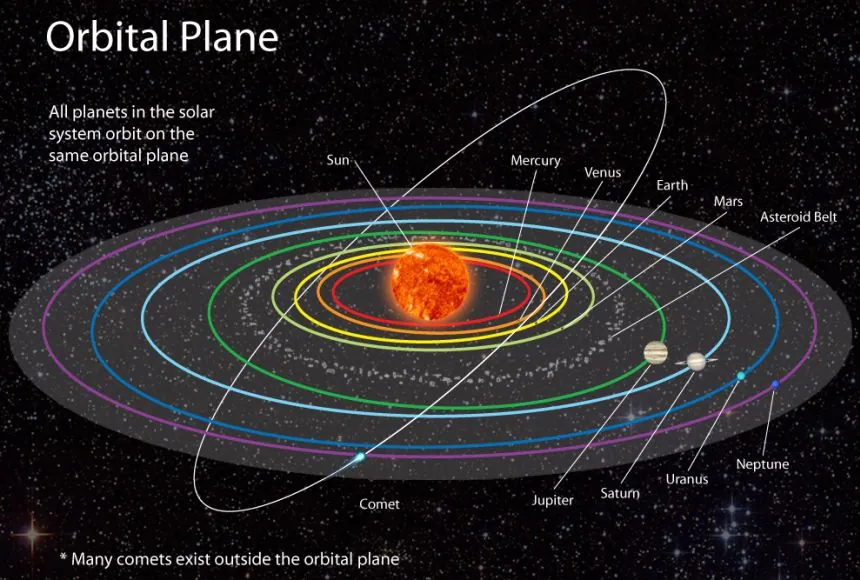
An orbital body is defined by its subordinate relationship to a massive primary object. In our solar system, the Sun acts as the primary gravity well, dictating the paths of planets, dwarf planets, and countless asteroids. These bodies are held in place by the gravitational force exerted by the Sun’s immense mass. When a smaller object moves with enough lateral velocity, it enters a state where its forward motion effectively “curves” around the primary body.
- Planets: Large bodies orbiting a star.
- Moons: Natural satellites orbiting planets.
- Artificial Satellites: Human-made objects placed into orbit for communication or research.
- Asteroids and Comets: Small, rocky, or icy bodies following elliptical paths around the Sun.
How Does an Orbit Work?
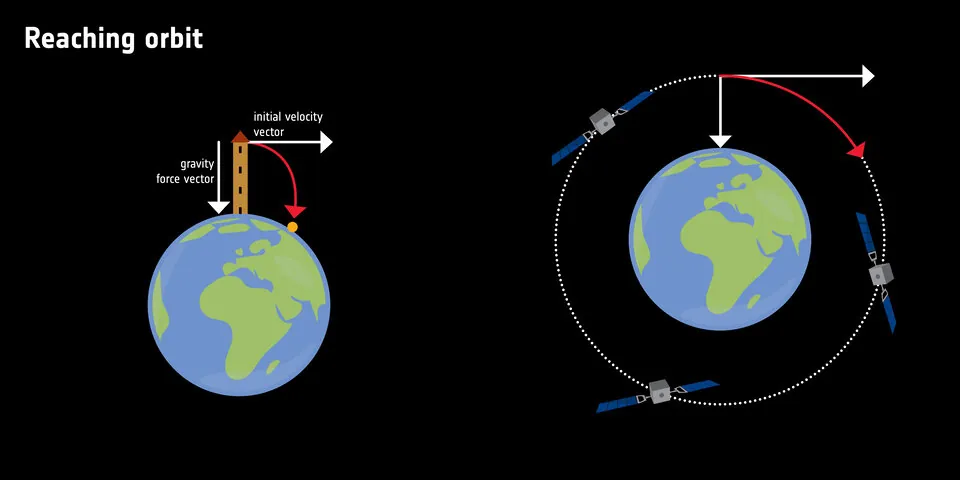
At its core, an orbit is a perpetual balancing act between velocity and gravity. Imagine firing a cannonball from a high mountain. If you fire it slowly, it hits the ground nearby. If you fire it faster, it travels further before hitting the ground.
If you fire it at a specific speed, the curvature of the ball’s path perfectly matches the curvature of the Earth. Because the Earth is round, the ground curves away beneath the ball at the same rate the ball falls toward it. This creates a stable trajectory where the object never actually hits the surface.
The Role of Velocity
Velocity is the crucial component that determines the height and shape of an orbit. If an object is moving too slowly, gravity wins, and the object descends into the atmosphere to burn up or crash. If it moves at the exact orbital velocity, it maintains a consistent distance from the primary body. If it reaches escape velocity, it breaks free from the gravitational pull entirely and heads into interstellar space.
| Orbital State | Speed Relative to Primary | Outcome |
|---|---|---|
| Sub-orbital | Below orbital velocity | Object falls back to surface |
| Stable Orbit | Equal to orbital velocity | Object maintains consistent path |
| Escape Trajectory | Above escape velocity | Object leaves the system |
The Geometry of Orbital Paths
Orbits aren’t perfect circles; they’re ellipses. Johannes Kepler discovered that planets move in elliptical paths with the Sun at one of the two foci. This means that an orbital body is sometimes closer to the primary object (periapsis) and sometimes farther away (apoapsis). As a body approaches the periapsis, its orbital speed increases because it’s deeper within the gravitational potential well, and it slows down as it moves toward the apoapsis.
Gravity as the Invisible Tether
Gravity is the fundamental force governing all orbital mechanics. The larger the mass of the primary body, the stronger the gravitational pull, which requires the orbital body to maintain a higher speed to stay in a stable orbit.
Factors Influencing Gravity
- Mass of the Primary: More massive stars or planets exert a stronger pull.
- Mass of the Satellite: Interestingly, the mass of the smaller object has a negligible effect on the orbit compared to the primary.
- Distance: The farther away an object is, the weaker the gravitational influence, meaning it needs less speed to maintain its orbit.
Warning: Never attempt to model orbital mechanics using high-speed projectiles or dangerous equipment; stick to simulations or simple mechanical models like swinging a tethered weight to visualize the centripetal force required to maintain a curve.
Classifying Different Types of Orbits
Orbits are categorized by their altitude and their orientation relative to the primary body. Low Earth Orbit (LEO) is the most common for human activity, sitting just a few hundred miles above the surface. Geostationary orbits are much higher, positioned so the orbital period matches the rotation of the planet, making the object appear to hang motionless in the sky.
| Orbit Type | Altitude Range | Primary Use |
|---|---|---|
| Low Earth (LEO) | 100–1,200 miles | Space stations, imaging |
| Medium Earth (MEO) | 1,200–22,000 miles | GPS, navigation systems |
| Geostationary (GEO) | ~22,236 miles | Weather and TV satellites |
Why Do Objects Not Fly Away?
If an orbital body is moving forward, why doesn’t it just fly off in a straight line? This is a common misconception rooted in the idea that objects move in straight lines unless acted upon by a force.
Gravity is that constant, accelerating force that’s always pulling the object toward the center of the primary mass. This force acts like a string, constantly bending the path of the object inward, forcing it to follow a curved trajectory rather than a straight line into the void.
Pro Tip: When studying orbital paths, look for animations that demonstrate the “slingshot effect,” where a spacecraft uses the gravity of a planet to gain speed, showing how gravity can actually accelerate an object rather than just holding it in place.
The Impact of Atmospheric Drag
For objects in very low orbits, the atmosphere is a significant factor. Even at the edge of space, there are sparse gas molecules that create friction. This atmospheric drag saps energy from the orbital body, causing it to lose altitude over time. Without periodic boosts from onboard thrusters, the orbital body will eventually spiral inward, entering the denser parts of the atmosphere where it will experience extreme heat and likely disintegrate.
Orbital Mechanics in Daily Life
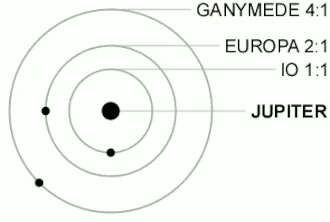
We rely on orbital bodies for almost every aspect of modern communication. GPS satellites, weather tracking systems, and international television broadcasts all depend on the precise maintenance of these paths. Engineers must constantly monitor these bodies to ensure they don’t drift out of their assigned orbital slots due to solar wind, the gravitational tug of other planets, or atmospheric drag.
Common Orbital Adjustments
- Station Keeping: Using small thrusters to correct the altitude of a satellite.
- De-orbiting: Intentionally lowering the altitude to burn up a satellite at the end of its life.
- Phasing: Adjusting the timing of an orbit to align with another object or ground station.
Related guides
- 10 Best Bath and Body Works Wallflower Scents for Your Home in 2026
- 5 Best Bath and Body Car Scents for a Fresh Vehicle Interior in 2026
Frequently Asked Questions
What happens if an orbital body stops moving?
If an orbital body were to suddenly stop its forward motion, it would lose the “sideways” velocity necessary to counteract gravity. Without that momentum, the object would fall directly toward the center of the primary body, eventually crashing into its surface or, in the case of a gas giant or star, being crushed by extreme pressure and heat.
Can an orbit be a perfect circle?
While theoretically possible, a perfectly circular orbit is extremely rare in nature. Most orbits are elliptical because they’re influenced by the gravitational pull of other nearby bodies, such as planets or moons. These external gravitational tugs, known as perturbations, constantly nudge the object, preventing it from maintaining a mathematically perfect circle over long periods.
How many objects are currently in orbit?
As of recent tracking data from global space agencies, there are thousands of active satellites orbiting Earth, along with tens of thousands of pieces of space debris. These range from large, functional communication satellites to tiny fragments of retired rockets, all following their own complex, intersecting paths around the planet at various altitudes.
Why do satellites need to be replaced?
Satellites require replacement primarily due to the exhaustion of their onboard fuel, which is necessary to maintain their precise orbital position against drag and gravitational perturbations. Additionally, hardware components degrade over time due to exposure to high-energy radiation, solar flares, and the extreme thermal cycling experienced during every pass through the Earth’s shadow.
Is the Moon considered an orbital body?
Yes, the Moon is the primary natural orbital body of the Earth. It follows an elliptical path around our planet, held in place by Earth’s gravity. The Moon also exerts its own gravitational pull on the Earth, which is the primary cause of the daily ocean tides. It’s a stable, long-term example of a natural satellite in a predictable orbit.
Conclusion
To deepen your understanding of these celestial mechanics, start by using a free, web-based physics simulator to experiment with velocity and distance variables to see how they alter the shape of an orbit in real time.
