
A faulty water inlet valve is the most common reason you have a kitchenaid dishwasher not filling with water during its cycle. This part controls the flow from your home supply into the tub, and when it fails or clogs, the machine can’t begin its wash. You can often resolve this by clearing the supply line or replacing the valve, but first, check that your home water supply is fully turned on at the shut-off valve located under your sink.
Why your KitchenAid dishwasher isn’t filling with water

The primary reason for this failure is a mechanical block in the water inlet valve. This valve acts like a gatekeeper; it opens when the appliance calls for water and closes when the tub is full. If the internal solenoid coil burns out or the rubber diaphragm inside becomes stiff, the gate stays shut regardless of the signal from the control board.
Another frequent cause is a clogged inlet screen. Most valves have a small mesh filter inside the intake port to stop sediment from your pipes from entering the machine. If you live in an area with hard water or have recently had plumbing work done, mineral deposits or pipe debris can plug this mesh in a matter of days. Once blocked, the water pressure is insufficient to trigger the valve, even if the electrical components are working perfectly.
Finally, the float switch may be stuck in the “up” position. Inside your dishwasher, a small plastic float monitors the water level. If it gets trapped by a stray utensil or a buildup of grime, it sends a false signal to the controller that the tub is already full.
The machine then skips the fill step to prevent an overflow. You can usually tell this is the issue if the float doesn’t move up and down freely when you push it with your hand.
Clean the water inlet screen
If your machine is silent when it should be filling, the inlet screen might be the culprit. Before you start, you must shut off the water supply at the wall valve and turn off the power to the dishwasher at your home’s breaker panel.
Locate the water supply line where it connects to the back of the dishwasher or the valve housing. Use an adjustable wrench to carefully loosen the connection. Place a small towel under the fitting to catch any trapped water. Once disconnected, look into the valve port to find the small mesh screen.
If you see debris, use a pair of needle-nose pliers to pull the screen out gently. Rinse it under a faucet until all sediment is removed. If the screen is damaged or heavily calcified, you should replace it with a genuine part matching your model number.
Reattach the supply line, turn the water back on, and inspect the connection for leaks before restoring power. If you’re unsure about the specific part for your machine, you can check the KitchenAid official parts library to confirm the correct fit.
Test the float switch
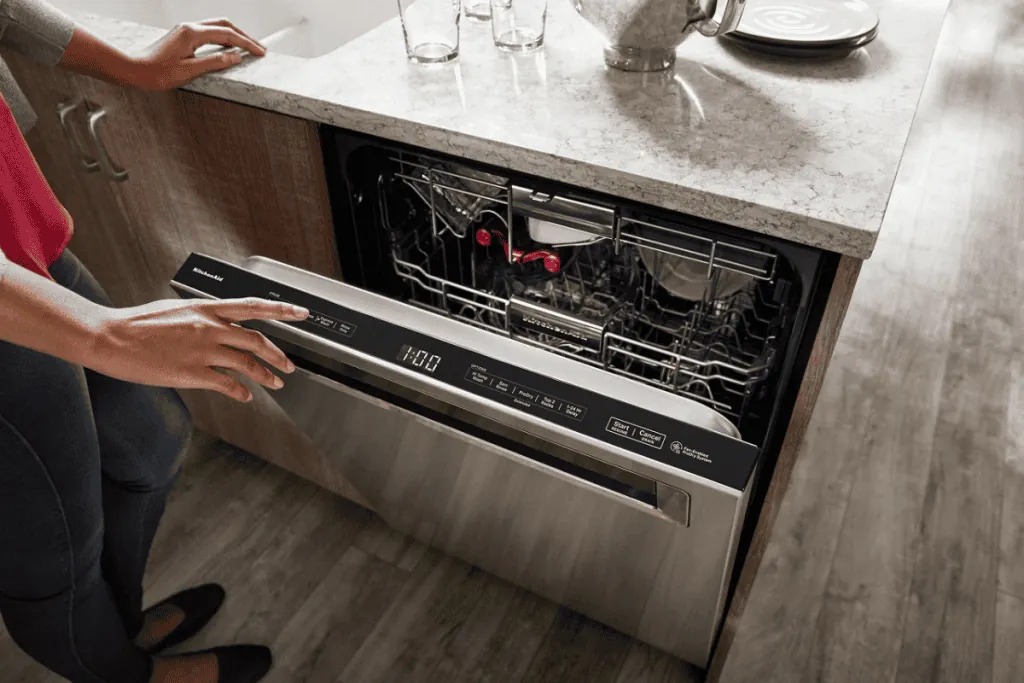
A stuck float switch is a common, simple fix that doesn’t require tools. The float is usually located at the front-right or front-left corner of the tub floor. It’s a small plastic cylinder or dome that slides on a vertical stem. If the float is stuck, the dishwasher will think the tub is full and won’t start the fill cycle.
Try to move the float up and down with your fingers. It should move smoothly and click slightly at the bottom of its travel. If it feels gritty or stuck, clean the area around the base with a soft brush and warm, soapy water. Sometimes, a piece of broken glass or a plastic label from a dish can wedge itself under the float.
If it remains stuck after cleaning, the switch beneath the tub floor might be faulty. This switch is a safety device that prevents flooding, so it’s vital that it functions correctly. If you find the switch itself is broken, you should contact a professional appliance technician. Trying to bypass this switch is dangerous, as it could lead to your dishwasher overflowing and causing significant water damage to your kitchen floor.
Replace the inlet valve
If the screen is clean and the float moves freely, the inlet valve likely needs replacement. This mechanical part wears out as the internal rubber diaphragm hardens or the solenoid coil burns out. If the valve doesn’t hum or vibrate when the dishwasher reaches the fill stage, it isn’t receiving or responding to the electrical signal.
To replace it, access the valve behind the lower kickplate at the front of the unit. Remove the screws holding the kickplate to reveal the assembly. Always shut off the power at the breaker and turn off the water supply valve before touching these components. You must disconnect the wire harness and the water supply hose from the old valve.
When installing the new valve, verify the orientation of the flow arrow stamped on the housing. If the valve is installed backward, the water pressure will force the diaphragm shut, preventing any water from entering the tub. Use a pair of pliers to ensure the hose clamps are seated firmly against the shoulder of the valve fitting to prevent slow, cabinet-destroying leaks.
If you find the electrical connectors are corroded or green, replace the wire harness too. Always test the new valve by running a short rinse cycle and checking for moisture under the machine before you reattach the kickplate. If you aren’t comfortable working with plumbing connections or electrical harnesses, hire a licensed professional to perform the repair. A mistake here can cause significant water damage to your flooring.
Common mistakes to avoid
Assuming it’s the pump is a frequent error. People often replace the main wash pump when the dishwasher won’t fill, but the fill valve is almost always the culprit. Test the valve by listening for a faint hum; if you hear silence, the solenoid has likely burned out.
Never attempt to diagnose a machine while it’s still receiving power. This risks accidental activation or electrical shock. Always flip the dedicated circuit breaker to the off position before removing the kick plate.
Avoid pouring drain cleaners into the dishwasher to fix a fill issue. These caustic agents can melt plastic seals and strip the interior finish, leading to permanent leaks.
Always verify that the shut-off valve under the sink is fully open. A valve turned only halfway can starve the machine of necessary pressure. If the handle resists, don’t force it; you may need to replace the valve entirely to restore full flow.
Proper maintenance for your dishwasher

| If you’re doing this | Do this instead | Why |
|---|---|---|
| Ignoring small leaks | Tighten fittings immediately | Small drips cause rot and mold |
| Using too much detergent | Use the recommended dosage | Excess soap creates a false float signal |
| Never cleaning filters | Rinse the filter monthly | Debris clogs the flow and causes odors |
| Forcing a stuck float | Clean with warm water | Forcing it can break the fragile switch |
Many owners assume the dishwasher is self-cleaning, but standing water at the bottom indicates the drain pump is struggling against a buildup of grease. If the water remains cloudy after a cycle, your filter is likely saturated.
Check the spray arms for mineral deposits every six months. If the tiny holes appear blocked, soak the arms in white vinegar for an hour to dissolve the calcium. A restricted spray arm forces the motor to work harder, shortening its lifespan by years.
If your dishes remain gritty, check the water temperature. A dishwasher requires at least 120 degrees Fahrenheit to dissolve modern enzyme detergents effectively. If your sink tap takes more than thirty seconds to run hot, run the faucet before starting the machine. This simple habit ensures the detergent activates during the initial wash phase rather than the rinse, preventing a film of undissolved soap on your glassware.
Frequently asked questions
How long does a dishwasher inlet valve last?
An inlet valve typically lasts for 7 to 10 years, depending on your water quality and usage frequency. Mineral buildup from hard water can shorten this lifespan significantly. If the fill cycle slows or stops entirely, the valve is likely failing.
Is it safe to run a dishwasher with no water?
No, running a dishwasher without water will damage the heating element and pump seals. Stop the cycle immediately if the unit isn’t filling.
Can I test the inlet valve with a multimeter?
You can test the valve for electrical continuity, but this isn’t recommended for most homeowners due to the risk of electric shock. If you have the proper training, the valve should show a specific resistance value in ohms. An open circuit indicates the solenoid coil is dead.
Why does my dishwasher make a humming noise but no water enters?
A loud, constant humming without water entering usually means the valve is energized but the plunger is stuck. Debris or mineral buildup often jams the mechanical part, preventing the valve from opening. You’ll likely need to install a new valve to restore normal operation.
How do I know if my water pressure is too low?
Your dishwasher requires a minimum water pressure of approximately 20 PSI to function correctly. If your kitchen faucet has significantly lower pressure than normal, the dishwasher will likely fail to fill within the allotted time. Consult a plumber if you suspect your home’s water pressure is too low.
Conclusion
If these quick checks don’t get your appliance running again, it’s time to call a professional technician. They’ll have the right tools to diagnose hidden electrical issues or faulty sensors that aren’t obvious. Don’t hesitate to reach out for help if you’re feeling stuck; it’s better to be safe than sorry.
