
You can safely test a small, low-voltage transformer using a multimeter to check winding resistance and continuity. Following how to test a transformer step by step guide means you’ll verify the input and output coils without risking injury. This covers the safe checks you can do yourself, the readings to expect, and exactly where your work must stop.
What a transformer test actually involves

A transformer moves electrical energy between two wire coils through a magnetic field. Testing it means checking those coils for breaks or shorts using a standard multimeter set to measure resistance. You’re looking for a complete path through the wire, not an open circuit.
It’s strictly for small, low-voltage units, and any testing of energized circuits should be left to a professional technician.
The big misconception is that you can safely open any metal box to test the parts inside. You can’t. If the transformer connects directly to your home’s main power panel, testing it requires a licensed electrician. A capacitor inside some equipment can hold a lethal charge even when unplugged, so never open sealed housings yourself.
Steps to safely test a transformer
These steps apply only to low-voltage transformers, like a 16V doorbell unit or a 24V HVAC control transformer, after you’ve completely disconnected them from all power sources.
- Turn off the breaker supplying the device and unplug it from the wall outlet.
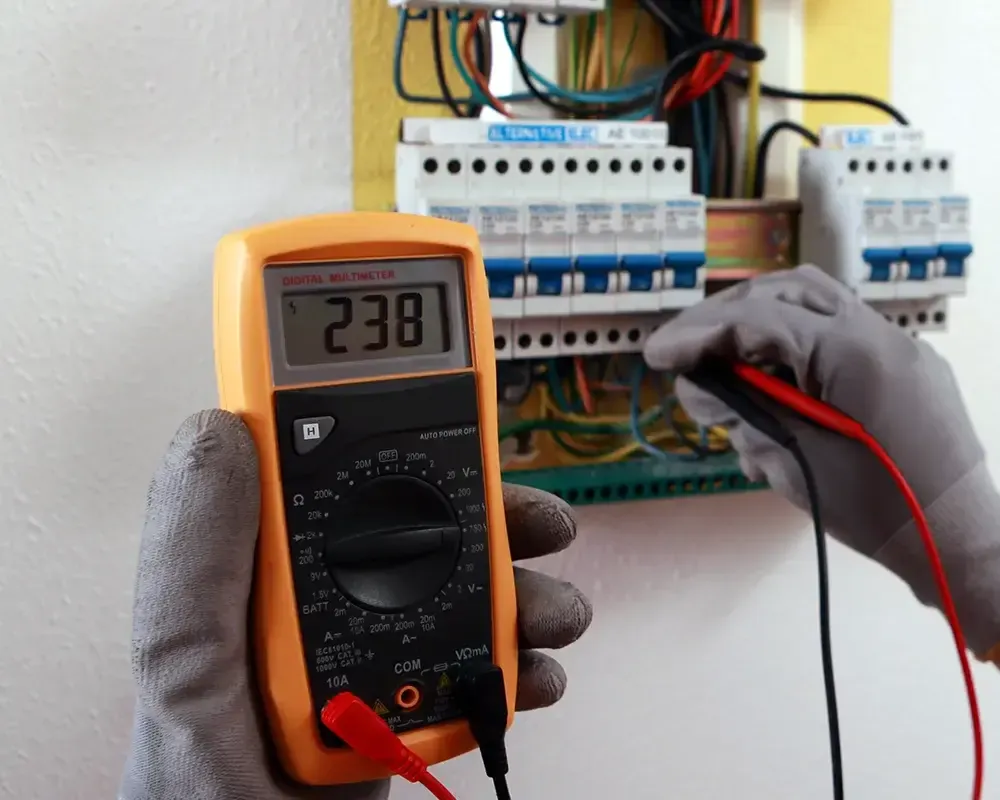
- Set your digital multimeter to the lowest resistance setting, usually marked as ohms (Ω).
- Touch the red and black probes together to confirm the meter reads close to zero ohms.
- Place one probe on each terminal of the primary coil (the input side) and note the reading.
- Move the probes to the secondary coil terminals (the output side) and record that number.
- Place one probe on any terminal and the other on the metal core to check for a short.
- Compare your readings against the manufacturer’s specification sheet for that exact model.
The single judgment call here is knowing when to stop. If the transformer is hardwired into a mains panel, bolted inside a microwave, or part of an industrial machine, put the tools down. That work belongs to a qualified technician.
Transformer test settings at a glance
Your multimeter needs specific settings depending on what you’re checking. Using the wrong range gives you numbers that don’t mean anything. These assume a standard digital multimeter with auto-ranging turned off.
| Situation | What to use | How long | What to watch for |
|---|---|---|---|
| Checking coil continuity | Lowest ohms (Ω) range | Under 1 minute per coil | Reading “OL” means the wire is broken inside |
| Measuring AC output voltage | AC Volts (V~) setting | 5 to 10 seconds | Probes slipping off live terminals causes sparks |
| Testing a 16V doorbell | 200V AC range | Under 1 minute | Zero volts with power on means a blown fuse |
| Checking DC control circuits | DC Volts (V⎓) setting | 5 to 10 seconds | Wrong mode shows zero even if power flows |
If your meter has auto-ranging, it picks the scale for you, but you still must select AC or DC correctly.
Getting accurate readings every time
Clean terminals change everything. Dirt, rust, or old solder on the connection points adds false resistance to your reading. Wipe the metal tabs with a dry cloth or fine sandpaper before the probes touch them. Skipping this makes a perfectly good transformer look broken.
Firm probe contact matters just as much. Pressing lightly causes the numbers on the screen to jump around wildly. Push the metal tips firmly against the clean brass or copper so they stay put while you read the display.
The order of operations
Always check continuity with the power off first. Only after you confirm the coils aren’t broken should you ever think about applying power to check voltage. Never measure resistance or continuity while the circuit is energized, as doing so can blow your multimeter’s internal fuse.
Your actual resistance value in ohms changes based on the wire gauge and length inside that specific transformer. Read your expected baseline off the manufacturer’s published spec sheet for your exact model number.
Troubleshooting strange multimeter readings
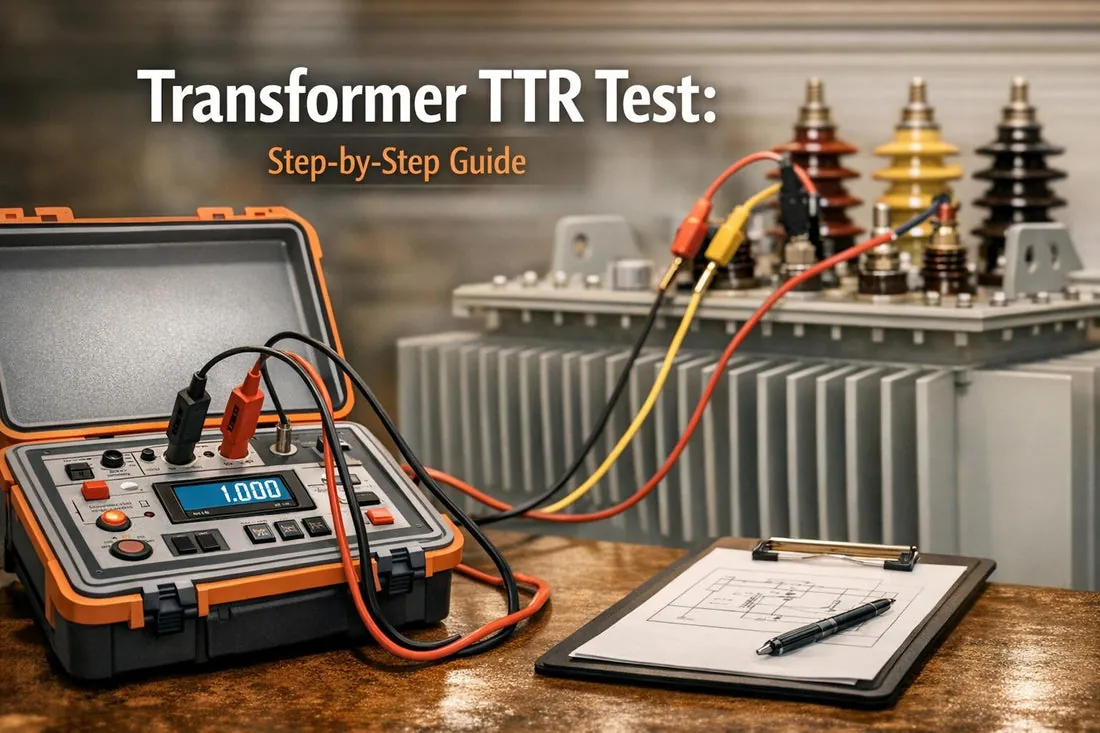
When the numbers don’t match what you expect, the cause is usually straightforward. Here is what the most common results point to and the first thing you should try.
| What you notice | What it usually means | What to do first |
|---|---|---|
| Screen shows “OL” or “1” | The wire coil is broken inside | Double-check probe contact on clean metal |
| Resistance reads zero ohms | The wires are shorted together | Disconnect all external wires and retest |
| Voltage is lower than labeled | The coil is damaged or overloaded | Remove the load wire and measure again |
| Numbers jump constantly | Probe isn’t touching metal well | Sand the terminal lightly and press harder |
| Meter fuse blows instantly | You selected the wrong dial setting | Verify you chose AC volts, not amps |
If retesting after cleaning and removing loads gives the same bad result, the transformer is done. Don’t try to repair the internal windings yourself.
Safety limits and electrical rules
Working with electricity follows strict boundaries. The Occupational Safety and Health Administration (OSHA) requires that workers be trained and authorized before servicing electrical equipment. For homeowners, this means your safe zone ends at low-voltage, plug-in devices.
Never open the housing of any appliance plugged into a standard wall outlet to test its internal transformer. Components like capacitors inside microwaves or power supplies store dangerous amounts of energy long after the cord is pulled.
OSHA electrical safety standards make clear that testing energized circuits requires specific training and protective gear. If your transformer is wired directly into your home’s breaker panel, call a licensed electrician. Guessing here costs more than a service call.
Storing and handling tested units
Once you’ve confirmed a transformer works, keep it in a dry place away from loose screws or bare wires. Moisture ruins the insulation on the copper coils over time. Put it back in its original box or wrap it in a plastic bag.
If you tested several units, write the resistance values on a piece of masking tape and stick it to the core. You won’t remember which reading belonged to which unit next month.
A spare low-voltage transformer sits safely on a shelf for years if it stays dry. But if you drop it hard enough to dent the metal core, test it again before wiring it up. Physical shock can crack the thin enamel coating the wire, creating a hidden short.
When a multimeter isn’t the right tool
A coil might show perfect resistance while sitting on your desk, but fail completely when asked to power a motor. If the device trips breakers only when running, you need a dedicated hipot tester operated by a professional.
This method also doesn’t work for three-phase industrial transformers. Those require specialized ratio testers and oil analysis that a hardware store tool simply can’t provide.
Finally, if the transformer is sealed inside a welded metal case with no exposed terminals, there’s nothing safe to probe. Leave sealed units alone and replace the entire assembly instead.
Related guides
- Best Water Test Kits: How to Check Your Home Supply Safely in 2026
- How to Check Ink Level in Brother Printer Using the Panel
- TF-100 vs K-2006: Which Pool Test Kit Is Right for You in 2026
Frequently asked questions
Can I test a transformer while it’s plugged in?
No, you shouldn’t test resistance while power flows through the unit. Doing so will blow your multimeter’s internal fuse instantly. Only voltage checks happen with power on, and only on low-voltage terminals under 50V.
Why does my multimeter read OL on both sides?
An “OL” reading means the circuit is open and the wire inside is broken. Check your probe contact first. If the metal terminals are clean and the reading stays “OL”, the transformer has failed internally.
How long does a basic continuity test take?
A full continuity check takes about two minutes for both coils, assuming the power is already off. This assumes you’re working on a small unit with easily accessible terminals. Rusted bolts add time.
Is it safe to test a microwave transformer?
No, it’s extremely dangerous. Microwave transformers connect to high mains voltage and sit next to capacitors holding lethal charges even when unplugged. Opening a microwave housing is strictly work for a certified appliance technician.
What happens if I use the DC setting by mistake?
Using DC volts on an AC transformer output will display zero or a wildly incorrect number. Transformers output alternating current, so your meter dial must be set to AC volts (V~) to read the true output.
How many ohms should a doorbell transformer read?
A typical doorbell transformer primary coil has a specific resistance rating, though this varies by brand. The exact acceptable range is printed on the manufacturer’s data sheet for your specific model number, and testing should be performed by a qualified technician.
Conclusion
Getting reliable results comes down to preparation rather than expensive tools. Clean the contacts, choose the right dial setting, and respect the boundary between low-voltage projects and mains-powered equipment. When the readings fall outside the manufacturer’s specs, replacing the unit is safer and cheaper than trying to rewind it yourself.
