
Yes, storing gasoline is safe only if you use containers specifically designed for flammable liquids and keep them in a cool, well-ventilated area away from living spaces. If you store fuel in the wrong container or near a heat source, you risk a fire or a dangerous buildup of toxic vapors. You should always consult your local fire code for specific limits on the total quantity you’re allowed to keep on your property.
Safe and risky fuel storage
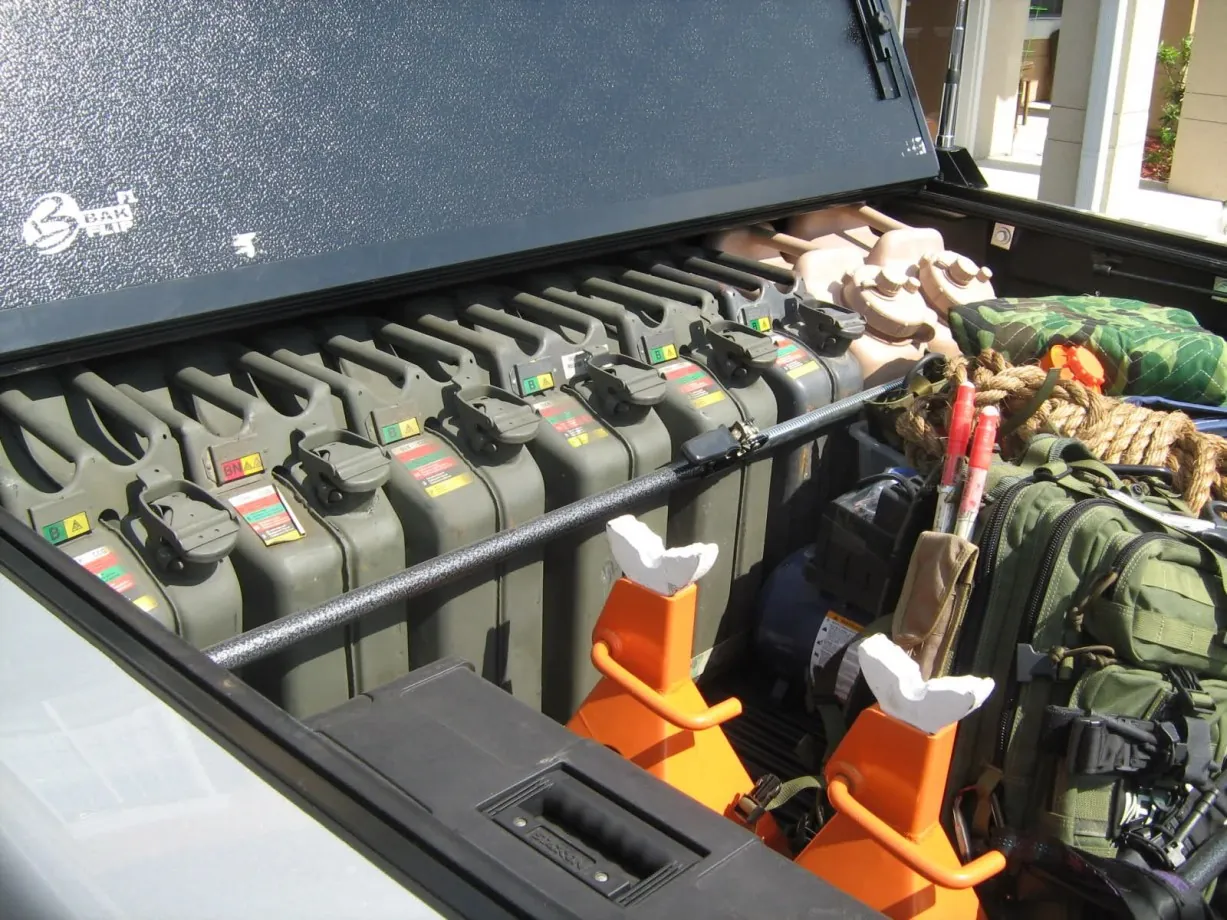
| Situation | Safe? | Why |
|---|---|---|
| Plastic fuel cans | Yes | Approved for gasoline if airtight |
| Glass containers | No | High risk of shattering and fire |
| Inside your home | No | Vapors collect and create fire risk |
| In a garage | With care | Needs high ventilation and no heat |
| Near a furnace | No | Ignition source can cause explosion |
| Using old jugs | No | Plastic degrades and leaks fuel |
Only use containers stamped with an Underwriters Laboratories or FM Global seal. If a container lacks these markings, assume it will fail under pressure. Gasoline expands significantly when temperatures rise, so never fill a can to the brim. Leave at least five percent of the volume as empty headspace to allow for this thermal expansion.
Most people mistakenly store fuel in repurposed milk jugs or soda bottles. This is a fatal error because gasoline acts as a solvent that breaks down thin plastics. Within weeks, the material becomes brittle, leading to pinhole leaks that release flammable vapors into your workspace.
If you smell gas in your garage, don’t flip a light switch or operate any power tools. The tiny spark from a switch is enough to ignite concentrated fumes. Move the containers to an outdoor area with direct airflow immediately.
If you store fuel for seasonal equipment, add a chemical stabilizer to the tank. Without it, gasoline begins to oxidize in as little as thirty days. This creates gummy deposits that clog fuel lines and ruin carburetors. If the fuel has turned a dark amber color, dispose of it at a hazardous waste facility rather than risking your engine.
Understanding gasoline storage risks
The primary danger when you’re keeping fuel at home is the release of flammable vapors. Gasoline is highly volatile, meaning it turns into a gas at temperatures as low as -45°F. These vapors are heavier than air, so they sink to the floor and travel across a room until they reach an ignition source like a water heater pilot light or a spark from an electrical tool.
Fire safety is a major concern because these vapors can ignite instantly, leading to a flash fire or an explosion. Local fire codes and safety standards dictate that fuel should never be kept in basements or near living areas. If you store fuel in a container not rated for gasoline, the plastic may swell or crack over time. This leads to slow leaks that saturate concrete floors, making them a permanent fire hazard that’s difficult to clean.
If you smell a faint, sweet odor near your storage area, assume a leak has already occurred. Don’t flip a light switch or operate any electronic device, as the small spark inside the switch can trigger an explosion. Instead, immediately ventilate the area by opening exterior doors and evacuate the space.
You must also consider the chemical breakdown of the fuel itself. Modern gasoline contains ethanol, which absorbs moisture from the air. If you leave a container partially empty, this water absorption happens faster, leading to phase separation where the fuel loses its ability to burn properly. This can damage small engines in lawnmowers or generators if you try to use old, degraded fuel.
If you plan to store fuel longer than thirty days, add a fuel stabilizer immediately after purchase. If the fuel has already sat for more than six months without treatment, don’t risk your engine; dispose of it at a local hazardous waste facility. Always check the manufacturer’s manual for your equipment to see the maximum recommended storage time.
Signs to stop immediately
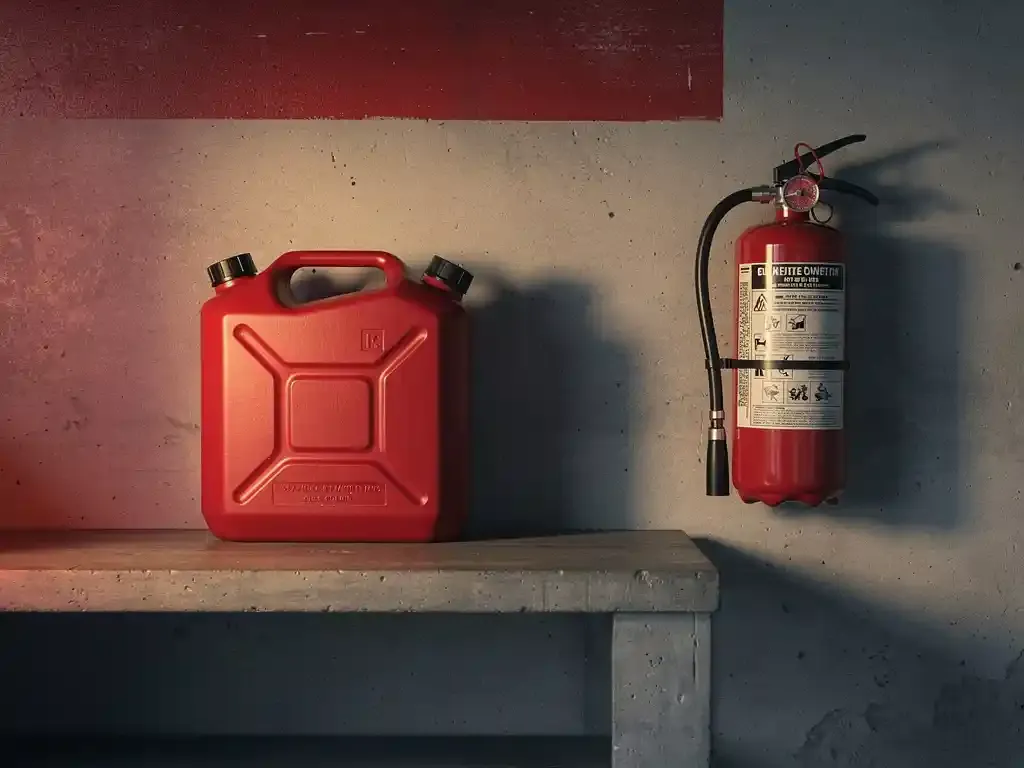
Strong fuel smell indicates vapors are actively leaking into your living space. Move the container to a well-ventilated outdoor area immediately. Don’t flip light switches or operate electronics nearby, as a single spark can ignite the concentrated fumes.
Swollen or bulging plastic means the container is reacting to internal pressure. It’s structurally compromised and could burst at any moment. If you see the bottom of the can rounding out, place it inside a secondary metal bin and transport it to a disposal site.
Cracks or brittle seams signify that the plastic has lost its chemical resistance. If the surface feels tacky or shows white stress lines, the container is no longer safe for storage. Replace it before the material fails completely.
Dark or cloudy fuel indicates significant chemical breakdown. Using this degraded liquid will clog your carburetor and ruin the fuel system of your machines. If the fuel has turned a deep amber or contains visible sediment, treat it as hazardous waste.
Leaking seals or caps create a persistent fire hazard. Any liquid on the outside of the can requires immediate cleanup and container disposal. If the gasket is compressed or cracked, don’t attempt a repair with tape or sealant.
If you find a large spill or an actively leaking container, never wash it into a drain. Doing so risks contaminating the water supply and creates an explosion hazard in the sewer system. Contact your local hazardous waste facility for safe disposal protocols.
The safer way for storing gasoline
Purchase only containers clearly marked as approved for gasoline by a recognized safety body like Underwriters Laboratories or the American National Standards Institute. Avoid repurposed plastic jugs, as these lack the necessary permeation barriers and will eventually degrade, causing leaks.
Fill the container no more than 95% full to allow for thermal expansion of the liquid when the temperature rises during the day. If you fill to the brim, the liquid will expand against the cap, forcing fuel past the seal and creating a fire hazard.
Tighten the cap until the seal is firm, ensuring the vent is closed completely to stop vapor from escaping into the surrounding area. If the cap feels loose or the gasket appears cracked, replace the entire unit immediately.
Place the containers in a detached shed or a well-ventilated garage that stays below 80°F whenever possible to prevent excessive pressure buildup.
Keep the containers on a flat, non-combustible surface like a concrete floor, far away from any electrical outlets, heaters, or open flames. Never store them in a living space or basement, as heavy fuel vapors settle in low spots and can be ignited by a pilot light.
Label the container with the date of purchase to rotate your supply and use the oldest fuel first. Add a fuel stabilizer if you plan to keep the gasoline for longer than 30 days, following the exact mixing ratio printed on the stabilizer bottle. Without stabilizer, gasoline begins to oxidize and gum up small engine carburetors within a month.
If you have a fuel spill
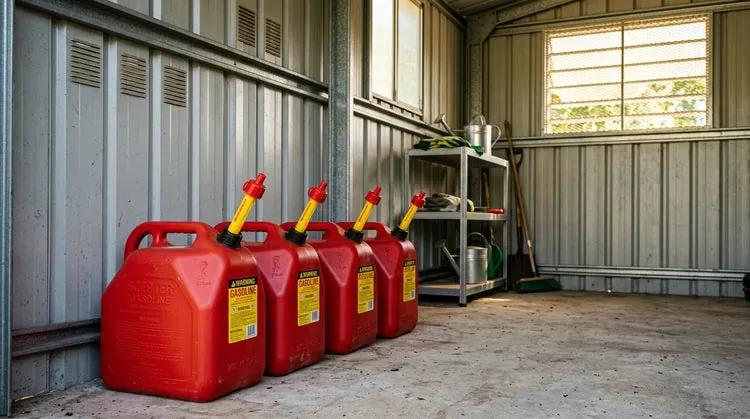
If you spill gasoline, immediately turn off all ignition sources, including nearby lights, power tools, or appliances. Use sand, cat litter, or an approved absorbent material to soak up the liquid completely. Once the liquid is absorbed, place the material in a sealed metal container and label it clearly as hazardous waste. Never throw gasoline-soaked rags into a regular trash bin, as they can spontaneously combust.
If the spill is larger than one gallon, or if the fuel has reached a floor drain or a sewer system, stop what you’re doing. Evacuate the area, ensure no one enters, and call your local fire department for assistance.
They have the professional equipment to contain volatile spills and prevent them from reaching groundwater or causing a fire in the building’s infrastructure. Don’t try to scrub the area with harsh chemicals or water, as this often spreads the fuel over a larger surface area and increases the risk of ignition.
Frequently Asked Questions
How long can i keep gasoline in a can?
You can keep gasoline for about 6 months if you add a fuel stabilizer, but untreated fuel usually degrades within 30 days. Check the label on your fuel stabilizer for the exact shelf life, as different chemical brands have different performance standards for long-term storage.
Is it safe to store gasoline in my basement?
No, you should never store gasoline in a basement because vapors will collect in the lowest point of the room. Since gasoline vapors are heavier than air, they don’t dissipate and will wait for a spark from a furnace or water heater to ignite.
How much gasoline is safe to keep at home?
The amount of gasoline you can keep depends on your local fire code, which varies by city and state. Check your local municipal website or call the fire marshal’s office to find the specific limit for residential properties in your area, as they set the legal maximums based on fire safety density.
Can i use a plastic milk jug for fuel?
No, you can’t use a milk jug because the plastic isn’t chemical-resistant and will melt or crack when it touches gasoline. Only use containers that have a stamp from an agency like UL or ANSI certifying them for flammable liquid storage.
What happens if i use old gasoline?
Using old gasoline often causes the engine to stall, misfire, or fail to start because the fuel has lost its volatility. If you suspect your fuel is old, drain it from your equipment and take it to a hazardous waste collection center for proper disposal.
Does it matter if the container is red?
Yes, the color red is the standard industry indicator for gasoline, which helps you and others avoid using it for the wrong liquid. Using a red, safety-rated container ensures that the material is compatible with gasoline and that the cap is designed to prevent accidental spills.
Conclusion
Check your fuel containers for any signs of cracks or leaks before you put them away for the season. If you find a worn-out seal, it’s time to replace the container immediately. You’ll sleep better knowing your garage is secure and that you’ve taken the right steps to protect your home.
