
The most common reason for an orange flame on gas stove burners is an incomplete combustion process caused by dust, debris, or a blocked air shutter. It’s generally safe to continue using the appliance if the flame is only slightly yellow or orange and doesn’t leave soot on your pots. You can confirm the cause by checking if the burner ports are clogged with food particles or if the air intake holes are obstructed by dust or grease.
Why your stove flame turns orange
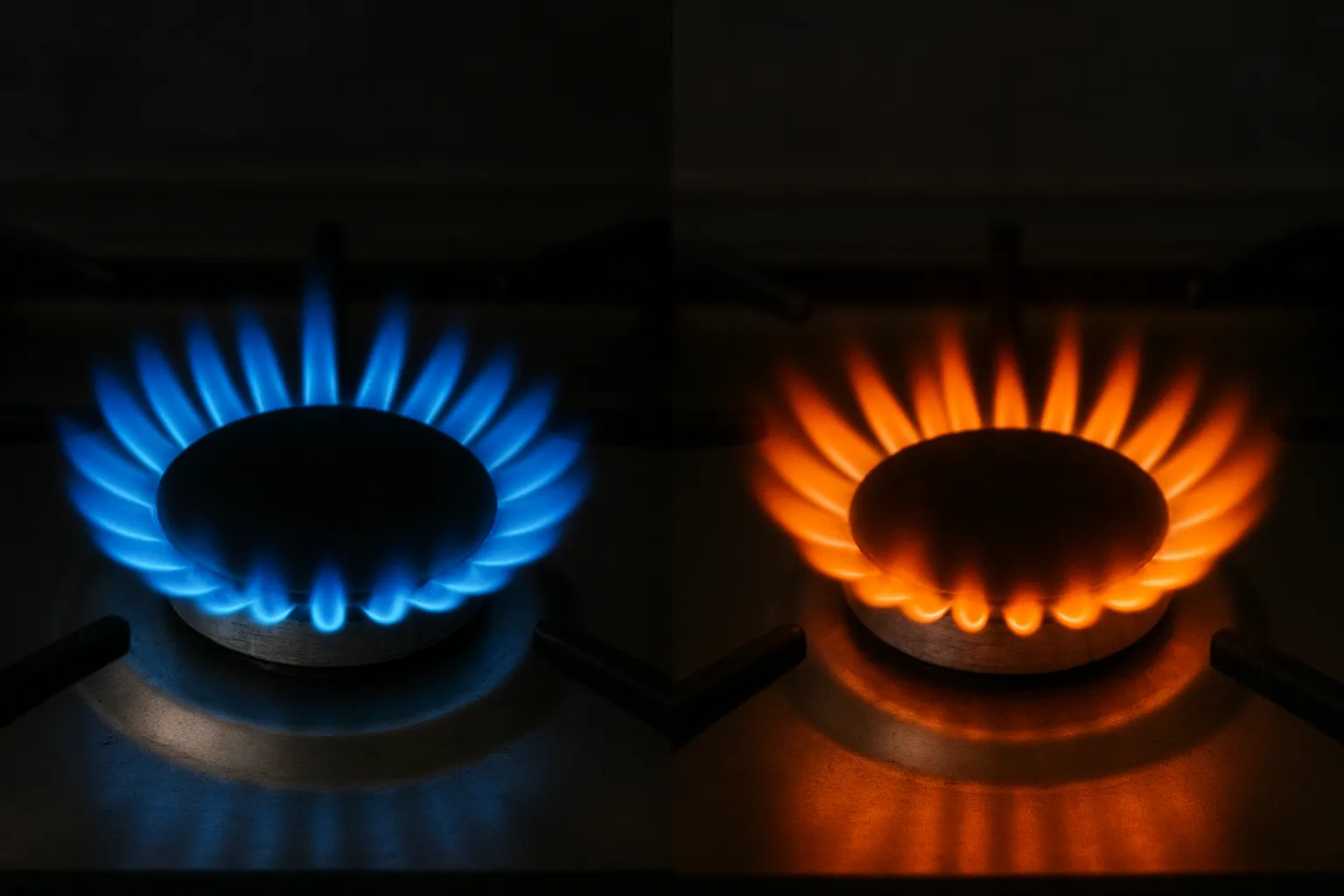
When you watch your stove, the color of the flame tells you how well the gas is burning. A healthy flame should be mostly blue, which shows that the fuel is mixing well with oxygen.
| What you notice | What it usually means | What to do first |
|---|---|---|
| Bright orange flames | Dust or debris interference | Clean the burner ports |
| Yellow-tipped flames | Poor air-to-gas ratio | Adjust the air shutter |
| Steady blue flames | Proper combustion process | No action needed |
| Hissing or whistling | Blocked burner openings | Clear the ports |
| Soot on cookware | Incomplete combustion | Check air intake flow |
| Uneven flame height | Partial port blockage | Scrub the burner head |
If you see a yellow flame that remains steady despite cleaning, you likely have a ventilation issue rather than a burner clog. Check if your kitchen exhaust fan is pulling enough air to support full combustion. Without proper airflow, the flame will starve and produce carbon monoxide.
If the flame flickers or jumps when you walk past the stove, it’s likely being affected by external air currents in the room. Tighten the shutter in small increments until the flame stabilizes. If you ignore a yellow flame, you’ll eventually notice black soot building up on the bottom of your pots.
Clogged Burner Ports and Debris
The primary cause of an orange flame is often physical blockage in the burner head. When food scraps, grease, or spilled liquids dry inside the small holes of the burner, they prevent the gas from exiting evenly. This disruption changes the ratio of air to fuel, which forces the flame to burn with an orange hue instead of the efficient blue color.
To check if your burner is clogged, turn off the stove and wait for the metal to cool completely. Use a thin, non-metallic tool like a wooden toothpick to gently clear each port. Avoid using wire or metal needles, as these can scratch the burner surface and change the shape of the hole, which ruins the flame pattern. If the port shape is distorted, the gas flow becomes turbulent, preventing the flame from ever stabilizing.
If you notice a significant amount of food buildup, remove the burner cap and head to wash them in warm, soapy water. A soft-bristled toothbrush works best to dislodge stubborn carbon deposits without damaging the finish.
After cleaning, dry the parts thoroughly before replacing them. Moisture trapped in the ports will cause sputtering or prevent ignition entirely. If the flame returns to a clear blue color after you relight the burner, the blockage was the issue.
If the orange color persists despite a clean burner, the problem is likely related to the airflow inside the mixing tube rather than the exit ports themselves. In that case, check the air shutter near the gas valve for dust or spider webs.
Restricted Air Intake Flow

Sometimes the issue isn’t the burner head but the air shutter located near the gas valve. This shutter controls the amount of oxygen that mixes with the gas before it reaches the flame. If this shutter is covered in dust, pet hair, or kitchen grease, the gas doesn’t get enough oxygen to burn cleanly. According to the Consumer Product Safety Commission, keeping gas burners clean is essential to prevent incomplete combustion which can lead to carbon monoxide buildup.
To check the shutter, you must first access the area under the stovetop or behind the range. If you see lint or heavy dust buildup around the air intake holes, use a soft brush or a vacuum hose to clear the area. Don’t use water or liquid cleaners near the internal gas valves. If the shutter is adjustable, you might need to loosen a small screw and slide the plate slightly to open the intake wider.
A common mistake is assuming the shutter needs adjustment when it only needs cleaning. If you adjust the shutter before removing the debris, you’ll likely overshoot the required setting. Always clear the intake fully first. If the flame remains yellow after deep cleaning, only then should you adjust the shutter.
If the flame becomes noisy or lifts away from the burner surface, you have opened the air intake too far and need to close it slightly. A healthy flame should sit firmly on the burner ports with a crisp, blue cone. If you see yellow tips, the intake is restricted; if the flame “dances” or detaches, you have created too much turbulence by opening the shutter beyond the capacity of the gas pressure.
Humidity and Environmental Factors
A less common cause for orange flames is high moisture content in the air or the presence of household chemicals. When you use cleaning sprays, aerosols, or bleach near the stove, the chemicals are drawn into the burner and react with the flame. This reaction often causes the flame to turn orange or even bright yellow temporarily.
You can tell this apart from physical blockages because the color change usually affects all burners at once rather than just one. If the orange flame appears only when you’re cooking with high humidity or after using cleaning products, the stove itself is likely fine. Simply improve the kitchen ventilation by turning on your exhaust hood or opening a window.
If the orange flame remains after the air has cleared and the kitchen is dry, you’re likely dealing with a mechanical issue like a clogged port. If you have multiple burners showing orange flames simultaneously and cleaning doesn’t help, the issue might be the gas pressure or the quality of the gas supply.
Most homeowners mistake this for a simple burner clog, wasting hours scrubbing ports that are perfectly clean. If the flame color remains steady regardless of the time of day, the issue is internal. If the color fluctuates with the weather or your cleaning schedule, it’s environmental.
In such cases, stop using the stove and contact your gas provider to check the pressure levels at your home. A technician can verify if your regulator is failing, which is a safety hazard that requires immediate professional intervention.
When to Call a Professional

You should stop trying to fix the stove yourself if you notice signs that indicate a deeper mechanical failure. Don’t attempt to take apart the gas valves or the main supply line.
- The smell of gas remains even when the burners are turned off, which suggests a leak.
- The burner flame is very high or unstable, which points to a faulty gas regulator.
- The stove makes a loud roaring sound or flame “blows” away from the burner head.
- You find loose wires or signs of heat damage on the internal components.
- The orange flame persists on all burners despite deep cleaning and ventilation checks.
If you encounter these issues, turn off the gas supply at the wall valve immediately. You need a licensed technician to inspect the gas regulator and burner assembly. Tampering with gas lines or regulators can result in a fire or health hazard, so always leave these repairs to a qualified professional who has the right tools to measure gas pressure.
Frequently Asked Questions
Can I use my stove if the flame is orange?
You can safely use the stove if the flame is only slightly orange and produces no soot, but you should clean the burners as soon as possible. A persistent orange flame indicates incomplete combustion, which is less efficient and can lead to soot buildup on your cookware. If you see heavy orange flames or smell gas, stop using the stove and arrange for a professional inspection.
Does an orange flame mean I have a gas leak?
An orange flame doesn’t usually mean you have a gas leak, as it’s typically caused by oxygen or debris issues. However, if you smell a sulfur-like odor or the smell of rotten eggs, you may have a gas leak. In that case, leave the house immediately, don’t touch any light switches, and call your gas company from a safe location outside.
How often should I clean my gas burners?
You should clean your burner ports and caps whenever you notice uneven flame patterns or a color change. Most households find that a light cleaning every 3 to 6 months keeps the burners working efficiently. If you cook frequently or use a lot of oil, you may need to check the ports more often to prevent grease from hardening inside the small openings.
Is it normal for the flame to be orange when I first turn it on?
It’s occasionally normal for a flame to flicker orange for a few seconds when you first light it as the gas pressure stabilizes. This should settle into a steady blue flame within 5 to 10 seconds of ignition. If the orange color remains after the burner has been lit for longer than a minute, it’s a sign that the burner needs to be cleaned.
Can cleaning products cause orange flames?
Cleaning products can cause a temporary orange flame because certain chemicals change the way the gas burns when they enter the air intake. If you have recently cleaned the stove, the color should return to blue after the chemicals evaporate or are pulled through the burner. If the flame stays orange for more than an hour, the issue is likely a physical blockage or dust.
Does the age of the stove affect flame color?
The age of the stove doesn’t directly cause an orange flame, but older burners are more likely to have accumulated dust or rusted ports. As a stove ages, the air shutters can also become stuck or clogged with years of grease buildup. Regular maintenance and cleaning are the best ways to ensure an older stove continues to produce a clean, efficient blue flame.
Conclusion
Keeping your stove clean is the best way to maintain efficiency and safety. If you follow the steps to clear the burner ports and check the air intake, you’ll likely solve the orange flame issue without needing a service call. Always wait for the stove to cool fully before starting any maintenance, and never use sharp metal objects that could damage the delicate burner components.
