
Units of measurement in mechanical engineering are the standard quantities engineers use to describe length, force, pressure, energy, power, temperature, and time. They fall into two systems: SI units and imperial units. The difference between them is which base quantities each system starts from and how widely each is used around the world.
Units of measurement in mechanical engineering

| What it measures | Best for | Example |
|---|---|---|
| Length | SI design and drawings | meter |
| Force | Loads and stresses | newton |
| Pressure | Fluid systems | pascal |
| Energy | Work and heat | joule |
| Power | Motors and engines | watt |
| Temperature | Thermal systems | kelvin |
| Time | Motion and cycles | second |
Meter
A meter is the SI base unit of length. It suits engineers who draw parts, set tolerances, and specify dimensions in metric drawings. It’s good for clear communication across international teams, for defining the size of a component, and for keeping calculations consistent with other SI units.
If your drawing shows dimensions in millimeters, convert to meters before plugging values into standard physics formulas. Failing to convert leads to order-of-magnitude errors in stress calculations. One concrete example: a steel shaft specified as 0.15 meters in diameter on a machine drawing.
Newton
A newton is the SI unit of force. It differs from the meter because it measures a push or pull rather than a distance. It suits engineers calculating loads on beams, forces in joints, and stresses in materials. It’s good for relating force to mass and acceleration, for converting weight into a force value, and for sizing structural members.
Always distinguish between mass in kilograms and force in newtons. If you use mass where force is required, your structural safety factors will be off by a factor of 9.81. One concrete example: a support bracket designed to hold a 500-newton load.
Pascal
A pascal is the SI unit of pressure. It differs from the newton because it measures force spread over an area rather than force alone. It suits engineers working with hydraulics, pneumatics, and pressure vessels. It’s good for rating pipe pressure, checking stress in thin walls, and comparing fluid system limits.
Use megapascals for most mechanical stresses, as one pascal is too small for practical engineering. If your result is in kilopascals, divide by 1,000 to get megapascals for easier comparison with material yield strengths. One concrete example: a hydraulic pump rated at 20 megapascals, or 20 million pascals.
Joule
A joule is the SI unit of energy. It differs from the pascal because it measures work done or heat transferred rather than pressure. It suits engineers analyzing engines, thermal systems, and mechanical work. It’s good for tracking energy input and output, for sizing heat exchangers, and for comparing different energy forms on one scale.
When calculating kinetic energy, ensure your velocity is in meters per second and mass is in kilograms. Mixing units like kilometers per hour will result in a massive error. One concrete example: a motor that delivers 500 joules of work over one minute.
Watt
A watt is the SI unit of power. It differs from the joule because it measures energy per unit of time rather than total energy. It suits engineers selecting motors, pumps, and fans. It’s good for rating machine output, for matching a driver to a load, and for sizing electrical supply to mechanical equipment.
If you’re sizing a motor, remember that mechanical power equals torque multiplied by angular velocity in radians per second. If you use revolutions per minute, you must apply a conversion factor of 2π/60. One concrete example: a 750-watt electric motor driving a conveyor.
Kelvin
A kelvin is the SI unit of thermodynamic temperature. It differs from the watt because it measures thermal state rather than the rate of energy use. It suits engineers in thermodynamics, heat transfer, and refrigeration. It’s good for absolute temperature calculations, for gas law equations, and for temperature differences where zero means absolute zero.
Always use kelvin for gas law calculations involving absolute pressure or volume. If you use Celsius, your results will be physically impossible. One concrete example: steam entering a turbine at 500 kelvin.
Second
A second is the SI unit of time. It differs from the kelvin because it measures duration rather than heat. It suits engineers studying motion, vibration, and control systems. It’s good for timing cycles, for defining frequency, and for expressing rates such as meters per second.
When dealing with high-speed machinery, use milliseconds to maintain precision in your data logs. If your control loop timing is off by even a few milliseconds, your system may experience resonance or instability. One concrete example: a machine cycle that completes in 2.5 seconds.
Choosing between SI and imperial units
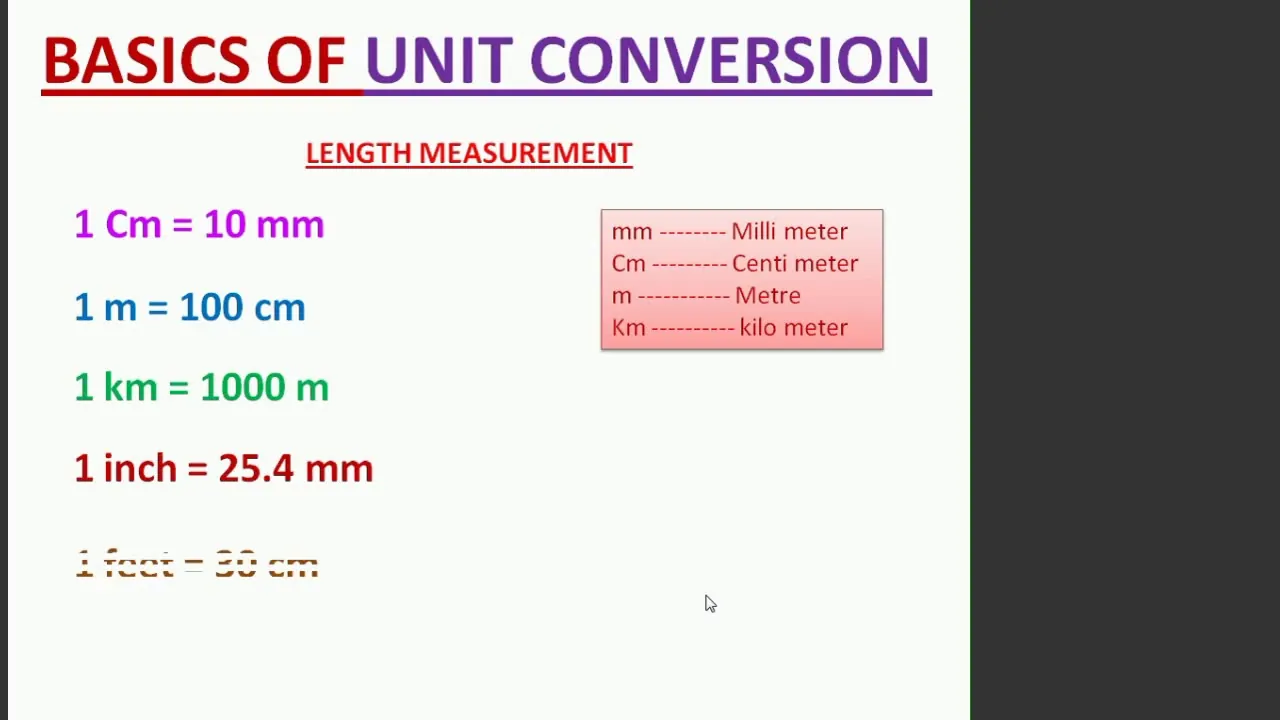
The choice depends on where the reader works, what their drawings already use, and who they share files with. A company building products for the global market should use SI units as the primary system, since most countries use them and most international standards are written in SI.
A shop in the United States repairing older American equipment often needs imperial units because the existing drawings, fasteners, and tools are inch-based. If you’re designing something new with no legacy constraints, SI is the simpler choice because its units convert by powers of ten and most modern software defaults to metric.
Mixing these systems on a single drawing invites human error. If you must include both, designate one as the primary system and place the secondary units in parentheses. Never mix them within a single dimension string, as this forces the machinist to perform mental math.
If your project involves high-precision aerospace or medical components, stick to the system used by your primary supplier to avoid rounding discrepancies. A common mistake is converting units mid-project to satisfy a secondary stakeholder; this often introduces a 0.001-inch tolerance drift that ruins interchangeable parts. If you’re drafting for a global supply chain, use SI; if you’re maintaining domestic infrastructure built before 1980, stick to imperial.
Related guides
- What Are the Units for Heat Capacity: The Standard Explained
- Best Garbage Disposals: How to Choose the Right Unit in 2026
- 5 Best Glue for Floating Engineered Wood Flooring Picks in 2026
Frequently asked questions
Can I mix SI and imperial units on one drawing?
Yes, but only if one system is primary and the other is shown in parentheses for reference. Mixing them without a clear primary system leads to conversion mistakes that can ruin a part.
Why do most countries use SI units instead of imperial?
SI units convert by powers of ten, which makes calculations faster and reduces errors. Most international engineering standards are also written in SI, so global teams share one language.
How long does it take to learn both systems?
A working engineer can learn the common conversions in a few weeks of regular use. Fluency depends on how often the reader switches between the two systems in daily work.
Is it safe to convert units by hand?
Simple conversions are safe when the reader checks the result against a known value. Complex conversions, especially for pressure or energy, are better done with a calculator or conversion tool to avoid a misplaced decimal point.
What happens if I use the wrong unit in a calculation?
The result will be wrong by the ratio between the two units, which can mean an undersized part, an overloaded machine, or a safety failure. Every result should be checked for scale before it’s used.
Does it matter which temperature scale I use?
Yes. Kelvin is required for absolute temperature in gas law and thermodynamics equations. Celsius works for temperature differences, but mixing kelvin and Celsius in the same equation gives the wrong answer.
How many base units does the SI system have?
Seven base units define the SI system: meter, kilogram, second, ampere, kelvin, mole, and candela. Mechanical engineering uses most of them, with meter, second, kilogram, and kelvin appearing most often.
What to do next
Verify the title block’s unit system before proceeding. If dimensions appear scaled incorrectly, cross-reference them against a known constant like a standard door height. This simple check prevents costly fabrication errors caused by mismatched regional standards. Moving forward, always confirm these settings at the start of every project to ensure design accuracy.
