
A condenser is a heat exchanger that works by cooling a gas or vapor until it turns into a liquid. It removes heat from a substance by transferring that thermal energy to a cooler medium, usually water or ambient air. This process is essential for refrigeration cycles, power plants, and chemical manufacturing where phase changes are required for efficiency.
How a condenser does its work
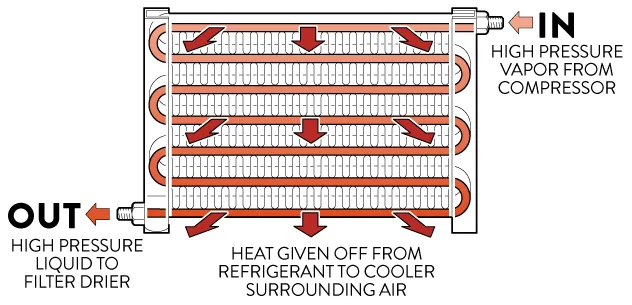
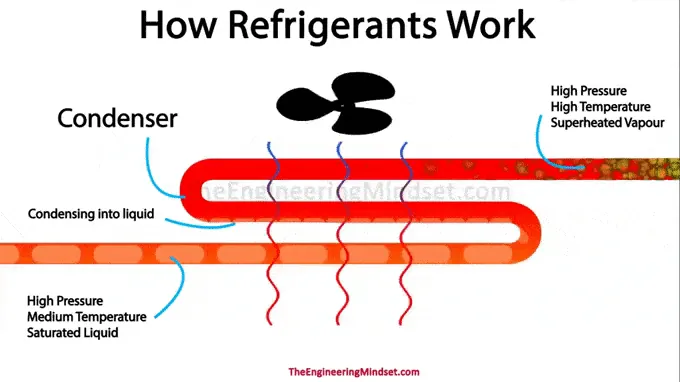
A condenser operates by moving a hot gas through a series of coils or tubes. As the gas flows, it loses heat to the surroundings, causing the molecules to slow down and condense into a liquid state. This phase change releases latent heat, which the cooling medium carries away to maintain the cycle.
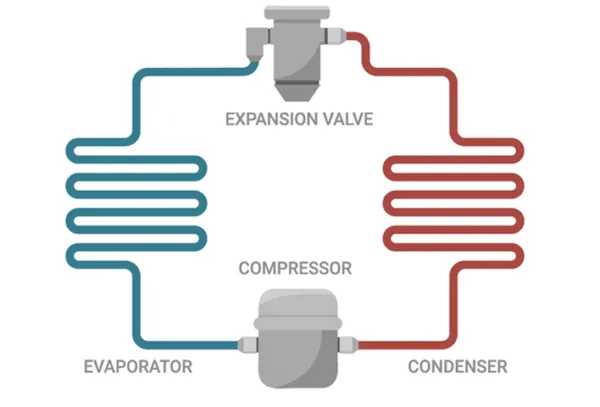
Hot refrigerant gas enters the condenser coils from a compressor. Heat transfers from the gas through the coil walls to the outside. The refrigerant loses enough energy to turn into a high-pressure liquid. This liquid state is necessary for the next stage of the cycle. The cooling medium, like air or water, carries the heat away. Pressure remains high inside the condenser to aid the phase change.
If the condenser fan fails, the system pressure spikes immediately. You can identify this by checking the high-side gauge; if it exceeds 300 psi on a standard R-410A system, the condenser is failing to reject heat. Most technicians mistake this for a low refrigerant charge. If you add gas to a system with a dirty coil, you’ll cause a compressor burnout. Always clean the exterior fins before checking pressures.
Why heat transfer requires a phase change
The primary purpose of a condenser is to manage energy through state changes. When a substance transitions from gas to liquid, it releases a significant amount of latent heat without changing its own temperature. This is a much more efficient way to move thermal energy than simply cooling a gas alone. This process allows air conditioners to move heat from inside a home to the outside environment.
If you’re looking at a standard air conditioner, the condenser is the outdoor unit. It takes the hot gas produced by the compressor and releases that heat into the outdoor air. If the condenser coils are blocked by dirt or debris, the heat can’t escape effectively. This causes the system to work harder, which raises electricity costs and can damage the compressor over time.
Most homeowners make the mistake of ignoring thin layers of dust on the fins. If your unit runs constantly but the house stays warm, check the coils before calling a technician.
You can determine if your condenser is working by checking the temperature of the air it exhausts. If the air feels warm or hot, the unit is successfully moving heat away from the refrigerant. If the air is cool, the system isn’t rejecting heat properly. This means the gas isn’t turning into a liquid, and the entire cooling cycle will eventually stop working. If the air is cool but the compressor is humming, the refrigerant charge is likely low.
When the condenser process changes
Not every condenser works the same way, as the cooling medium and the physical design vary based on the specific application. A water-cooled unit relies on consistent fluid volume, so you must verify the flow rate against the manufacturer’s baseline. If the flow drops below 80% of the rated capacity, the internal tubes will scale rapidly, permanently reducing heat transfer efficiency.
Air-cooled units depend on surface area, meaning even a thin layer of dust acts as an insulator. Clean the fins whenever you notice a 5-degree rise in the approach temperature.
In steam power plants, the integrity of the vacuum seal is the primary concern. A leak as small as a pinhole can introduce non-condensable gases, which effectively trap heat and stall the cycle. If you hear a high-pitched whistle near the flange, shut down immediately. Conversely, industrial chillers operate under extreme pressure. Always monitor the high-side gauges for spikes, as these indicate a refrigerant overcharge or a failing expansion valve.
How to maintain your condenser units
Proper maintenance is the most effective way to keep a cooling system efficient. If you own an air-cooled condenser, you must clean it based on usage and the manufacturer’s manual. If you live in a dusty area, you should check it according to the owner’s manual guidelines.
Turn off the power supply at the exterior disconnect box before you start. Never skip this step; a live fan blade can cause severe injury if the system cycles on while you’re working.
Remove any leaves, grass, or debris from the exterior of the unit. Use a soft brush to gently clean the cooling fins on the outside. Spray the fins with water using a low-pressure garden hose nozzle. High-pressure sprayers will fold the delicate aluminum fins, which restricts airflow and forces the compressor to work harder.
Check for any bent fins and straighten them with a fin comb. If the fins are crushed over more than 10% of the surface area, the unit will lose significant heat exchange capacity. Restore power and listen for the sound of the fan running smoothly.
The mistakes that ruin performance
Blocking the airflow around the unit stops heat from escaping. Maintain at least 24 inches of clearance on all sides to prevent the system from recycling hot exhaust.
Ignoring bent fins reduces the surface area for heat exchange. Use a fin comb to straighten them gently.
Running a system with a dirty coil raises the internal pressure. This forces the compressor to work harder, shortening its lifespan by years.
Using high-pressure water can crush the delicate cooling fins. Always use a low-pressure garden hose setting to avoid permanent, costly structural damage.
Frequently asked questions
Can a condenser be repaired if it leaks?
A leaking condenser coil usually requires a professional technician to braze or seal the metal tubes. Because these systems often contain high-pressure refrigerants, you shouldn’t attempt to fix a leak yourself. If you see oil spots on the coils, call a licensed HVAC professional to test the pressure and perform a safe repair.
How long does a condenser typically last?
A well-maintained condenser typically lasts for a significant period depending on the local environment and usage intensity. If you live near the ocean, salt in the air can corrode the coils much faster. You can extend the life of the unit by keeping the coils clean and ensuring the area around the unit remains clear of plants.
Is it safe to clean a condenser with water?
It’s safe to clean the outside of an air-cooled condenser with water if the power is turned off. Use a gentle spray from a garden hose to wash away dust and dirt from the fins. Never use a high-pressure washer, as the force can bend or break the thin metal fins and ruin the unit.
What happens if the condenser fan stops?
If the fan stops, the condenser can’t remove heat from the refrigerant gas. The pressure inside the system will spike, which usually triggers an automatic safety switch to shut the unit down. If your unit turns on and off quickly, check if the fan blade is stuck or if the motor has failed.
Does it matter if the unit is in the sun?
The unit should be in a shaded area if possible, but the most important factor is clear airflow. If the condenser is in direct sunlight, it will still work, but it may run slightly less efficiently than one in the shade. Always prioritize keeping at least 2 feet of space around the unit for air to move freely.
How do I know if the condenser is too small?
A condenser is too small if the system runs constantly but never reaches the desired temperature. This is a common issue when people add extra rooms to a house without upgrading their cooling equipment. If your system can’t keep up during the hottest days of the year, ask a contractor to calculate your cooling load.
Conclusion
Whether you’re maintaining a home air conditioner or studying industrial cooling, keeping these units clean is vital for performance. Dust and debris block airflow, so you’ll want to check your coils regularly. If you notice your system struggling, it’s time to inspect the fins and ensure they aren’t bent or clogged.
