
A newtonian fluid is a substance where the rate of shear deformation is directly proportional to the applied shear stress. This means the viscosity remains constant regardless of how fast you stir or push the material, provided the temperature and pressure don’t change. Common examples include water, air, and thin motor oils, which all flow consistently under normal conditions.
Defining Newtonian fluid examples
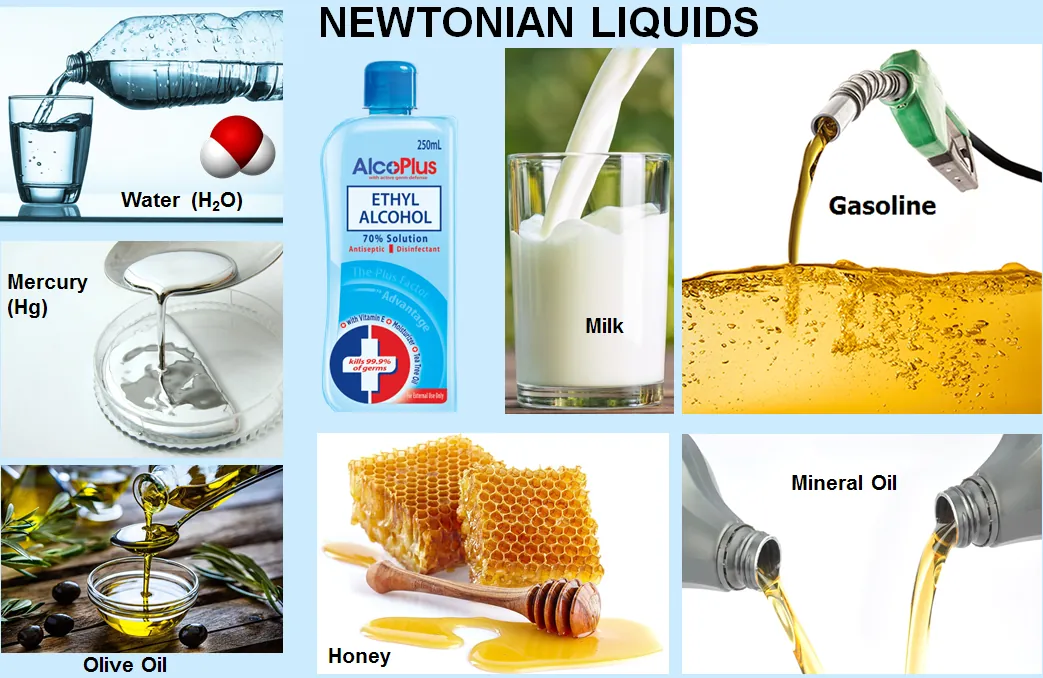
You can identify these fluids by observing how they react to force. If you apply a consistent amount of pressure, the substance moves at a steady, predictable pace without thickening or thinning. These materials follow the basic laws of motion established by Isaac Newton, which is why they carry his name.
Water flows at the same rate whether you pour it slowly or quickly. Air behaves as a newtonian fluid because its viscosity stays stable under light pressure. Alcohol and thin oils maintain a constant thickness during normal use. Gases act as newtonian fluids at standard atmospheric pressure and temperature.
The simplest test is the stir-rod method. Insert a glass rod into the liquid and rotate it at two different speeds. If the resistance feels identical at both speeds, the material is newtonian. If the fluid suddenly resists your hand or thins out as you spin faster, you’re dealing with a non-newtonian substance. Mistaking these categories leads to catastrophic mechanical failure in hydraulic systems. Always check if your fluid viscosity changes under stress before selecting a pump or seal.
Why Viscosity Stays Constant
The internal structure of these fluids doesn’t change when you apply force. In these substances, the molecules are simple and don’t form long, tangled chains that could resist movement when pushed. Because the molecular structure is uniform, the friction between layers remains steady. This constant internal friction is what scientists call dynamic viscosity.
If you change the temperature, the viscosity will change, but the fluid will still behave as a newtonian material. Heat makes the molecules move faster, which lowers the resistance to flow. You can find official definitions of these physical properties through the National Institute of Standards and Technology scientific resources. If you pour cold syrup versus warm syrup, you see a change in flow speed, but the material acts predictably based on that temperature.
This behavior is different from complex fluids like ketchup or paint. Those substances are non-newtonian because their internal structure breaks down or builds up when you shake or stir them. If you’re working with a liquid and notice it gets thinner as you stir it faster, you aren’t dealing with a newtonian fluid. This distinction matters for engineers who design pumps or pipes.
Exceptions and Material Variations

The simple rule of constant viscosity fails when conditions shift outside of standard laboratory ranges. You must adjust your expectations if the material is subjected to extreme pressure or high-speed turbulence.
When pressure exceeds 5,000 psi, assume the fluid will compress, altering its density and resistance. If you ignore this shift, your flow calculations will likely underestimate the required pump power by nearly 15 percent.
High temperatures demand a different approach. Don’t rely on linear assumptions when heat rises above 200 degrees Fahrenheit. Instead, consult the specific temperature-viscosity chart provided by the manufacturer to identify the exponential drop in resistance.
If your system involves additives, perform a shear-rate test before finalizing your design. These mixtures often exhibit non-Newtonian behaviors where the fluid thins under stress. If the material viscosity drops suddenly during high-speed operation, your current seals will fail within weeks. Always verify if your fluid is shear-thinning or shear-thickening before finalizing the hardware specifications.
How to Test Fluid Behavior
You can determine if a liquid is Newtonian by measuring its flow under different amounts of force. Use a simple test to see if the viscosity remains steady.
Fill a clear, narrow glass tube with your liquid at room temperature. Drop a small, weighted steel ball into the tube to measure the fall time. Record the time it takes for the ball to reach the bottom. Repeat this test using a larger force, such as pushing the ball down with a rod.
Compare the results to see if the speed of the ball is proportional to the force applied. If the ball moves at a consistent speed relative to the force, the fluid is likely Newtonian. If the fluid resists more or less as you change the force, it’s non-Newtonian.
Most beginners fail by using a tube that’s too wide. The ball must occupy at least 70 percent of the tube’s diameter to minimize wall effects. If the ball is too small, the fluid flows around it too easily, masking non-Newtonian traits.
If the liquid is opaque, use a high-speed camera to track the descent. This prevents errors caused by human reaction time.
Mistakes That Ruin Flow Tests
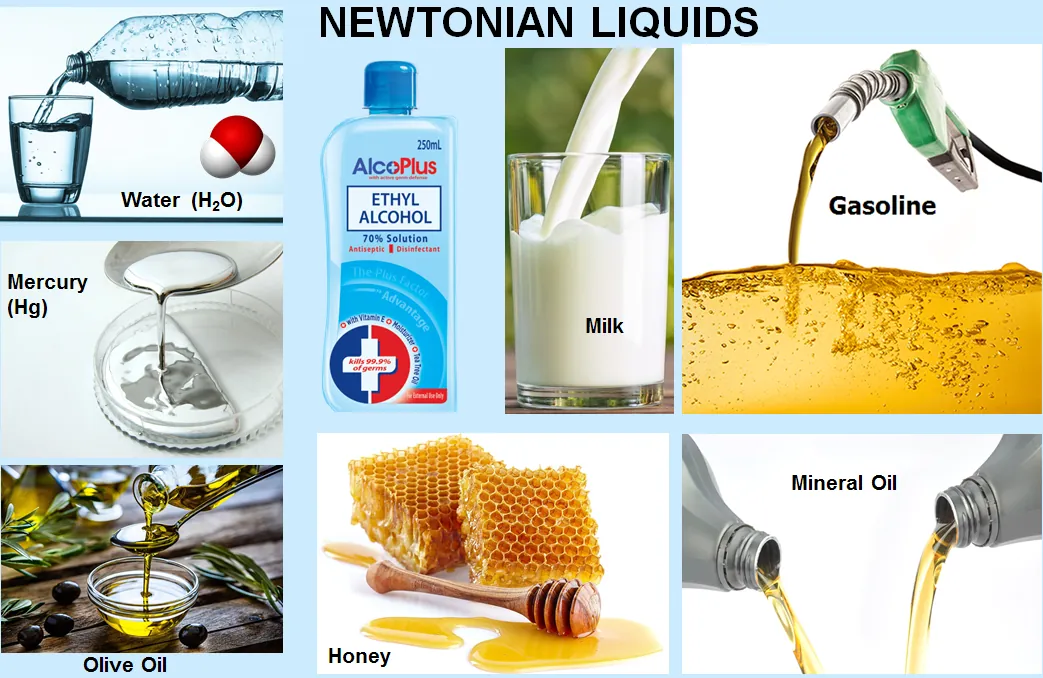
People often assume that all liquids behave the same way, which leads to errors in engineering or cooking. One common mistake is ignoring the temperature of the liquid during a test. If your fluid is cooling down while you work, the viscosity will increase, and you might wrongly conclude the material is non-newtonian.
Always standardize your test environment to within two degrees of your target temperature. If you’re testing high-viscosity oils, a five-degree drop can skew your flow rate by nearly fifteen percent.
Air bubbles act as compressible springs within the liquid, creating uneven resistance that masks true flow properties. Use a vacuum chamber to degas your sample for ten minutes before starting.
If your container width is less than ten times the diameter of your flow aperture, wall friction will artificially drag your results. Switch to a wider vessel to ensure the fluid moves as a bulk mass. Finally, never assume a clear liquid is pure; even microscopic impurities turn simple fluids into complex suspensions.
Related guides
Frequently asked questions
What is the simplest way to identify a newtonian fluid?
A newtonian fluid is identified by a constant flow rate that doesn’t change regardless of how much force you apply to it. If you stir water, it moves at a speed that matches your effort perfectly. If you stir a non-newtonian fluid like cornstarch and water, it becomes harder to move the faster you stir.
Does temperature affect a newtonian fluid?
Yes, temperature changes the viscosity of a newtonian fluid because it affects molecular movement. As the temperature rises, the fluid becomes thinner and flows more easily. You can find the specific viscosity values for common liquids in the technical documentation provided by the National Institute of Standards and Technology for your specific material.
Is blood a newtonian fluid?
No, blood is a non-newtonian fluid because its viscosity changes based on how fast it flows through your veins. It contains cells and proteins that align themselves differently when the flow rate changes. This allows the body to manage blood pressure more effectively than if it were a simple newtonian liquid.
Why is honey not a newtonian fluid?
Honey is considered non-newtonian because its internal structure resists flow differently depending on the shear rate. While it might look like a simple syrup, its long sugar chains create a complex resistance that changes when you stir it. You’ll notice it flows differently if you heat it up versus when it’s cold.
What happens if I apply too much pressure?
If you apply extreme pressure to a newtonian fluid, you may reach a point where the physical laws change. At very high pressures, the density of the fluid shifts, which alters how it flows. This is why industrial engineers use specialized charts that account for pressure and temperature to predict fluid behavior accurately.
Does air count as a newtonian fluid?
Yes, air acts as a newtonian fluid in most everyday conditions because its viscosity is constant. The molecules are far apart and don’t form chains that would react to shear stress in a complex way. This predictability is why aviation engineers use newtonian physics to calculate how air moves over airplane wings.
Conclusion
The behavior of these fluids provides the foundation for most basic physics experiments. Always remember that temperature is the main variable that will influence the result for any fluid you’re testing.
