
A door that isn’t fully locked is the most frequent reason a maytag washer won’t start just beeps when you press the button. Most of the time, the machine detects a problem with the latch or the electronic control board and signals this through an alert tone. You should verify that the door is closed firmly and the display shows no error codes. If the display is blank or flashing, check your home circuit breaker or the outlet for power.
Why your Maytag washer won’t start
| Cause | How common | How to confirm it | Fix it yourself? |
|---|---|---|---|
| Unlatched door | Very common | Check for door gap | Yes |
| Control board error | Common | Look for error codes | Yes |
| Power supply issue | Frequent | Test outlet with lamp | Yes |
| Uneven load | Occasional | Open and redistribute | Yes |
| Child lock active | Rare | Check lock icon | Yes |
| Failed door switch | Rare | Inspect for damage | No |
If the door latch clicks but the machine still chirps, check the strike plate for debris. A single penny or a stray button trapped in the rim prevents the sensor from engaging. You can usually clear this with a pair of needle-nose pliers in under a minute.
When the control board flashes a cryptic code, don’t assume the hardware is fried. Unplug the unit for exactly ten minutes to drain the capacitors. This hard reset clears temporary logic loops that often mimic permanent component failure.
If you suspect a power issue, plug a standard desk lamp into the same wall outlet. If the lamp flickers when you wiggle the cord, the outlet itself is loose. This creates a voltage drop that triggers a low-power alarm on modern digital displays.
For uneven loads, listen for a rhythmic thumping before the beeping starts. If the machine is off-balance, the internal sensors will halt the cycle to prevent mechanical damage. If this happens every time, use a carpenter’s level to ensure the feet are flush with the floor. A variance of even a quarter-inch causes the drum to shift during high-speed spins.
Finally, if the child lock is active, the controls will remain unresponsive even if the machine is powered on. Press and hold the designated button—usually marked with a small padlock icon—for five full seconds to override the safety setting.
The door latch and sensor alignment
A loose or misaligned door latch is the most likely culprit when your machine refuses to begin a cycle. The washer is programmed to prevent operation if the switch doesn’t signal that the door is fully closed and locked. This safety feature protects you from water leaks and high-speed spin hazards. If the door feels loose, the sensor can’t confirm that the seal is tight enough to start safely.
To test this, open the door completely and inspect the strike plate for any debris or buildup. Ensure there’s no clothing caught in the seal that might prevent a firm closure. Push the door closed with a firm, steady motion until you hear a clear click.
If the machine still beeps, try pressing the start button again while applying light pressure to the center of the door. If the cycle begins, the latch strike plate likely needs adjustment or the door hinge is sagging.
Check the hinge screws with a screwdriver; if they’re loose, the entire door assembly shifts downward by even a few millimeters, causing the latch to miss the sensor. If the machine continues to beep despite this pressure, the internal door switch may be faulty.
Many users mistakenly assume the latch is broken when the actual issue is a buildup of detergent residue inside the strike plate hole. Use a damp cloth to clear this path, as even a small obstruction prevents the latch from seating fully. If you find the door requires a heavy slam to engage, the strike plate is likely bent.
Tighten the screws, but if the door remains misaligned, the hinge itself is likely warped and requires replacement. Replacing an internal door switch requires specialized tools and access to internal parts, so you should contact a professional if the basic closure check doesn’t resolve the issue.
Dealing with electronic control errors
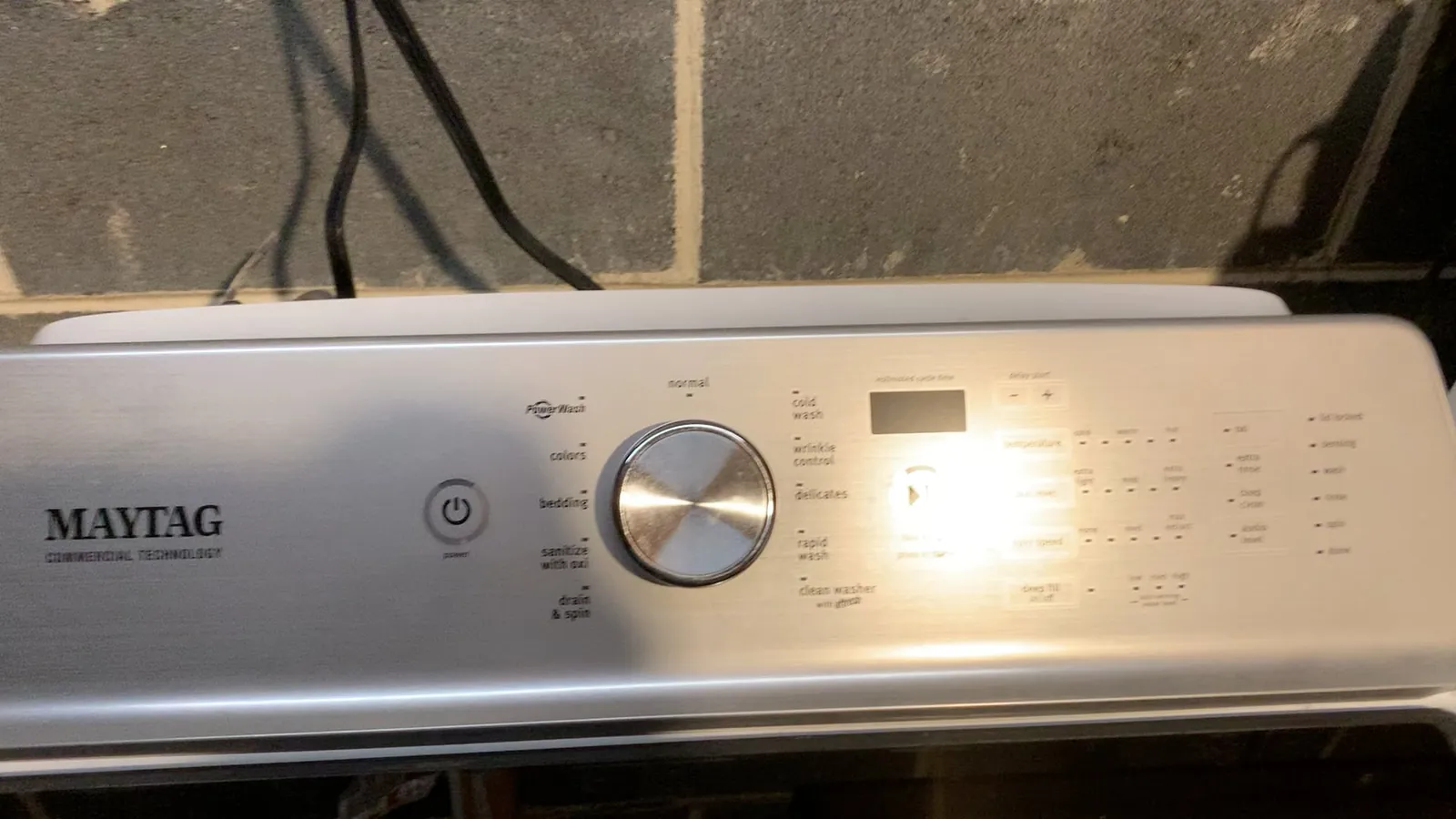
Your washer uses a computer to monitor every stage of the wash cycle, and it will beep if it detects an internal error. This often happens because the cycle was interrupted or the control board received conflicting information from a sensor. When the control board is confused, it refuses to start to prevent potential damage to the motor or the internal plumbing. You can often clear these temporary digital errors by performing a hard reset on the system.
Unplug the washer from the wall outlet or flip the circuit breaker to the off position for at least 60 seconds. This time allows the residual electricity to drain from the capacitors on the control board. If you plug the unit back in too quickly, the board may retain its corrupted memory state, rendering the reset useless. After the wait, restore the power and try to select a new cycle from the beginning.
If the display shows a specific letter and number code, write it down, as this identifies the exact sensor that’s failing. Most manufacturers include a diagnostic chart in the back of the owner’s manual. If the code corresponds to a water inlet valve, check your hoses for kinks before calling a technician. If the error code returns immediately after the reset, the control board may need a professional diagnostic check.
If the unit remains unresponsive to these steps, the hardware may have a permanent failure. You can distinguish between a software glitch and a hardware failure by listening for a click when you press start. If you hear a mechanical engagement but no water flows, the issue is likely a physical component like a pump or valve rather than the computer itself.
Power and child lock status
Sometimes the machine beeps because it isn’t receiving enough power or because a feature is preventing the start command. A tripped circuit breaker or a loose power cord can cause the lights to flicker or the machine to beep as it tries to initialize.
You should verify that the washer is plugged directly into a wall outlet rather than an extension cord. Extension cords often struggle to deliver the steady voltage required for modern high-efficiency motors. If you use a power strip, the machine may draw more current than the strip can handle, leading to intermittent power drops that trigger error codes.
Check the control panel for a lit “Lock” or “Control Locked” icon. If this light is visible, the machine is in child-lock mode, which ignores all button presses to keep children safe. You can usually disable this by holding the “End of Cycle” or “Lock” button for 3 seconds. If the panel is completely dark and makes no sound, check your home electrical panel to see if a breaker has flipped.
If the breaker is fine but the machine shows no lights, the internal fuse or power supply cord might be damaged. A simple way to test the outlet is to plug a lamp into the same socket; if the lamp fails to turn on, the issue is your home wiring rather than the appliance.
Never attempt to test or replace internal wiring yourself, as these components carry dangerous voltages even when unplugged. If you smell ozone or see scorch marks near the plug, disconnect the power immediately and call a licensed electrician. Ignoring these warnings can lead to permanent damage to the machine’s control board.
Less common startup issues
Excessive suds: The washer detects too much soap and pauses. Wait for the suds to dissipate before restarting. If this happens repeatedly, you’re likely using twice as much detergent as necessary; modern high-efficiency machines only require two tablespoons per load.
Water supply failure: The machine beeps because it can’t sense incoming water. Check that both house valves are fully open. If the valves are clear, inspect the mesh inlet screens located where the hoses connect to the machine. These often clog with mineral deposits in older homes, restricting flow and triggering the error.
Drain pump blockage: A trapped coin or small item prevents the pump from starting. Clear the drain filter if your model has one. If you hear a rhythmic humming sound but no water exits, the impeller is likely obstructed by a loose button or hair pin.
Motor overload: The unit stops to prevent overheating. If the thermal fuse has blown, it must be replaced by a professional. If the drum feels stiff when turned by hand, the bearings are failing, and the machine will continue to trip this fuse until the mechanical resistance is corrected.
Professional repair is required if the issue involves the motor, the main control board, or the internal wiring harness. These repairs involve removing exterior panels and working with high-voltage components, which poses a significant risk of shock or injury.
What a typical repair involves
Fixing a persistent beeping issue usually depends on whether the problem is a simple setting or a broken part. If the fix is a simple adjustment to the door strike or a reset of the control board, you only need your time and a few minutes of patience.
These quick fixes cost nothing but the time it takes to read your manual and perform the steps. If you need to replace a physical part like a door latch or a sensor, you’ll need a screwdriver and a replacement part from the manufacturer.
The cost of parts varies significantly based on the specific component, but they’re generally less expensive than the cost of a brand-new machine. You can find the correct part number by looking at the sticker on the inside of the door or the back of the washer.
Once you have the model number, check the manufacturer’s website to get a real quote for the part. If you aren’t comfortable handling tools or the repair requires opening the cabinet, a professional technician will charge a service fee plus the cost of labor. Always ask for a quote before work begins to avoid surprises.
If your washer is over a decade old, compare repair costs against the price of a new unit. If repairs approach half the value of a replacement, upgrading is often the smarter choice. For newer machines, a simple part replacement can often provide many more years of reliable service. Research your next appliance purchase today to prepare for a potential upgrade.
Related guides
