
You don’t need to open the motor to test it. You can check a single phase motor with a multimeter by measuring resistance across the windings, checking continuity to ground, and testing the capacitor if the motor has one. These readings tell you whether the motor is burnt out, shorted, or simply not getting power. The rest of this guide walks through each check, what the numbers mean, and when to stop and call an electrician.
What a single phase motor is
A single phase motor runs on standard household or workshop power, unlike three phase motors that need industrial supply. It uses one live wire and one neutral wire, and many home models use a capacitor to help the motor start.
People often assume a humming motor just needs a new start capacitor, but a burnt winding or a seized bearing can cause the same symptom. If you aren’t sure whether your motor has a capacitor, check the manufacturer’s label or manual for your model.
How to test a single phase motor
-
Turn off the power at the breaker and unplug the motor from the outlet. Wait at least one minute before touching anything.
-
Set your multimeter to the lowest ohms setting, usually marked with the omega symbol.
-
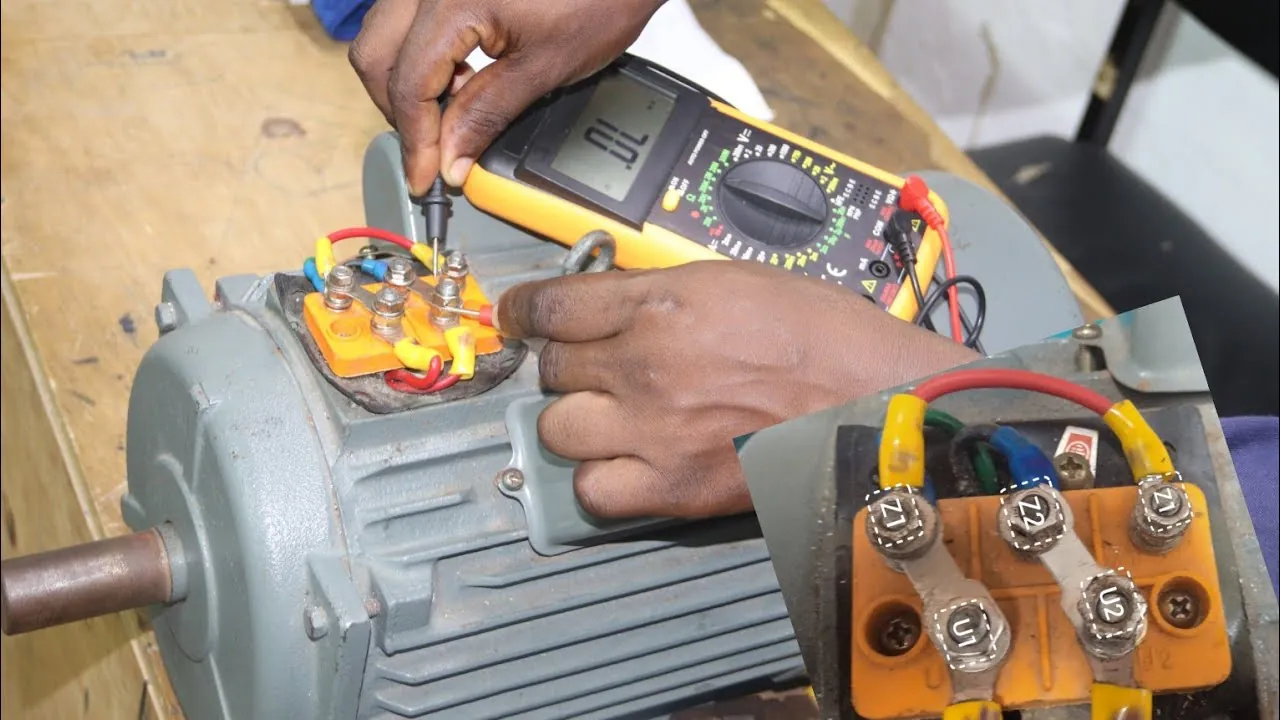
Touch the probes to the two main winding terminals, often labeled T1 and T2, and read the resistance. A healthy reading is typically a few ohms, not zero and not infinite.
-
Measure each winding to the motor frame or ground. The reading should show infinite resistance or OL on the meter; anything lower means a short to ground.
-
If your motor has a capacitor, discharge it first with an insulated screwdriver, then measure its microfarad rating and compare it to the value printed on the capacitor label.
-
Reconnect power and try to start the motor. Listen for humming, slow starting, or a breaker trip, and note which one happens.
If the motor hums but won’t turn, the problem is usually the capacitor or a stuck shaft, not necessarily a burnt winding.
Never open the motor housing, discharge internal capacitors beyond the start capacitor, or test internal parts such as the centrifugal switch or thermal overload protector. A capacitor can hold a lethal charge even when unplugged, and this work belongs to a qualified electrician or motor repair technician.
Key numbers and settings at a glance
These figures assume a standard single phase motor used in a home or small workshop. Your motor’s nameplate may list different values, so check the label before you begin.
| Situation | What to use | How long | What to watch for | | Resistance check across windings | Multimeter on lowest ohms setting | About 10-15 seconds per reading | Zero ohms means a short; infinite means an open winding | | Winding to ground check | Multimeter on ohms | About 10 seconds per winding | Any finite reading means insulation failure | | Capacitor test | Multimeter on microfarad setting | About 20-30 seconds | Reading far below the printed rating means replace it | | Power-up test | Breaker and outlet restored | Watch for 5-10 seconds | Humming without turning, slow start, or tripped breaker | | Discharge before capacitor test | Insulated screwdriver | A few seconds | Sparks are normal; never touch the terminals with bare fingers |
What separates good results from bad ones
Before you touch a probe, confirm the breaker is off and the motor is unplugged. A live reading can destroy your meter and injure you.
Check the order of the windings carefully. On many single phase motors there are main and auxiliary windings, and measuring the wrong pair gives a misleading number. Partway through, recheck your meter on a known resistor or a AA battery to confirm it’s still working.
Leave the motor alone once you find a clear fault. If a winding reads infinite ohms or a winding to ground shows continuity, the motor needs professional rewinding or replacement. Probing further won’t change the result and can damage the insulation.
Common problems and quick fixes
| What you notice | What it usually means | What to do first | | Motor hums but doesn’t turn | Bad start capacitor or seized bearing | Test the capacitor; if it reads low, replace it | | Breaker trips immediately | Shorted winding or ground fault | Stop and call an electrician; don’t reset and retry | | Motor runs hot and shuts off | Overload from a jammed load or bad bearing | Check that the driven load turns freely by hand | | No power at the motor terminals | Blown fuse or tripped breaker | Check the breaker and outlet before testing the motor | | Resistance reads infinite across windings | Open winding inside the motor | The motor needs repair or replacement |
The rules that apply
Electrical work in a home or workplace falls under local electrical codes, and in the United States the National Fire Protection Association publishes the National Electrical Code, which covers motor installations and disconnect requirements. If your motor is hardwired rather than plugged in, turning off the breaker is your only safe isolation step, and verifying it’s off with a tester is a technician’s job.
Renters and anyone working on equipment they don’t own should get permission before opening or replacing parts. Where a step needs a licence, special equipment, or carries a real risk of shock or fire, stop and call a qualified electrician.
Keeping it working afterwards
After testing, restore power only when the motor is fully reassembled and the cover is secure. Keep the motor clean and free of dust, and make sure its ventilation openings stay clear so it doesn’t overheat. Record the resistance and capacitor readings you measured so you have a baseline for the next check. There’s no universal service interval for a single phase motor; instead, watch for new humming, heat, or breaker trips, and test again when those signs appear.
When to use a different approach

This method doesn’t apply to three-phase motors. These units require checking all three windings against each other and against ground to detect phase imbalance, a pattern far more complex than a simple continuity test.
Avoid this approach for motors inside sealed appliances like refrigerators or air conditioners. Refrigerant regulations and pressurized systems mean a certified technician must handle the work to prevent hazardous leaks or legal liability.
If the motor is hardwired into a distribution panel or you can’t reach a plug, call an electrician. Testing live connections without a clear disconnect point risks a high-amperage arc flash. If you see charred insulation or smell ozone, stop immediately. These signs indicate a short that will likely destroy your multimeter or cause a serious electrical fire if you attempt to power the circuit.
Related guides
- Cuisinart Grinder Not Working: Simple Fixes for Motor Issues
- Hamilton Beach FlexBrew Single Serve Not Working: Easy Fixes
- Momcozy M5 Motor Not Working: Simple Fixes and Troubleshooting
Frequently asked questions
Can I test a single phase motor without a multimeter?
No. You need a multimeter to check winding resistance and ground continuity safely. Without one, you can only guess based on sound and behavior.
How long does it take to test a single phase motor?
About 15 to 30 minutes, assuming the motor is unplugged, accessible, and you already have a multimeter and a screwdriver for discharge.
Is it safe to test a single phase motor myself?
Only the external checks described here are safe for a non-electrician: unplugging, switching off the breaker, and measuring with a multimeter. Opening the housing or touching internal capacitors is not.
What happens if a winding reads infinite ohms?
It means the winding is open or broken inside, and the motor won’t run. It needs professional rewinding or replacement.
Why does my motor hum but not start?
Usually because the start capacitor has failed or the shaft is stuck. Test the capacitor first, then check that the driven load turns freely by hand.
How often should I test a single phase motor?
There’s no set schedule. Test it when you notice humming, overheating, slow starting, or a tripped breaker, and compare the readings to the last good set you recorded.
Conclusion
Always match your readings to the motor’s nameplate values, and when in doubt, have a qualified electrician take over.
