
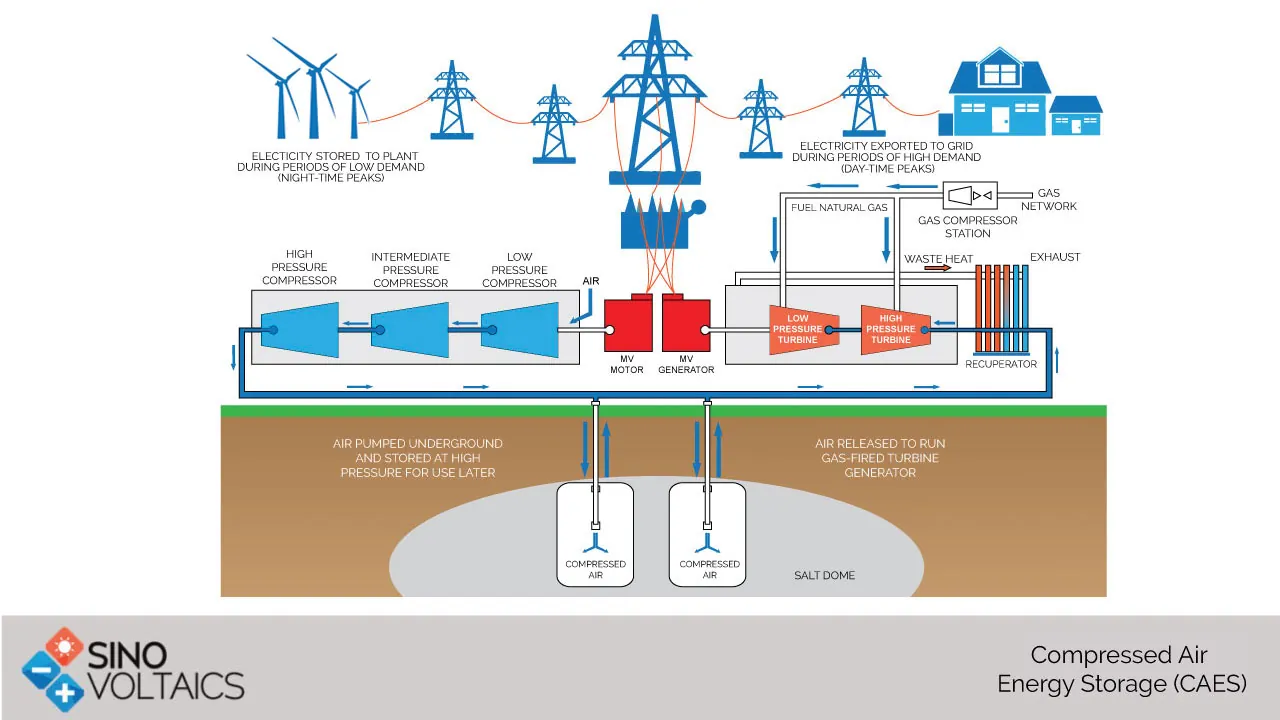
Compressed air energy storage works by using extra electricity to push air into a sealed space, keeping it there under pressure, and letting it out through a turbine when power is needed again. It’s like blowing up a very stiff balloon with a pump, then opening the valve to spin a small fan. You put electricity in at one end, and you get electricity back out at the other.
Parts of compressed air energy storage
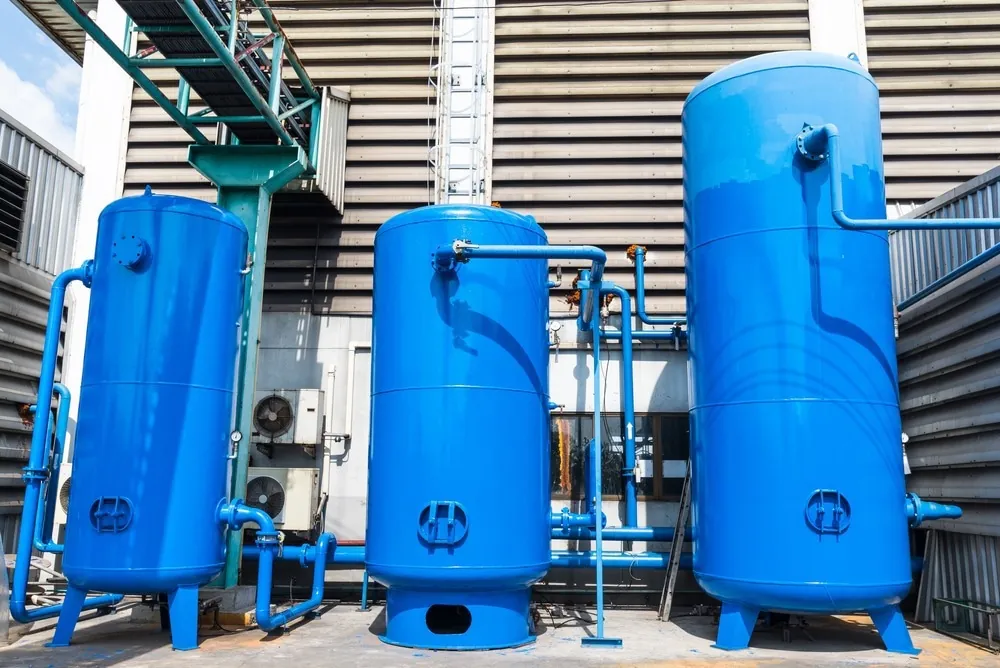
A compressed air system relies on five main pieces working together in a specific order. Each part handles one job, from taking in power to sending it back out. If one piece fails, the whole cycle stops or loses efficiency.
| Part or input | What it does | What you notice when it goes wrong |
|---|---|---|
| Electric motor | Drives the compressor using grid power | Motor won’t start or trips breakers |
| Compressor | Pushes ambient air to high pressure | Air pressure stays low despite running |
| Storage cavern | Holds the pressurized air safely | Pressure drops fast without releasing air |
| Expansion turbine | Spins as high-pressure air flows through | Power output falls below expected levels |
| Generator | Turns the spinning turbine into electricity | No voltage reaches the power lines |
You can check the rated pressure for your specific setup in the equipment manual. The numbers differ based on the size of the cavern and the model of the compressor you’re using.
How the compressed air cycle runs
The process follows a strict path from storing energy to giving it back. Each step changes the state of the air or the direction of the power flow.
- Extra electricity from the grid powers the electric motor during off-peak hours, which usually takes several hours depending on how much empty space the cavern has left to fill.
- The motor spins the compressor, pulling in outside air and squeezing it down to pressures between 40 and 70 bar, assuming a standard underground salt cavern setup.
- Squeezing the air makes it very hot, so the heat either gets stored in a separate thermal tank or cools away before the air enters the storage space.
- The cooled, dense air sits inside the underground cavern or above-ground tanks until the grid signals that electricity demand has risen and more power is needed.
- When called upon, valves open to let the high-pressure air flow out, passing through a heater if the system saved the compression warmth earlier in the cycle.
- The expanding air rushes through the turbine blades, forcing them to spin at thousands of revolutions per minute, turning the stored pressure back into mechanical motion.
- The spinning turbine drives the generator, which produces alternating current and feeds it straight back into the electrical grid for homes and businesses to use immediately.
Why compressed air storage fails
Air escaping through cracked rock or faulty seals means less force hits the blades later. If the pressure gauge reads lower than the target after filling, but the compressor ran for the full time, check the cavern seals first; if the pressure holds fine but output stays low, look at the turbine instead.
Heat management causes the second biggest issue. Traditional plants burn natural gas to warm the air before it expands, increasing energy output and preventing ice formation in the valves and turbine. Advanced adiabatic systems store that heat during compression to reuse it later. If the thermal storage unit loses its warmth, the plant can’t fully reheat the air, reducing power output and efficiency.
Moisture in the intake air creates another failure point. Water vapor condenses when the air cools inside the cavern, pooling at the bottom. Over time, this water corrodes pipes and damages the turbine blades during expansion. Facilities in humid climates need heavy-duty dryers running before the compressor stage.
You won’t get the same efficiency everywhere. The round-trip efficiency—the percentage of electricity you get back compared to what you put in—sits around 42% for traditional diabatic plants and reaches up to 70% for advanced adiabatic designs, according to the U.S. Department of Energy. Your actual return depends entirely on the geology of your site and the specific technology installed, and you’ll find your exact figure on the plant’s performance dashboard.
This approach isn’t for sites needing instant, short bursts of power. Batteries handle those split-second reactions better, while compressed air needs minutes to ramp up its turbines fully.
Controlling compressed air energy storage
What you control
- The timing of when you run the compressors to buy electricity at cheaper off-peak rates.
- The target pressure level inside the cavern, within the safe limits set by the manufacturer.
- The speed at which you open the release valves to manage how fast power returns to the grid.
- The maintenance schedule for drying the intake air to prevent moisture buildup over time.
- The choice between burning fuel or using stored heat to warm the air before expansion.
What is fixed by design
- The maximum volume and pressure limits of the underground cavern, which together dictate how much energy you can store.
- The geological stability of the rock formation, which you can’t alter once the site is chosen.
- The physical laws of thermodynamics that guarantee some energy loss as heat during every single cycle.
- Modifying the cavern walls or altering high-pressure seals requires specialized engineering licenses and carries severe safety risks, so leave structural changes to certified geotechnical contractors.
Habits for better compressed air storage
Running the compressors only during the cheapest grid hours directly improves your financial return. Electricity prices fluctuate daily, so setting automated timers to match local off-peak windows saves money on every cycle.
Monitoring the dew point of the intake air prevents long-term damage. If the moisture reading climbs above the manufacturer’s stated limit, swap the desiccant in your dryers immediately rather than waiting for scheduled maintenance. Wet air costs you turbine repairs later.
Tracking the pressure decay rate while the cavern sits full tells you if seals are failing. A drop faster than the documented baseline means air is leaking somewhere. Catching this early avoids a complete loss of stored energy during peak demand.
Keeping the thermal storage insulated properly ensures the captured heat actually survives until expansion time. Check the insulation thickness against the original build specifications every year, because settling materials create gaps that let warmth escape into the surrounding rock.
Frequently asked questions
How long does compressed air energy storage last?
A well-maintained underground salt cavern operates for 30 to 40 years before needing major structural review, assuming standard daily cycling. Above-ground steel tanks have shorter lifespans due to metal fatigue. You can verify your facility’s expected operational life in the original engineering documentation provided by the builder.
Can compressed air storage power a single house?
No, the equipment required to compress and expand air safely is far too large and expensive for residential use. These systems serve entire towns or industrial grids. Homeowners needing backup power should look at lithium-ion battery setups instead, which scale down properly.
Why does compressed air get hot during storage?
Squeezing gas molecules closer together forces them to move faster, which registers as heat. This is a basic law of physics, not a mechanical fault. That heat must be removed before the air enters the cavern, or managed carefully, to prevent damage to the storage walls.
Is it safe to store air at such high pressure?
Yes, when kept in tested geological formations like salt caverns or engineered steel vessels built to strict standards. The rock naturally seals itself under pressure. Safety relies entirely on staying within the rated pressure limits stamped on the equipment and verified during regular inspections.
How much electricity do you lose in the process?
Traditional systems lose about 58% of the input energy, returning roughly 42% as usable electricity. Advanced systems that capture and reuse the compression heat return up to 70%. The exact number you experience depends on your specific plant design and local operating conditions.
Does the location of the cavern matter?
Yes, the geology decides everything. Salt domes offer the best natural seals and structural strength for holding high pressure. Hard rock caverns cost more to excavate and often require concrete lining. You can’t just dig anywhere; geological surveys determine if a site is viable.
What happens if the turbine freezes during release?
Ice forms when expanding cold air drops below freezing and residual moisture is present. The plant shuts down automatically to protect the blades. Operators prevent this by heating the air before it hits the turbine, either with stored thermal energy or supplemental fuel.
Conclusion
Storing energy as pressurized air turns idle off-peak electricity into a reliable reserve for busy hours. The physics are straightforward, even if the machinery is massive. Matching the right geological site with proper heat management separates a plant that runs for decades from one that constantly fights leaks and frozen valves.

3 thoughts on “How Compressed Air Energy Storage Works: A Simple Guide”