
Kinetic energy is the energy an object holds because it’s moving. A rolling ball, a falling apple, or a car driving down the road all carry it. How much an object holds depends on its mass and how fast it travels.
What kinetic energy is
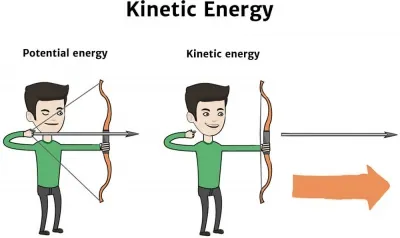
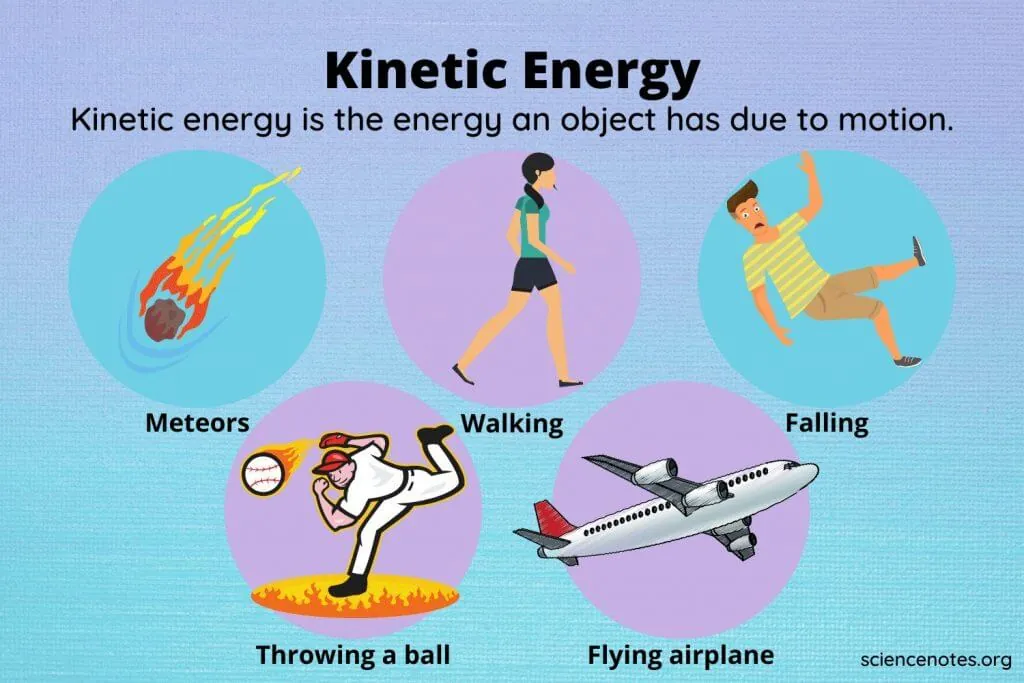
Kinetic energy is the energy of motion. Anything that moves has it, from a drifting leaf to a jet in flight. The heavier the object and the faster it goes, the more kinetic energy it holds. If the object stops moving, that energy doesn’t disappear — it changes into another form, such as heat or sound.
To calculate this force, multiply half the mass by the square of the velocity. This means speed is far more significant than weight. Doubling an object’s mass only doubles its energy, but doubling its speed quadruples it.
People often mistake kinetic energy for momentum, but they’re distinct. Momentum is a vector that accounts for direction, while kinetic energy is a scalar value. If you’re designing a safety barrier, use kinetic energy to determine the total work required to stop the object. Use momentum if you need to calculate how far an object will slide or bounce after contact.
If you’re dealing with a rotating object, remember that the energy is stored in the spin. A spinning flywheel holds energy even when its center of mass remains perfectly still.
Why objects carry kinetic energy
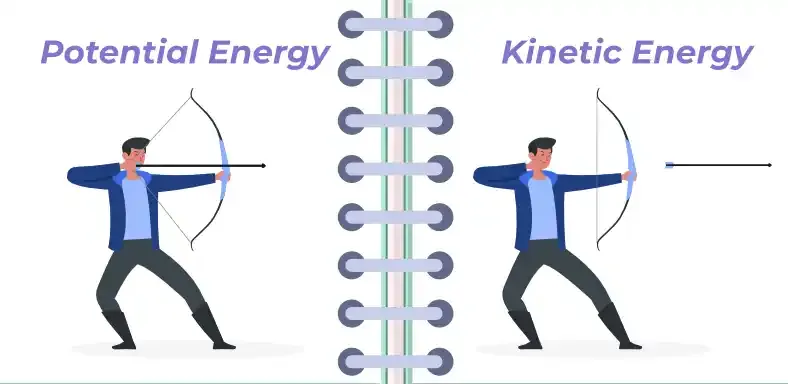
Energy can’t be created or destroyed; it only changes form. When a force pushes an object and makes it speed up, work is done on that object. That work becomes kinetic energy stored in the object’s motion. The object keeps this energy as long as it keeps moving at the same speed and direction.
The amount depends on two things: mass and speed. Speed matters far more than mass because it enters the calculation squared. Doubling an object’s mass doubles its kinetic energy, but doubling its speed makes it four times as great. This is why a small, fast object can hit harder than a large, slow one.
If you’re trying to minimize impact damage, focus on reducing velocity rather than weight. A driver slowing from 60 to 30 mph reduces the kinetic energy of the car by a factor of four, not two.
Kinetic energy is measured in joules, the same unit used for all forms of energy. You can read the value off a physics formula or measure it with the tools in a lab. The exact number depends on the object’s mass and speed, so check those two figures before calculating. Always convert mass to kilograms and speed to meters per second to ensure your result is in standard joules.
When kinetic energy changes
| Situation | What changes | What to do instead |
|---|---|---|
| Object slows down | Speed drops | Use the lower speed in the formula |
| Object speeds up | Speed rises | Use the higher speed |
| Mass changes | Mass rises or falls | Use the new mass |
| Object stops | Speed reaches zero | Kinetic energy reaches zero |
| Object hits something | Motion turns into heat or sound | Track where the energy went |
Doubling the speed quadruples the kinetic energy because velocity is squared in the equation. Halving the speed cuts it to one quarter. People often forget this and assume a car going sixty needs twice the braking distance of one going thirty. It actually needs four times the distance. That mistake costs lives on highways every year.
A rocket burning fuel gets lighter as it climbs, so its mass drops continuously during flight. You can’t plug the launch weight into the formula and expect an accurate answer at altitude. You must use the mass the rocket has at the exact moment you’re measuring.
When an object hits a wall, the energy doesn’t vanish. It becomes heat in the metal or sound waves traveling through the air.
How to calculate kinetic energy
Find the object’s mass in kilograms using a scale or the manufacturer’s specifications. If you’re working with grams, divide by 1,000 first to ensure your final output is in standard joules.
Measure the object’s speed in meters per second with a speedometer or timing tool. If your data is in miles per hour, multiply by 0.447 to reach the correct metric unit.
Square the speed by multiplying the number by itself. Beginners often mistake this for multiplying by two, which leads to a massive underestimation of energy. Because speed is squared, doubling your velocity actually quadruples the resulting kinetic energy.
Multiply the mass by the squared speed. Finally, divide that result by two to get the energy in joules.
Always verify your units before trusting the number. If you use kilometers per hour instead of meters per second, your result will be off by a factor of 3.6 squared. Use this simple rule: if the object is stationary, your result must be zero. If you calculate a positive value for a parked car, you have likely swapped your mass and velocity variables.
Mistakes people make with kinetic energy
Treating mass and speed as equally important leads to dangerous miscalculations because speed changes the result far more due to being squared. Doubling the mass merely doubles the energy, yet doubling the speed quadruples it instantly. A heavy truck moving slowly often carries less destructive force than a light car speeding down the highway, a distinction that matters when judging stopping distances or impact severity.
Forgetting to square the speed before multiplying cuts the answer far short of the real value, creating a false sense of security. If you calculate energy for a vehicle at thirty meters per second but omit the squaring step, your final number will be thirty times too small. This specific arithmetic error causes engineers to underdesign barriers and drivers to misjudge the space needed to halt safely on wet roads.
Using grams or miles per hour instead of kilograms and meters per second guarantees a wrong number because the standard formula demands strict metric consistency. Plugging in miles per hour without conversion inflates the result by a factor of nearly two thousand, while using grams shrinks it by one thousand. Always convert your measurements to the base units first; if your data comes from a US speedometer or a kitchen scale, pause and translate before computing.
Assuming a stopped object still holds kinetic energy ignores the fundamental rule that motion defines this specific form of power. Once an object halts, its kinetic energy drops precisely to zero, having transformed entirely into heat, sound, or deformation damage during the stop. Believing residual kinetic energy remains after a crash might lead someone to approach a wrecked vehicle unnecessarily cautiously about movement, or conversely, to misunderstand where the dissipated heat actually went.
Related guides
- How Compressed Air Energy Storage Works: A Simple Guide
- LG Washer Stuck on Spin Cycle: Simple Fixes for UE Errors
Frequently asked questions
Can an object have kinetic energy while sitting still?
No. An object at rest has zero kinetic energy because its speed is zero. It may hold stored energy, such as a compressed spring or a raised weight, but that’s potential energy, not kinetic.
How long does kinetic energy last?
It lasts only as long as the object keeps moving. Friction, air resistance, and collisions turn motion into heat and sound, so the energy drains away unless something keeps pushing the object.
Is kinetic energy dangerous?
Yes, when the object is heavy or fast enough. A car at highway speed holds enough kinetic energy to cause serious damage in a crash, which is why speed limits exist.
What happens to kinetic energy in a crash?
It changes into other forms, mainly heat, sound, and the energy used to bend or break materials. The total energy stays the same, but the motion is gone.
Does it matter which direction the object moves?
No. Kinetic energy depends on speed, not direction. An object moving north at ten meters per second holds the same kinetic energy as one moving south at the same speed.
Conclusion
Kinetic energy is a real, measurable quantity — not just a description of movement. If you need the exact number for a specific object, find its mass and speed first, then apply the formula. Everything else follows from those two figures.
