
A heat recovery boiler works by capturing waste thermal energy from industrial exhaust gases to generate steam or hot water, and its benefits include lower fuel consumption and reduced carbon emissions. This equipment acts like a thermal sponge, soaking up heat that would otherwise vanish into the sky. By recycling this energy, a facility turns a costly waste stream into a useful energy source for its own operations.
Components of heat recovery systems
| Part or input | What it does | What you notice when it goes wrong |
|---|---|---|
| Exhaust gas | Provides heat energy | Temperature drops below expected levels |
| Heat exchanger | Transfers energy to water | Reduced steam output or leaks |
| Feedwater pump | Supplies water to system | Low water pressure or alarms |
| Steam drum | Separates steam from water | Unstable water levels in sight |
| Control valves | Manages flow and pressure | Fluctuating output or system noise |
Check your specific equipment documentation or the manufacturer’s plate for individual component pressure ratings. If you notice persistent leaks or unusual vibrations, consult a certified mechanical technician immediately.
Scale your maintenance based on the system’s duty cycle. If you operate intermittently, prioritize checking the feedwater pump for mineral buildup during each startup sequence.
Many operators mistake minor valve chatter for normal mechanical operation. This error often masks internal seat wear, which eventually leads to a complete bypass failure. If the noise persists after you adjust the setpoint, replace the valve internals before the pressure drop compromises your steam quality.
Determine your system’s state by monitoring the temperature differential across the heat exchanger. If the delta drops by more than 15 percent, you likely have internal scaling. In this case, schedule a chemical cleaning rather than simply increasing the exhaust flow.
Process of recovering waste heat
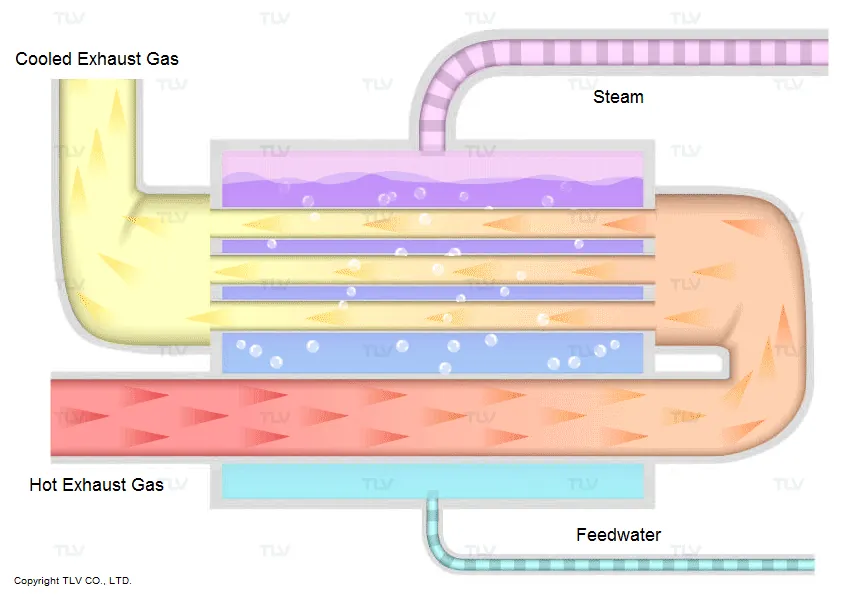
- Hot exhaust gases from a primary process enter the inlet duct of the boiler unit, typically traveling at speeds between 50 and 100 feet per second.
- These gases pass over a series of tubes filled with water, which absorbs the thermal energy through the metal walls of the heat exchanger pipes.
- The water inside the tubes heats up rapidly, reaching the saturation temperature required for the system’s design pressure, often between 150 and 300 psi.
- As the water boils, it transforms into steam, which rises into the steam drum for separation from any remaining liquid droplets to ensure high-quality output.
- The cooled exhaust gas exits the stack at a much lower temperature than it entered, having shed a large portion of its thermal energy into the water.
- The generated steam is then piped to other parts of the facility for heating or process use, completing the cycle of energy recovery and reuse.
Efficiency and operational impact
The primary reason to install this technology is to improve fuel economy by reusing energy that’s already paid for. When a burner creates heat for a furnace or gas turbine, a large portion of that energy leaves through the exhaust stack. By adding a recovery unit, you capture this wasted energy to generate steam without burning extra fuel. This process directly lowers the total fuel bill for the facility.
If you have a high-temperature exhaust flow, you can generate significant amounts of high-pressure steam; if your exhaust is low-temperature, you might only generate warm water for building heating. This trade-off means that not every exhaust stream is suitable for high-pressure steam generation.
A common mistake is failing to monitor the exhaust gas temperature, which leads to acid condensation and corrosion inside the boiler tubes. This costs thousands in repairs and downtime. You must keep the exhaust temperature above the dew point of the acid gases to prevent rapid metal degradation. Always check your site-specific gas analysis to determine the safe minimum operating temperature for your particular fuel source.
Control and design limits
Things you control
- The rate of feedwater flow into the boiler.
- The set point for steam pressure and temperature.
- Routine cleaning of heat exchanger surfaces.
- Periodic water chemistry testing and treatment.
Limits of design
- The total volume and temperature of exhaust gas.
- The physical dimensions of the heat exchanger.
- The metallurgical limits of the boiler tubes.
Any work involving the pressure boundary requires a licensed professional. Don’t attempt to modify safety valves or weld on pressure vessels yourself, as this creates a risk of catastrophic failure or legal liability.
Habits for better performance
Consistent performance depends on keeping the heat transfer surfaces clean and the water chemistry balanced. If you notice a steady decline in steam production while the exhaust temperature remains high, it’s likely that soot or scale has built up on the tubes.
Cleaning these surfaces once or twice a year, depending on your fuel type, restores the original heat transfer rate. You should also monitor your feedwater quality daily. High mineral content leads to scale formation, which acts as an insulator and blocks heat transfer.
If your system uses a bypass damper, verify it operates correctly every month to ensure gas flow is directed properly when the boiler is offline. Following the manufacturer’s maintenance schedule for inspection and testing will keep your equipment running safely for its expected lifespan. Always keep a log of pressures and temperatures to spot small changes before they become major problems.
Related guides
Frequently asked questions
Can a heat recovery boiler work with any exhaust gas?
No, the suitability depends on the temperature and chemical makeup of the exhaust gas. High-sulfur fuels create acidic gases that corrode standard steel tubes if the exhaust temperature drops too low. Check the manufacturer’s technical specifications for your specific unit to find the minimum allowable exhaust temperature for your fuel type.
How long does a heat recovery boiler last?
A well-maintained unit typically lasts for a significant duration depending on the operating environment and water quality. The lifespan is determined by the rate of corrosion on the tubes and the frequency of thermal cycling. Consult your maintenance manual for the specific inspection intervals required to reach this service life.
Is it safe to operate the boiler while the main process is off?
No, most heat recovery boilers require the flow of exhaust gas from the primary process to generate steam. Without the heat input from the exhaust, the boiler can’t produce steam effectively. If you need steam during downtime, you must use a separate auxiliary boiler system designed for that purpose.
How much fuel does this save?
Fuel savings usually range from 10% to 30% of total facility energy usage, depending on the heat recovery system’s efficiency. The exact percentage depends on the temperature difference between the exhaust gas and the feedwater. You can calculate your specific savings by measuring the energy content of the steam generated versus your fuel costs.
What happens if the water level gets too low?
Low water levels lead to overheating of the boiler tubes, which can cause them to rupture or melt. Modern systems include automatic low-water cutoffs that shut down the process to prevent damage. Always verify these safety switches are tested according to the intervals listed in your operator’s manual for reliable protection.
Does it matter if the exhaust gas is dusty?
Yes, dust and particulates build up on the tube surfaces and block heat transfer. This accumulation reduces efficiency and can eventually block the flow of gas entirely. You must implement a cleaning schedule, such as soot blowing or manual brushing, based on the particulate levels found in your specific exhaust stream.
How often should I test the water quality?
Water quality testing should be performed daily to prevent scale and corrosion. The specific chemical limits for your system are found in the manufacturer’s water treatment guidelines. Failure to maintain these levels causes rapid degradation of the internal components and voids most equipment warranties.
Conclusion
Proper maintenance of your heat recovery boiler ensures that you continue to capture maximum energy from your exhaust stream. By tracking your daily performance numbers against the baseline values provided by the manufacturer, you can keep your system operating at peak efficiency for many years.

1 thought on “How a Heat Recovery Boiler Works and Its Key Benefits”