
When your laundry is sitting in a pool of standing water because your Whirlpool washer spin cycle not working, it’s easy to feel frustrated and overwhelmed by the prospect of a major repair. Before you call a professional, it’s important to know that many common spin issues stem from minor imbalances, sensor glitches, or simple drainage obstructions that you can address yourself. Understanding how your machine operates is the first step toward restoring functionality.
Key Takeaways

- Check for an unbalanced load first, as this is the most common cause of spin failure.
- Inspect the drain pump filter for debris like coins, buttons, or hair ties that block water exit.
- Ensure the lid switch or door latch is fully engaging to signal the machine to spin.
- Verify the drive belt isn’t snapped or slipping if the motor hums but the drum remains still.
- Perform a factory reset by unplugging the unit for five minutes to clear electronic control board errors.
Safety: Inside a mains-powered machine, the parts behind the outer cover can hold a dangerous electrical charge even after it has been unplugged — that’s why they sit behind a cover. Opening the housing, or testing or replacing anything behind it, is a job for a qualified technician, never a home repair.
Identifying Common Spin Cycle Issues
Most modern Whirlpool machines use a series of sensors to determine if the drum is safe to rotate at high speeds. If the machine detects a problem, it will intentionally disable the spin cycle to prevent damage to the drum or the motor.
This is a safety feature, not necessarily a sign of a catastrophic failure. Common culprits include items caught in the drain pump, a worn-out drive belt, or a malfunctioning lid sensor that fails to register that the machine is closed.
| Component | Function | Potential Failure Sign |
|---|---|---|
| Drain Pump | Pushes water out | Humming noise or standing water |
| Lid Switch | Signals closure | “Lid” error code or no agitation |
| Drive Belt | Rotates the drum | Motor runs but drum stays still |
| Door Lock | Secures the drum | Clicking sound or locked door |
| Control Board | Processes commands | Unresponsive buttons or cycles |
Is Your Load Unbalanced?
The most frequent reason for a spin failure is an uneven distribution of clothing inside the drum. When heavy items like towels, rugs, or jeans bunch up on one side, the machine’s internal sensors detect the wobble. To prevent the machine from “walking” across the floor or damaging the suspension, it will refuse to enter the high-speed spin cycle. If the machine attempts to spin and stops repeatedly, it’s likely trying to redistribute the load and failing.
To resolve this, pause the cycle, open the lid, and manually rearrange the items. Ensure that you have a mix of heavy and light items rather than a single heavy blanket. If you’re washing a single large item, add a few smaller towels to help balance the center of gravity.
Testing the Lid Switch
A Whirlpool washer won’t spin if it believes the door is open. The lid switch is a small safety component that triggers a signal to the main control board when the lid is securely closed. If this switch is broken, loose, or covered in soap residue, the machine will remain in a “pause” state. You can often hear a distinct “click” when the lid closes. If you hear silence, the switch may be faulty.
- Inspect the switch for visible damage or broken plastic tabs.
- Clean the area around the switch with a damp cloth to remove built-up detergent.
Why Is Water Not Draining?
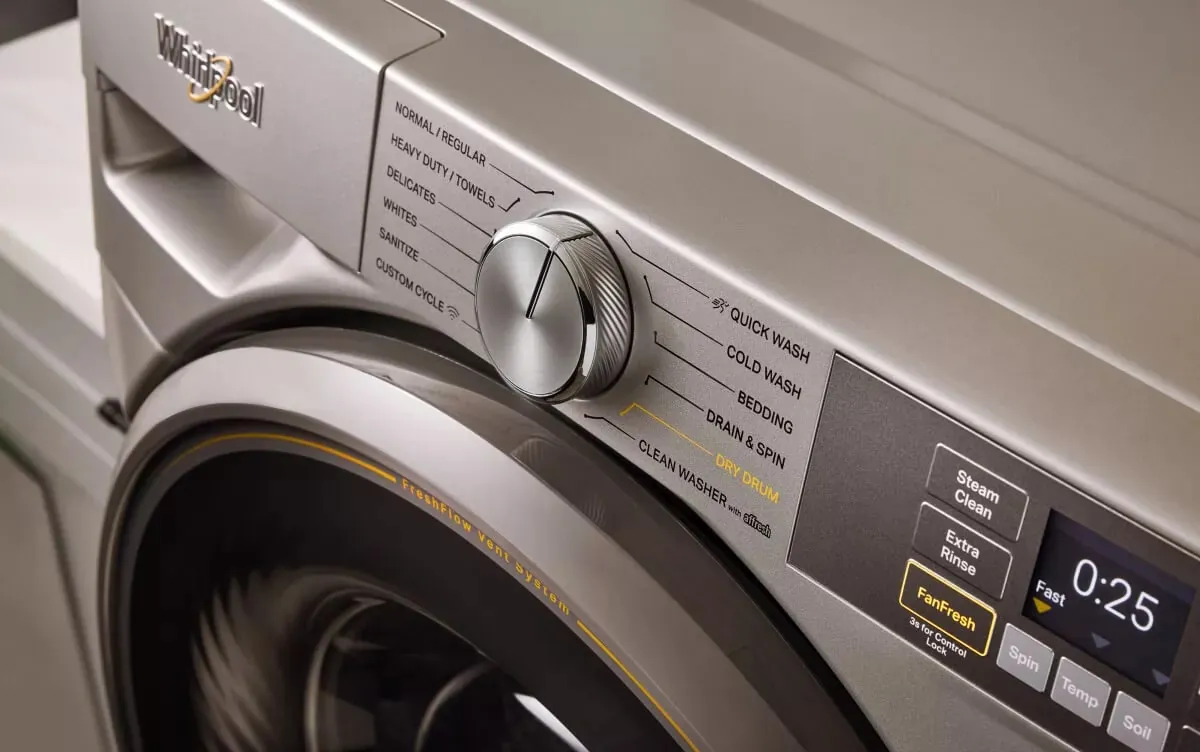
Your washer won’t spin if the tub is still filled with water. The spin cycle is designed to extract moisture, not to act as a sump pump. If the drain pump is clogged, the water level sensor will tell the machine to wait. You should inspect the drain hose for kinks or blockages. If the hose is clear, the drain pump filter is the next place to look.
Warning: Always unplug the washing machine from the power outlet and shut off the water supply valves before attempting to open the drain pump filter to avoid electrical shock or water damage to your floor.
Cleaning the Drain Pump Filter
The drain pump filter is typically located behind a small panel at the bottom front of the machine. Keep a shallow pan or a towel ready, as residual water will spill out when you remove the filter cap. Once open, clear away any debris.
Inspecting the Drive Belt
If you hear the motor running but the drum doesn’t turn, the drive belt may have snapped or slipped off the pulley. This component connects the motor to the drum, transmitting the rotational force required for the spin cycle. Over time, these belts can stretch, crack, or fray. If you notice a burning rubber smell or a high-pitched squealing sound during the wash cycle, the belt is likely the source of the issue.
- Remove the back or bottom access panel of the washer.
- Look for the belt looped around the motor shaft and the large tub pulley.
- Check for cracks, missing teeth, or signs of dry rot.
- If the belt is loose, it can often be tensioned or replaced with a manufacturer-approved part.
Resetting the Control Board
Sometimes, the machine’s electronic control board experiences a software glitch that prevents it from advancing to the spin phase. This is common after a power surge or an interrupted cycle. A hard reset can often clear the memory and restore normal operation.
To perform a reset, unplug the washer from the wall outlet and wait for at least five minutes to allow the capacitors to discharge completely. Plug the machine back in and run a “Drain and Spin” cycle to see if the issue persists.
How Much Does a Repair Cost?
The cost of fixing a spin issue depends heavily on whether you perform the repair yourself or hire a professional. If you decide to DIY, you’re only paying for parts, which typically range from $20 to $150. If you hire a service technician, expect to pay for a diagnostic fee plus labor.
| Service Option | Typical Low Price | Typical High Price |
|---|---|---|
| DIY Part Replacement | $20 | $150 |
| Professional Labor | $100 | $350 |
| Total Repair Cost | $120 | $500 |
Checking the Motor and Coupler
In some direct-drive Whirlpool models, a motor coupler is used instead of a belt. This plastic component connects the motor to the transmission. If the machine is overloaded frequently, the plastic can shear, causing the motor to spin without turning the transmission. This is a common failure point that requires removing the motor assembly to inspect. If the plastic teeth on the coupler are rounded or broken, the part must be replaced to restore the spin function.
Addressing Drive Motor Failures
If you have confirmed that the belt is intact and the coupler is functioning, the drive motor itself might be the issue. While less common than belt or sensor failures, a motor can burn out, especially in older machines that have endured years of heavy use. Signs of a failing motor include a loud humming sound with no movement, a blown thermal fuse, or a motor that smells like ozone.
- Check for loose wiring connections leading to the motor.
- Listen for a “buzzing” sound that indicates the motor is struggling to start.
- Consult the service manual for your specific model number to perform a voltage test.
Frequently Asked Questions
Why does my washer stop before the spin cycle starts?
The machine likely detects an imbalance or a communication error. If the load is too heavy or shifted to one side, the sensor prevents the high-speed spin to protect the internal components. Alternatively, if the water didn’t drain completely during the rinse phase, the control board will refuse to initiate the spin to prevent the drum from becoming unstable.
How do I manually drain my Whirlpool washer?
Locate the drain hose at the back of the unit and lower it into a bucket placed on the floor. Gravity should pull the water out of the drum. If the water doesn’t flow, there’s a blockage in the drain pump or the hose itself. Ensure the hose isn’t kinked behind the machine before attempting to manually clear the drain line.
Can a bad lid switch be bypassed?
While it’s technically possible to bypass a lid switch, it’s extremely dangerous and highly discouraged. The switch is a critical safety mechanism designed to prevent you from reaching into a spinning drum. Bypassing it can lead to severe injury or death. Always replace a faulty switch with the correct part specified for your particular Whirlpool model to maintain safety standards.
Will a power surge cause a spin failure?
Yes, a power surge can corrupt the firmware on the washer’s control board, causing it to freeze or skip cycles. If your machine acts erratically after a storm or a power outage, perform a hard reset by unplugging the unit for several minutes. If the problem persists, the control board may have sustained permanent damage and might require a complete replacement by a qualified technician.
How long should a Whirlpool washer last?
A well-maintained Whirlpool washing machine typically lasts between 8 and 12 years. Factors such as the frequency of use, the hardness of your local water supply, and whether you regularly clean the filters and leave the door open between cycles will significantly influence its lifespan. Keeping the exterior and interior clean and avoiding chronic overloading will help you get the most value out of your appliance.
Conclusion
The most effective way to determine if your machine needs professional service is to perform a drain and spin test after checking for blockages. If the machine still refuses to rotate after you have cleared the filter and confirmed the load is balanced, inspect the drive belt for wear. If the belt is intact, consider contacting an authorized service technician to diagnose potential control board or motor failures.
