
Choosing between a heat pump vs gas water heater depends on your local energy costs and how much you want to save on monthly bills. Most homeowners save more money over time with a heat pump, but a gas model is faster at heating water when you have a large family using multiple showers at once. If your home already has natural gas lines and you live in a cold climate, a gas unit is often the easier choice.
Comparing water heating technologies
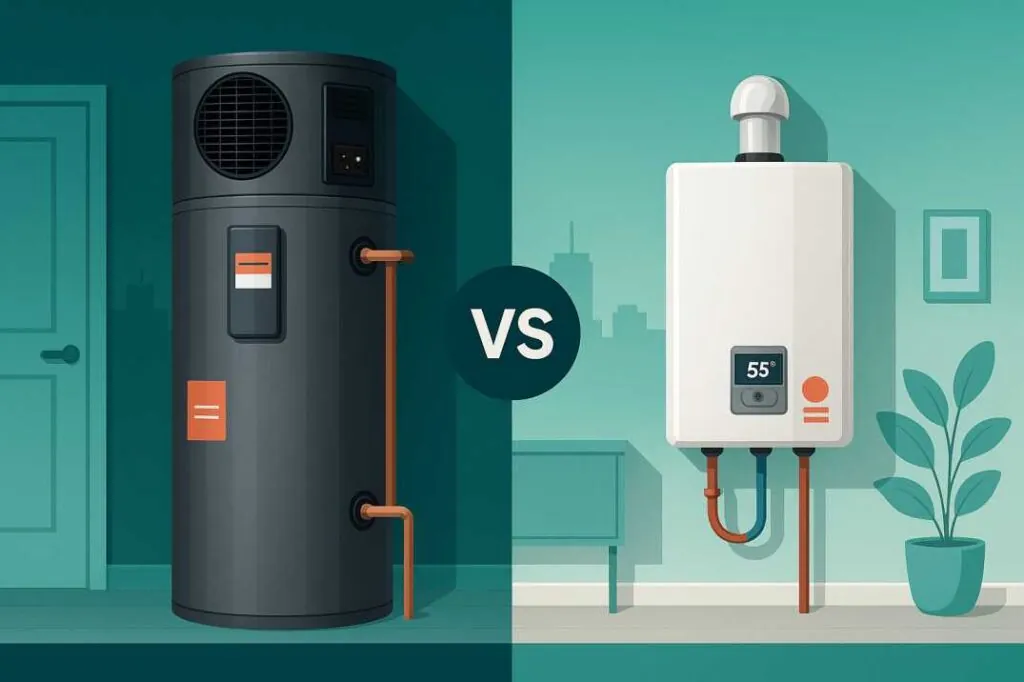
You should look at your current setup before deciding. If you already have gas lines, keeping them is cheaper than adding electric wiring. If you’re building a new home, you can choose the best system for your specific needs.
| Method | How long | Effort | Cost | Best for |
|---|---|---|---|---|
| Heat pump | Long | Medium | High | Saving energy |
| Gas tank | Short | Low | Medium | Large families |
| Gas tankless | Very short | Medium | High | Endless water |
The upfront cost for a heat pump is higher, but the monthly energy usage is significantly lower in most regions. For a gas tankless unit, you get constant hot water, but it requires a larger gas line to function correctly.
Heat pump water heaters
These units pull heat from the air around them to warm your water. They act like a refrigerator running in reverse, transferring ambient thermal energy into your tank rather than generating it through resistance heating.
Install the unit in a room with at least 1,000 cubic feet of space. If you place the heater in a cramped closet, the unit will quickly exhaust the available warmth and cycle into inefficient backup mode.
Connect the cold water supply and the hot water outlet. Ensure you include a drain pan beneath the tank, as these units naturally condense moisture from the air during operation.
Have a licensed electrician hardwire the unit to a dedicated circuit. Verify your circuit breaker is rated for the specific amperage listed on the manufacturer’s data plate, as undersized wiring will cause frequent tripping.
Set the desired temperature on the digital display. Aim for 120 degrees Fahrenheit to balance energy savings with safety, as higher settings increase the risk of scalding.
Heat pumps cut water heating bills by more than half compared to standard electric tanks. However, they’re noisy and require significant clearance for airflow.
If your installation site consistently drops below 40 degrees Fahrenheit, the heat pump will struggle to function. In these cold climates, choose a hybrid model that includes traditional electric elements to ensure you never run out of hot water during winter months.
Standard gas water heaters
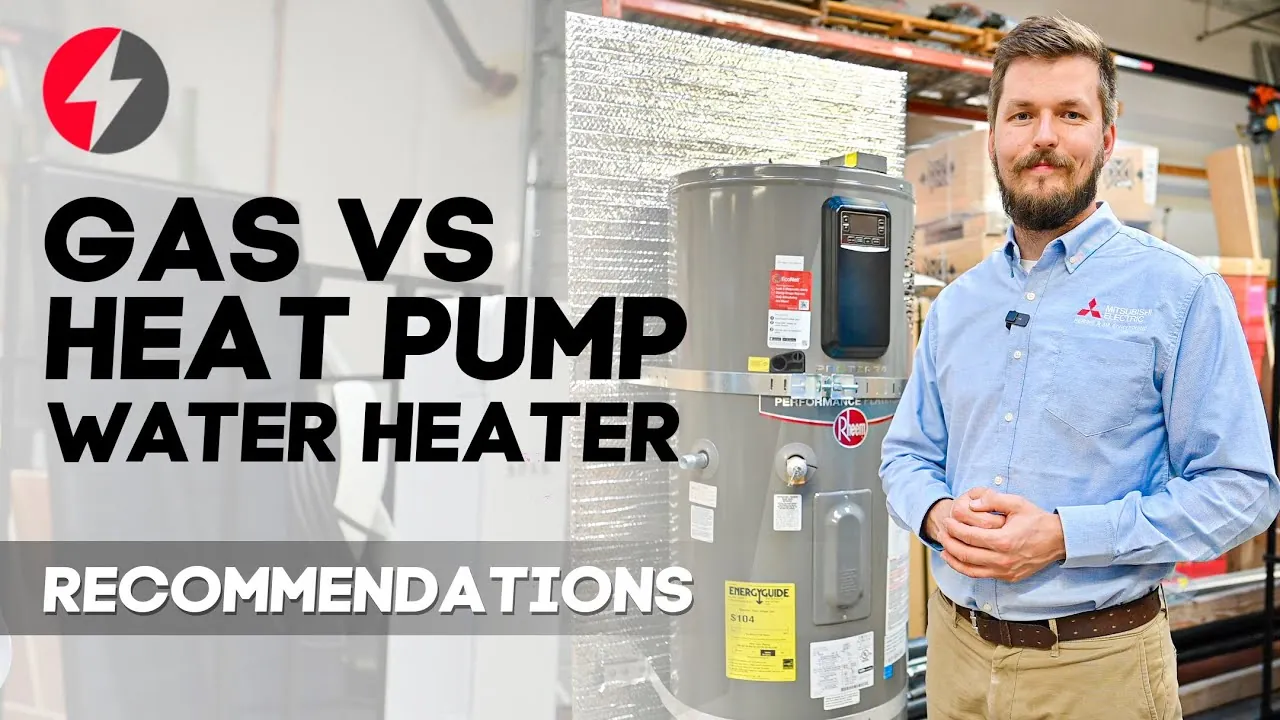
These systems use a burner at the bottom of the tank to heat water directly. They’re simple, reliable, and work even if your power goes out.
- Connect the gas supply line to the burner control valve.
- Attach the water pipes to the tank inlets.
- Ensure the exhaust vent is connected to an outside chimney.
- Light the pilot light according to the manufacturer’s manual.
Gas heaters heat water quickly and cost less to buy than heat pumps. If your household uses more than 60 gallons of hot water daily, the recovery rate of a gas unit prevents the cold-shower scenarios common with electric tanks. However, they waste energy through the flue, even when you aren’t using hot water.
A common mistake is installing these units in small, unventilated closets. This restricts combustion air, which forces the burner to produce soot and increases the risk of carbon monoxide accumulation. If your water heater is in a confined space, you must install louvered doors or dedicated air intake vents to ensure safe operation.
You must have a professional check the gas connections and venting once a year to prevent leaks. If you notice a yellow flame rather than a crisp blue one, the burner isn’t receiving enough oxygen. Stop using the unit immediately and call a technician. Proper maintenance extends the tank life by roughly five years, saving you the cost of premature replacement.
Gas tankless water heaters
These units heat water only when you turn the tap on. They don’t have a storage tank, so they never run out of hot water.
Mount the unit on a wall near a gas line. Connect the cold water intake and hot water output. Install the specific venting required for your model. Set the temperature on the control panel.
Tankless units are perfect for homes where space is limited. They save energy because they don’t keep a tank of water hot all day. The main downside is that they can only heat a certain amount of water at once. If you run the dishwasher and two showers at the same time, the water might get cold.
Check your home’s flow rate requirements before you buy. If you live in a cold climate, your unit must work harder to raise the incoming groundwater temperature. A standard unit might struggle to keep up if your groundwater is below 50 degrees Fahrenheit. In these regions, choose a model with a higher BTU rating to ensure consistent heat.
Most homeowners make the mistake of choosing a unit based on the number of bathrooms rather than the total flow rate. If your household uses more than three fixtures simultaneously, you need a unit capable of at least 7 gallons per minute. Without this capacity, you’ll face lukewarm showers during peak morning hours.
Which water heater is right for you?
When you’re in a hurry to get a replacement, a gas tank heater is usually the fastest to install because the plumbing and venting are already in place. If you’re doing this for the first time, hire a licensed plumber to handle the gas or electrical work. This ensures the unit passes local building codes and keeps your home insurance policy valid.
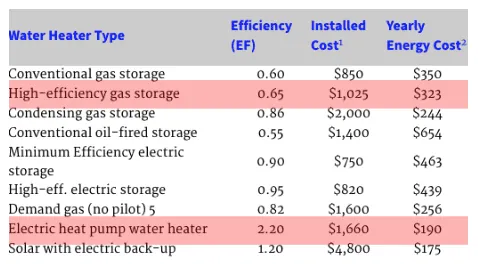
If you want the best possible result regardless of upfront costs, a heat pump is the winner for long-term savings. These units can reduce your water heating energy consumption by up to 60 percent compared to standard electric models.
The trade-off is between the low purchase price of gas and the low operating costs of a heat pump. A gas heater is a set-it-and-forget-it device that works reliably during power outages. A heat pump, however, acts like a refrigerator in reverse and requires space for air circulation.
If your home lacks a 240-volt outlet near the tank, the cost of an electrician can be a significant addition to your installation bill. In that case, gas remains the more affordable choice. If you live in a climate where temperatures stay below 40 degrees Fahrenheit for most of the winter, a heat pump will struggle to pull heat from the air, making a gas or hybrid unit a much smarter investment.
The rules that apply to all heaters
Regardless of the system you pick, safety and maintenance are the most important parts of ownership. You should always follow the ENERGY STAR water heater guidelines to ensure your unit is installed correctly and safely. Most manufacturers require an annual flush of the tank to remove mineral buildup, which helps the heater last longer.
If you live in an area with hard water, flush your tank based on your usage and consult the owner’s manual for the correct frequency. Scale buildup acts as an insulator, reducing heat transfer efficiency and increasing the energy required to heat the water. This extra strain often leads to premature tank failure or a sudden spike in your utility bills.
Check your local building codes before you buy anything. Some cities require specific venting or earthquake straps for gas units. If you’re working with gas lines, don’t attempt the installation yourself; hire a certified professional to avoid the risk of fire or gas leaks.
Always keep the area around your heater clear of boxes, paint, or flammable materials to prevent accidents. Ensure there’s at least 18 inches of clearance on all sides for proper airflow. If your unit is in a closet, verify that the door vents remain unobstructed. Blocking these vents can cause carbon monoxide to build up inside your home.
Related guides
- 10 Best Programmable Space Heaters for Efficient Home Heating
- Best Electric Heaters for Tent Camping (10 Top Picks) in 2026
Frequently asked questions
How long does a water heater last?
Most water heaters last between 8 and 12 years if you maintain them. You can extend this time by flushing the tank periodically to remove sediment. If you live in an area with hard water, the minerals will shorten the life of your unit faster than in areas with soft water. Check your owner’s manual for the specific maintenance schedule recommended for your model.
Is it safe to install a gas heater myself?
No, you should never attempt to install a gas water heater unless you’re a licensed professional. Improper gas connections can cause dangerous leaks or explosions, and incorrect venting can lead to carbon monoxide poisoning. Always hire a certified plumber or HVAC technician to ensure your installation meets all local safety codes and manufacturer requirements for your specific home.
How much space does a heat pump need?
A heat pump needs at least 1,000 cubic feet of air space to operate effectively. If you place it in a small, closed closet, it will run out of warm air and stop working correctly. It works best in a large basement or a garage that stays above 40 degrees Fahrenheit. If your space is smaller, you might need to install air ducts to bring in fresh air.
Why does my water heater make noise?
Noise in a water heater is usually caused by sediment buildup at the bottom of the tank. When the water gets hot, the trapped air bubbles under the mineral layer make a popping or rumbling sound. You can fix this by flushing the tank to drain out the sediment. If the sound continues, it might be a sign that the heating element or burner is failing.
What happens if the power goes out with a heat pump?
If the power goes out, your heat pump will stop heating water immediately. Unlike a gas tank heater, which can often run without electricity, a heat pump requires a constant power supply to run its compressor and fan. Once the power returns, the unit will turn back on automatically and start heating the water in the tank.
How often should I flush my water heater?
You should flush your water heater based on your usage and consult the owner’s manual for the correct frequency. This removes the mineral deposits that collect at the bottom of the tank. If you have very hard water in your area, you might need to flush it more often to keep it running efficiently. This simple task prevents the tank from overheating and saves you money on your monthly energy bills.
Conclusion
Ultimately, your decision comes down to your long-term goals and current home setup. You shouldn’t feel rushed, so take a moment to check your recent utility bills to see which fuel source is cheaper for you. Once you’ve compared those costs, you’ll be ready to pick the best system for your family’s needs.