
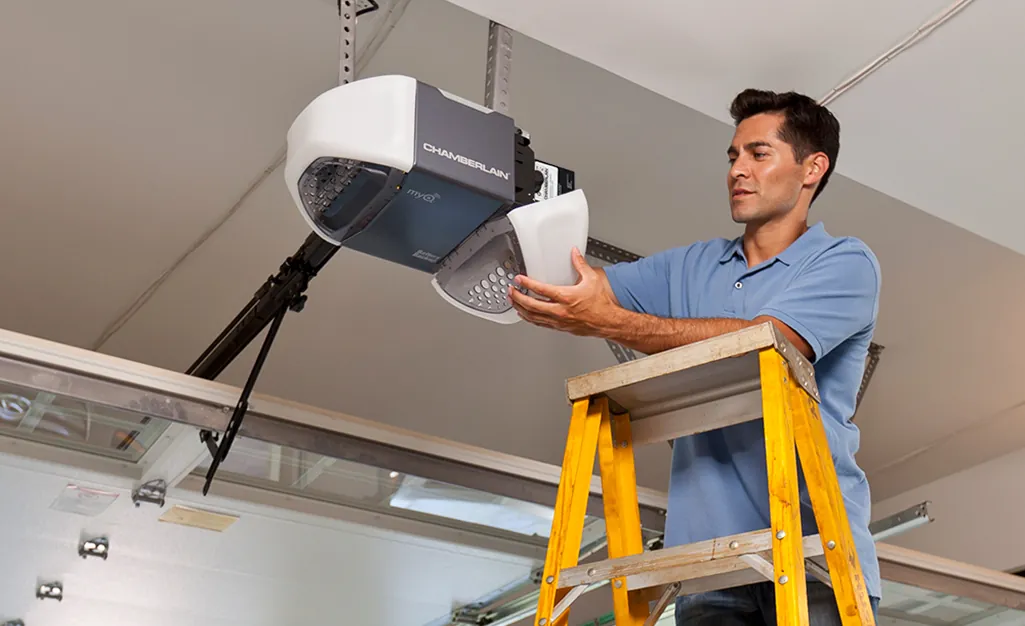
A dead battery in your remote or a blocked safety sensor is the most common reason for a chamberlain garage opener not working, affecting nearly every user at some point. You can usually confirm these issues by checking if the wall-mounted button still operates the door or if the safety sensor lights are blinking. If the wall button works but the remote does not, the battery is a likely culprit, though programming or signal issues are also possible. If the wall button also fails, you likely have a power supply issue or a logic board failure.
Why your Chamberlain garage opener isn’t working
| Cause | How common | How to confirm it | Fix it yourself? |
|---|---|---|---|
| Blocked safety sensors | Very common | Check for blinking lights | Yes |
| Dead remote battery | Very common | Try wall control button | Yes |
| Misaligned sensors | Common | Check sensor alignment | Yes |
| Power supply failure | Occasional | Check GFI outlet status | Yes |
| Logic board error | Rare | Reset the system | Yes |
| Broken drive gear | Rare | Listen for humming motor | No |
Most sensor issues stem from a simple obstruction, but if the lights blink even when the path is clear, check for spider webs or dust buildup on the lenses. A quick wipe with a dry cloth often restores the connection instantly.
If your remote fails, test the wall-mounted button first. If the door opens via the wall but not the remote, you’re dealing with a transmitter issue rather than a mechanical failure. Replace the coin-cell battery before assuming the remote itself is broken.
When the motor hums but the door refuses to budge, inspect the drive gear inside the housing. If you see white plastic shavings on the floor, the gear has stripped. This requires a professional replacement, as attempting to service the internal tension springs or motor gears yourself risks serious injury from high-tension components. Never ignore a grinding noise, as it signals imminent gear failure that could leave your door stuck permanently.
Blocked or dirty safety sensors
The safety sensors are located at the bottom of your garage door tracks. These sensors project an invisible infrared beam across the opening to prevent the door from closing on objects or people.
When this beam is interrupted by debris, boxes, or even a spider web, the system detects a blockage and stops the door from moving for safety reasons. You can identify this issue if the LED lights on your sensors are flickering or completely off instead of glowing steadily.
To fix this, first clear any items away from the door tracks that might be blocking the path. If the area is clear, use a soft, dry cloth to wipe the lenses of both sensors to remove dust or dirt. If the lights remain off or continue to blink after cleaning, check the wiring leading to the sensors for any loose connections. If the wires are intact but the sensors remain unresponsive, the sensors themselves may be faulty or misaligned.
If you’re wondering about the safety standards for these units, the Consumer Product Safety Commission mandates that automatic garage door openers must have an external entrapment protection system. This ensures the door reverses if it hits an object or if the beam is broken. If your sensors are cracked or the housing is damaged, you must replace the sensor pair entirely. Never attempt to bypass these sensors, as doing so removes a critical safety feature of your home.
Dead remote control batteries
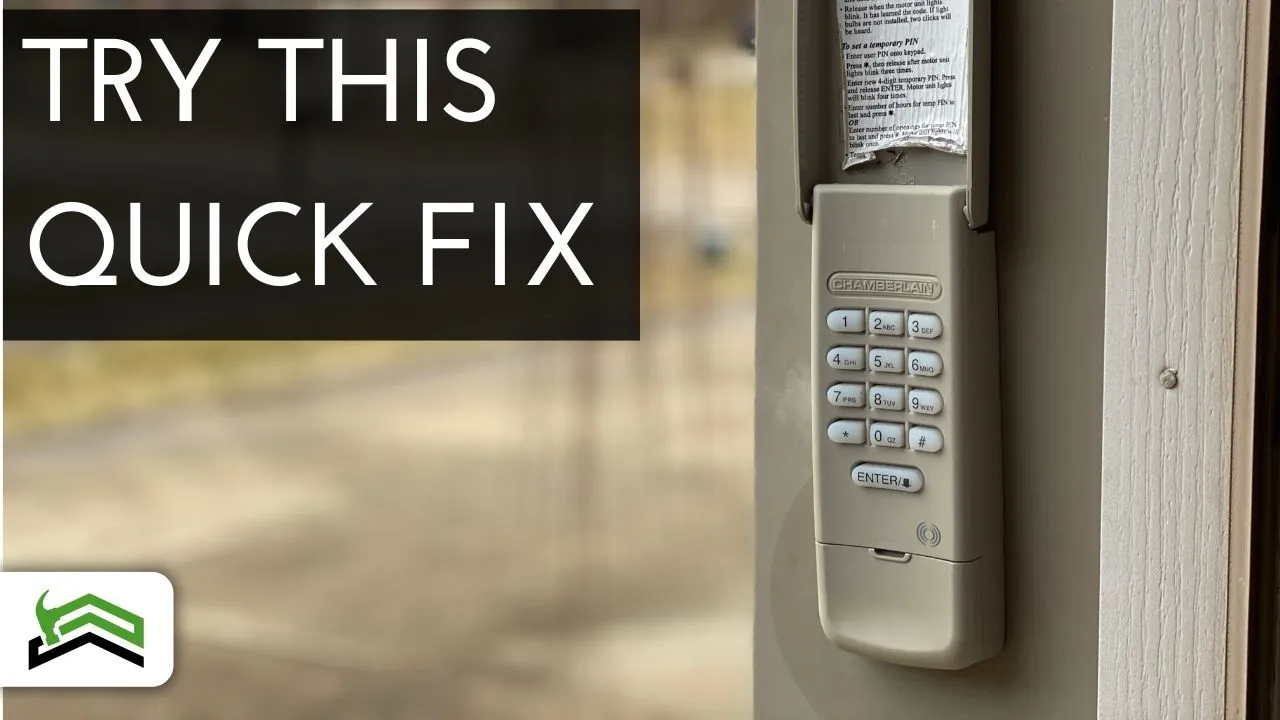
A remote that fails to trigger the door is often just running on low voltage. If your wall-mounted control panel works but your handheld remote does not, the remote battery is the most likely cause. This happens because remotes use small coin-cell batteries that lose power gradually over time. You can confirm this by testing a second remote; if the second one works, the battery in the first is definitely dead.
To replace the battery, slide the cover off the back of the remote. Most Chamberlain models use a 3-volt lithium coin battery, typically a CR2032 or CR2016. Check the back of your specific remote or the original manual to confirm the exact model number.
If you replace the battery and the remote still fails to respond, it might have lost its programming. You’ll need to press the “Learn” button on the motor unit and then the button on your remote to re-sync them.
If you have two remotes and neither works, replace the battery in just one to test if the problem is the battery or the remote itself. If the new battery doesn’t fix it, the remote may be damaged. If you find the remote works only when you’re standing right next to the motor unit, the antenna on the motor might be loose or the remote’s signal is being blocked by interference.
Power and wiring issues
Sometimes the problem isn’t with the sensors or the remote, but with the power supply to the motor unit itself. If your garage door opener is completely silent and the lights on the unit don’t turn on when you press the button, the unit is likely not getting electricity. Check your home’s circuit breaker to see if it has tripped or if the GFI outlet the opener is plugged into has been triggered.
To check the outlet, look for a reset button on the plug itself. If the outlet is working, ensure the power cord is pushed firmly into the socket. If you see a light on the motor unit but it still refuses to move, the logic board may have experienced a temporary glitch. You can often clear this by unplugging the unit from the power source for 60 seconds and then plugging it back in to reboot the system.
If the motor hums but the door doesn’t move, the internal drive gear may be stripped. This is a mechanical failure that occurs over time as the gear wears down from daily use. If you see white plastic shavings near the motor housing, this is a clear sign that the internal gear is failing. This is a major repair that requires specialized tools and technical experience, so you should contact a professional.
Rare mechanical and electrical failures
- Broken torsion springs: The door feels extremely heavy or won’t budge because the spring tension is gone.
- Worn drive belt or chain: The motor runs but the trolley doesn’t move, often caused by the belt slipping or snapping.
- Logic board malfunction: The unit acts erratically, such as opening on its own or failing to respond to any commands.
- Travel limit settings: The door stops before it hits the floor or reverses immediately, which requires a simple limit adjustment.
If you need to replace a major part like the logic board or the drive gear, a professional technician should handle the job. These repairs involve opening the motor housing, which carries risks of electrical shock and potential injury from tensioned parts. A certified garage door specialist has the training and the specific parts needed to restore your system safely and reliably.
What a fix usually involves
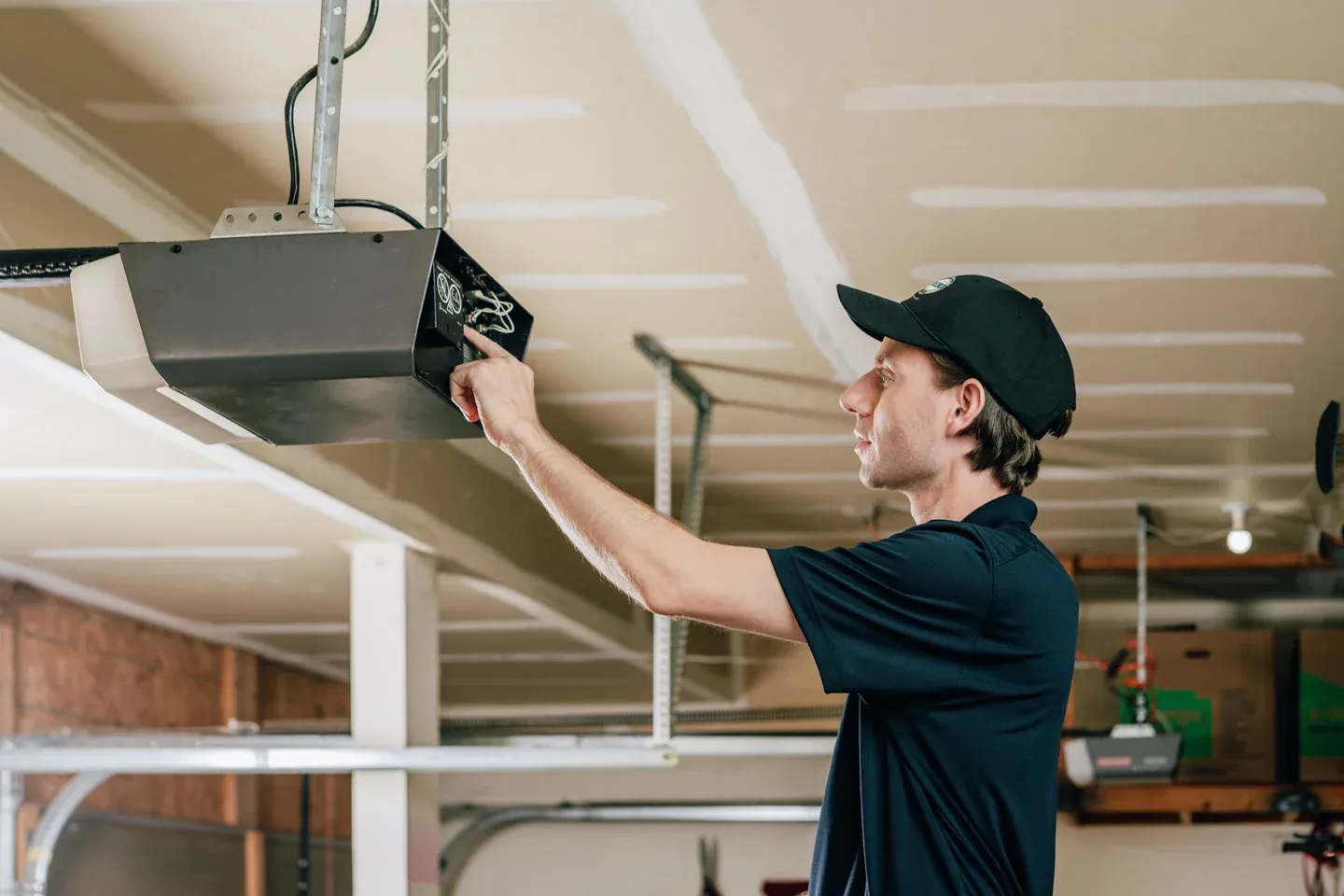
Fixing most garage door issues requires only simple tools you likely have at home, such as a screwdriver or a ladder. If you’re dealing with a battery swap, the cost is minimal—just the price of a small coin-cell battery. If you need to realign a sensor, it costs only your time to adjust the bracket until the light turns solid. These tasks are similar in effort to changing a lightbulb or tightening a loose cabinet handle.
However, if the issue is a broken drive gear or a failing logic board, the repair will cost significantly more. These parts are more expensive than batteries, and hiring a professional adds the cost of labor.
The final price depends on your specific model of garage door opener and the local labor rates in your area. You can get a clear quote by calling a local garage door company and providing them with your opener’s model number, which is usually printed on a sticker on the side of the motor unit.
Related guides
- Qardio App Not Working: Simple Fixes to Restore Syncing
- iTouchless Garbage Can Lid Not Working: Simple Battery Fixes
- Stop Freezer Building Up Frost With These Simple Fixes
Frequently Asked Questions
Can I fix my garage door opener myself?
Yes, you can fix common issues like dead batteries, blocked sensors, or simple alignment problems yourself. These tasks don’t require specialized tools and are safe for most homeowners to perform. If the problem involves internal motor parts, broken springs, or complex electrical wiring, you should stop and call a professional. Attempting these repairs without training can be dangerous and may void your warranty.
How do I know if my safety sensors are aligned?
You can confirm alignment by looking for a solid LED light on both the sending and receiving sensors. If the lights are blinking, the sensors are likely misaligned; if they’re off, there may be a power or wiring issue. Try gently adjusting the angle of the brackets until both lights stay on steadily. If the lights never turn solid, ensure there’s no direct sunlight hitting the receiving sensor, as this can sometimes interfere with the infrared beam.
Why does my garage door open by itself?
The door may open on its own due to a faulty wall button, a short in the wiring, or an accidental signal from a neighbor’s remote. Start by disconnecting the wall control wire from the motor unit to see if the problem stops. If it does, the wall button or the wire is the cause. If it continues, try clearing all programmed remotes and keypads from the motor unit’s memory.
How long should a garage door opener last?
A standard garage door opener typically lasts for a significant period with regular maintenance.
Is it safe to use the door if the sensors are broken?
No, it isn’t safe to use the door if the safety sensors are broken or bypassed. The sensors are a critical safety feature designed to prevent the door from crushing people or pets. If your sensors aren’t working, you must operate the door with extreme caution or keep it closed until you have replaced the faulty parts. Never disable this system to keep the door operational.
What happens if I unplug my garage door opener?
Unplugging your garage door opener will cut all power to the unit, causing it to stop responding to remotes or wall buttons. This is a safe way to perform a hard reset if the logic board is glitching. If your door has a battery backup, it may still operate for a short time after you unplug it, so be aware that the door might still be able to move.
Conclusion
If these quick fixes don’t get your door moving again, don’t hesitate to reach out to a local professional. Sometimes a deeper mechanical problem is to blame, and it’s better to have an expert take a look. You’ll be glad you didn’t spend all weekend wrestling with a stubborn motor.
