
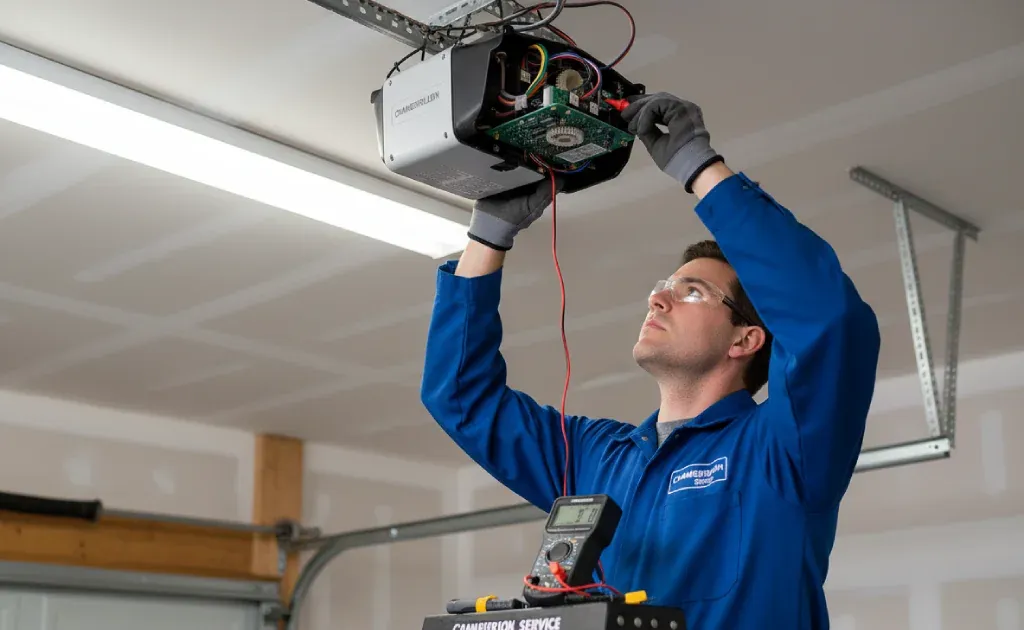
If your garage door won’t open or close properly, chamberlain garage door opener troubleshooting is often as simple as checking your power supply or clearing the safety sensors. The most frequent cause for a door that refuses to move or reverses immediately is a blocked or misaligned safety sensor. When these infrared beams are interrupted by debris or dirt, the system prevents the motor from running to ensure safety. You can usually fix this by cleaning the lenses or tightening the mounting brackets.
Why your garage door opener stops working
The main reason for a malfunctioning opener is a break in the safety path. These small sensors sit near the floor on both sides of your door track. They send an invisible beam of light across the opening.
If that light is blocked by a box, a spider web, or a misaligned bracket, the door won’t close because it “thinks” something is in the way. Always check the status light on the motor unit or the sensors themselves; a blinking light often indicates a communication error between these two components.
Another common cause is a power issue. If your unit is completely dead, check if the GFCI outlet has tripped or if a circuit breaker in your home panel has flipped. It’s also possible the wall-mounted control panel has been locked. Many models have a “Lock” button that prevents the door from moving when you use your remote. If this button is active, the wall light will blink, and your remotes won’t work until you disable the lock feature.
Finally, consider the age of your hardware. Over time, the internal gear assembly can wear down, or the force settings may need a small adjustment. If the door moves a few inches and then stops, the opener might detect too much resistance, prompting it to stop moving to prevent damage to the motor or the door structure.
Clear and align the safety sensors
This fix is for you if your door reverses immediately when you try to close it. First, look at the two sensors located at the base of your door tracks. One should have a steady green light, and the other should have a steady amber or green light, depending on your specific model.
If one light is off or flickering, the sensors aren’t communicating. Take a soft, dry cloth and wipe the glass lenses clean. If they’re dusty or covered in cobwebs, the infrared beam can’t bridge the gap.
Next, check the alignment of the brackets. If a sensor was bumped, it might be pointing toward the wall instead of its partner. Gently adjust the angle until the light on the sensor turns solid. If the bracket is loose, tighten the wingnut so it stays in place. If the door still refuses to close, ensure there are no items like bicycles or garden tools sitting in the path of the beam.
If you suspect a wiring issue, inspect the low-voltage wires running from the sensors to the motor unit. If a wire is frayed or disconnected, the system will fail. For safety reasons, don’t attempt to repair internal wiring inside the motor housing.
If the wiring is damaged, Chamberlain Group support provides specific guidance on how to identify and resolve these connections. If the sensors are damaged beyond simple cleaning, they must be replaced by a qualified technician to ensure the safety reversal system functions correctly.
Reset the power and remote settings

This fix is for you if your system is unresponsive to both wall buttons and remotes. Start by unplugging the garage door opener from the ceiling outlet. Wait for at least 60 seconds to allow the internal memory and capacitors to fully discharge. Plug the unit back in and listen for a click, which signals that the logic board has restarted. This simple power cycle often clears minor software glitches that stop the motor from responding.
After the reset, test your wall-mounted control panel. If the door still won’t move, check for a small “Lock” button on the panel. If this button is lit up, it’s active. Press and hold the button for a few seconds to turn the lock feature off. Once the light on the panel stops flashing, try your remote control again.
If only one remote is failing while the wall button works, the remote’s battery might be low. Replace the battery with a fresh one, typically a 3-volt coin cell, and test the range.
If the remote still doesn’t work, you may need to clear the memory on the motor unit and reprogram your remotes. This process varies by model, so refer to your owner’s manual to find the specific “Learn” button sequence for your unit. Never attempt to bypass the motor’s safety limits, as this can lead to property damage or injury.
Check the door balance and tracks
This fix is for you if the door moves slowly or struggles to reach the floor. A garage door must be perfectly balanced to operate safely. With the door closed, pull the red emergency release cord to disconnect the opener. Manually lift the door halfway and let go. If the door stays in place, it’s balanced. If it slams shut or flies open, the springs are under high tension.
Don’t attempt to adjust springs or cables yourself. This is a high-risk task that requires specialized tools and training; always call a professional garage door technician for spring or track alignment issues. If the door moves freely but feels heavy, look for debris in the metal tracks. Use a damp cloth to wipe away old grease or dirt that might be slowing the rollers down.
If the door is heavy or the tracks are bent, the motor will detect excessive force and stop automatically. If you notice the door is physically rubbing against the frame, ensure the tracks are mounted securely to the wall. If you’re unsure about the condition of your tracks or springs, consult a local professional. Only perform maintenance on the tracks and rollers; leave all spring and cable adjustments to those with the proper equipment to prevent serious injury.
Avoid these common troubleshooting mistakes
Spraying lubricants directly into the motor housing ruins the electronic logic board and voids your warranty. Use silicone-based sprays only on the metal tracks and hinges.
Forcing the door to close by holding the wall button bypasses essential safety sensors. This risks crushing objects or people trapped beneath the door. If the door refuses to close, check for debris blocking the infrared beam at the floor level.
Adjusting force settings to the maximum masks real mechanical friction. This mistake leads to a snapped drive chain or a stripped motor gear. If the door reverses mid-travel, clean the tracks first. If it still fails, the spring tension likely requires a professional adjustment.
Maintain your door for long-term use
To keep your system running smoothly, compare your current setup against these standard maintenance items.
| If you’re doing this | Do this instead | Why |
|---|---|---|
| Ignoring the door’s speed | Listen for grinding noises | Grinding indicates worn gears |
| Using thick grease on tracks | Use a silicone-based spray | Thick grease attracts dirt/grit |
| Leaving the sensors dirty | Wipe lenses monthly | Prevents false reversal signals |
| Forcing a heavy door | Call a professional | Springs are under lethal tension |
Related guides
- LiftMaster vs Chamberlain: Which Garage Door Opener Is Best
- 1/2 vs 3/4 Horsepower Garage Door Opener: Which One to Choose
- LiftMaster vs Overhead Door Garage Door Openers: The Verdict
Frequently asked questions
How long should a garage door opener last?
A standard residential unit typically lasts between 10 and 15 years. This lifespan assumes you perform basic maintenance, such as keeping tracks clean and sensors aligned.
Why does my garage door open by itself?
A door opening on its own is usually caused by accidental remote activation or a short circuit in the wall button. Check your remotes for accidental presses and disconnect the wall button wires to isolate the source.
Is it safe to use the door without sensors?
It’s never safe to operate an automatic garage door without working safety sensors. Federal safety standards require these sensors to prevent the door from closing on people or objects.
How do I know if my garage door spring is broken?
A loud bang or a heavy door when lifted manually usually indicates a broken spring. Don’t operate the opener if a spring is broken, as the motor can’t lift the full weight of the door.
Why does my garage door reverse before hitting the floor?
The door reverses early if the logic board detects resistance or if the safety sensors are misaligned. Check the tracks for obstructions and ensure the sensors are pointing directly at each other.
Can I replace the motor gear myself?
Replacing the internal gear assembly is possible but not recommended for most homeowners. This process involves removing the motor cover and working near sensitive electronic components.
Conclusion
If you have performed the basic sensor cleaning and power resets without success, it’s time to contact a professional. Issues with internal gears, motor failure, or spring tension require specialized skills to resolve without risk of injury. Keep your manual handy so you can provide the technician with your specific model number, which helps them arrive with the correct parts for your system.

3 thoughts on “Chamberlain Garage Door Opener Troubleshooting: Easy Fixes”