
Steel, aluminum, and offset pipe wrenches are the standard tools used to grip and turn metal pipes, with jaw capacities ranging from 6 to 60 inches. These tools use a spring-loaded design to bite into surfaces, providing the leverage needed to loosen or tighten connections. While steel offers maximum durability, aluminum models reduce fatigue. Always verify the jaw capacity on the handle before starting to avoid deforming or cracking the pipe.
Pipe wrench types and uses
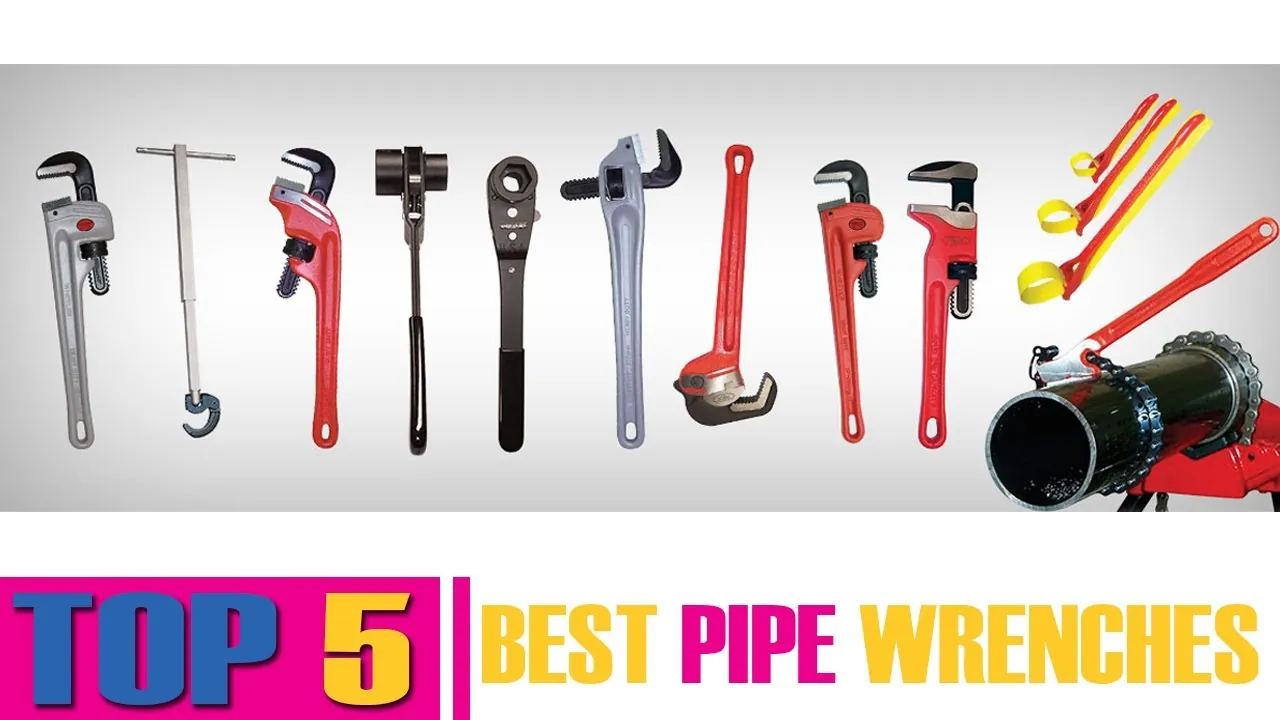
Choosing the right tool depends on the material you’re working with and the amount of space available. This table shows the common types used by tradespeople to handle various plumbing and mechanical tasks.
| Wrench type | Best for | Common example |
|---|---|---|
| Heavy-duty steel | High-torque jobs | 18-inch straight wrench |
| Aluminum body | Overhead work | 24-inch aluminum pipe wrench |
| Offset head | Corner access | 14-inch offset wrench |
| Chain wrench | Large diameter pipes | 3-inch capacity chain tool |
Select a steel wrench when you need to break loose stubborn, rusted fittings. The weight of the steel provides necessary leverage, but it causes rapid fatigue during overhead tasks. If you’re working above shoulder height for more than ten minutes, switch to an aluminum model. It reduces the total weight by nearly 40 percent, saving your shoulders from unnecessary strain.
Use an offset wrench if your pipe runs parallel to a wall with less than three inches of clearance. A standard straight wrench will hit the wall before the jaws can grip the pipe. If the pipe diameter exceeds four inches, discard the standard wrench entirely in favor of a chain tool. Standard jaws lose their grip on large, curved surfaces, which often leads to the tool slipping and crushing your knuckles against the pipe.
Always match the wrench size to the pipe diameter. A 10-inch wrench is sufficient for half-inch pipe, but it lacks the jaw opening for anything over one inch. If you use a tool that’s too small, you’ll likely strip the teeth off the wrench or deform the pipe wall. When the pipe is soft copper or plastic, wrap the jaws in a thick rubber strap to prevent deep gouges.
Heavy-duty steel pipe wrenches
Heavy-duty steel pipe wrenches are the industry standard for jobs where you need maximum strength and durability. They consist of a cast-iron or steel frame that can withstand significant force without bending or breaking. These tools suit professionals who work with iron pipes and need a reliable, long-lasting tool that can take a beating on a construction site.
- Provides the highest durability for high-torque applications.
- Offers a stable, heavy frame that helps keep the tool in place.
- Handles extreme pressure when breaking loose rusted or seized joints.
- Resists wear and tear better than lighter materials during heavy daily use.
If you’re working on a stationary iron line in an open area, a 14-inch steel wrench provides enough leverage for a standard 1-inch pipe. If you’re struggling to move a stubborn fitting, the weight of the steel helps you maintain a solid grip without the handle flexing under pressure.
Avoid the common mistake of using a steel wrench on stainless steel or PVC piping. The aggressive, hardened teeth of a steel wrench will bite deep into these softer or more reactive materials, creating stress risers that lead to premature pipe failure or corrosion. If you’re handling sensitive materials, switch to an aluminum wrench or use a strap wrench to protect the surface integrity.
You can determine which tool is right by the location of your work. If you must carry your kit up a ladder or into a crawlspace, the sheer weight of steel becomes a liability that drains your energy. In those tight, vertical spaces, aluminum is the superior choice. Reserve the heavy-duty steel for bench work or ground-level pipe runs where the tool’s mass acts as a stabilizing anchor.
A 1-inch pipe requires a 10-inch or 14-inch wrench, while a 2-inch pipe demands an 18-inch or 24-inch model. If you find yourself constantly adding a “cheater bar” or a length of pipe to the handle to gain more torque, you’re using the wrong tool. Stop immediately and step up to the next size class. Pushing a wrench beyond its rated capacity risks a catastrophic snap that can cause severe hand or facial injuries.
Aluminum pipe wrenches
Aluminum pipe wrenches serve as a lighter alternative to steel, weighing about 40% less while offering similar gripping strength. These tools suit plumbers who spend their day moving between job sites or working overhead where every ounce of weight matters. By reducing the physical strain on your arms and wrists, they help you maintain accuracy during repetitive tasks.
Choose aluminum when you’re working on overhead gas lines or in restricted crawlspaces where you must hold the tool at arm’s length for long periods. If you’re performing heavy-duty demolition or working on seized, rusted-out iron pipe, stick with steel. Aluminum is softer and can deform or crack if you apply extreme force with a cheater bar.
A common mistake is assuming aluminum tools are indestructible. Using a cheater bar on an aluminum handle will often snap the frame, costing you the full price of a replacement. If the job requires significant leverage beyond your own physical strength, the steel wrench is the safer, more economical choice.
When selecting a size, match the tool to the pipe diameter rather than your grip strength. A 24-inch aluminum wrench provides the necessary torque for 2-inch pipe while remaining manageable for overhead work. However, if you’re regularly torquing pipes larger than 3 inches, the weight savings of aluminum become negligible compared to the durability required to prevent tool failure.
The rule is simple: if you’re installing or servicing, choose aluminum to save your joints. If you’re breaking down old, corroded systems, keep a steel wrench in your kit to handle the heavy impact and higher torque requirements. Always inspect the teeth of an aluminum wrench before a major job; because the alloy is softer than steel, the teeth will dull faster. If you can’t get a clean bite on the pipe, the tool is a liability.
Offset pipe wrenches
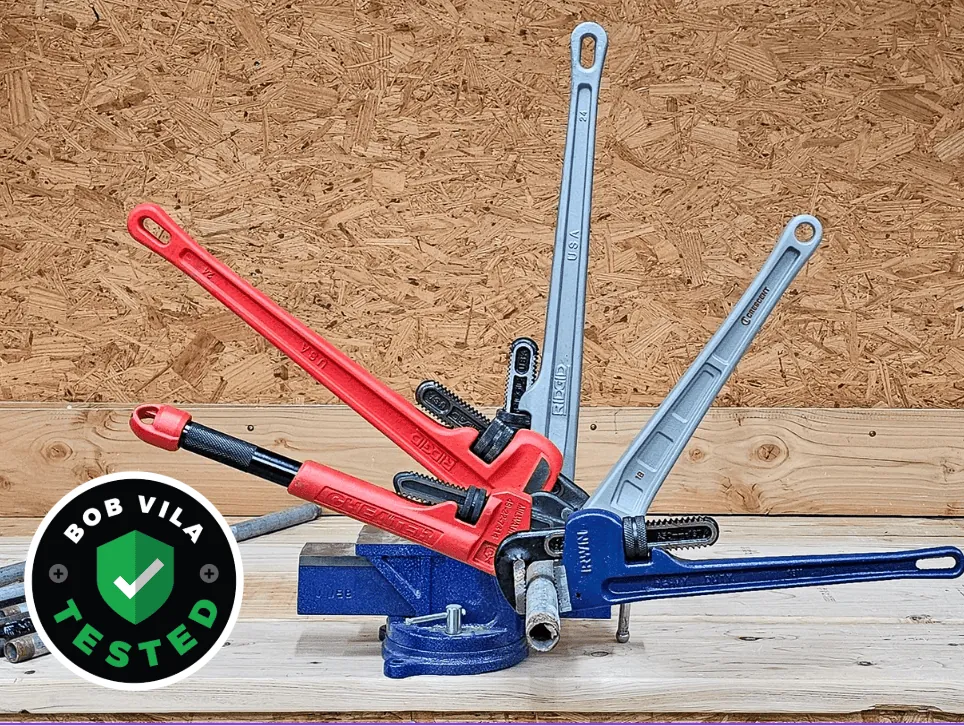
Offset pipe wrenches feature a jaw set at a 90-degree angle, which allows you to grip pipes that are close to walls or in recessed areas. These tools suit technicians who perform maintenance on pipes running parallel to floors or ceilings where a straight wrench can’t fit. The design creates a unique trade-off: you gain better access to tight corners, but you lose some of the raw leverage found in a straight-handled tool.
- Reaches pipes in narrow gaps or against flat surfaces.
- Provides a secure grip on fittings that sit flush against a wall.
- Enables rotation in spaces where a standard handle would hit an obstruction.
If you’re tightening a pipe that’s only 2 inches from a brick wall, an offset wrench lets you apply pressure without your knuckles hitting the masonry. This tool requires a steady hand, as the offset head can slip if the jaw isn’t fully engaged on the pipe circumference.
Chain pipe wrenches
Chain pipe wrenches use a heavy-duty chain to wrap around the pipe, providing an even, circular grip that’s perfect for large or irregular shapes. These tools suit industrial mechanics who handle large-diameter pipes or fittings that standard jaws can’t accommodate. Unlike standard wrenches that bite into one side, the chain distributes pressure around the entire pipe surface, which prevents localized denting.
The tool excels when you face pipes exceeding 4 inches in diameter. At this scale, traditional pipe wrenches become prohibitively heavy and difficult to seat. A chain wrench allows you to loop the links around the workpiece and lock them into the head’s teeth, creating a secure hold that tightens as you pull.
If you’re turning a pipe in a cramped utility room, a chain wrench allows you to rotate the handle in small increments. You can reset the grip without removing the chain entirely, which saves time in tight quarters. This maneuverability is why professionals prefer them for overhead or subterranean work.
Avoid using these on thin-walled copper or PVC tubing. The crushing force of the steel chain will collapse the pipe wall instantly, leading to costly leaks. If you see the pipe material yielding under the chain, stop immediately; you have exceeded the structural capacity of the fitting.
Use a chain wrench only on Schedule 40 steel or thicker iron pipe. If the pipe is galvanized and you need to preserve the finish, wrap a piece of rubber or heavy leather around the pipe before setting the chain. This simple layer prevents the hardened steel teeth from biting into the metal and creating rust-prone gouges.
When choosing a size, match the chain length to your most frequent pipe diameter. A chain that’s too long becomes a liability, as the excess links can snag on nearby conduits during the swing. If the chain is too short, you risk the locking mechanism slipping under high torque.
Other common pipe wrench styles
Compound leverage wrenches feature a specialized design that multiplies the force you apply to the handle. This mechanical advantage is essential for loosening seized pipes exceeding two inches in diameter. If you’re struggling with a rusted joint that refuses to budge, this tool provides the necessary torque without requiring an extension bar. Never use a cheater pipe on a standard wrench, as the handle will likely snap under the stress.
Internal pipe wrenches grip the inside diameter of a pipe. These are indispensable when a threaded fitting shears off flush with a wall or floor. By expanding inside the pipe, the tool applies pressure against the interior walls to back the piece out. Use this only when the pipe wall is thick enough to withstand the outward force. If you’re working with thin-walled copper, the internal pressure may collapse the pipe, turning a simple repair into a full replacement.
Strap wrenches use a heavy-duty nylon or rubber band to create friction. This is the only safe option for polished chrome, brass, or PVC pipe where surface finish is a priority. Because the strap conforms to the shape of the object, it works equally well on odd-sized fittings or smooth cylinders.
If you need to tighten a decorative fixture without marring the plating, wrap the strap twice around the body. This extra layer increases grip and prevents the tool from slipping under tension. If the pipe is wet or oily, wipe the surface clean before applying the strap. A slick surface will defeat the friction, leading to frustrating slips that can damage the finish you’re trying to preserve.
Choosing the right pipe wrench
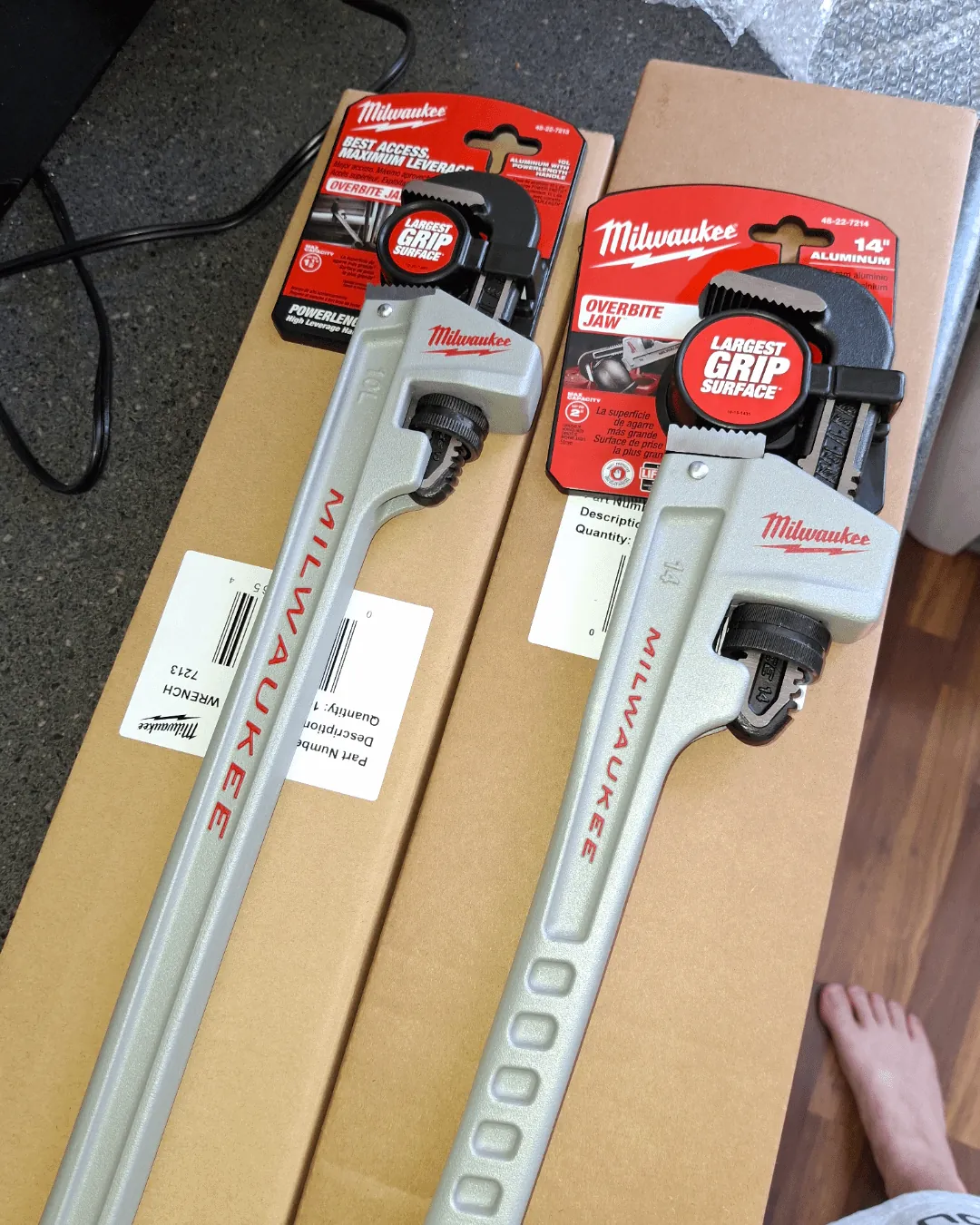
Selecting the right tool depends on your physical strength, the pipe diameter, and the clearance space around the connection. If you’re working on a small copper sink drain, reach for a strap wrench to avoid damaging the finish; if you’re working on a large, rusted iron gas line, a heavy-duty steel wrench is the only way to get enough torque. For overhead work, always choose aluminum to reduce the risk of dropping a heavy tool on yourself or the floor.
If you have a pipe diameter of 1 inch, use a 10-inch or 12-inch wrench; if you have a 2-inch pipe, move up to an 18-inch or 24-inch model to ensure you have enough leverage.
Never use a cheater bar on any pipe wrench, as it exceeds the tool’s design limits and can cause the handle or jaw to snap. Picking one style often means leaving others behind, so build a kit with one 14-inch steel wrench for general use and one 12-inch offset wrench for tight corners.
Frequently asked questions
Can I use a pipe wrench on a nut?
You should use an adjustable or open-end wrench on nuts because pipe wrenches have serrated teeth that round off corners. Pipe wrenches are designed specifically to bite into soft metal to create friction. Only use a pipe wrench on a nut as a last resort if it’s already stripped.
How long should a pipe wrench handle be?
Using a handle that’s too short results in poor torque transfer and potential injury. Always switch to a longer handle if you struggle to turn the pipe.
Is it safe to use a cheater bar?
Never use a cheater bar on any pipe wrench, as it exceeds the tool’s design limits and can cause the handle or jaw to snap. A cheater bar increases leverage, but it puts immense stress on the pivot pin and jaw. Never use one on aluminum or cast-iron tools, as they can shatter.
What happens if the jaw teeth wear down?
If jaw teeth wear down, the wrench will slip off the pipe, potentially causing you to lose your balance or strike your hand. You can often replace the jaw assembly on professional-grade wrenches without buying a new tool. Check teeth after every heavy job to ensure they provide a safe grip.
Does it matter if I pull or push the wrench?
It’s always safer to pull the wrench toward you rather than pushing it away, as this prevents you from falling into the work if the tool slips. When you pull, your body weight is balanced, and if the wrench loses its grip, you’re already moving away from the hazard. Always ensure your footing is stable before applying force, and never stand directly in line with the pipe movement.
How often do I need to oil the threads?
You should clean and oil the adjustment nut threads whenever the wrench feels stiff, typically after a few months of use. Light machine oil keeps the nut moving smoothly, allowing for one-handed operation. Always wipe away grit or metal shavings before applying oil to prevent grinding down the threads.
Conclusion
Start by measuring the diameter of the pipe you need to turn to select the correct size wrench for the job. Once you place the wrench on the pipe, ensure the jaw is open slightly wider than the pipe before you begin to turn, which allows the teeth to bite deeply into the metal. If the wrench slips or the handle starts to bend, stop immediately and check your tool size or the pipe integrity.