
The dichlor bleach method uses 1 ounce of granular sodium dichloro-s-triazinetrione per 10,000 gallons of pool water to raise free chlorine by about 6 parts per million. Dissolve the granules in a bucket first, pour them around the edges, and run the pump for at least 8 hours before anyone swims again.
What dichlor actually does in pool water
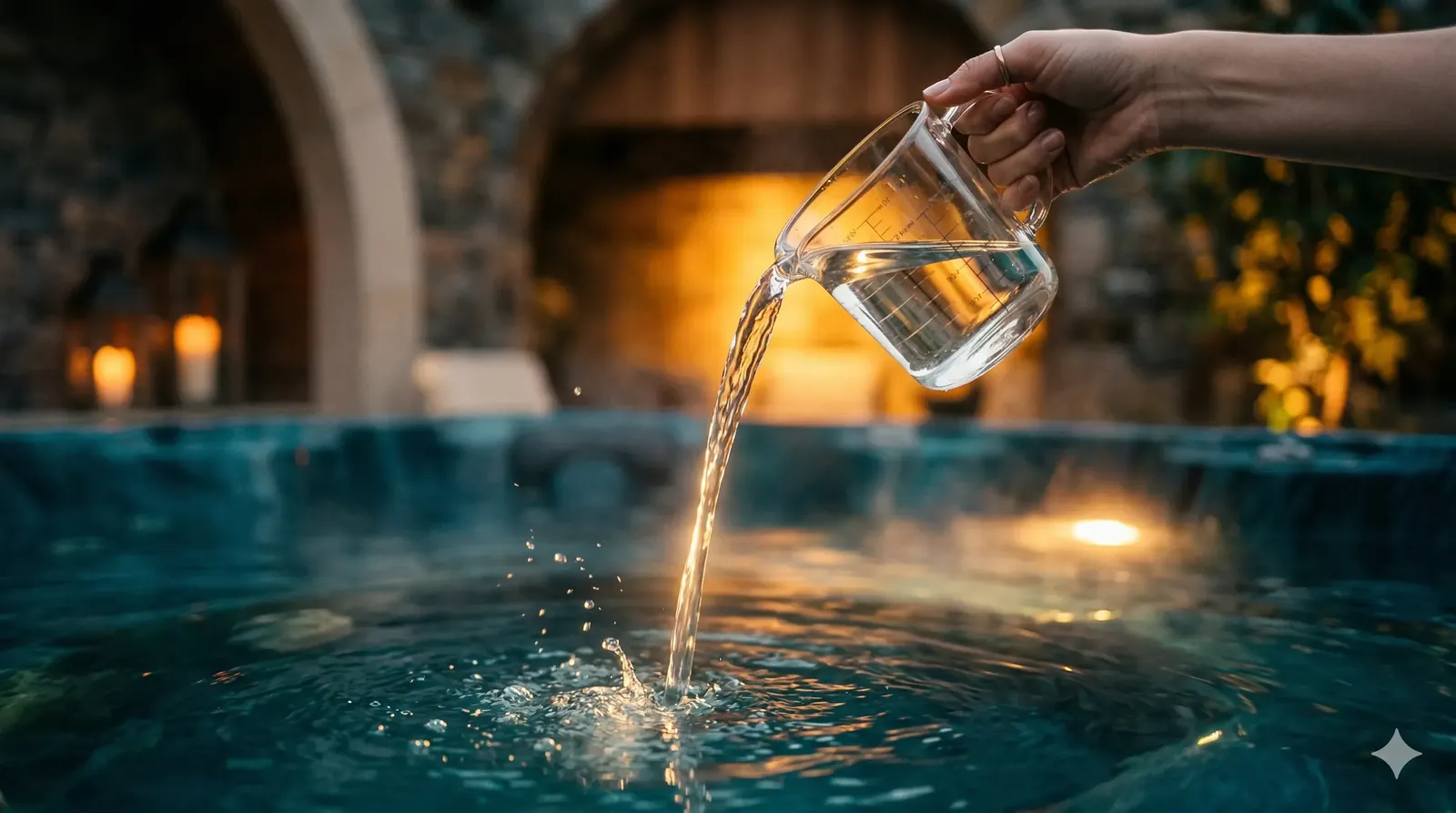
Dichlor is a granular pool chemical that dissolves quickly and releases free chlorine along with cyanuric acid. Pool owners use it to kill bacteria, clear cloudy water, or handle a sudden algae bloom. It works well for vinyl-lined pools and fiberglass shells because it doesn’t add calcium to the water.
The one thing people get wrong is treating it like plain liquid bleach. It isn’t. Every ounce you add also adds cyanuric acid, which acts as a sunscreen for chlorine but builds up over time.
When you drop dichlor into water, it breaks apart into hypochlorous acid and cyanurate ions. Hypochlorous acid is the part that actually kills germs. Cyanuric acid bonds reversibly with the chlorine in the water so sunlight doesn’t destroy it right away. That protection is useful outdoors, but it comes with a trade-off.
If you already have high cyanuric acid levels from using stabilized tablets all summer, adding more dichlor pushes the stabilizer past the point where it helps. Once it gets too high, the chlorine stops working even if your test kit says the level is fine.
This method fits outdoor pools that start with low stabilizer readings, usually under 30 parts per million. If your pool sits indoors, you don’t need cyanuric acid at all, and dichlor is the wrong product for that job. Always check your current cyanuric acid reading on your test strips before you open the bucket. The label on your specific brand will list the exact percentage of available chlorine, since formulas vary slightly between makers.
Steps to shock a pool with dichlor
Follow these steps in order. The amounts below assume a standard 10,000-gallon outdoor pool starting with a cyanuric acid level under 30 ppm. If your pool holds 20,000 gallons, double every amount listed here. If it holds 5,000 gallons, cut them in half.
- Test the water. Dip a fresh test strip into the pool. Write down the free chlorine and cyanuric acid numbers. Don’t add anything if cyanuric acid is already above 50 ppm.
- Measure the granules. Weigh out 1 ounce of dichlor granules for every 10,000 gallons of water you’re treating. For a heavy algae problem, use 2 ounces per 10,000 gallons instead.
- Fill a plastic bucket. Add 3 gallons of pool water to a clean plastic bucket. Never use metal, because wet chlorine eats through it fast.
- Mix the solution. Pour the measured granules into the water slowly. Stir with a wooden stick until the grains disappear completely, which takes about 2 minutes.
- Turn on the pump. Make sure the pool’s circulation pump is running. You need the water moving so the chemical spreads evenly instead of sinking to one spot.
- Pour it around the edge. Walk the perimeter of the pool. Pour the bucket mixture steadily into the water near the return jets. Keep the stream low so it doesn’t splash back on you.
- Run the pump for 8 hours. Leave the filter running overnight. Don’t let anyone swim during this time.
- Test again before swimming. Check the free chlorine the next morning. Wait until it drops below 5 ppm before anyone gets in the water.
The single judgment call that separates a clear pool from a ruined one happens at step one. If your cyanuric acid is already high, adding dichlor just locks up your chlorine further. In that case, switch to plain unscented liquid bleach or calcium hypochlorite instead.
Also, never mix dry dichlor with other chemicals in the same bucket. That reaction can release toxic gas or start a fire. If you aren’t sure how to read your test kit, take a water sample to a local pool store for a professional reading.
Dichlor pool settings and amounts
These figures give you the exact dose, wait times, and limits to keep handy while you work. The amounts assume an outdoor pool with a cyanuric acid reading below 30 ppm and a water temperature between 70°F and 85°F. Colder water slows down the chemical reaction, so you might need to run the pump an extra hour or two in early spring.
| Situation | What to use | How long | What to watch for |
|---|---|---|---|
| Weekly maintenance (10k gal) | 1 oz dichlor granules | Run pump 4 hours | Free chlorine stays between 2-4 ppm |
| Algae shock (10k gal) | 2 oz dichlor granules | Run pump 8-12 hours | Water clears; chlorine drops below 5 ppm before swimming |
| After heavy rain (10k gal) | 1.5 oz dichlor granules | Run pump 6 hours | Cloudiness disappears; retest pH |
| Indoor pool (any size) | Liquid bleach instead | Run pump 4 hours | No cyanuric acid needed indoors; dichlor wastes money here |
| Vinyl liner pool (10k gal) | 1 oz dichlor pre-dissolved | Run pump 8 hours | Never dump dry granules directly onto vinyl; they bleach the pattern |
Keep this table nearby when you measure. A bare number means nothing without its condition attached. One ounce treats 10,000 gallons for routine care, but that same ounce ruins the balance in a 500-gallon hot tub. Adjust the math based on your actual water volume. Your pool builder’s manual or the manufacturer’s label will tell you the exact capacity if you don’t know it.
Getting the mix and timing right
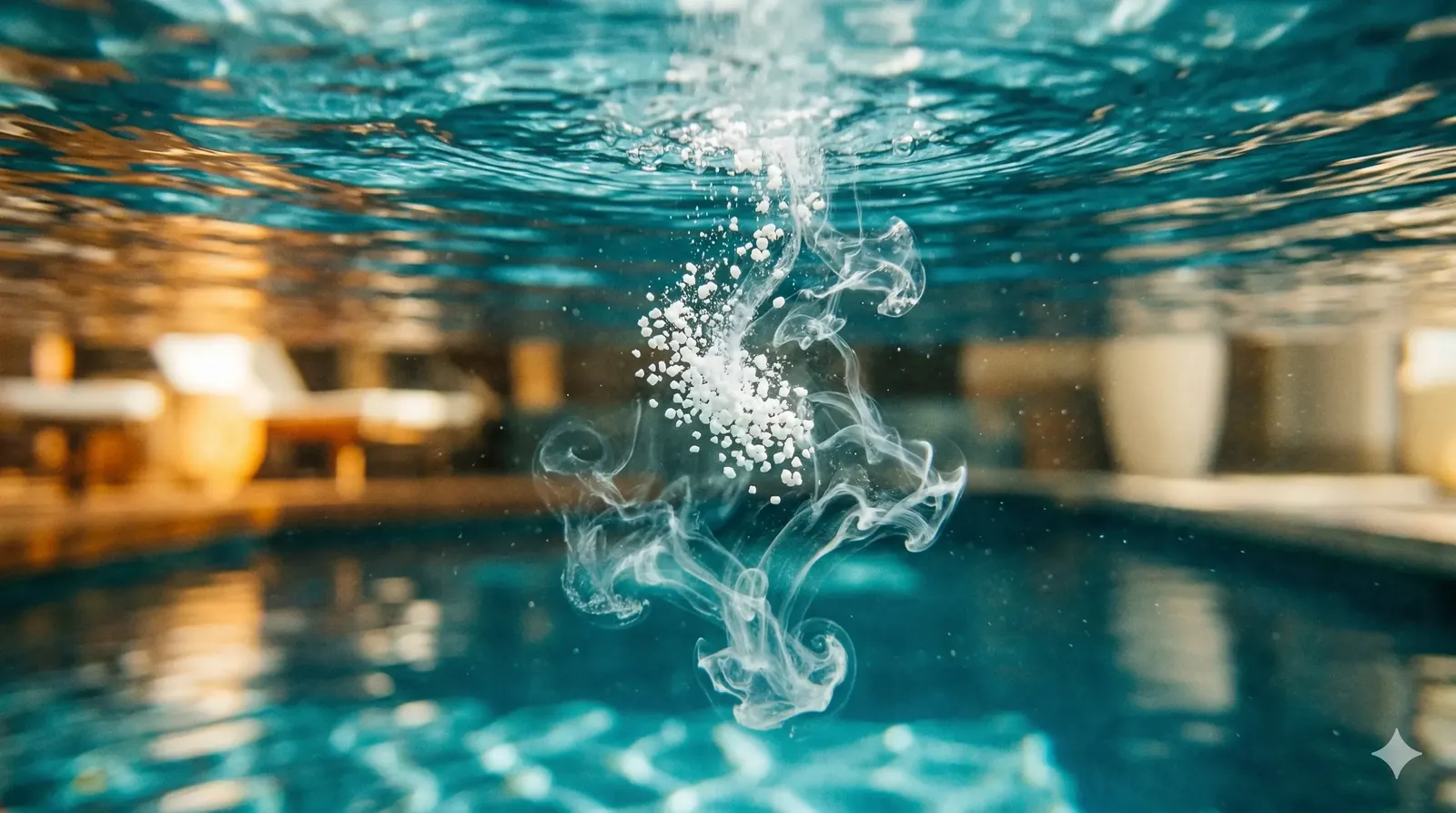
The difference between clear water and a green mess comes down to how you handle the granules before they touch the pool. Dry dichlor dropped straight into the water sinks immediately. It settles on the floor, creates a highly concentrated spot of sanitizer, and bleaches whatever surface it lands on.
Pre-dissolving it in a plastic bucket isn’t optional. It’s the only way to protect a vinyl liner or a painted concrete floor. Stir until the water looks completely clear, with no gritty sand left at the bottom.
Timing matters just as much as the mix. Adding this chemical at noon under full sun wastes your effort. Ultraviolet rays break down free chlorine rapidly, even with cyanuric acid present to slow the process. Pour your bucket around the edges after the sun goes down. Let the pump push the treated water through the filter all night. By morning, the chlorine has done its work without fighting the sun for eight hours.
Halfway through that pump cycle, check the skimmer basket. Dead algae and debris collect there fast after a shock treatment. A clogged basket chokes the flow, meaning the chemical never reaches the far end of the pool. Pull the basket out, rinse it with a hose, and put it back. Don’t turn the pump off for more than a minute while you do this.
Leave the automatic pool cleaner in the garage while you treat the water. The high chlorine concentration attacks rubber tires and plastic hoses. Wait until your test strip reads below 5 ppm before putting the cleaner back in. That number isn’t a guess. Check their published standards if your local health department requires specific documentation.
When dichlor won’t fix the water
| What you notice | What it usually means | What to do first |
|---|---|---|
| Chlorine drops to zero overnight | Heavy organic load or active algae eating the sanitizer faster than you add it | Brush the walls, vacuum the floor, then double the shock dose |
| Water stays cloudy after 24 hours | Filter is dirty or dead algae particles are too small for the sand to catch | Backwash the filter, or add a clarifier to clump the particles together |
| Test shows high chlorine but algae lives | Cyanuric acid is above 80 ppm, locking the chlorine so it can’t kill anything | Drain 20% of the pool and refill with fresh water to dilute the stabilizer |
| Strong chemical smell stings eyes | Chloramines formed because there wasn’t enough free chlorine to finish breaking down sweat | Add another full shock dose to burn off the combined chlorines |
| White powder sitting on the bottom | Granules weren’t stirred long enough in the bucket and sank before dissolving | Vacuum the powder to waste so it doesn’t bleach the pool floor |
Read the left column first. Match what you see in the water to the symptom, then follow the action in the right column. Don’t just keep adding more dichlor hoping it works eventually. If the stabilizer is too high, more dichlor makes the problem worse, not better. Draining and refilling is the only physical way to lower cyanuric acid once it crosses the line.
Handling and storing pool chlorine safely
Sodium dichloro-s-triazinetrione is an oxidizer. The U.S. Environmental Protection Agency registers it as a pesticide because its primary job is killing organisms in water. That classification means you have to treat the bucket like a hazardous material, not a bag of salt. Store it in a cool, dry place away from direct sunlight. Keep the lid sealed tight. Moisture getting inside the container causes the granules to clump and slowly degrade, which can release irritating fumes into your storage shed.
Never store dichlor next to muriatic acid, trichlor tablets, or any other pool chemical. If two different oxidizers or an acid and a base mix accidentally, they can generate toxic fumes or start a fire that water won’t put out. The National Fire Protection Association classifies dry pool chlorine as a strong oxidizer, requiring separation from flammable materials and acids. Check their published codes for exact storage distances if you keep large quantities on site.
Wear safety glasses and gloves when you scoop the granules. A stray breeze can blow dry powder into your eyes, causing immediate chemical burns. If you spill some on the driveway, sweep it up dry. Don’t hose it down toward a storm drain. Local environmental agencies strictly prohibit washing pool chemicals into municipal runoff systems.
If your pool requires electrical work to run the pump during this process, or if you suspect a leak in the plumbing, stop. Call a licensed electrician or a certified pool technician. Working with water, electricity, and strong oxidizers at the same time carries risks that go beyond basic home maintenance.
Keeping the water balanced afterward
Once the pump has run its course and the water clears, your job shifts from shocking to maintaining. Test the free chlorine as often as your use requires, following your owner’s manual for guidance. Dichlor leaves cyanuric acid behind permanently, so your stabilizer level will be higher today than it was last week. Write both numbers down in a logbook or a phone app. Tracking the trend tells you when you’re approaching the ceiling.
Run the filter daily for at least 8 hours during the summer. The chlorine kills the bacteria, but the filter physically removes the dead cells. Without circulation, the dead matter settles on the floor and feeds new algae. Skim the surface each evening to pull out leaves and bugs before they sink and consume your chlorine.
You’ll need to shock the pool again when the free chlorine struggles to stay above 2 ppm despite running the pump normally. There’s no fixed calendar schedule for this. A pool surrounded by trees after a windstorm needs it sooner than a fenced pool in a dry climate. Watch the water clarity and your test strip colors rather than counting weeks.
If you use dichlor for every weekly maintenance dose, the cyanuric acid will eventually climb past 50 ppm. At that point, switch your routine maintenance to liquid chlorine, which contains zero stabilizer. Save the dichlor strictly for occasional shocks or the beginning of the season when the stabilizer is naturally low.
When to skip dichlor entirely
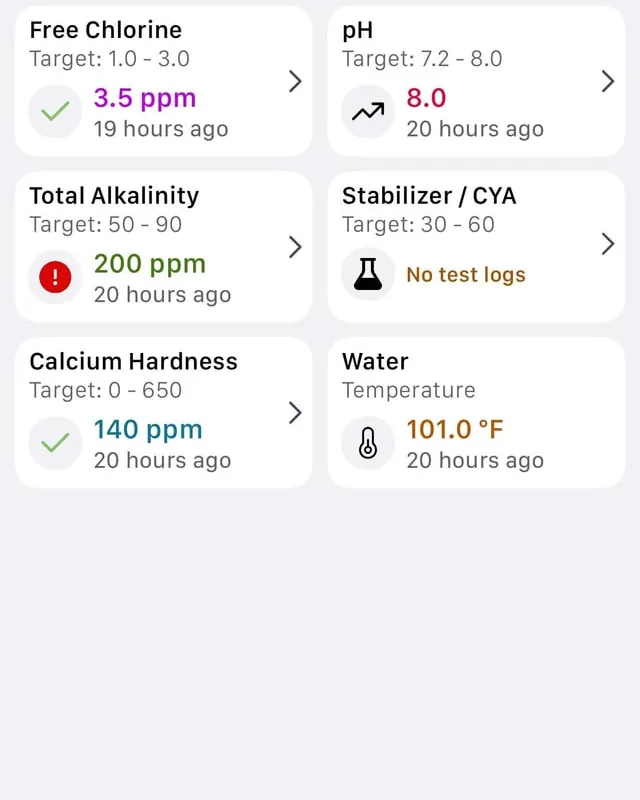
This method doesn’t fit every pool. If your cyanuric acid already reads 50 ppm or higher on your test strip, adding dichlor pushes the stabilizer into a range where chlorine stops working efficiently. In that case, use liquid sodium hypochlorite instead. It raises free chlorine without adding any stabilizer, letting you sanitize the water without worsening the lock-up problem.
Indoor pools are another situation where dichlor is the wrong choice. Sunlight destroys chlorine outdoors, which is why cyanuric acid exists. An indoor pool has a roof blocking UV rays, so it doesn’t need stabilizer at all. Using dichlor indoors just dumps unnecessary chemicals into the water, forcing you to drain and refill sooner to correct the balance. Stick to liquid bleach or calcium hypochlorite for enclosed spaces.
Hot tubs and small spas hold too little water for this granular product to behave safely. A standard dose meant for a pool would spike the chemistry violently in 400 gallons. High temperatures accelerate chemical reactions, making the water harsh on skin and damaging to acrylic shells. Use products specifically labeled for spas, which come in much smaller doses and formulations designed for heated, low-volume water.
If you need to raise your calcium hardness because you have a plaster pool with soft water, dichlor won’t help you. It adds zero calcium. Calcium hypochlorite handles both tasks at once, sanitizing the water while depositing the minerals your plaster surface needs to prevent etching. Match the chemical to the specific deficiency your test kit reveals.
Related guides
- 8 Best Pool Vacuum for Leaves Picks for a Clean Pool in 2026
- 8 Best Robotic Pool Cleaner Picks for Every Pool Type in 2026
- 10 Best Pool Floats for Reading a Book: Our Top Picks in 2026
Frequently asked questions
Can I swim after adding dichlor?
No, you shouldn’t swim immediately. Wait until your test strip shows the free chlorine has dropped below 5 ppm. With the pump running continuously, this usually takes 8 to 12 hours for a standard maintenance dose. A heavier shock treatment for algae might keep the levels above 5 ppm for a full day. Always test the water before anyone gets in.
Why is my pool still green after shocking?
The chlorine probably did its job, but the dead algae is still floating in the water. Dead algae turns greyish-green and needs to be filtered out. Run the pump continuously and backwash your filter when the pressure gauge rises 10 psi above normal. If the water stays bright green, your cyanuric acid might be too high, preventing the chlorine from working.
How long does dichlor take to dissolve?
It dissolves in about 2 minutes when stirred into a bucket of warm pool water. Don’t toss dry granules directly into the pool. They sink, sit on the bottom, and bleach the surface underneath. Mixing them in a plastic bucket first ensures the chlorine spreads evenly through the return jets instead of pooling in one dangerous spot.
Is it safe to mix dichlor with liquid bleach?
No. Never mix different pool chemicals together in the same bucket or directly into the pool at the same time. Combining an acid-based chlorine source with a high-pH liquid bleach causes a rapid chemical reaction. It releases toxic chlorine gas that can damage your lungs. Treat the pool with one product, let the pump circulate it fully, and test before adding anything else.
What happens if I add too much dichlor?
Your free chlorine will spike well past safe swimming levels, and your cyanuric acid will rise permanently. You can’t filter out excess stabilizer. The only way to lower it’s to drain a portion of the pool and refill it with fresh water. To avoid this, always measure your pool’s exact gallon capacity and weigh the granules instead of guessing.
How often should I use this method?
Use it only when your free chlorine drops below 1 ppm or when you see early signs of algae. For most outdoor pools, that means once every few weeks during peak summer heat. Relying on dichlor for daily chlorination fills the water with cyanuric acid too fast. Use unstabilized liquid chlorine for daily maintenance instead.
Does dichlor change the pH of my pool?
Yes, but only slightly. Dichlor is nearly neutral, with a pH around 6.5 to 7.0. It won’t swing your water chemistry wildly like calcium hypochlorite or trichlor tablets do. Still, always test your pH after the pump has run overnight. If it drifted below 7.2, add a small amount of soda ash to bring it back into the proper range.
Conclusion
Getting the water clear relies on matching the right chemical to your current test results. Measure your pool’s volume, check your stabilizer level, and pre-dissolve the granules every time. The numbers on your test strips dictate the next move, not the calendar. Keep the bucket sealed, run the pump through the night, and let the filter do the heavy lifting once the chlorine finishes its work.