
Mechanical energy is the energy an object holds because it’s moving or because of where it sits. It adds together kinetic energy, which comes from motion, and potential energy, which comes from position. The total stays the same unless an outside force, such as friction, acts on it.
What mechanical energy means

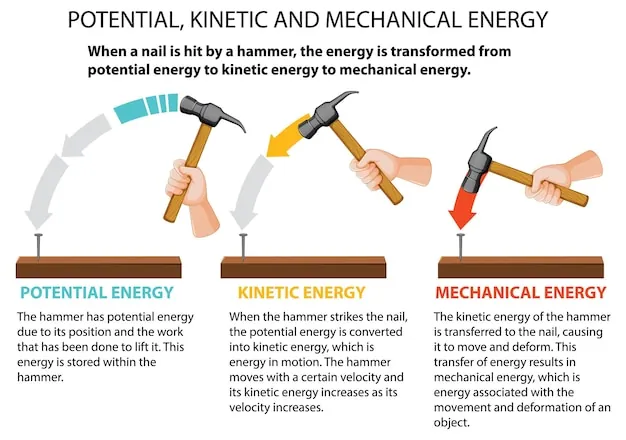
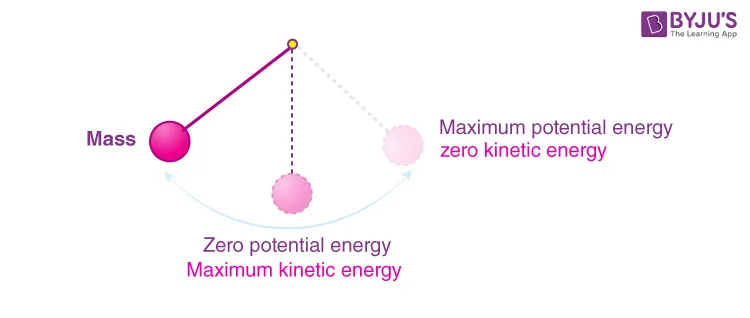
Mechanical energy is what lets a moving object do work. A rolling ball carries it because of its speed, and a book held above a table carries it because of its height. The two parts add up: kinetic energy comes from motion, and potential energy comes from position. When the ball rolls downhill, potential energy turns into kinetic energy. A physicist can measure the total in joules, which is the unit used for all forms of energy.
You can calculate kinetic energy by multiplying half the mass by the square of the velocity. If you double the speed of an object, you quadruple its kinetic energy, not just double it. This is why high-speed collisions are exponentially more destructive than low-speed ones.
Potential energy depends on the force of gravity and the object’s vertical distance from a reference point. If you lift a five-kilogram weight two meters, it gains roughly 98 joules of potential energy.
Distinguish between these states by checking for movement. If the object is currently in motion, look for kinetic energy. If the object is stationary but possesses the potential to move due to gravity or tension, focus on potential energy. Ignoring this distinction leads to errors in predicting how much work a system can perform.
Why mechanical energy changes
The total mechanical energy of an object changes when a force outside that object does work on it. Gravity pulling a falling apple converts stored energy into motion energy. Friction between surfaces converts some mechanical energy into heat, so the object slows down.
A hand pushing a swing adds energy to the system. Energy never disappears; it only moves from one form to another or from one object to another. This is why a bouncing ball never rises to the same height twice unless someone pushes it.
People often treat gravity and friction as doing the same kind of work. They do not. Gravity trades potential energy for kinetic energy inside the system. The total stays the same while the apple falls. Friction takes energy out of the mechanical ledger entirely. It turns motion into thermal energy you can’t recover by reversing the slide.
You can tell which case you face by asking one question. Does the force depend only on where the object starts and stops? If yes, the total mechanical energy holds steady along any path between those points. If the answer is no, expect a loss.
That loss compounds fast. A steel ball dropped onto concrete loses roughly ten percent of its bounce height each time. After seven bounces, half the original mechanical energy has become heat in the floor.
When mechanical energy isn’t conserved
| Situation | What changes | What to do instead |
|---|---|---|
| Object speeds up or slows down | Kinetic energy shifts | Count both motion and position energy |
| Friction or air resistance acts | Mechanical energy turns to heat | Expect the total to drop |
| A motor or hand pushes | Energy enters the system | Add the work done to the total |
| Height changes while speed stays fixed | Potential energy shifts | Recalculate potential energy at each height |
Friction is the most common reason mechanical energy fails to stay constant. Students often miss it because the lost energy doesn’t vanish. It becomes thermal energy in the surfaces that rub together.
A block sliding across a rough table stops sooner than your frictionless math predicts. The missing kinetic energy equals the friction force multiplied by the sliding distance. You must subtract that exact amount from your initial total.
Air resistance works the same way but scales with speed. A falling ball loses more mechanical energy per meter near the bottom of its drop than near the top. At low speeds you can sometimes ignore this loss.
An external push adds energy rather than removing it. If a person lifts a box at a steady pace, the kinetic energy never changes. The work done by their hands goes entirely into gravitational potential energy.
Motors do this continuously. When solving problems with motors, treat the electrical work input as a positive addition to the mechanical total before checking your final state.
How to find mechanical energy
-
Find the mass of the object in kilograms. Use a digital scale for precision, as even a 50-gram discrepancy will skew your final total.
-
Measure its speed in meters per second. If the object is accelerating, record the velocity at the exact moment you intend to measure the energy.
-
Calculate kinetic energy as one-half mass times speed squared. Beginners often square the mass instead of the speed; remember that speed has a far greater impact on the result because of the exponent.
-
Find the object’s height above a chosen reference point in meters. You must remain consistent with this reference point throughout the entire calculation, or your potential energy will be meaningless.
-
Multiply mass, height, and gravity to get potential energy. Use 9.81 m/s² for gravity unless you’re working in a specialized environment.
-
Add kinetic energy and potential energy together. If you’re analyzing a system with friction or air resistance, this sum will decrease over time as energy converts to heat.
-
Check that the result is expressed in joules. If your units don’t align, re-verify that your mass is in kilograms and your distance in meters.
Common errors with mechanical energy
- Treating kinetic and potential energy as separate totals instead of adding them.
- Forgetting that friction removes mechanical energy from a moving object.
- Using different reference heights when comparing potential energy at two points.
- Assuming mechanical energy stays constant when a motor or person adds force.
- Measuring speed in miles per hour instead of meters per second before calculating.
Related guides
- How Compressed Air Energy Storage Works: A Simple Guide
- What Is Beta Energy: The Science Behind Beta Decay Explained
- How Much Oven Cost Per Hour: Calculate Your Energy Usage in 2026
Frequently Asked Questions
Can mechanical energy be created or destroyed?
No. Energy can’t be created or destroyed; it only changes form. Mechanical energy can turn into heat through friction, or into electrical energy in a generator, but the total amount of energy stays the same.
How long does mechanical energy last in a moving object?
It lasts only until another force acts on the object. A rolling ball loses mechanical energy to friction and air resistance, so the exact time depends on the surface and the object’s shape.
Is mechanical energy the same as power?
No. Mechanical energy is the amount stored in an object, measured in joules. Power is how fast that energy is used or transferred, measured in watts.
What happens to mechanical energy when a ball bounces?
Some of it turns into heat and sound when the ball hits the ground. Because of that loss, the ball doesn’t bounce back to its original height.
Does an object at rest have mechanical energy?
Yes, if it’s positioned where gravity or a spring can act on it. A book on a shelf has potential energy even though it isn’t moving.
Does mass affect mechanical energy?
Yes. For the same speed or height, a heavier object holds more mechanical energy than a lighter one.
Conclusion
Energy isn’t something you can see directly, but you can see what it does. The amount an object holds depends on its mass, its speed, and its height, so there’s no single number that applies to every case. Check the mass, speed, and height for your own object to calculate its value.
