
When choosing between brands, the best option for most homeowners is a belt-drive model because it offers quiet operation and long-term durability. If you need a budget-friendly solution that’s easier to install, a chain-drive model from either brand is the superior choice. You’ll find that comparing liftmaster vs genie garage door openers depends largely on your need for smart home integration versus simple, rugged mechanical reliability.
Comparing garage door opener features

The choice between these two brands often comes down to the specific technology you prefer for your daily routine. While both companies offer reliable motors, their focus on connectivity and hardware accessories varies.
| Method | How long | Effort | Cost | Best for |
|---|---|---|---|---|
| Belt-drive | 10-15 years | Low | High | Quiet homes |
| Chain-drive | 10-12 years | Medium | Low | Budget buyers |
| Wall-mount | 15+ years | High | High | High ceilings |
If your garage is attached to the house, prioritize a belt-drive system to keep noise levels down. If you have a detached garage, a chain-drive model saves money without sacrificing performance.
Many homeowners mistakenly ignore the horsepower rating when comparing these units. If you have a heavy carriage-style door or a reinforced steel model, a standard half-horsepower motor will burn out within three years. Always choose at least three-quarters horsepower for doors weighing over 200 pounds to ensure longevity.
If you value remote access, check if the unit requires a separate bridge device to connect to your Wi-Fi. Systems with built-in radios offer faster response times and fewer connection drops.
Keep in mind that these lifespans assume you perform annual maintenance. If you hear a grinding sound or see the door jerk during operation, tighten the drive chain or belt immediately. Neglecting this simple adjustment forces the motor to work twice as hard, which often leads to total system failure before the decade mark.
Features of LiftMaster systems
LiftMaster is widely known for its MyQ smart technology, which allows you to monitor and control your door from a smartphone. This ecosystem is highly stable and integrates well with many home security platforms.
Install the rail and motor unit according to the provided manual, ensuring the header bracket is anchored into a solid wall stud. If you mount the bracket to drywall alone, the vibration of the motor will eventually tear the fastener loose, causing the rail to sag and the door to bind.
Connect the power supply and test the safety sensors by placing an object in the path of the beam to ensure the door reverses. If the door fails to reverse immediately upon the beam breaking, adjust the sensor alignment until the indicator light stops flickering.
Program your remote controls using the “Learn” button on the motor head, following the specific sequence for your model version. If the light on the motor unit doesn’t blink during this process, check that you aren’t exceeding the maximum memory capacity of 20 remotes.
Download the MyQ app and sync it with your home Wi-Fi network to enable remote access features. These units excel in security features, such as automatic deadbolts that engage when the door closes.
However, the reliance on a proprietary app can be a drawback if you prefer open-source home automation tools. If your home network uses a 5GHz band exclusively, the system will fail to connect; you must ensure your router broadcasts a 2.4GHz signal for the initial handshake. If you’re uncertain about electrical wiring, consult a licensed electrician to avoid fire hazards or voiding your warranty.
Features of Genie systems

Genie focuses on ease of use and has a long history of creating intuitive hardware for the average homeowner. Many of their models are known for being straightforward to program and maintain without needing specialized tools.
Secure the mounting bracket to the header above the garage door, ensuring it’s perfectly level with the floor. If the bracket is off by even a quarter-inch, the door will bind during travel and trigger the safety reversal system prematurely.
Mount the motor head to the ceiling using the provided angle iron, making sure the weight is evenly distributed across the supports. Use at least two points of contact on each side to prevent vibration during operation.
Attach the belt or chain assembly to the carriage, adjusting the tension until it matches the manufacturer’s specification for your specific rail length. If you’re installing a chain drive, you should be able to pull the chain down about half an inch from the center of the rail.
Set the open and close limits on the unit so the motor knows exactly when to stop at the top and bottom positions. If the door stops an inch short of the floor, reset the down-travel limit switch according to the manufacturer’s instructions.
Genie systems are often praised for their simple LED lighting integration and robust wall consoles. A common mistake people make is over-tightening the chain, which puts unnecessary stress on the motor gear and leads to premature sprocket failure. If the chain hums or vibrates loudly while the door moves, it’s too tight. Loosen the tensioner until the chain sits just clear of the rail. Always verify your model meets the latest Underwriters Laboratories safety requirements for automatic door operators.
Choosing the right garage door motor
Deciding which unit to buy depends on your specific needs for speed, silence, and ease of setup.
When you’re in a hurry, choose a Genie chain-drive model. The installation process is well-documented and typically faster for a DIY project. These units are rugged, but they produce a distinct metallic clatter that echoes through walls. If your garage shares a ceiling with a bedroom, the noise will wake the household.
When you’re doing this for the first time, opt for a standard LiftMaster belt-drive. Their online support videos make the setup process manageable for beginners. The rubber belt absorbs vibration, creating a near-silent operation that prevents structural rattling.
When you want the best possible result, select a wall-mount unit from either brand. It clears overhead space and provides the smoothest operation for heavy doors. These motors attach directly to the torsion bar, eliminating the need for a noisy rail system.
The trade-off is between the complexity of smart features and the simplicity of mechanical parts. If your door weighs more than 350 pounds, avoid standard half-horsepower motors; they will burn out within two years. You need a three-quarter horsepower unit to handle the load without straining the gears.
If you prioritize a quiet home, use belt-drive systems. If you want to save money, stick to chain drives. Always verify your door’s weight before purchasing, as exceeding the motor’s lift capacity can cause premature gear failure or motor burnout.
Safety and maintenance for all openers
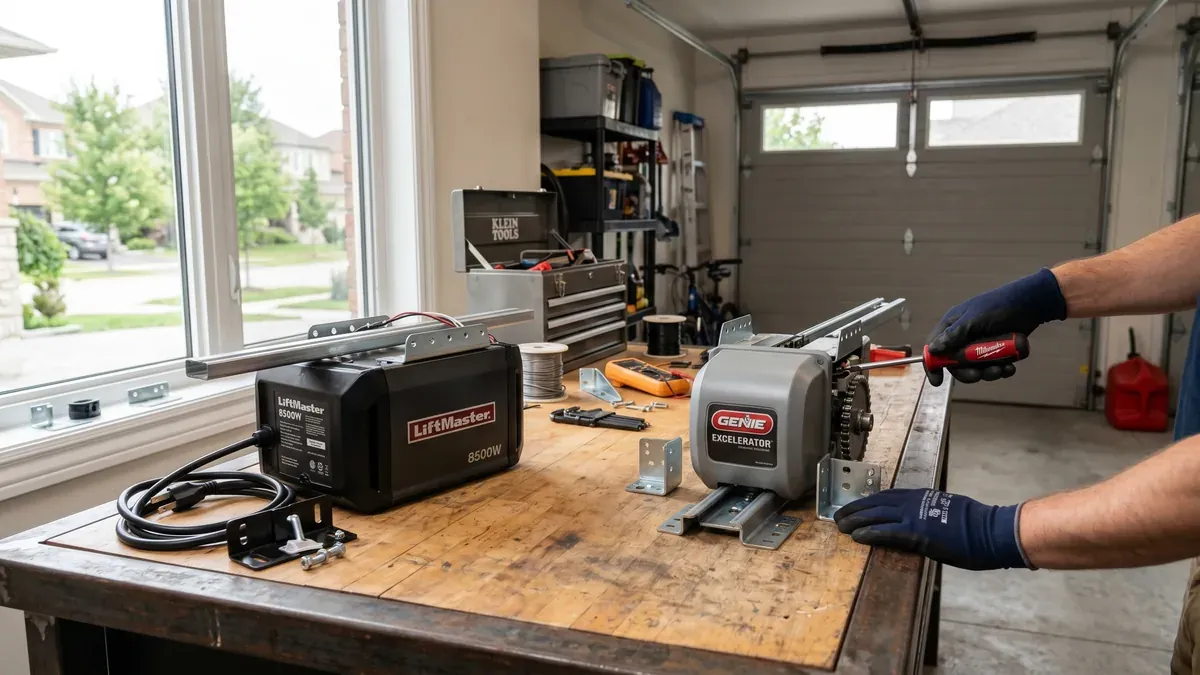
Regardless of the brand you choose, the safety of your garage door system depends on consistent care. Every opener must follow the same basic safety rules to prevent accidents.
Test the auto-reverse feature every month by placing a 2-by-4-inch piece of wood in the path of the closing door. If the door doesn’t reverse immediately upon contact, adjust the force settings or call a professional. If the door reverses but hits the wood with significant force before retracting, the force sensitivity is set too high and requires immediate recalibration.
Never attempt to adjust the torsion springs yourself. These components are under extreme tension and can cause severe injury or death if they snap during an adjustment. If the door feels heavy when lifted manually, the springs are likely failing. Don’t continue to operate the opener, as this puts excessive strain on the motor and can strip the internal gears.
Keep remote controls away from children to prevent accidental operation. If you notice the door moving unevenly or making grinding noises, inspect the rollers and tracks for debris or damage. A common mistake is lubricating the tracks with grease, which actually attracts grit and causes the rollers to bind. Use a silicone-based spray instead to ensure smooth movement.
If the issue persists, contact a certified door technician. These professionals have the correct equipment to handle high-tension springs safely and ensure the entire system remains in balance. A balanced door should stay stationary when you release it halfway, neither falling shut nor pulling upward. If it moves on its own, your spring tension is incorrect.
Related guides
Frequently asked questions
Can I install a garage door opener by myself?
Yes, you can install one yourself if you have basic tools and follow the manual. It’s a one-day project for most people, though you should have a helper to support the motor unit while you secure it to the ceiling. If you aren’t comfortable working with electricity or heavy lifting, hire a professional to avoid injury or damage to your property.
How long should a garage door opener last?
Most openers last between 10 and 15 years with regular maintenance. The actual lifespan depends on how often you open and close the door, as well as the local climate. If you live in an area with extreme temperatures, the internal gears and belts may wear out faster, so check the manufacturer’s warranty for details on expected performance.
Is it safe to use an old opener?
No, it isn’t recommended if your unit lacks modern safety sensors. Any opener made before 1993 may not have the required photo-eye sensors that detect objects in the door’s path. If your unit doesn’t reverse when an object blocks the beam, it’s time to replace the entire system to ensure the safety of your family and pets.
How much horsepower do I need?
You need at least 0.5 horsepower for a standard aluminum door, while heavier wood or carriage-style doors require 0.75 horsepower or more. Check the weight of your door before buying, as using an underpowered motor will cause the gears to strip quickly. If you’re unsure about the weight, look for the sticker on the back of the door panels for the manufacturer’s rating.
Why is my garage door moving slowly?
Your door might move slowly because of dried-out lubricant on the tracks or worn-out rollers. Check the rails for any debris or obstructions that might be causing friction. If the tracks are clean and lubricated, the motor might be struggling due to age or incorrect force settings. Always consult your manual to see how to adjust the force without damaging the unit.
Conclusion
Proper maintenance is the most effective way to extend the life of your equipment. By checking the balance and safety sensors regularly, you ensure the system operates smoothly for many years. Whether you choose the high-tech features of a smart model or the simple reliability of a standard motor, your daily routine will benefit from a well-installed and properly balanced garage door.

4 thoughts on “LiftMaster vs Genie Garage Door Openers: The Best Drive Types”