
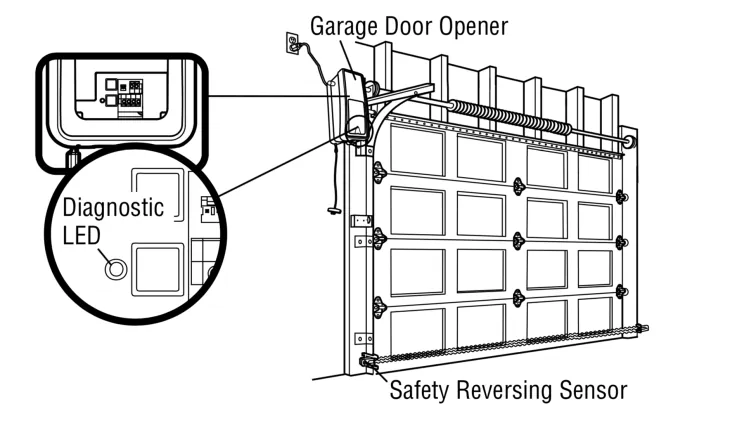
A blocked safety sensor is the most common reason you have a lift master garage door not opening when you press the remote. Most of the time, the door won’t move at all, or it will start to close and immediately reverse back up. You can quickly check this by looking at the small LED lights on the safety sensors located at the bottom of your door tracks. If these lights are blinking or off, the sensors aren’t aligned or something is blocking the beam.
Why your garage door won’t lift
| Cause | How common | How to confirm it | Fix it yourself? |
|---|---|---|---|
| Blocked safety sensors | Very common | Check sensor LED lights | Yes |
| Misaligned safety sensors | Common | See if lenses face each other | Yes |
| Broken torsion spring | Occasional | Look for gap in spring | No |
| Locked wall console | Occasional | Check lock button status | Yes |
| Disconnected trolley | Rare | Check if release rope hangs | Yes |
| Worn gear assembly | Rare | Listen for motor grinding | No |
If your garage door reverses immediately after touching the floor, the sensors are likely misaligned. If the lights on the sensors flicker instead of glowing solid, tighten the mounting brackets.
A broken torsion spring is a high-tension hazard. If you see a clean break in the metal coil above the door, don’t attempt a repair. Call a professional to avoid severe injury from the stored kinetic energy.
Many homeowners mistake a locked wall console for a motor failure. If the wall button flashes but the door doesn’t move, look for a “Lock” or “Vacation” button. Pressing this usually disables remote signals.
If you hear a loud grinding noise but the door remains stationary, the internal plastic gears have likely stripped. This happens after ten years of heavy use. Replace the entire gear kit rather than individual teeth to ensure the motor housing stays balanced.
Obstructions at the safety sensors
Safety sensors are infrared beams that run across the bottom of your garage door opening. When an object interrupts this invisible line, the opener prevents the door from moving to avoid crushing anything in its path. This is a mandatory safety feature for all residential garage door openers to prevent injury. You can verify this by checking the LiftMaster safety sensor alignment guidelines on their official support page.
If you see the LED light on either sensor isn’t glowing steadily, the beam is broken. First, clear any items like bicycles or boxes that might be sitting in front of the lens. If the area is clear, check the brackets to ensure they haven’t been bumped out of position. Gently adjust the sensor until the light turns solid. If the light remains off, check that the wires connected to the back of the sensors are tight and not frayed.
Ensure the sensors are installed at the height recommended by your manufacturer, typically no more than 6 inches above the floor. For standard residential setups, this height is the factory requirement. If your floor is uneven, you might need to adjust the mounting bracket slightly to ensure the beam remains unbroken across the full width. If the sensors have power and are aligned but the light still flashes, the sensor units themselves may be faulty and need replacement.
Misaligned sensors or wiring faults
Misalignment is often caused by a simple bump from a car or a broom. When the sender and receiver aren’t looking directly at each other, the system assumes the door path is blocked. You can tell this is the issue if the amber or green light on the sensor is flickering rather than glowing solid. If the light is completely dead, check the wire connections at both the sensor and the motor unit.
To fix a misalignment, loosen the wing nut on the sensor bracket slightly. Slowly pivot the sensor until the indicator light on the motor unit or the sensor itself turns solid. Once the light is steady, tighten the wing nut firmly without shifting the position. If the wiring is the problem, look for loose connections at the back of the motor unit. If you find a loose wire, push it back into the terminal until you feel a click.
If you see physical damage to the wires, don’t try to splice them yourself if you’re uncomfortable with basic electrical work. A bad connection here will prevent the signal from reaching the logic board. Always unplug the opener from the power source before touching any internal wiring. If you can’t get the lights to stay solid after cleaning the lenses and checking the wires, the issue likely sits with the internal logic board.
Locked wall control panels
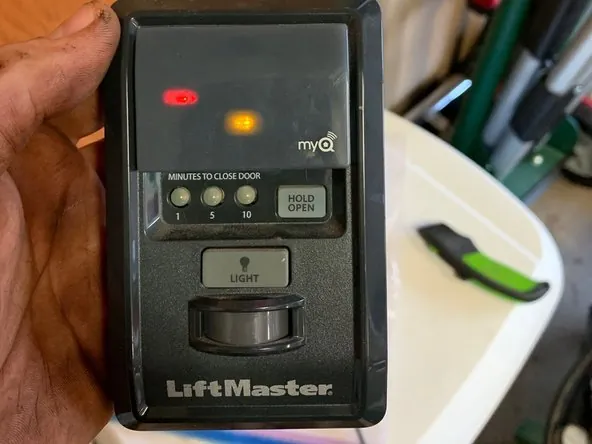
A wall-mounted control panel sometimes has a lock feature that disables the remote controls. This is a common mistake when someone accidentally holds the lock button for a few seconds while cleaning or hanging items near the console. You can tell this is the cause if the wall button light is flashing rapidly or the remote clicks but the motor doesn’t respond.
To disable the lock, look for a button labeled “Lock” on your wall console. Press and hold this button for 3 to 5 seconds until the light stops flashing or returns to its normal state. If your model doesn’t have a dedicated lock button, consult the manual for your specific wall station model. Sometimes, simply holding the main door control button for several seconds will toggle the lock mode on or off.
This feature is intended to keep the door shut while you’re on vacation. If your remote controls work but the wall button does not, or vice versa, the wall station might be faulty. If you have multiple wall stations, try each one to see if one is stuck in the locked position. If none of the wall buttons respond, the issue may be a loose wire behind the console itself.
Rare mechanical issues
Broken torsion springs: If you see a clear gap in the metal coil above the door, the spring is snapped. The door is now too heavy for the motor to lift safely. Don’t attempt to operate the opener, as the motor will likely burn out under the sudden load.
Disconnected trolley: If the emergency release rope is pulled, the motor will run but the door won’t move. Check the carriage assembly on the rail. If the release lever is hanging down, simply pull it toward the motor to re-engage the latch.
Worn gear assembly: If the motor makes a loud grinding noise but the door doesn’t move, the internal nylon gears inside the housing have likely stripped. This usually happens after ten years of service. If you see white plastic shavings near the motor unit, the gear kit requires replacement.
Remote battery failure: If the wall button works but the remote does not, the battery is likely dead. If a fresh battery fails to fix the issue, hold the learn button on the motor for three seconds to resync the signal.
If you identify a broken spring, stop immediately and call a professional. Replacing a torsion spring involves high-tension parts that can cause severe injury if handled without specialized tools and training. Attempting to wind these springs yourself risks catastrophic failure of the hardware.
What a professional fix requires
Fixing a garage door issue involves either simple adjustments or part replacements. If the problem is just sensor alignment or a locked console, you only need a few minutes and a screwdriver to tighten the brackets. These fixes cost nothing beyond your time. If a part like a sensor or gear assembly is broken, you’ll need to buy a replacement part from the manufacturer.
The cost of parts depends on the age and model of your opener. You can check the model number on the side of the motor unit and compare it against the manufacturer’s parts list online. If you need a professional, the cost will include a service call fee plus the price of the labor and any new parts. Get a quote by calling a local garage door specialist and describing the specific symptoms you see.
Always ask for a quote before work begins to avoid surprises. If the technician suggests replacing the entire unit, ask why the specific part can’t be repaired. A well-maintained opener can last a long time, but parts like gears and springs do wear out eventually. If your unit is quite old, parts may be harder to find, and a full replacement might be more cost-effective.
Related guides
Frequently asked questions
Can I open the door if the sensor is broken?
You can’t open the door using the motor if the safety sensors are broken or disconnected. The system is designed to fail-safe, meaning it won’t allow operation if it detects a potential hazard. If you must open the door, use the emergency release rope to disconnect the trolley and lift the door manually by hand.
How do I know if my garage door spring is broken?
You know the spring is broken if you see a visible gap of 1 to 2 inches in the metal coil located above the door. You might also hear a loud bang in the garage or find that the door is extremely heavy to lift manually. Never attempt to operate the motor or fix the spring yourself if you see this gap.
How long should a garage door opener last?
A standard residential garage door opener typically lasts for a significant duration with regular use. The lifespan depends on how often you cycle the door and how well you maintain the tracks and springs. If you notice the motor struggling or making unusual noises, it may be time to inspect the drive chain, belt, and gear assembly for wear.
Is it safe to fix a garage door by myself?
It’s safe to perform basic maintenance like aligning sensors or changing remote batteries, but you should never touch the springs or cables. These parts are under extreme tension and can cause serious injury if they snap or release unexpectedly. If you’re unsure about any step, always call a professional technician to handle the repair.
What happens if I pull the red emergency rope?
The door disconnects from the motor and allows you to move it manually when you pull the red emergency release rope. This is useful during power outages or when the motor fails. To reconnect the door to the opener, pull the rope toward the door and move the door until the trolley clicks back into the drive chain or belt.
Why does my garage door move a few inches and stop?
The door stops and reverses because the safety system detects an obstruction or a mechanical resistance. This usually happens if the safety sensors are misaligned or if the track is blocked by debris. Check the sensor lights first, then inspect the tracks for any objects that might be preventing the door from moving smoothly along its path.
Conclusion
If your door still won’t budge after checking those sensors, there might be a deeper mechanical issue at play. Don’t hesitate to reach out to a local technician if you’re feeling unsure. It’s better to be safe than sorry, and they’ll get everything running smoothly again before you know it.
