
A kettle type reboiler uses a shell-and-tube heat exchanger to vaporize process fluids, a process commonly used to separate components in chemical plants and oil refineries. Liquid enters a large shell to cover a bundle of heated tubes. Steam or hot fluid inside these tubes transfers heat to the liquid, causing it to boil. The resulting vapors rise into a top space before leaving the unit for further processing.
Components of a kettle reboiler
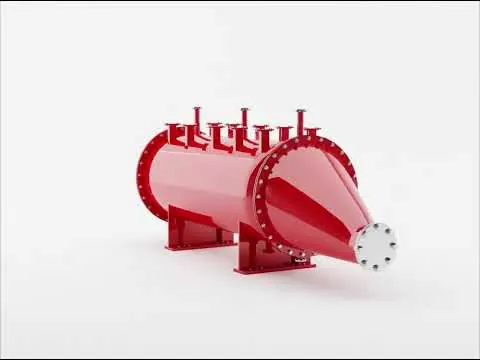
The parts of a kettle reboiler each serve a specific role in the heat transfer process. You can find the exact specifications for your unit by checking the American Petroleum Institute standards for shell and tube exchangers which define the design requirements for industrial use.
| Part or input | What it does | What you notice when it goes wrong |
|---|---|---|
| Shell | Contains the liquid pool | Leaks or external corrosion |
| Tube bundle | Transfers heat to liquid | Fouled surfaces or low heat |
| Weir plate | Maintains liquid level | Poor overflow or dry tubes |
| Vapor space | Allows vapor separation | Liquid carryover into product |
| Steam inlet | Supplies heat energy | Blocked valves or low pressure |
The weir plate is your most critical control point. It must sit high enough to keep the top row of tubes submerged at all times. If the liquid level drops below these tubes, you risk localized overheating and rapid coking on the metal surface.
Check your liquid level during startup. If the level remains below the weir height, you’ll see erratic temperature swings in the bottoms product. When the liquid is too high, the vapor space shrinks, causing liquid droplets to carry over into the overhead system. This contamination often ruins the purity of your final product.
Always verify the bundle clearance before installation. If the bundle is too close to the shell wall, you create a stagnant zone. This prevents proper circulation and leads to uneven heat distribution across the tube bank.
The cycle of operation
The liquid feed enters the shell until it reaches the overflow height of the internal weir plate. Maintain this level within two inches of the weir’s crest to prevent liquid carryover into the vapor outlet.
Hot utility fluid, usually steam, flows inside the tube bundle to heat the surrounding pool of liquid. If your steam pressure fluctuates by more than five percent, the boiling rate will become unstable, causing erratic pressure spikes in the vapor space.
As the liquid reaches its boiling point, bubbles form and rise to the surface of the pool. The vapor collects in the upper section of the shell, separate from the boiling liquid pool below.
Liquid that doesn’t vaporize flows over the weir and exits the shell as a bottom product. If the discharge valve is throttled too tightly, the pool level will rise and flood the bundle. The vapor exits through the top nozzle to continue toward a distillation column or condenser unit.
Kettle reboiler performance and applications
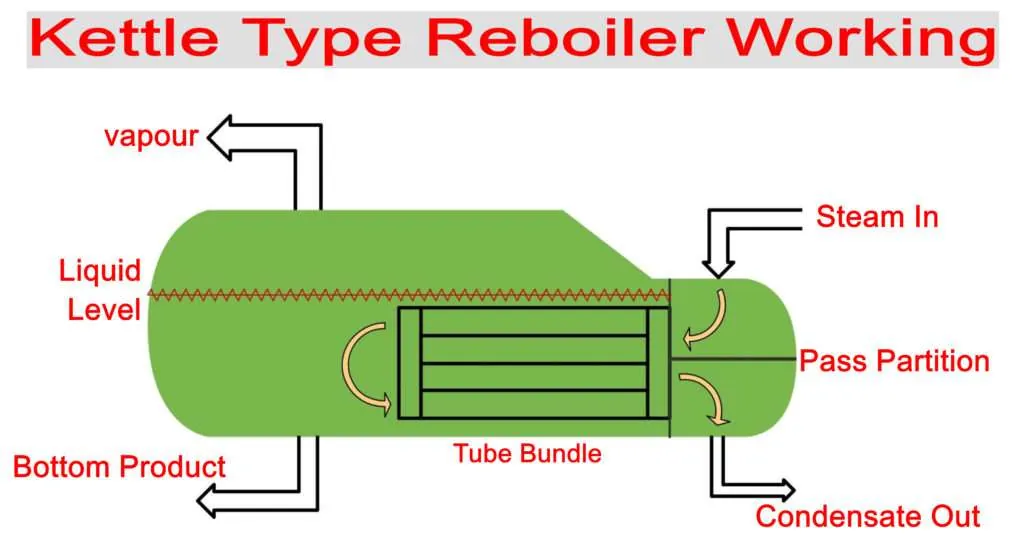
The efficiency of this system relies on the liquid level remaining constant over the tube bundle. If the level drops too low, the top rows of tubes become exposed to vapor instead of liquid. This reduces the total surface area available for boiling, which causes the heat transfer rate to plummet. Operators must monitor the weir height closely because it acts as the primary control for the liquid inventory.
Fouling presents another common challenge that changes how the unit functions over time. As minerals or process residue coat the outside of the tubes, they create an insulating layer that blocks heat. You might notice this when the required steam pressure increases to maintain the same vapor output. If you see a steady rise in steam demand without an increase in production, the tubes likely need cleaning.
Pressure differences also dictate the boiling point of your fluid. If the internal pressure of the shell rises due to a downstream restriction, the liquid requires more heat to boil. This shifts the balance of the system, potentially causing the liquid to back up or the vapor flow to become unstable. Always verify that your pressure control valves are calibrated according to the manufacturer’s data sheet for your specific vessel.
Operational control and design limits
Things you can change
- Adjust the steam flow rate to control the heat input.
- Modify the feed rate to maintain the correct liquid level.
- Change the pressure set point to alter the boiling temperature.
- Clean the tube bundle surface to remove accumulated fouling.
Fixed design limits
- The physical size and total surface area of the tubes.
- The height of the internal weir plate.
- The material compatibility with the process fluid.
If you suspect a internal mechanical failure like a broken weir or collapsed tube, don’t attempt repairs yourself. These vessels are pressurized systems that require certified personnel and specialized welding procedures to remain safe. Contact your plant’s maintenance department or a qualified pressure vessel technician to handle these inspections.
Habits for better heat transfer

Successful operation depends on keeping the tube bundle fully submerged at all times. If the liquid level oscillates, the thermal stress can weaken the tube-to-tubesheet joints over time. Check your level control instrumentation at least once per shift to ensure it provides a stable signal.
Keep your steam trap functioning correctly to prevent condensate from backing up into the tubes. Condensate takes up space that should be used for steam, which effectively reduces the heating capacity of the bundle. If you notice the condensate return line feeling cold to the touch, the trap is likely stuck closed.
Monitor the temperature difference between the steam inlet and the shell fluid. A narrowing gap often indicates that the heat transfer surfaces are becoming fouled. If the temperature difference remains high but the vapor output stays low, check for non-condensable gases trapped inside the tubes. Venting these gases periodically restores the efficiency of the heat exchange process.
Frequently asked questions
How long does a kettle reboiler typically run between cleanings?
Most units run for 12 to 24 months between cleanings, depending on the cleanliness of the process fluid and the fouling tendency of the chemicals involved. You can determine your specific interval by tracking the steam-to-vapor ratio; when the ratio exceeds your baseline by 15%, it’s time to plan a shutdown for maintenance.
Is it safe to operate with the shell level below the top tubes?
No, operating with exposed tubes is unsafe because it causes uneven heating and thermal stress on the tube bundle. The liquid must cover the entire bundle to ensure uniform heat distribution, or you risk damaging the mechanical integrity of the tubes over time.
Why does the vapor pressure fluctuate during operation?
Vapor pressure fluctuates because the balance between heat input and liquid feed rate is being disturbed. If your steam flow spikes or your feed supply drops, the liquid boils too quickly and changes the pressure inside the shell. Stabilize your feed flow first to see if the pressure settles.
Does the material of the tubes matter for performance?
Yes, the thermal conductivity of the tube material directly affects how fast heat moves into the liquid. Copper or high-grade stainless steel are common choices because they conduct heat well, but you must consult your vessel’s original design specifications to ensure any replacement matches the required pressure and corrosion ratings.
What happens if the weir plate collapses?
The liquid level will drop to the bottom of the shell, which leaves most of the tube bundle dry and unable to boil the process fluid. You’ll notice a sudden loss of vapor production and a potential alarm from your level control system, requiring an immediate shutdown to fix the internal structure.
How do I know if the steam trap is failing?
You can identify a failed steam trap by checking the temperature of the condensate line, which should be slightly cooler than the steam supply but not cold. A cold line suggests the trap is closed and blocking flow, while a line at the same temperature as the supply suggests the trap is stuck open.
Conclusion
These units remain essential for reliable distillation, but they aren’t always the most energy-efficient choice for every setup. If you’re planning a new system, it’s worth checking if a thermosyphon or falling film design might save you more power. You’ll find that choosing the right equipment really pays off in the long run.
