
You can bake frozen pizza in a pizza oven safely as long as you use a low temperature setting and allow for a longer, slower cook time than you would for a fresh pie. Because outdoor pizza ovens are designed to reach extreme heat quickly, the crust will often burn before the frozen center thaws if you treat it like a fresh pizza. Your success depends on your ability to manage the oven’s thermal mass, the starting temperature of the dough, and the specific fuel type you use.
Owners of outdoor pizza ovens
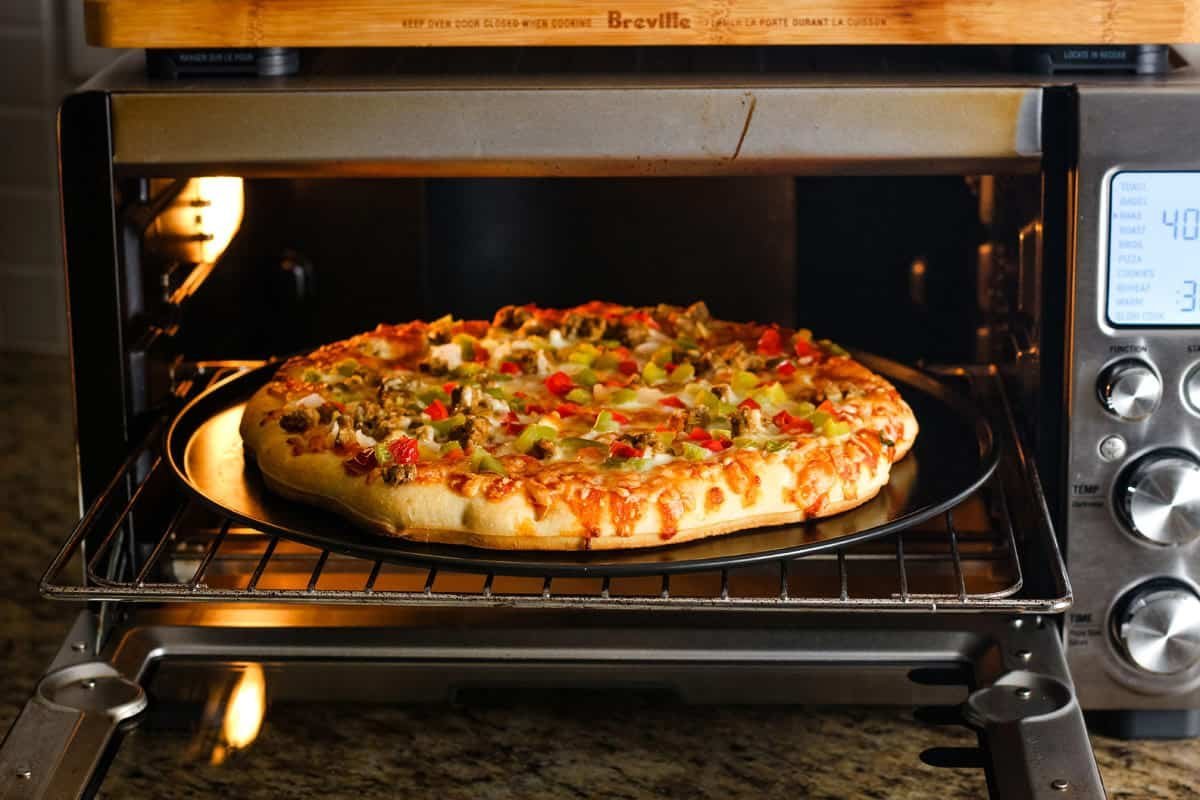
This page serves people who own wood-fired, gas, or pellet-fired outdoor pizza ovens and want to use them for convenience meals. These users typically have an oven that reaches temperatures between 700°F and 900°F, which is far hotter than the 400°F to 450°F range required for standard frozen supermarket pizzas.
We assume you’re using a commercially purchased frozen pizza that’s designed for a standard home oven. If you’re trying to bake a homemade frozen pizza you prepared yourself, the moisture content and thickness will change the required timing significantly. This page focuses on the technique of “tempering” the oven to handle a lower-heat product without damaging your stone or producing a burnt exterior with a cold, icy middle.
Heat management and moisture control
The primary factor deciding your success is the thermal mass of your oven. If you have a thick stone, it will hold heat for a long time; if you don’t let the stone cool down after a high-heat session, the bottom of the frozen pizza will char instantly. You must measure the stone temperature with an infrared thermometer to ensure it stays below 500°F for the best results.
Fuel type also changes the outcome. Wood-fired ovens add smoke flavor that can be overpowering for a mass-produced frozen pizza, while gas ovens offer more stable control. If your oven uses gas, you can turn the flame to its lowest setting to maintain a consistent ambient heat. If you use wood, you need to let the fire die down to a bed of embers rather than active flames to avoid scorching the toppings.
The moisture content of the pizza is the final variable. Frozen pizzas contain significant ice crystals, which turn into steam as they melt. If you crowd the oven or keep the door closed too tightly, the steam will soften the crust, making it soggy. You must balance the heat to evaporate this moisture without burning the cheese. People often fail by rushing the process, which results in a pizza that’s black on the edges and frozen in the center.
Steps for consistent baking
- Remove all plastic packaging and cardboard circles from the frozen pizza while it’s still fully frozen.
- Let the pizza sit on the counter for 15 minutes to take the sharpest chill off the dough, which helps the center cook faster.
- Fire your oven until the stone reaches a surface temperature of 450°F to 500°F, then move the fire to the very back or turn your gas to the lowest setting.
- Place the pizza in the center of the oven, ensuring it’s at least 6 inches away from the active flame or hot embers.
- Rotate the pizza 90 degrees every 2 minutes to ensure even cooking, as frozen pizzas are more sensitive to localized heat than fresh dough.
- Use FoodSafety.gov’s chart for safe temperatures to verify that the center of the pizza reaches 165°F, which ensures any meat toppings are fully cooked and safe to eat.
- Remove the pizza from the oven once the cheese is bubbling and the crust is golden brown, usually between 8 and 12 minutes depending on the thickness.
- Let the pizza rest on a wire rack for 3 minutes before cutting, which allows the steam to escape and prevents the cheese from sliding off.
The single judgement call that separates a good result from a poor one is recognizing when to remove the pizza based on the crust color rather than a fixed timer. If the edges darken too quickly, move the pizza toward the front opening of the oven where the air is slightly cooler.
Baking results by pizza type
| Pizza Situation | Action | Time Needed | Watch For |
|---|---|---|---|
| Thin crust | Use lower heat | 6-8 minutes | Burnt edges |
| Thick crust | Move to front | 10-14 minutes | Doughy center |
| Topping heavy | Rotate often | 12-15 minutes | Uneven melting |
| Small personal | Use a screen | 5-7 minutes | Rapid burning |
| Veggie style | Keep door open | 8-10 minutes | Soggy crust |
For thin crusts, drop your oven temperature by 25 degrees. This prevents the edges from charring before the center firms up. If the crust bubbles too much, poke it with a fork midway through.
Thick crusts require patience. Placing them near the front of the oven keeps the bottom from hardening before the middle finishes cooking. If the top browns early, tent it with foil to save the doughy center.
Heavy toppings create moisture traps. Rotate the pizza every four minutes to ensure even heat distribution. If you notice the cheese pooling in one spot, use a spoon to redistribute the oils.
Small personal pizzas cook fast. Using a mesh screen prevents the bottom from scorching against the hot stone. Watch the crust closely after five minutes, as these can go from golden to black in seconds.
Veggie pizzas release water during the bake. Keeping the oven door cracked for the final two minutes lets steam escape.
Signs of success and failure
Heat management techniques
Experienced bakers know that the stone is the most important part of the process. If your stone is too hot, the base will burn before the toppings melt. Always check the stone temperature with an infrared gun before placing the pizza inside.
Texture and topping consistency
The order of operations is vital for a good result. Never add fresh toppings to a frozen pizza before baking, as they will release water and turn the crust into a mushy mess. If you want to add extra cheese or herbs, wait until the last 2 minutes of the bake. This keeps the flavor fresh and prevents the fats from separating and turning into an oily pool.
Baking errors and solutions
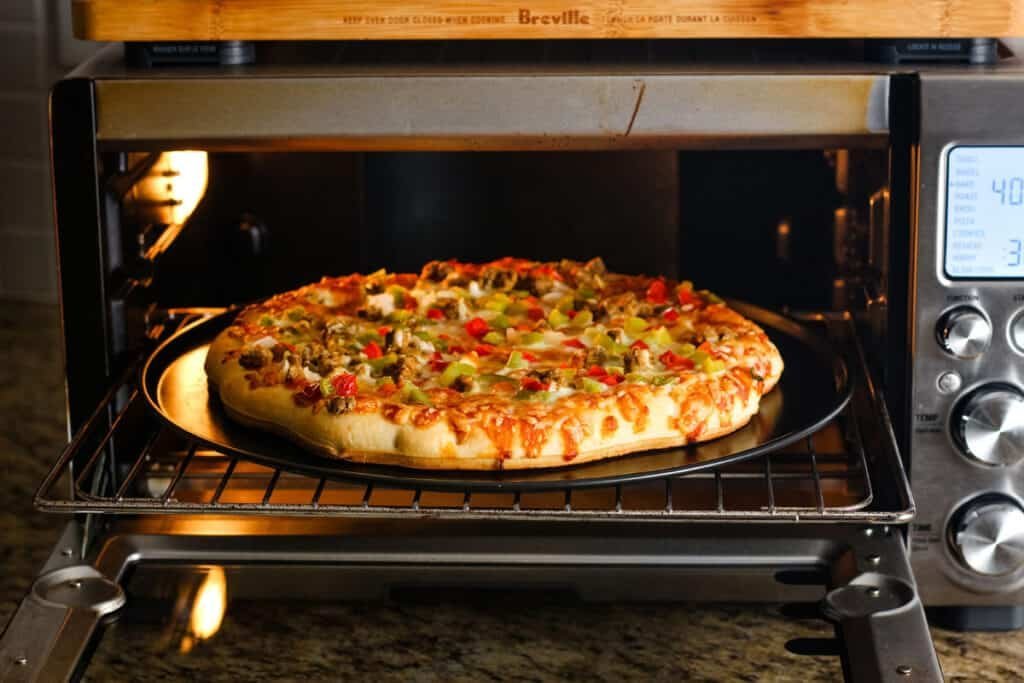
| What you notice | What it usually means | What to do first | How to stop it |
|---|---|---|---|
| Burnt crust | Stone too hot | Move to front | Lower stone temp |
| Frozen middle | Heat too high | Reduce flame | Thaw 15 mins |
| Soggy center | Excess steam | Open door slightly | Use pizza screen |
| Dried out cheese | Cooked too long | Check temp early | Use lower heat |
| Uneven browning | Poor placement | Rotate pizza | Keep away from fire |
If your crust burns while the center remains raw, your stone is likely saturated with heat. This happens when the stone sits too close to the flame for over 45 minutes. To fix this, move the pizza to the oven’s front edge, which is typically 50 degrees cooler.
A soggy center often results from using too many fresh toppings. If you see liquid pooling, reduce your sauce volume by one tablespoon. If the issue persists, switch to a perforated pizza screen. This tool allows moisture to escape from the bottom during the first three minutes of baking.
Many bakers mistake a dried-out crust for a lack of moisture in the dough. In reality, this is usually caused by over-baking at a temperature below 700 degrees. If your cheese looks leathery, stop relying on a timer. Instead, pull the pizza the moment the crust shows light brown spots. If you’re baking multiple pies, wait exactly four minutes between each launch to let the stone recover its temperature. Failing to wait leads to a pale, limp crust that lacks a proper crunch.
Rules for safe preparation
You must follow standard food safety protocols when handling frozen products, as they aren’t pre-cooked to a sterile state. The USDA and other health authorities emphasize that pathogens like Listeria can survive in cold environments, meaning your freezer doesn’t kill bacteria. Always ensure your pizza reaches an internal temperature of 165°F to ensure it’s safe for consumption.
Use a digital instant-read thermometer to verify this temperature. Insert the probe into the center of the thickest topping or the crust edge. If the reading is below 165°F, you risk surface-level contamination that heat hasn’t yet neutralized.
If your pizza contains meat, such as pepperoni or sausage, this temperature is essential for safety. This error can lead to foodborne illness.
If you’re using a commercial oven that requires specific ventilation or fuel clearances, check the manufacturer’s manual for your specific model to ensure you aren’t violating safety codes. Never attempt to modify the interior of a gas-powered oven to increase airflow. This modification often leads to incomplete combustion and dangerous carbon monoxide buildup.
The cost of convenience
Baking frozen pizza in a specialized oven costs more in fuel than using a standard home oven. A wood-fired oven requires several logs to maintain the ambient temperature, while a gas oven consumes a higher volume of propane to keep the heat steady for the 10 to 15 minutes required to cook a frozen item. The real cost is your time and effort in monitoring the pizza to prevent burning.
If you find that your frozen pizza is consistently burning, the cost of the wasted food is the primary concern. You can mitigate this by investing in a pizza screen, which is an inexpensive accessory and provides a physical barrier between the hot stone and your pizza. This simple tool allows you to bake at slightly higher temperatures without risking the integrity of the crust, effectively saving you money on wasted meals.
Maintaining your equipment
After you finish, you must clean the stone once it has fully cooled. Use a long-handled brush to remove any burnt cheese or dough debris left behind by the frozen pizza. Never use water or cleaning chemicals on a porous ceramic stone, as they can soak into the material and affect the taste of your next meal.
Check the burner ports or the firebox for any ash buildup after every session. Frozen pizzas can sometimes drip grease, which may clog small gas ports or create uneven soot patterns in a wood oven. If you notice an uneven flame pattern, stop using the oven and contact the manufacturer for guidance on safely cleaning the burner assembly.
Many owners mistakenly use a wire brush on ceramic stones. This practice creates deep micro-abrasions that trap food particles, eventually leading to mold growth or permanent burnt-on flavors. Use only nylon or natural-bristle brushes to preserve the surface integrity.
If you’re unsure whether your stone needs a deep clean, perform the “water drop” test. Place a single drop of water on the surface; if it beads up, the stone is seasoned and safe. If it absorbs immediately, the pores are open and vulnerable to soap contamination. In that case, keep the stone dry and rely solely on heat to sanitize the surface before your next bake.
When to use a standard oven
If your frozen pizza has a very thick, doughy crust, an outdoor pizza oven is often the wrong choice. These ovens are built for rapid, high-heat cooking, which is the opposite of what a thick, frozen crust needs to rise and cook through. If you use the outdoor oven, you’ll almost always end up with a burnt exterior and a raw, doughy center that isn’t safe to eat.
In these cases, a standard kitchen oven is the better tool. It provides a more controlled, lower-temperature environment that allows the center of the dough to heat through slowly.
The primary mistake here is assuming that higher heat always yields better results. For thick crusts, you need an ambient temperature between 375°F and 425°F. If your pizza requires more than 15 minutes to cook, the outdoor oven’s 800°F stone will char the base long before the center is cooked.
Use this decision rule: if the crust is over an inch thick, stick to the kitchen oven. If the pizza is thin-crust or pre-parbaked, the outdoor oven is safe. If you lack a standard oven, place your pizza in a deep-dish cast iron pan. This metal barrier slows heat transfer, protecting the dough from the stone’s intense, localized thermal radiation.
Frequently asked questions
Can I bake frozen pizza on a pizza stone?
Yes, you can use a pizza stone, but it must be preheated to a lower temperature than you would use for fresh dough. Aim for a stone temperature of 450°F to 500°F to ensure the crust cooks through before the top burns.
How long does a frozen pizza take in a wood-fired oven?
A frozen pizza typically takes 8 to 12 minutes in a wood-fired oven when the heat is managed correctly. You must monitor the color of the crust closely, as the intense radiant heat can cause the exterior to burn in less than 5 minutes if not placed far from the flame.
Is it safe to cook frozen food in a pizza oven?
Yes, it’s safe as long as the internal temperature of the pizza reaches 165°F. Use an instant-read digital thermometer to check the center of the pizza, especially if it contains meat or poultry toppings, to ensure all bacteria are destroyed during the cooking process.
Why is my frozen pizza soggy in the middle?
Your pizza is soggy because the ice crystals in the dough are turning into steam and getting trapped under the cheese. To fix this, ensure your oven is hot enough to evaporate the moisture and try using a pizza screen to allow air to circulate under the crust.
Does the type of pizza oven matter?
Yes, gas ovens are generally easier to use for frozen pizza because they offer consistent, adjustable heat. Wood-fired ovens are more challenging because the temperature drops as the fire dies down, requiring you to carefully manage the embers to avoid uneven cooking or a smoky, bitter flavor.
What happens if I put a frozen pizza on a 900°F stone?
If you put a frozen pizza on a 900°F stone, the bottom will burn to a crisp while the top remains frozen. This extreme temperature difference causes the bottom of the crust to carbonize instantly, creating a bitter flavor and a texture that’s impossible to chew.
Can I put a frozen pizza directly on the oven floor?
You should avoid placing a frozen pizza directly on the oven floor unless the temperature is strictly controlled below 500°F. Placing a frozen item on an ultra-hot hearth will shock the stone and result in a burnt, inedible crust before the toppings have a chance to melt properly.
Bake frozen, in short
Start by preheating your oven to a moderate temperature and using an infrared thermometer to verify the stone surface before you slide the pizza in. Watch the crust color closely during the first few minutes, and use a peel to rotate the pizza to ensure even heat distribution. If you see the edges darkening too fast, move the pizza to a cooler zone or use a screen to finish the bake.
Related guides