
Finding the best hospital grade air purifier means choosing between power and convenience. You’re likely looking for a unit that keeps your indoor air clean from dust, dander, and allergens without constant oversight. Some units focus on smart sensors that react to air changes, while others prioritize long-term durability and filter life. Focus on the filter specifications and room coverage ratings to ensure you pick a model that actually suits your living area.
*As an Amazon Associate, we earn from qualifying purchases. *
1. Austin Air HealthMate Plus Air Purifier

Best for: Long-term use in large living spaces or offices.
This unit uses a 4-stage filtration system that includes activated carbon and zeolite. It’s designed to capture particles like dust, mold, and VOCs, which helps if you have asthma or pet sensitivities. The long-lasting filter, rated for up to 5 years, is the main feature that separates this from models that require frequent replacement.
It’s built for consistent performance in spaces up to 1,500 square feet. Owners will find it runs quietly even when operating at higher power levels, which is useful for bedrooms. It isn’t for buyers who want smart app connectivity or real-time digital air quality displays, as it relies on manual controls.
| What it gives | What you accept |
|---|---|
| 5-year filter life | No smart app controls |
| 1,500 sq ft coverage | Manual control interface |
| Activated carbon and zeolite | Larger physical footprint |
2. Medify MA-112 PRO Air Purifier with HEPA Filter
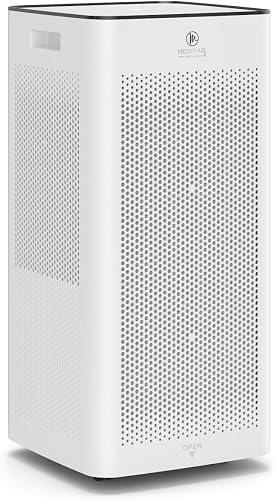
Best for: Rapid air purification in massive rooms.
This purifier is built for speed, cleaning up to 5,948 square feet in one hour. It uses dual H13 True HEPA filters to remove particles down to 0.1 microns, making it a strong choice for smoke and heavy pollution. The unit is mounted on wheels, which is the key feature that makes moving this heavy-duty machine between rooms manageable.
Using it’s straightforward thanks to a touch panel that includes a timer and sleep mode. You’ll need to replace the filter set every 3,000 hours, or roughly every 4-5 months, which is a frequent maintenance task compared to others. It isn’t for people looking for a compact, unobtrusive unit, as its high-capacity design is physically large.
What goes smoothly:
- Quick cleaning for very large areas
- Easy to move on wheels
- Sleep mode dims panel lights
- Child lock feature included
What you have to accept:
- Filter replacements are required every 4-5 months
- Large design takes up significant floor space
3. AIRDOCTOR AD5500 Air Purifier. Cleans Whole Home

Best for: Whole-home air purification with advanced sensors.
The AD5500 utilizes UltraHEPA filtration, which captures particles as small as 0.003 microns. This is a significant step beyond standard HEPA, as it targets pollutants that are 100 times smaller. It also includes an auto mode that uses PM2.5 sensors to monitor air quality and adjust fan speeds in real-time.
You can expect a quiet experience, as it’s designed to run without disrupting your sleep or work. It isn’t for someone who doesn’t have an open floor plan, as the system is optimized for large, flowing spaces rather than small, walled-off rooms.
Snapshot:
- Cleans 4,172 sq ft in one hour
- UltraHEPA captures 99.99% of tiny particles
- Real-time air quality display with Halo
- Includes timer and six fan speeds
- Quiet performance for day or night use
4. BLUEAIR Signature SP4i

Best for: Buyers who want smart home integration and style.
This model features 7-stage HEPASilent filtration to capture particles down to 0.1 microns. It doubles as a piece of furniture, which is a unique design choice that helps it blend into living rooms or offices. The ability to control schedules and fan speeds through an app is the main feature for those who want to manage their air quality remotely.
It provides real-time feedback through a 5-color indicator system, letting you know the air quality at a glance. It isn’t for users who prefer simple, “set-it-and-forget-it” buttons, as the smart features require app setup to use all available settings.
Who it fits Those who want to control their air purifier from their phone while at work or in another room. It suits people who prefer a modern, furniture-style aesthetic over a traditional plastic appliance look.
Who should pass People who don’t want to manage an app or connect their appliances to home Wi-Fi. It’s also not ideal for those who prefer a purely utilitarian, compact design.
5. WINIX 5520 Air Purifier

Best for: Real-time monitoring and smart sensor automation.
This purifier features a washable pre-filter and a True HEPA filter that captures allergens as small as 0.01 microns. Its air quality indicator provides a visual, color-coded status of your room’s air. The smart sensor and auto mode are the primary features here, as the unit constantly adjusts to changes in your environment.
It’s compatible with the Winix Smart App, allowing for remote monitoring. It isn’t for those who need to cover massive, multi-room layouts, as its coverage is limited to 1,882 square feet in one hour.
What goes smoothly:
- Real-time air quality LED display
- Smart app for remote control
- Auto mode adjusts speed automatically
- Washable pre-filter reduces maintenance
- Very quiet on the lowest speed
What you have to accept:
- Lower coverage area than larger dedicated units
- Requires app setup for full monitoring
6. COWAY Air Purifier

Best for: Consistent automated performance in medium-to-large rooms.
The Coway Mighty AP-1512HH(W) uses a 4-stage system including a bipolar device and a HEPA filter. The auto mode is the standout feature, as it monitors air quality and adjusts the fan speed dynamically to keep the room clean. It’s a reliable, straightforward workhorse for spaces up to 1,748 square feet.
The filter alert system takes the guesswork out of maintenance by tracking how much air has passed through the unit. It isn’t for users who want advanced smart features like app control or detailed particle count displays, as it focuses on simple, sensor-based automation.
| What it gives | What you accept |
|---|---|
| Automated sensor-based fan speed | No app connectivity |
| Filter replacement indicators | Minimal digital display |
| 1,748 sq ft coverage | Manual button interface |
7. AIRDOCTOR AD3500 Air Purifier
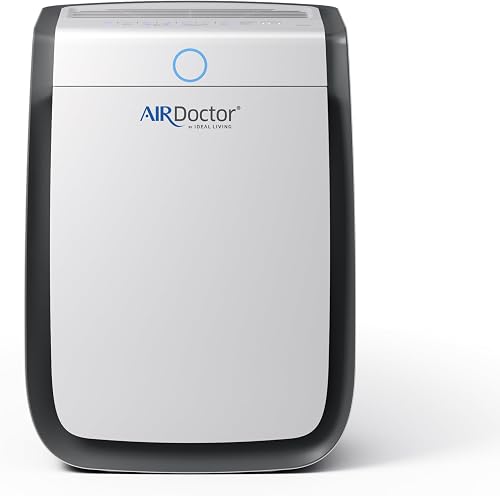
Best for: Effective filtration in a smaller, compact footprint.
This model shares the UltraHEPA filtration technology of the larger AD5500, capturing 99.99% of particles down to 0.003 microns. It’s designed for bedrooms and kitchens, offering a more compact size while still cleaning up to 2,520 square feet in an hour. The Halo air quality monitor provides real-time feedback on your environment.
It’s a great fit for those who want the high-end filtration of the professional series without the larger size of the whole-home models. It isn’t for anyone who needs the highest-end, massive-room coverage of the AD5500, as this unit is built for smaller, more focused areas.
What goes smoothly:
- Compact design for bedrooms
- UltraHEPA 0.003 micron filtration
- Real-time air quality Halo display
- Quiet operation for sleeping
- Auto mode adjusts fan speed
What you have to accept:
- Smaller coverage area than the AD5500
- Four fan speeds instead of six
8. LEVOIT Smart Air Purifiers

Best for: Users who value independent performance certification.
The Core 400S-P is AHAM Verifide, meaning it has been independently tested for CADR ratings regarding smoke, dust, and pollen. It uses a 3-stage filtration system to capture particles down to 0.1 microns. The AirSight Plus laser sensor is the main feature, as it updates the PM2.5 display continuously so you can see exactly what is in the air.
It’s powerful enough to handle 1,733 square feet in an hour, making it versatile for most living rooms. It isn’t for those who prefer long-term passive filtration, as the smart features and laser sensors are designed for active, constant monitoring.
Snapshot:
- AHAM Verifide performance rating
- Laser dust sensor for real-time data
- Captures 99.97% of particles down to 0.1 microns
- Covers 1,733 sq ft in one hour
- Smart display shows PM2.5 levels
The Decision Filter
To pick the right unit, start by measuring your room size in square feet and comparing it to the hourly coverage capacity of these units. Decide if you want a machine that you control via an app or one that runs purely on physical buttons. If you have severe allergies, prioritize models with advanced filtration capable of trapping the smallest possible airborne irritants over standard HEPA. Those who want to set it and forget it should look for units with auto-mode sensors. Finally, consider if you have the space for a floor-standing unit or if you need something more compact for a bedroom.
The Thirty-Second Checklist
- Do you know the exact square footage of the room where the unit will live?
- Will the unit be placed in a bedroom where noise levels during sleep matter?
- Are you comfortable using an app to monitor your air quality and filter life?
- Does anyone in your home suffer from specific allergies that require ultra-fine particle filtration?
- Is there enough floor space to accommodate a large, high-capacity air purifier unit?
- Are you prepared to replace filters on a schedule to keep the machine effective?
Three Regrets Worth Avoiding
Regret #1: Buying a unit based on its maximum coverage without considering the noise at high speeds. The listing doesn’t mention the decibel levels for every fan speed.
Regret #2: Ignoring the maintenance schedule of the filters. Some high-performance units require filter changes every few months, which can be an unexpected chore. Choose a model with a longer filter life if you prefer low-maintenance ownership.
Regret #3: Overlooking the physical size of the unit. Some of the most powerful purifiers are large and difficult to move, which can be a problem in smaller homes. Measure your available floor space before deciding on a model.
If You Want This, Look for That
| If you want… | Look for | Avoid |
|---|---|---|
| Ultra-fine filtration | 0.003 micron rating | Standard HEPA only |
| Remote control | App compatibility | Manual-only controls |
| Minimal maintenance | 5-year filter life | 3-month filter cycles |
| Automated cleaning | PM2.5 sensors | Fixed fan speeds |
| Large room power | High CADR ratings | Small bedroom units |
The best hospital grade air purifier for you depends on your room size and how much you care about smart features. When in doubt, prioritize the Association of Home Appliance Manufacturers certification to ensure the performance claims match real-world expectations. Check your room dimensions carefully before finalizing your choice.
Related guides
- 10 Best Air Purifiers for Cat Litter Dust: Our Top Picks in 2026
- 10 Best Air Purifiers for Kitchen Smells: Our Expert Picks in 2026
- Best Hepa Air Purifier Under 100 Dollars in 2026
Frequently Asked Questions
Do these air purifiers remove all odors?
Most of these units use activated carbon filters designed to reduce common household odors, smoke, and VOCs. While they’re very effective at neutralizing cooking smells, pet odors, and smoke, they may not eliminate every single trace of scent in a room. Consistent airflow and regular filter replacements are key to maintaining odor control.
How often should I replace the filters?
Filter life varies significantly between models, ranging from a few months to several years. High-capacity units often require more frequent changes, while others use long-life filters to minimize maintenance. Always check the manufacturer’s indicator light or schedule to ensure the filtration remains effective according to the recommended replacement interval.
Can I leave the air purifier on all day?
Yes, these units are designed for continuous operation to keep air quality stable. Most models feature energy-efficient modes or auto-sensors that lower power consumption when the air is already clean. Leaving them on ensures that dust and allergens don’t accumulate between your cleaning sessions.
Are these units loud at night?
Many of these purifiers include a dedicated sleep mode or a whisper-quiet setting designed for nighttime use. While they can be loud at maximum power, they generally operate at very low decibel levels on their lowest settings. Check the specific noise rating for the “low” or “sleep” mode if you’re a light sleeper.
Do I need to clean the exterior of the unit?
Wiping down the exterior with a soft cloth is recommended to keep the intake vents free of dust. Keeping the exterior clean helps the unit perform efficiently and ensures the sensors aren’t blocked by debris. Always consult your manual before using any cleaners on the device casing.
Will these units work with my smart home system?
Some models offer app connectivity that allows for integration with your smartphone or smart home ecosystem. If you want to use voice commands or monitor your air quality from your phone, focus on the models that specifically list app compatibility. Units without these features will rely on manual or remote control.
Final Thoughts
Investing in cleaner air makes a real difference in your daily comfort. Once you’ve measured your space, check the manufacturer’s website for current filter availability so you aren’t caught off guard later. You’ll breathe much easier knowing your home’s environment is finally protected by a system you can truly trust.