
If your garage door opener stopped working during a power outage, you might be looking for a LiftMaster battery backup to restore functionality. Depending on the specific model of your unit and whether you’re purchasing a simple replacement battery or an entire integrated system, you can expect to pay anywhere from $45 to $210 for these components. Adding this feature ensures that you retain access to your home even when the local electrical grid goes offline, providing a critical layer of security and convenience for busy households.
Key Takeaways
- Integrated battery backups allow for 20 to 50 cycles of operation during a standard power failure.
- Most replacement batteries for these systems have a lifespan of approximately 2 to 3 years before requiring a change.
- You should test your backup system monthly by unplugging the main power cord to ensure the battery engages correctly.
- The status LED on your opener will blink orange or alternate colors when the battery is low or needs replacement.
- Always recycle your old lead-acid batteries at authorized collection centers rather than disposing of them in household trash.
Understanding the Battery Backup System
A battery backup acts as an auxiliary power source that automatically kicks in the moment the primary AC power from your home is lost. These systems are typically housed within the motor unit of your garage door opener. When the power is out, the opener enters a low-power mode to conserve energy, often disabling non-essential features like the Wi-Fi connectivity or the main bright LED lights, while still allowing the motor to move the door up and down.
Integrated power systems are designed specifically for modern openers that feature a dedicated slot for a 12-volt lead-acid battery. If your opener didn’t come with one, you may need to verify compatibility before attempting to install a retrofit kit. Most units manufactured by the Chamberlain Group, which owns the LiftMaster brand, include a specific port for these batteries. You can confirm the exact specifications and compatibility requirements by checking the LiftMaster product support documentation to ensure your specific motor head supports this functionality.
How Much Does It Cost?
The financial investment for this safety upgrade varies based on whether you’re replacing a worn-out component or adding the feature for the first time. The following table breaks down the typical costs associated with these components.
| Component Type | Estimated Price Range |
|---|---|
| Replacement 12V Battery | $45 – $85 |
| Full Battery Backup Kit | $120 – $210 |
| Professional Installation Labor | $75 – $150 |
Installing Your New Battery
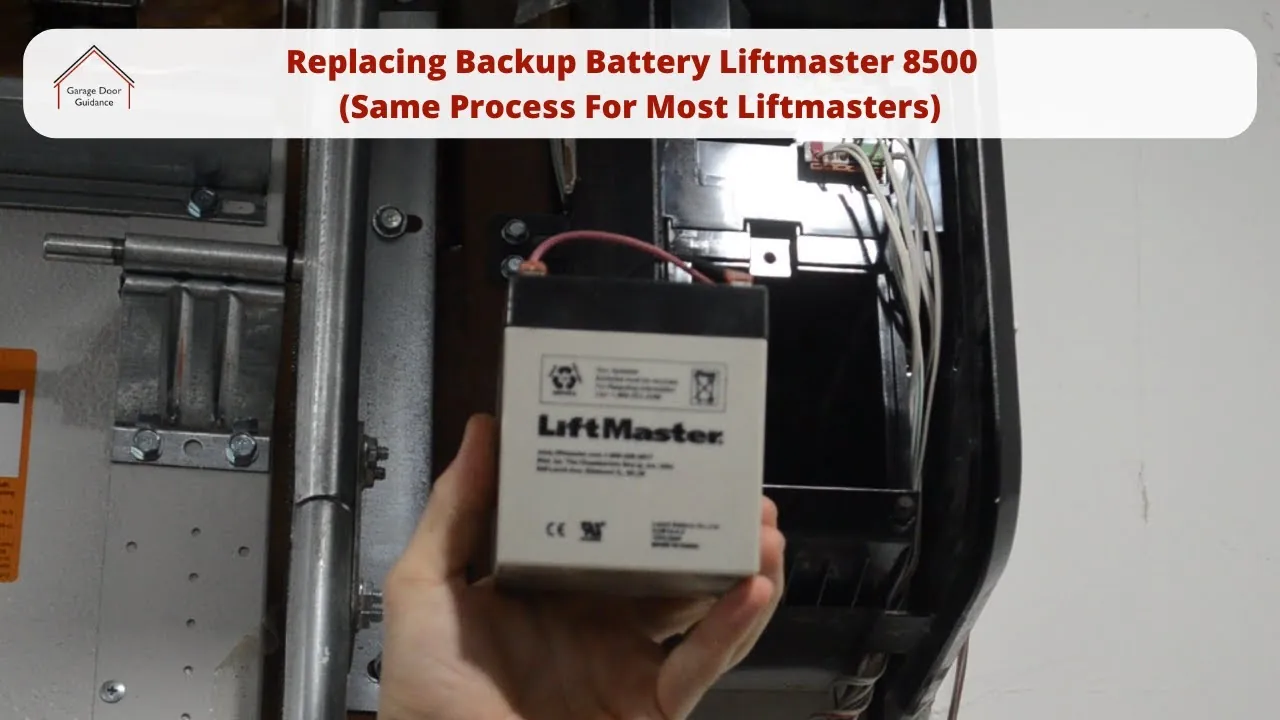
Installing a new battery is a straightforward process that doesn’t require specialized tools. Before starting, ensure that the garage door is in the closed position to prevent any accidental movement. Unplug the main power cord from the wall outlet to ensure you’re working in a safe environment.
- Locate the battery compartment cover on the side or top of the motor unit.
- Use a screwdriver to remove the screws holding the cover in place.
- Slide the old battery out and disconnect the two wire terminals.
- Connect the red wire to the positive terminal and the black wire to the negative terminal on the new battery.
- Slide the new battery into the housing and secure the cover back in place.
- Plug the power cord back into the outlet and wait for the status light to turn green.
Safety precautions are vital whenever you’re working with electrical components. Even though the battery is low voltage, the wires can still spark if shorted. Always ensure that the terminals don’t touch metal objects during the transition.
What Causes Battery Failure?
Batteries are chemical devices that degrade over time, regardless of how often you use them. The most common cause of failure is simple aging, where the internal plates lose their ability to hold a charge. Extreme temperature fluctuations in your garage can also accelerate this degradation process.
- Natural chemical aging leads to reduced capacity over years.
- Deep discharge cycles occur if the battery is left dead for long periods.
- Corrosion on terminals prevents a solid electrical connection.
- Excessive heat during summer months dries out the electrolyte.
If you find that your battery light is blinking red even after a full 24-hour charge, it’s likely that the battery has reached the end of its functional life and needs to be replaced immediately.
Troubleshooting Your Backup Unit
If your backup system isn’t performing as expected, start by checking the status lights on your motor unit. A solid green light indicates the battery is fully charged and ready. A blinking orange light usually means the battery is currently in use or is charging. A solid orange or red light often indicates a fault or that the battery is no longer holding a charge.
| Symptom | Probable Cause | Action Required |
|---|---|---|
| Opener doesn’t move | Dead Battery | Replace the 12V battery |
| Light blinks orange | Charging in progress | Wait 24 hours for full charge |
| Beeping sound heard | Power outage detected | Check home circuit breakers |
| No light on unit | Loose terminal wire | Reconnect battery cables |
Pro Tip: If the opener beeps periodically, it’s often a reminder that the battery is either low on power or has failed the self-test diagnostic. Check your manual to see if the beep pattern corresponds to a specific error code.
Maintenance and Testing Tips
To ensure your system is reliable, make it a habit to test the unit every time you perform seasonal garage maintenance. Testing is simple: unplug the power cord from the ceiling outlet and attempt to open and close the door using your wall-mounted control or remote. If the door moves at a normal or slightly reduced speed, the backup is functioning correctly.
- Visual inspection of the wires for fraying or damage.
- Cleaning the terminals with a baking soda solution if white crusty buildup appears.
- Testing cycles once a month to keep the internal chemicals active.
- Checking the date on the battery label to track its actual age.
Warning: Never attempt to open the battery casing itself. The lead-acid contents are hazardous if leaked. If you notice any bulging or leaking from the battery housing, handle it with gloves and place it in a sealed plastic bag for proper disposal at a hazardous waste facility.
Choosing the Right Replacement
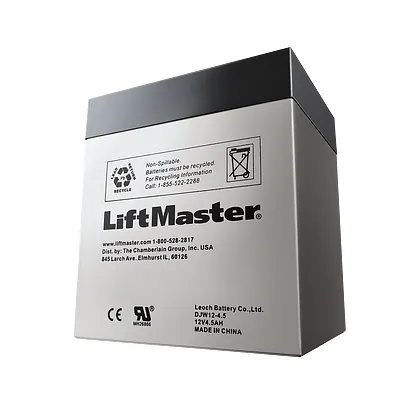
When searching for a replacement, always look for OEM parts or high-quality compatible batteries that match the voltage and amperage rating of the original. Generic batteries might fit, but they often lack the vibration resistance required for a ceiling-mounted garage door opener.
- Brand-specific batteries ensure the best fit for the housing.
- Sealed Lead-Acid (SLA) construction is standard for these applications.
- Check the model number on your motor head to match the battery.
- Verify the dimensions of the battery compartment before ordering online.
Choosing a reputable vendor is just as important as choosing the right battery. Ensure the seller provides a warranty, as batteries can sometimes arrive defective from the factory. If you’re unsure about the model number, most manufacturers provide a lookup tool on their website using the serial number found on the motor head.
Environmental Considerations
Because these batteries contain lead and sulfuric acid, they’re classified as hazardous waste in many jurisdictions. It’s illegal in many states to put these in your regular trash bin. Most auto parts stores and local recycling centers have dedicated drop-off bins for lead-acid batteries.
- Local municipal centers often accept batteries during hazardous waste days.
- Auto parts retailers frequently have recycling programs for customers.
- Electronics stores may offer trade-in programs for old batteries.
- Manufacturer take-back programs are available for certain brands.
By recycling your old battery, you help prevent harmful chemicals from leaching into the soil at landfills. Many of the materials in these batteries, including the lead and plastic casing, are reclaimed and used to manufacture new products, making recycling a highly efficient process.
Frequently Asked Questions
How long does a LiftMaster battery backup last?
A fully charged battery typically provides enough power for 20 to 50 cycles of opening and closing your garage door. In terms of shelf life, a high-quality battery will usually last between 2 and 3 years before it begins to lose its ability to hold a sufficient charge, depending on the ambient temperature of your garage and how frequently it’s used during power outages.
Can I install a battery backup on an older opener?
Most older garage door openers weren’t designed with the internal space or the electrical circuitry to support a battery backup. If your current model doesn’t have a dedicated battery compartment or a plug-in port for a backup kit, you can’t retroactively add one. In such cases, the only solution is to upgrade to a newer model that specifically lists battery backup as a built-in feature.
Will the garage door open if the battery is dead?
If your power is out and your battery is dead, the automatic opener won’t function. However, you can still open the door manually. Every garage door opener is equipped with an emergency release cord, usually a red handle hanging from the trolley. Pulling this cord disconnects the door from the motor, allowing you to lift it by hand safely. Always ensure the door is closed before pulling the cord.
Why does my garage door opener beep?
A beeping sound from your garage door opener during a power outage is a standard alert indicating that the unit is operating on battery power. If it beeps while the power is on, it often signals a fault with the battery itself, such as a low charge, a connection issue, or that the battery has reached the end of its life and needs to be replaced by a new unit.
Does the battery charge while the power is on?
Yes, the battery is constantly being maintained and charged by the opener whenever the unit is plugged into your home’s main AC power supply. The system uses a trickle charge method to keep the battery at an optimal level without overcharging it. This ensures that the battery is always ready to take over the moment an electrical grid failure occurs, provided the battery hasn’t expired.
Conclusion
To ensure you’re never caught off guard, take five minutes today to locate the battery compartment on your motor head and check the status light. If the light indicates a fault or if you can’t remember the last time the battery was replaced, ordering a fresh unit now will provide peace of mind and secure access to your home.
