
An oven is better for texture, browning, and large portions, while a microwave is better for speed and energy efficiency, meaning oven vs microwave which is better depends entirely on the specific meal you’re preparing. You should choose the oven when you want a crisp crust or even heat across a heavy dish, whereas the microwave is the superior tool for quick reheating or steaming vegetables in small quantities.
These two appliances serve different roles in a kitchen based on how they transfer energy to food. The oven relies on radiant heat to cook the surface and then the interior, while microwaves use electromagnetic waves to excite water molecules, generating heat quickly throughout the item.
Deciding between an oven and microwave
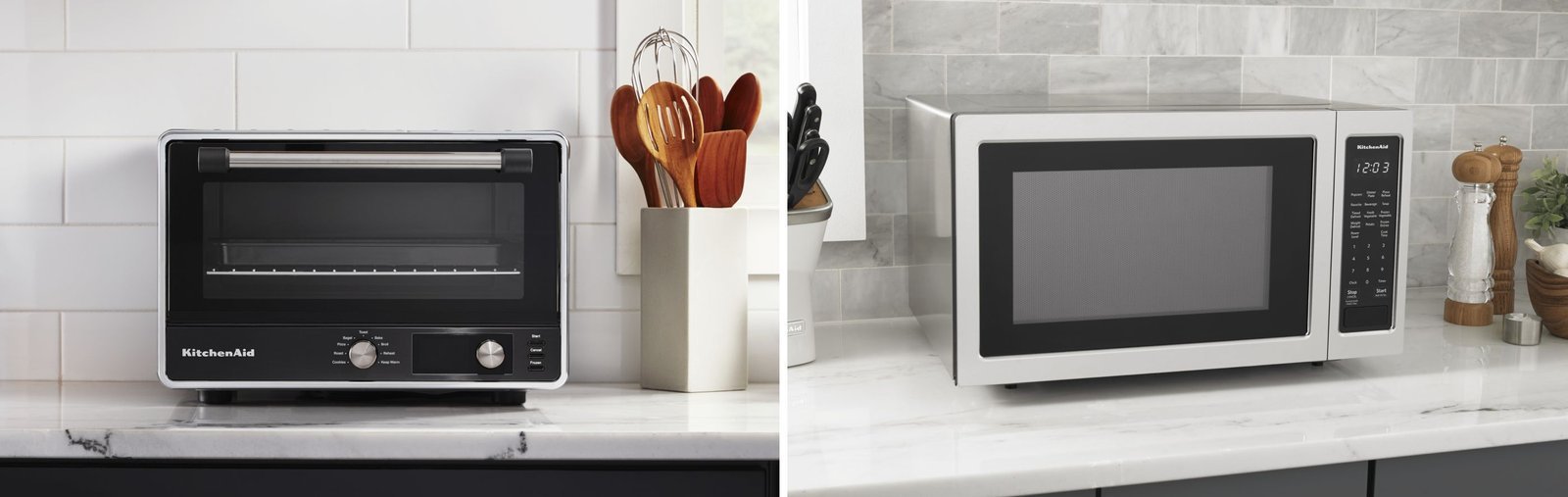
Home cooks often struggle to decide between these appliances because they have different strengths that impact the final result. One reader might be a busy professional who needs to reheat leftovers in under three minutes, while another is a baker who requires consistent, long-term heat to rise dough and brown a crust. This page serves the person who wants to understand the physics of their kitchen tools to improve their cooking results.
The primary assumption here is that your appliances are in good working order and you have access to both. If you only have one, the “better” option is the one that can perform the most tasks for your specific diet. For example, if you eat mostly frozen meals and vegetables, the microwave is your primary tool. If you roast meat or bake bread, the oven is essential. This page doesn’t cover commercial-grade equipment or industrial ovens. It focuses on standard residential appliances found in most homes. If you’re struggling with a specific appliance, check the manufacturer’s manual for the model-specific temperature ranges and power settings, as these can vary significantly between brands.
Factors that change the outcome
The most important factor is the desired texture of the food. If you want a crispy, browned exterior, the oven is the only choice. Microwaves don’t brown or caramelize food because they operate at a lower temperature, usually near the boiling point of water.
Power output is another major factor. A 1,000-watt microwave will cook food significantly faster than a 700-watt model. If your microwave is lower-powered, you must add about 40% more time to your cooking cycles to reach the same result. Always check the label inside your door to confirm your wattage.
The size of the food matters too. Microwaves are best for small items or liquids. When you put a large roast into a microwave, the outer edges often overcook while the center remains cold. Ovens provide an even, ambient heat that’s necessary for large, dense cuts of meat.
People often make the mistake of using the microwave for everything to save time. This often ruins the texture of bread, pastries, and meats, leading to soggy or rubbery results. The cost of this mistake is usually a wasted meal.
Finally, consider the energy consumption. Microwaves use less electricity for short tasks because they heat the food directly. Ovens require more energy to heat the entire air volume of the cavity. For a single portion, the microwave is almost always the more efficient choice.
Using your kitchen appliances properly
- Identify if your food needs browning. If yes, preheat your oven to the required temperature, usually 350°F to 425°F for most roasts and bakes.
- For reheating leftovers to a safe internal temperature, use a food thermometer to ensure you reach 165°F as noted in FoodSafety.gov’s safe minimum internal temperatures.
- When using a microwave, cover the dish with a microwave-safe lid to trap steam, which keeps the food moist.
- Arrange food in a circle on the microwave tray to help the waves hit the edges evenly.
- If you’re heating a liquid, stir it halfway through to prevent hot spots.
- Check for doneness by using a thermometer for meats or checking that vegetables are tender with a fork.
- Always allow food to rest for two minutes after microwaving to let the internal heat distribute evenly.
- If the food isn’t hot enough, return it to the microwave in 30-second intervals rather than one long blast.
The primary judgment call is the “doneness” of the food. In an oven, you look for color and texture changes. In a microwave, you rely on temperature checks because the visual cues are often misleading.
Comparing your cooking options
| Situation | Best Choice | Why it wins | What to watch |
|---|---|---|---|
| Frozen pizza | Oven | Crispy base | Burning edges |
If you’re baking bread, the oven is mandatory because it provides the dry, circulating heat required for a Maillard reaction. Without this, your crust will remain soft and pale. Always calibrate your oven with a standalone thermometer, as most built-in sensors drift by 25 degrees or more over time.
For reheating soup, the microwave is superior because it agitates water molecules directly. If you choose the stove, you risk scorching the bottom of the pot. Always cover your bowl with a paper towel to prevent the inevitable mess of splattering liquid.
When roasting chicken, the oven is the only reliable tool for rendering fat. Aim for an internal temperature of 165 degrees Fahrenheit in the thickest part of the thigh. If you rely on time rather than a thermometer, you’ll likely end up with dry breast meat or undercooked joints.
Steaming vegetables in the microwave preserves nutrients that often leach into boiling water. Use a microwave-safe dish with a splash of water and a vented lid. Be careful when removing the cover, as the trapped steam can cause severe burns instantly.
Finally, when melting butter, use the microwave in 10-second bursts. Butter expands rapidly; if it overflows, it will coat your microwave walls in a film that’s notoriously difficult to scrub away.
Improving your cooking results
Mastering heat distribution
Experienced cooks know that the oven needs time to stabilize. They never place food in the oven as soon as the preheat light turns off. Instead, they wait an extra ten minutes to ensure the walls of the oven are fully heated. This prevents the temperature from dropping significantly when the door is opened.
In the microwave, the secret is power levels. Beginners always use the “high” setting for every task. Experienced users drop the power to 50% or 70% for items like fish or cheese. This prevents the rubbery texture that happens when proteins are blasted with too much energy at once.
Managing moisture levels
Moisture control is the biggest difference between the two. Ovens have vents that allow steam to escape, which is perfect for browning. If you want to keep something moist in the oven, you must cover it or add a water bath.
Microwaves hold moisture in, which is great for steaming but bad for crusts. Never try to crisp a crust in a microwave; it will only become soft and chewy. If you have a combination microwave that includes a grill function, use that specifically for the last few minutes of cooking to add color.
Dealing with common issues
| What you notice | What it means | What to do first | How to stop it |
|---|---|---|---|
| Cold center | Uneven heating | Stir or rotate | Use lower power |
| Soggy crust | Too much steam | Remove cover | Use oven instead |
| Dry edges | Overcooked | Reduce time | Check early |
| Sparks | Metal interference | Stop immediately | Remove metal |
| Uneven cooking | Power surge/drop | Check outlet | Use stable power |
Most users assume a cold center means the microwave is broken. In reality, microwaves struggle to penetrate dense proteins deeper than one inch. If your food is thicker than that, you must stir halfway through the cycle to redistribute the thermal energy manually.
Soggy crusts often occur because you left the plastic film on during heating. This traps steam, which condenses into water and ruins the texture. If you need a crisp finish, skip the microwave entirely and use a toaster oven.
Sparks are almost always caused by hidden metallic elements. Check for gold-rimmed plates, twist ties, or foil remnants. If you see arcing, stop the machine immediately to prevent damage to the magnetron. Replacing a magnetron often costs more than a new unit.
Finally, if your appliance cycles on and off, check if it shares a circuit with high-draw tools like a coffee maker. A voltage drop causes the magnetron to pulse, leading to uneven results. If the lights dim when the microwave runs, move it to a dedicated outlet.
Essential safety requirements
Safety standards for microwaves are set by the FDA and the Center for Devices and Radiological Health. These agencies mandate that all microwave ovens must have multiple interlock systems to ensure the unit stops the moment the door is opened. Never attempt to bypass these switches, as exposure to high-frequency energy is dangerous. If your door seal is damaged or the hinge is loose, the unit is no longer safe to use.
Oven safety relies on proper ventilation and keeping the interior free of grease buildup. A grease-filled oven is a fire hazard, especially at high temperatures. Always clean the bottom of your oven after spills. For both appliances, if you notice a burning smell or see smoke that isn’t coming from your food, turn the unit off at the breaker immediately. If you suspect a technical failure involving the internal wiring or the magnetron, don’t attempt a repair. These components contain capacitors that can hold a lethal charge even when the unit is unplugged. Contact a qualified technician for all internal repairs.
Real costs of your choice
The cost of using an oven versus a microwave is mostly seen in your utility bill. An electric oven uses about 2,000 to 5,000 watts per hour, while a standard microwave uses 600 to 1,200 watts. If you’re roasting a chicken for 90 minutes, your oven uses significantly more energy than a microwave would for a quick reheat.
However, the “cost” also includes the time you spend prepping. If you use the oven for a quick meal, you lose 15 minutes just waiting for it to reach 400°F. If you’re in a rush, this is a high cost.
Most people make the mistake of ignoring the “latent heat” tax. An oven stays hot for 30 minutes after you turn it off, which raises your kitchen temperature and forces your air conditioner to work harder in summer.
Use this decision rule: If the item contains more than 20% water, like a vegetable or leftover pasta, the microwave is the efficient choice. If the item requires a crust or a specific texture, like bread or meat, the oven is mandatory.
Conversely, if you use the microwave for a dish that requires a delicate, slow cook, you pay the cost in ruined food. Always compare the value of your time against the electricity cost. For daily reheating, the microwave is the cheapest option. For quality-focused meals, the oven is the better investment.
Maintaining your equipment
To keep your oven running correctly, wipe down the glass door regularly to prevent burnt-on grease. This prevents carbon buildup that can etch the glass over time. If your oven has a self-cleaning function, use it only when the house is well-ventilated, as it creates extreme heat and smoke. Avoid using this feature too often, as the intense temperatures can stress the control board and internal wiring.
Check the door seal whenever you notice it by closing the door on a piece of paper. If it slides out with no resistance, the seal needs replacing.
For your microwave, keep the interior free of food splatters, which absorb energy and cause localized hot spots. Wash the glass turntable in warm, soapy water after any spill. If the turntable stops rotating, check the plastic ring underneath for debris. If it still doesn’t move, the motor may be failing.
Never operate the microwave empty. Without food or water to absorb the energy, the waves bounce back into the magnetron. This mistake often leads to total unit failure within months. If you hear a loud humming sound while the unit is empty, turn it off immediately to prevent permanent damage.
When to avoid the microwave
Don’t use the microwave for thick cuts of meat, such as a whole beef tenderloin or a thick pork chop. The uneven heating will result in an unsafe center and a tough exterior. Instead, use a roasting pan in the oven to ensure a consistent, safe temperature throughout the cut.
If the meat exceeds one and a half inches in thickness, the microwave’s waves can’t penetrate deep enough to cook the core before the outer edges turn leathery. You can test this by inserting an instant-read thermometer; if the center is below 145 degrees Fahrenheit while the edges are already firm, you have lost the cut.
Also, avoid using the microwave for delicate baked goods like soufflés or delicate cakes. These require the gentle, rising air of a convection or standard oven to maintain their structure. If you try to microwave these, they will rise too fast and then collapse into a dense, rubbery mess.
The rule is simple: if the recipe relies on a slow protein coagulation or a gradual crumb structure, the microwave will ruin it.
Frequently asked questions

Can I use metal in the microwave?
No, you should never use metal in a microwave as it can cause arcing and potential fire. Most modern microwaves have specific instructions on what materials are safe, so check your owner’s manual before using any containers.
How long does an oven take to preheat?
Most residential ovens take about 10 to 15 minutes to reach 350°F. This varies by model — check the label or the display, as some newer units have a “fast preheat” setting that may be faster.
Is it safe to reheat food twice?
Yes, it’s safe to reheat food a second time, provided it was stored correctly at 40°F or below in your refrigerator. Ensure the food reaches an internal temperature of 165°F every time you reheat it.
Why does my microwave make a buzzing sound?
A loud, consistent buzzing sound usually means the transformer or magnetron is working under a heavy load or is beginning to fail. If the sound is new and loud, stop using the unit and contact a professional technician.
How often should I clean my oven?
If you see smoke or smell burnt food when you turn it on, it’s time for a thorough cleaning.
Does a microwave cook from the inside out?
No, microwaves heat the outer one to two centimeters of the food first through molecular agitation. The heat then moves to the center through conduction, which is why thick foods often have cold spots.
What is the best way to defrost meat?
The best way to defrost meat is in the refrigerator over 24 hours, but the microwave is the fastest method if you use the “defrost” setting. Always cook the meat immediately after defrosting in the microwave to prevent bacteria growth.
Oven microwave, in short
Start your cooking session by choosing the appliance that matches your desired result and the time you have available. If your food comes out uneven or the texture is wrong, adjust your power settings or switch to the other appliance next time. If you notice smoke, sparks, or strange mechanical noises, stop immediately and seek help from a qualified appliance repair technician.
Related guides