
The most reliable way to choose between garage door openers is to prioritize belt-drive models for quiet homes and chain-drive units for heavy doors on a budget. A comprehensive garage door openers review shows that your choice depends primarily on your garage’s location relative to living spaces and the weight of your door. If your garage is attached to a bedroom, you should choose a belt-drive system to minimize noise. If you have a heavy, solid-wood door, you must select a chain-drive model to handle the extra load.
Comparing garage door opener systems
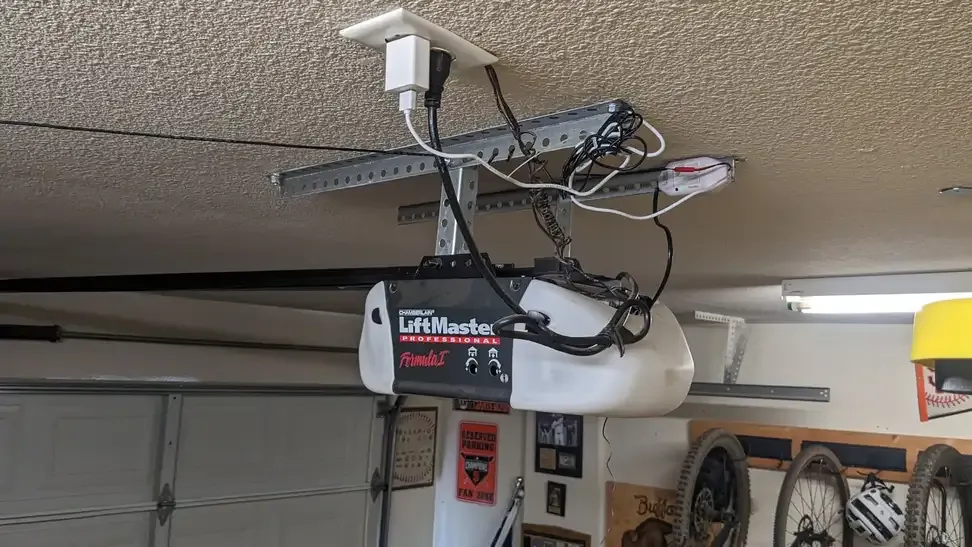
Choosing the right system depends on how much noise you can tolerate and the weight of your garage door. While some units offer advanced smart features, the mechanical drive system determines the day-to-day operation of the device.
| Method | How long | Effort | Cost | Best for |
|---|---|---|---|---|
| Belt-Drive | 3-5 hours | Moderate | High | Quiet homes |
| Chain-Drive | 3-5 hours | Moderate | Low | Heavy doors |
| Direct-Drive | 2-4 hours | Low | Medium | Tight spaces |
If your door is standard weight, a belt-drive system offers the smoothest experience. If you’re on a tight budget and noise isn’t a concern, a chain-drive unit is the most practical choice.
Install a chain-drive opener only if the door is made of solid wood or carriage-style steel.
For homes with living spaces directly above the garage, prioritize direct-drive systems. These units contain only one moving part, which eliminates the vibration common in chain or belt models. You should avoid direct-drive units if your ceiling height is under seven feet, as the motor housing can obstruct the door’s travel path.
Most buyers mistakenly prioritize smart-home integration over motor longevity. If you live in an area with frequent lightning strikes, choose the simplest mechanical system available.
Belt-drive systems for quiet operation
Belt-drive openers use a steel-reinforced rubber belt instead of a metal chain. This design dampens vibration and mechanical chatter, making it the quietest choice for garages attached to living spaces.
Disconnect the power to your existing opener at the circuit breaker before beginning any work. Mount the rail assembly to the wall above the center of the door frame. Attach the motor unit to the ceiling brackets according to the manufacturer’s instructions. Slide the belt into the trolley and tighten the tensioner until it reaches the specified deflection. Connect the safety sensors at the base of the door tracks.
If you hear a rhythmic slapping sound against the rail, your belt is too loose and requires immediate tightening to prevent premature wear. If the belt remains taut but the door jerks during travel, check for debris in the rail rather than adjusting the tension further.
These units are ideal for homes where the garage sits directly beneath or adjacent to a bedroom. However, rubber belts can stretch in extreme heat. If you live in a region with high summer temperatures, plan to check and adjust the tension every 12 to 18 months to maintain smooth, silent operation.
Chain-drive systems for heavy lifting
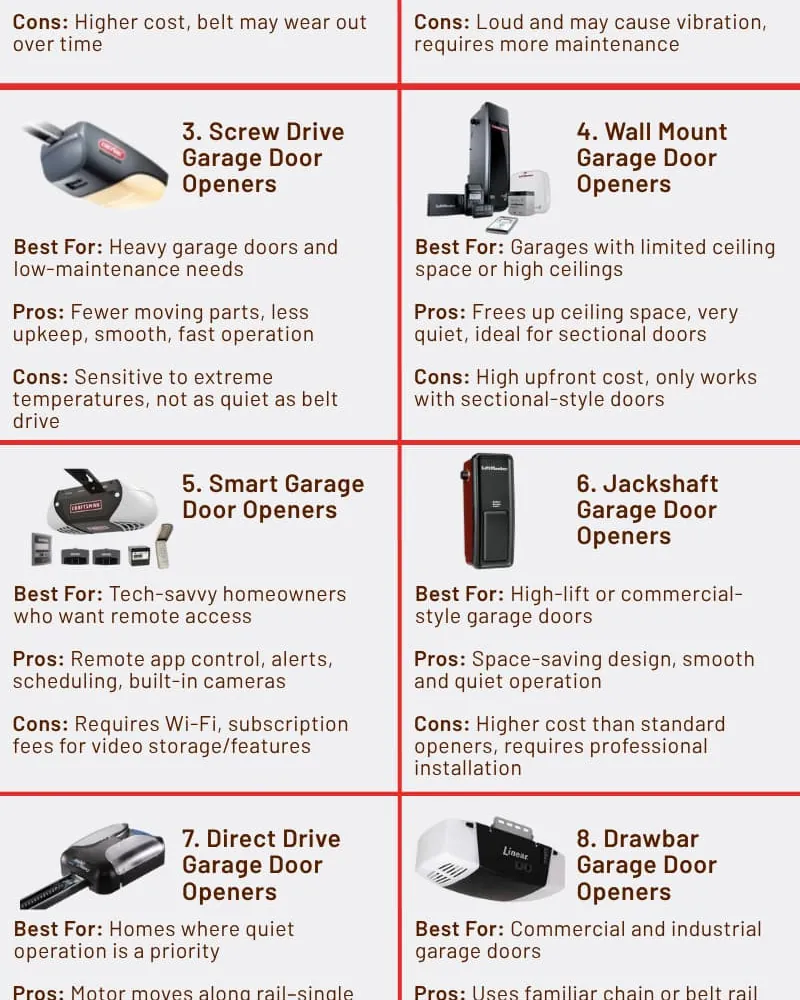
Chain-drive openers are the traditional choice for durability and strength. They use a metal chain similar to a bicycle chain to move the door, which is highly effective for heavy, carriage-style, or solid-wood doors.
Measure the door height to ensure your chain rail is the correct length. If your door exceeds seven feet, you must purchase a rail extension kit; failing to do so will cause the trolley to strike the motor housing, potentially stripping the drive gears.
Bolt the rail segments together and slide the chain onto the drive sprocket. Secure the rail to the header bracket above the door. Fasten the motor housing to the ceiling joists using steel angle iron. Never mount the unit directly to drywall, as the vibration will eventually pull the fasteners loose.
Tighten the chain until it hangs about 0.5 inches above the center of the rail. If the chain sags lower, it will slap against the rail and accelerate wear; if it’s too tight, you risk snapping the chain or burning out the motor.
This system is exceptionally strong for older, heavier doors. The main downside is the noise level, as metal-on-metal contact creates a distinct clicking sound. If your garage is attached to a bedroom, the vibration transfer makes this system a poor choice. Always verify your system includes mandatory auto-reverse features.
Direct-drive systems for space efficiency
Direct-drive openers feature a motor that travels along the rail itself, eliminating the need for a chain or belt. This design has very few moving parts, which results in minimal wear and tear over the life of the opener.
- Install the rail assembly along the center ceiling line of the garage.
- Mount the motor carriage directly onto the rail.
- Connect the push arm to the door bracket.
- Program the travel limits using the digital interface on the motor.
- Test the safety reversal system by placing a wooden block in the door path.
These openers are ideal for low-clearance garages where every inch of overhead space matters. They’re among the quietest systems available because the motor moves with the door rather than pulling it from the wall.
If your garage ceiling sits less than six inches above the top of the door, choose this system to avoid the bulky hardware of traditional belt drives. You must ensure your header wall is reinforced, as the direct-drive motor places the entire weight load on the rail rather than distributing it across the wall bracket.
Beginners often fail to level the rail perfectly, which causes the motor to bind during travel. If the door chatters, check the rail alignment before adjusting the motor speed. Expect to pay a 30 percent premium over standard models for this simplified, durable mechanical advantage.
Choosing the right opener for your needs
When you’re in a hurry, a standard chain-drive unit is the best choice because it’s widely available and simple to install. If you’re doing this for the first time, a belt-drive system is often easier to adjust because the tension requirements are more forgiving than those of a metal chain. When you want the best possible result regardless of cost, a direct-drive system wins because it offers the quietest operation and the lowest long-term maintenance requirements.
The trade-off is simple: you either pay more for quiet technology or accept higher noise levels for a cheaper, more durable mechanical system. If your garage is detached from your house, the noise factor is less important, and you can safely prioritize cost savings.
Most homeowners make the mistake of ignoring the weight of their door. A standard residential door weighs roughly 150 pounds, but carriage-style wood doors can exceed 300 pounds. If your door weighs more than 200 pounds, avoid 1/2 horsepower motors entirely. They will strain under the load and fail within two years. Use a 3/4 horsepower motor for any door over 200 pounds to ensure longevity.
Safety and installation rules
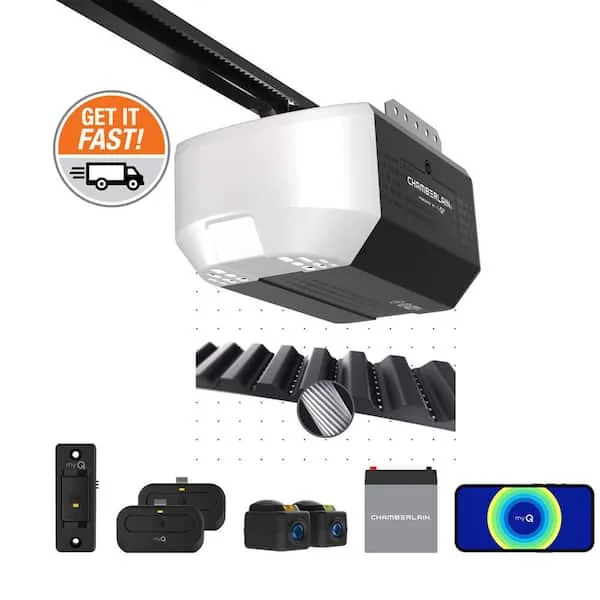
Regardless of the system you choose, you must adhere to strict safety standards to prevent accidents. Most manufacturers require that the door be balanced correctly before the opener is attached, meaning the door should stay in place when opened halfway. If the door drifts, you must adjust the spring tension first, which involves high-tension parts that can cause serious injury; if you aren’t experienced, hire a professional.
Always test the safety reversal system monthly by placing a 2-inch object under the door. The door must reverse upon contact with the object, as required by modern safety standards. If the door doesn’t reverse, stop using the opener immediately and check the sensor alignment or the force sensitivity settings.
Keep the remote controls away from children to prevent accidental operation, and ensure the emergency release handle is reachable by an adult but not hanging low enough to be pulled by a child.
Related guides
- Chamberlain Garage Door Opener Troubleshooting: Easy Fixes
- LiftMaster vs Chamberlain: Which Garage Door Opener Is Best
- LiftMaster vs Overhead Door Garage Door Openers: The Verdict
Frequently asked questions
How long does a garage door opener last?
Most openers last 10 to 15 years when they’re maintained annually. This assumes the door is balanced correctly and the tracks are kept clean of debris. If your door is heavy or the opener is underpowered, the motor may fail sooner. You can check the expected lifespan by looking at the warranty provided by the manufacturer, which usually reflects their testing of the motor’s total cycle count.
Is it safe to install a garage door opener yourself?
Yes, it’s safe for a person with basic mechanical skills to install an opener, provided you follow the manual exactly. The main risk is the spring system, which you must never touch or adjust yourself. If you find the door is too heavy to lift or the springs are rusted, you should stop and call a professional technician to handle the door balance before you attach the opener.
How much horsepower do I need?
You need at least 0.5 horsepower for a standard single-car aluminum door. If you have a heavy double-car door or a solid wood door, you must use a 0.75 or 1.0 horsepower motor to avoid overheating. Most manufacturers provide a weight chart on the packaging that helps you match the motor size to your specific door material and size.
Why is my garage door opener making a loud grinding noise?
A loud grinding noise usually means the internal gears are worn out or the chain is too loose. Check the chain tension first, as a loose chain hitting the rail is a common cause of noise. If the chain is tight, the internal nylon gears may be stripped, which requires a replacement gear kit or a new motor unit depending on the model’s age.
How often should I lubricate the door tracks?
You should lubricate the tracks and hinges as needed based on usage, following the specific recommendations in your owner’s manual to ensure smooth operation. Use a silicone-based lubricant instead of grease, as grease attracts dust and dirt that can damage the rollers over time. Don’t spray lubricant directly onto the belt or the chain, as this can cause the drive system to slip or collect grit that wears down the internal components.
Conclusion
A properly functioning garage door opener is essential for home security and daily convenience. By selecting the right drive type for your specific garage layout and keeping up with regular maintenance, you ensure the system remains reliable for many years. Always prioritize safety features and test your auto-reverse sensors regularly to protect your family and your property.
