
Beta energy is the kinetic energy released during the process of beta decay, where an unstable atomic nucleus transforms into a more stable configuration by emitting a high-speed electron or positron. This subatomic phenomenon occurs when a neutron turns into a proton, or vice versa, to balance the ratio of particles within the nucleus. Because the energy released is shared between the emitted particle and an elusive, nearly massless neutrino, the resulting beta particles exhibit a continuous range of energies rather than a single, fixed value.
Key Takeaways

- Beta decay is a fundamental radioactive process driven by the weak nuclear force.
- The kinetic energy of the emitted particle varies from zero up to a maximum specific to each isotope.
- Beta particles are high-speed electrons or positrons that can penetrate materials differently than alpha particles.
- Energy conservation in beta decay requires the simultaneous emission of a neutrino or antineutrino.
- Shielding against beta radiation requires specific materials, such as thin plastic or aluminum, to prevent tissue damage.
The Science of Beta Decay
At the heart of the atom, stability depends on the delicate balance between protons and neutrons. When an atom has too many of either, it becomes unstable. Beta decay is the mechanism the nucleus uses to reach a lower energy state.
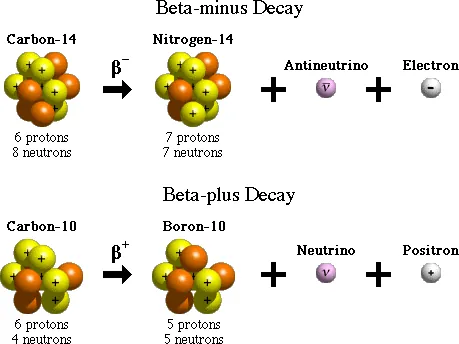
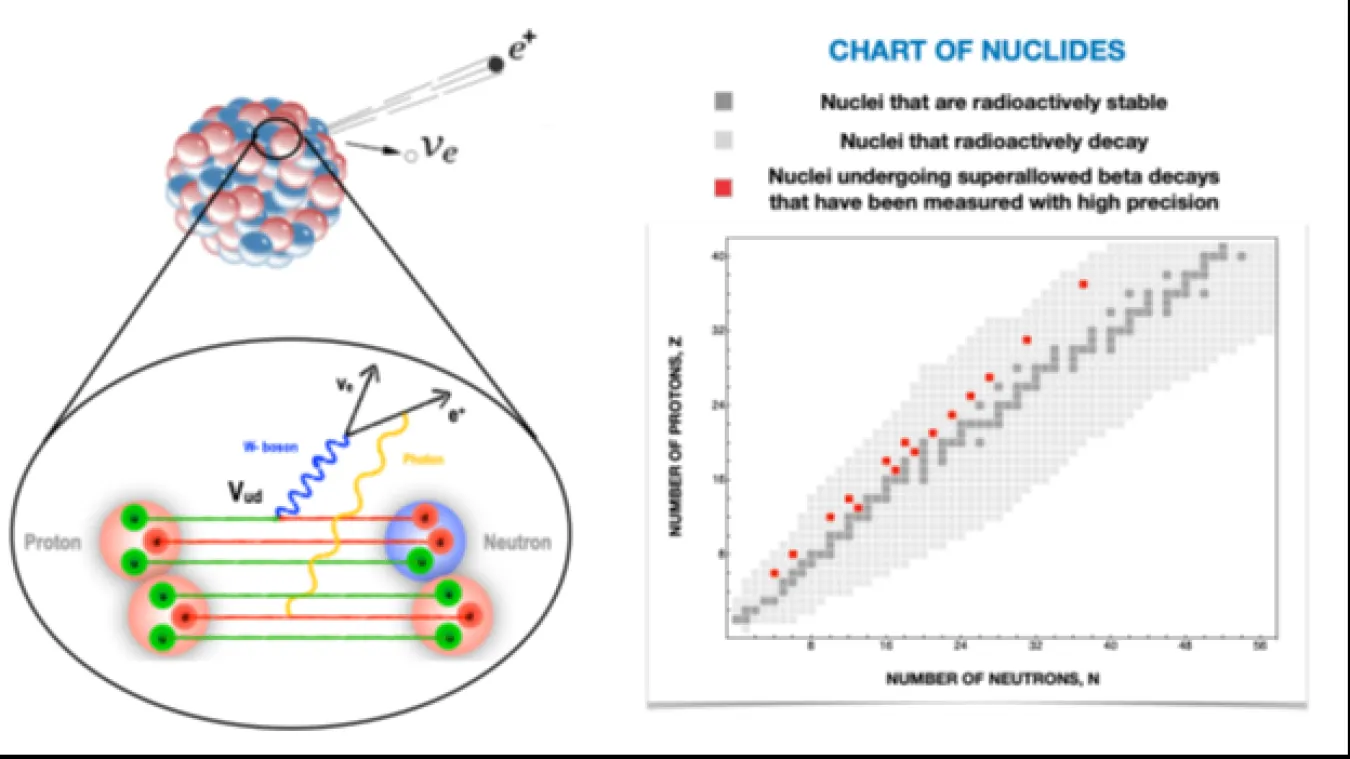
During this transition, a neutron converts into a proton by emitting a beta particle and an antineutrino, or a proton converts into a neutron by emitting a positron and a neutrino. This transformation is governed by the weak nuclear interaction, which allows for the change in the identity of the subatomic building blocks.
What Is Beta Energy?
Beta energy refers specifically to the kinetic energy carried by the beta particle (the electron or positron) ejected from the nucleus. Unlike alpha decay, where the alpha particle carries away a discrete amount of energy, beta energy is distributed across a spectrum. This happens because the total energy released during the decay must be shared between the beta particle and the neutrino.
Since the neutrino can take away varying amounts of energy, the beta particle is left with a spectrum of possible energies, starting from nearly zero up to a maximum defined by the specific nuclear transition.
| Feature | Beta Minus Decay | Beta Plus Decay |
|---|---|---|
| Particle Emitted | Electron | Positron |
| Parent Nucleus | Neutron-rich | Proton-rich |
| Resulting Nucleus | Atomic number increases | Atomic number decreases |
| Energy Source | Weak nuclear force | Weak nuclear force |
Why Do Neutrinos Matter?
In early studies of beta decay, physicists were puzzled because energy appeared to disappear. It seemed that the sum of the energies of the daughter nucleus and the beta particle didn’t equal the total energy of the parent nucleus.
Wolfgang Pauli proposed the existence of an invisible particle to solve this, which Enrico Fermi later named the neutrino. The neutrino carries no charge and has almost zero mass, meaning it escapes detection easily. Without the neutrino, the conservation of energy and angular momentum would be violated in every decay event.
How Does Beta Penetration Work?
Beta particles are significantly lighter and faster than alpha particles, which gives them a higher “range” in matter. While an alpha particle can be stopped by a sheet of paper, a beta particle requires more substantial shielding.
Because they’re charged particles, they interact with the electrons of atoms in the material they pass through, losing energy through ionization and excitation. The depth of penetration depends on the initial kinetic energy of the beta particle and the density of the shielding material.
Common Shielding Materials
- Thin Plastic: Acrylic or Lucite is ideal for low-energy beta emitters.
- Aluminum Sheets: Effective for stopping higher-energy beta radiation.
- Lead Glass: Used when shielding against secondary X-rays caused by beta deceleration.
Beta Decay in Medical Applications
The science of beta decay isn’t just theoretical; it has practical uses in modern medicine. Radiopharmaceuticals often utilize beta emitters because the particles deposit their energy over a short distance, which is perfect for targeting specific tissues. In oncology, beta radiation is used to destroy cancerous cells while sparing the healthy tissue immediately surrounding the tumor. By attaching a radioisotope to a molecule that seeks out cancer cells, doctors can deliver a precise dose of radiation.
Comparing Radiation Types
Understanding beta energy requires context regarding how it compares to other forms of ionizing radiation. Alpha particles are heavy and slow, causing massive damage over a tiny distance. Gamma rays are high-energy photons that can pass through most materials. Beta particles occupy a middle ground, providing a unique tool for both diagnostic imaging and therapeutic treatment.
| Radiation Type | Mass (amu) | Charge | Penetration Power |
|---|---|---|---|
| Alpha Particle | 4 | +2 | Low (paper) |
| Beta Particle | 0.0005 | -1 or +1 | Medium (plastic/aluminum) |
| Gamma Ray | 0 | 0 | High (lead/concrete) |
Is Beta Radiation Dangerous?
Beta radiation poses a risk primarily if the source is ingested or inhaled, or if it comes into direct, prolonged contact with the skin. Because beta particles have enough energy to penetrate the top layers of skin, they can cause radiation burns. Internally, they’re more dangerous because they deposit all their energy directly into sensitive organs. Proper laboratory protocols, such as wearing gloves and using specialized shielding, are essential when working with radioactive isotopes that undergo beta decay.
Pro Tip: Always use a calibrated Geiger counter to monitor ambient radiation levels when handling isotopes known to emit beta particles, even if the activity levels seem low.
The Role of Half-Life
Every radioactive isotope has a characteristic half-life, which is the time required for half of the radioactive atoms in a sample to decay. Beta decay rates are constant and can’t be altered by temperature, pressure, or chemical environment. This predictability makes beta-emitting isotopes like Carbon-14 invaluable for carbon dating, where scientists measure the remaining beta activity in organic materials to determine their age.
Can Beta Energy Be Harvested?
Researchers have explored ways to convert beta energy into electricity using betavoltaic devices. These are essentially nuclear batteries that use a semiconductor junction to capture the energy from beta particles. As the particles strike the semiconductor, they create electron-hole pairs, generating a current. While these batteries produce very low power, they can last for decades without needing a recharge, making them useful for remote sensors or medical implants.
Related guides
Frequently Asked Questions
Why is the beta spectrum continuous?
The continuous spectrum exists because the total energy released in the decay is shared between the beta particle and the neutrino. Because the neutrino can carry away any fraction of the available energy, the beta particle is left with a variable amount of kinetic energy, resulting in a broad distribution rather than a single energy peak.
What is the difference between an electron and a beta particle?
Physically, they’re identical. The term “beta particle” is simply a classification used in nuclear physics to describe an electron (or positron) that has been ejected from an atomic nucleus during radioactive decay. Once the particle travels away from the nucleus, it behaves like any other electron.
Are all beta particles negative?
No, beta particles can be either negatively charged electrons or positively charged positrons. Beta-minus decay results in an electron, while beta-plus decay, also known as positron emission, results in a positron. The type of decay depends on whether the nucleus is neutron-rich or proton-rich.
How do I protect myself from beta radiation?
Protection involves increasing the distance from the source, minimizing the time of exposure, and using appropriate shielding. For beta emitters, thin sheets of plastic (like acrylic) or aluminum are effective. Warning: Never touch radioactive sources directly, as they can cause localized skin damage even if they don’t penetrate deeply into the body.
Can beta decay change an element?
Yes, beta decay changes the atomic number of the atom. In beta-minus decay, a neutron becomes a proton, increasing the atomic number by one and turning the atom into the next element on the periodic table. In beta-plus decay, a proton becomes a neutron, decreasing the atomic number by one.
Does beta radiation cause cancer?
Like all forms of ionizing radiation, beta radiation has the potential to damage DNA within cells. If the repair mechanisms of the cell are overwhelmed or fail, this damage can lead to mutations that result in cancer. However, this risk is managed through strict regulatory standards and the use of proper containment procedures in medical and industrial settings.
Conclusion
To deepen your understanding of these nuclear processes, you should consider reviewing the specific decay schemes of common isotopes used in your field of interest. You might start by researching the decay chain of common medical tracers or industrial isotopes, which will show you how beta decay fits into the broader lifecycle of unstable atomic nuclei.
