
The best time to split firewood is late winter through early spring, while logs are still frozen or freshly cut and before summer heat dries them out. Splitting green wood takes less force than splitting seasoned timber, and the pieces dry faster once they’re stacked. Aim to finish splitting by early summer so the wood has months to season before cold weather returns.
When to split firewood

Timing decides whether the job goes quickly or becomes a struggle. Wood split while green separates along the grain with far less effort than wood that has already hardened through drying.
The single most common mistake is waiting until autumn, when logs have sat outside all summer and the fibers have set. At that point, the wood has developed a tough, outer “case” that resists the axe, often doubling the number of swings required to reach the heartwood.
If you’re working with hardwoods like oak or hickory, split them within two weeks of felling. If the logs have already developed deep cracks across the ends, they’re likely too dry to split by hand. In that case, switch to a hydraulic splitter to save your back.
The best time to split firewood
Cut and split logs in late winter or early spring while they’re still frozen or freshly felled. Sap is lowest then, so moisture leaves faster than with summer-cut timber that holds water tight against the bark.
Split each piece to six inches across or less so air reaches the center of every chunk. Measure across the widest face, not diagonally, because thick centers stay wet even when edges feel dry to the touch.
Stack split wood off the ground on pallets or rails with bark side up on the top layer. Ground contact wicks moisture back into bottom courses and invites rot fungi that spread upward through the pile over time.
Leave the stack open to sun and wind, covering only the top so rain can’t soak in. Tight tarps trap humidity underneath and slow drying more than an uncovered stack would in most climates.
Check ends for cracks and a hollow sound before burning, usually after six to twelve months of drying. Dense hardwoods like oak often need the full year, while soft pines may burn safely in six months.
If you need a chainsaw to buck logs and lack experience, take a safety course or hire someone. Frozen wood can be brittle, so stand clear of flying pieces and always wear eye protection.
Don’t split wood inside a garage unless the floor is clear and there’s room to swing without hitting walls.
How long firewood takes to dry after splitting
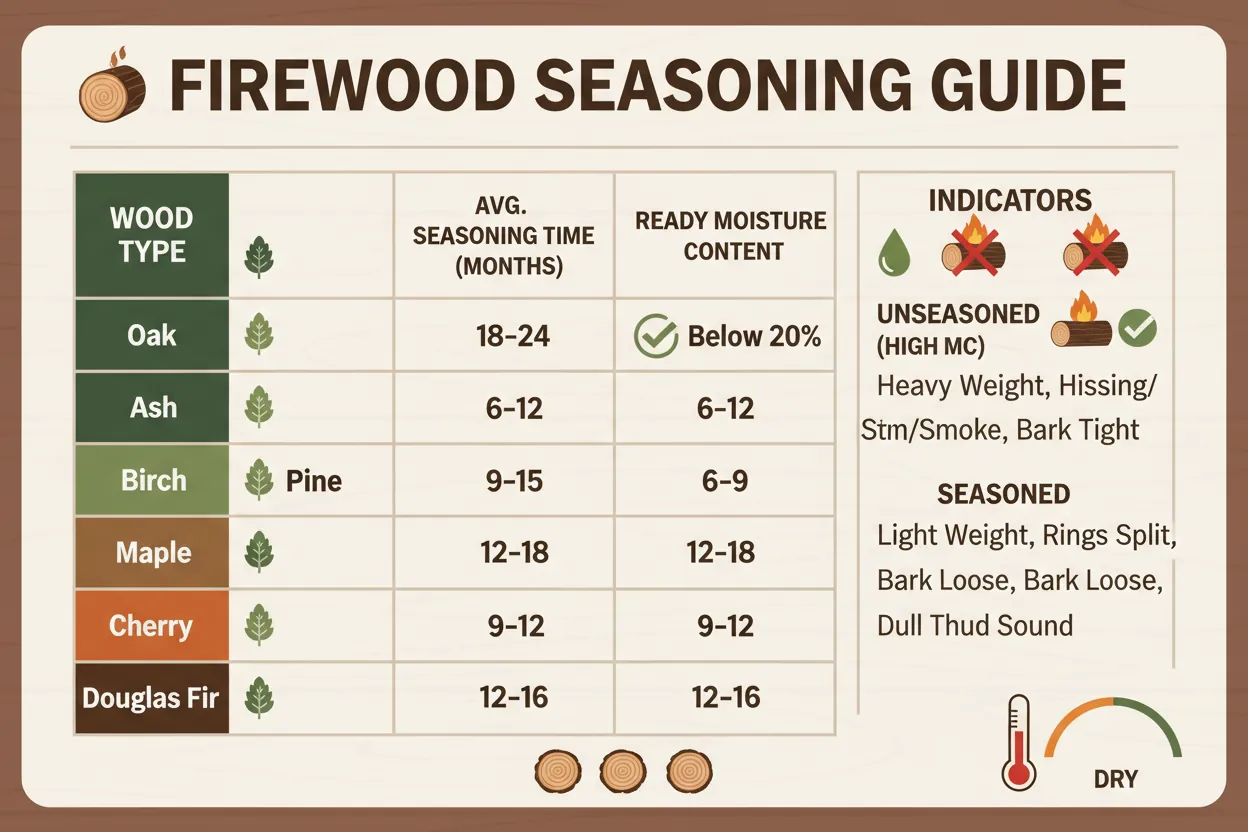
| Starting point | Drying time | What changes it | What to watch for |
|---|---|---|---|
| Split in late spring, six inches or less | Six to eight months | Wood species and local humidity | Moldy or damp ends |
| Split in midsummer, same size | Four to six months | Warm, dry weather speeds it up | Insects in the stack |
| Split in autumn, same size | Twelve months or more | Cool, damp air slows drying | Wood that feels heavy and sounds dull |
| Unsplit logs left whole | Two years or longer | Moisture trapped inside the bark | Rot at the base of the pile |
Dense hardwoods like oak often need the full upper range even when split small. Softer species such as pine may burn safely weeks earlier than the table suggests. Local rainfall matters more than calendar dates for final moisture content. Cover only the top of your stack to block rain while letting side winds pull moisture out. Fully wrapping a pile traps ground vapor and reverses summer progress.
If your wood is still damp well past the time in the table, restack it so air moves through every row. Move the pile to a sunnier, more open spot if shade persists.
Test three pieces from the stack center with a moisture meter before committing to a burn date. Readings above twenty percent mean waiting another month regardless of how dry the surface looks. Burning wet wood wastes heat and coats your chimney with creosote faster than any other common mistake.
Signs your split firewood is ready to burn
Look for darkening ends with visible cracks, often called checks, running from the bark toward the center. Pick up two pieces and knock them together. Seasoned wood sounds hollow and sharp, while green wood makes a dull thud.
Split a piece open and touch the fresh face to your cheek. It should feel dry, not cool or damp. The bark should peel away easily. The wood should weigh noticeably less than when it was first split.
When the signs disagree, use a moisture meter. Wood is ready at twenty percent moisture or less. That’s the level most heating guides and stove manufacturers recommend before burning.
Drive the pins into the freshly split face, never the outer surface exposed to rain. A wet exterior will trick you every time. Testing the outside of a log that sat through a storm gives false readings.
Stacks in the open with direct sun exposure dry faster than those under a roof. Dense hardwoods like oak need more time than softwoods like pine.
Mistakes that ruin split firewood
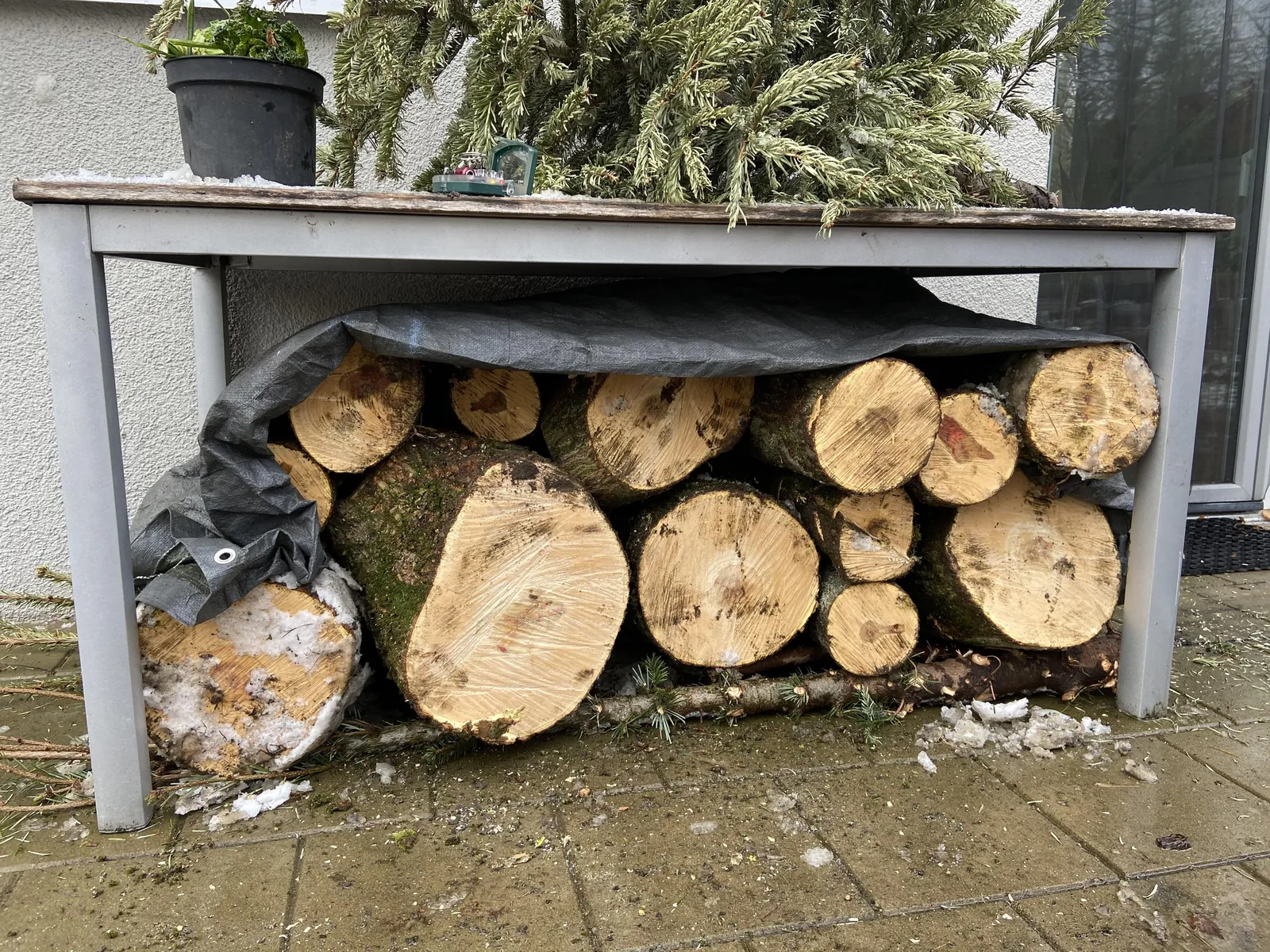
Covering the whole stack with a tarp traps moisture inside and causes the wood to rot from the bottom up; cover only the top and leave the sides open. If you must use a tarp, ensure it doesn’t touch the sides of the stack, as this prevents the airflow necessary to carry away evaporating water.
Splitting pieces too large leaves the center damp even when the outside feels dry. Aim for a diameter of six inches or less. If you’re burning dense hardwoods like oak, split them even smaller to ensure the moisture content drops below 20 percent within a single season.
Stacking directly on the ground lets soil moisture wick into the lowest logs and invites termites. Use pallets, pressure-treated rails, or a raised steel rack to create at least four inches of clearance.
Splitting in late autumn and burning right away leaves no time to season. This wood will smolder, wasting energy and building dangerous creosote in your chimney. Plan to split your wood in early spring so it can dry throughout the heat of summer.
Related guides
- Best Outdoor Faucet Covers for Winter: How to Choose Protection in 2026
- Swing vs Spring Loaded Check Valve: Choosing the Right Type in 2026
Frequently asked questions
Can you split firewood in the summer?
Yes, you can split firewood in summer, but the wood is harder to split once it has dried in the heat, and it will have less time to season before winter. Split early in the season and stack it where sun and wind can reach it.
Why is green wood easier to split than seasoned wood?
Green wood contains more moisture, so the fibers separate with less force along the grain. Once wood dries completely, the fibers harden and resist the maul, making each split take more effort.
How long does split firewood take to season?
Six to twelve months, assuming the pieces are six inches across or less and stacked off the ground in an open, sunny spot. Thicker pieces or damp climates take longer, so check with a moisture meter before burning.
Is it safe to split frozen firewood?
Yes, but frozen wood can splinter and throw sharp pieces, so wear eye protection and stand to the side of the log, never directly behind it. Let the wood thaw slightly if the cold makes the maul bounce off instead of biting in.
What happens if you burn unseasoned firewood?
It produces more smoke, less heat, and creosote buildup in your chimney, which raises the risk of a chimney fire. Burn only wood that has dried to twenty percent moisture or less, as recommended by stove and heating guides.
How often should you split firewood?
Once a year, in late winter or early spring, giving the split wood a full warm season to dry before you need it. If you heat with wood every winter, split enough for the coming season plus a small reserve.
Conclusion
Split firewood while it’s green or frozen, stack it open to the air, and give it six to twelve months to season before the first frost. That timing is the difference between easy splits and a hot, clean fire all winter.
