
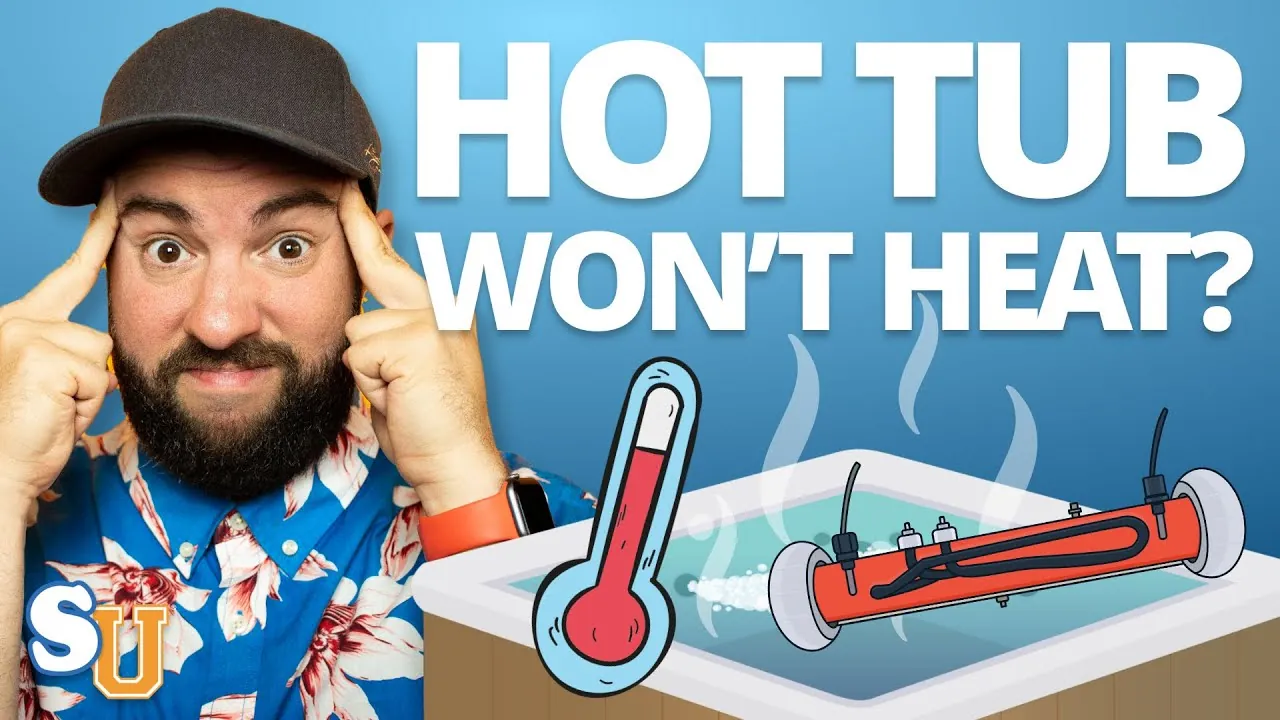
Most hot tubs that won’t heat have a simple blockage or a tripped safety switch, not a broken heater. You can often fix the issue by checking the filter, resetting the breaker, or waiting for the temperature sensor to cool down. The exact cause of why your hot tub wont heat depends on whether the unit is running at all or if it just stops warming the water.
Three main things change the answer for you: the type of filter you use, how old your spa is, and what error code appears on the display. If you know these three details, you can usually find the problem without calling a technician right away.
Who this guide serves best
This page helps homeowners who own a standard residential spa with a digital control panel and a visible filter cartridge. It also serves people who see an error code like “Ht” or “Lo Temp” but don’t know what it means. You need to be comfortable looking at a circuit breaker box and removing a filter cover to follow these steps.
If you own a commercial pool with a separate heating system, this advice doesn’t fit your setup. Those systems need licensed technicians because they involve high-voltage electrical work and complex plumbing codes. This guide assumes your spa has a built-in heater and a standard 120V or 240V power connection found in most homes.
We don’t cover antique spas from before 1990 that lack modern safety sensors. Those units often require custom parts that are no longer made. If your spa is very old, skip the DIY checks and call a pro immediately. Safety rules have changed, and older wiring might not meet current standards.
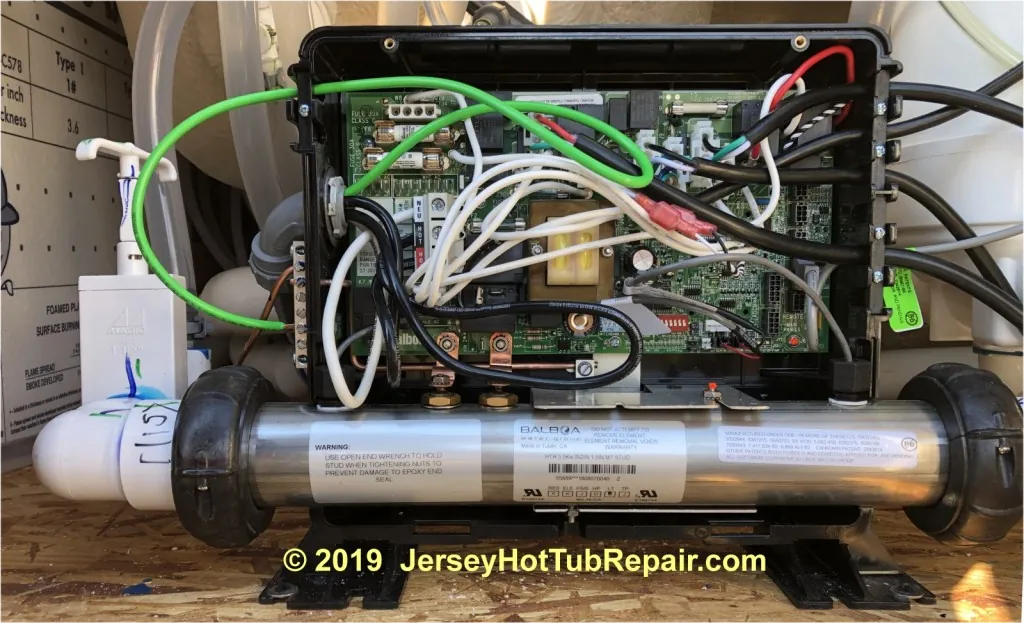
Safety: Inside a mains-powered machine, the parts behind the outer cover can hold a dangerous electrical charge even after it has been unplugged — that’s why they sit behind a cover. Opening the housing, or testing or replacing anything behind it, is a job for a qualified technician, never a home repair.
What decides the heating result
The filter condition is the biggest factor in whether your spa heats up properly. A clogged filter restricts water flow so much that the heater shuts off to prevent damage. If the water can’t move through the heater fast enough, the safety switch trips and stops the heating cycle completely.
The age of your equipment matters a lot too. Heaters inside spas eventually fail as their internal elements wear out over time. If your unit is near that stage, the problem is likely a worn-out part rather than a simple setting. Check your purchase date or look for a sticker on the side of the cabinet to see when it was made.
Error codes tell you exactly where the problem lies. Modern panels show specific letters like “F3” or “Ht” when the sensor detects low flow or high temperature. Ignoring these codes leads to bigger repairs later. Always write down the code before you try any fixes, as it guides the next step.
Many people get the power setting wrong first. Some models have a “circulate only” mode that runs the pump but skips the heater. If you accidentally selected this mode, the water will stay cold even though the machine is running. Check your manual to ensure the heat button is actually active.
Steps to check safely yourself
Start by turning off the power to the spa at the circuit breaker box outside or in your garage. Wait 30 seconds, then flip the switch back on to reset the internal electronics. This simple step clears temporary glitches that stop the heater from firing.
Remove the filter cartridge from its housing and rinse it thoroughly with a garden hose. Hold the hose nozzle close to the pleats to blast out trapped dirt and oils. If the filter looks grey or slimy, soak it in a cleaning solution for 15 minutes before reinstalling.
Check the airlock by opening the air valve on the pump or loosening the union nut slightly. Let a small amount of water escape until you hear a steady stream without bubbles. Air trapped in the lines stops water from reaching the heater element.
Look at the control panel for any flashing lights or error codes written on the screen. Note the exact letters or numbers shown, then consult your owner’s manual for the specific meaning. Don’t guess what the code means, as different brands use different symbols.
Ensure the temperature setting on the panel is higher than the current water temperature. If you set it to 95°F but the water is already 96°F, the heater won’t turn on. Raise the target temperature by 5 degrees to force the system to start heating.
Wait at least 20 minutes after making changes to see if the water temperature rises. The heater takes time to warm the full volume of water in the tank. If the temp still doesn’t go up after this wait, the issue is likely a failed component.
The final judgement call is whether to keep trying or call a pro. If you have checked the filter, cleared air, reset the power, and verified settings but the water stays cold, stop here. Trying to open the electrical panel or replace the heater yourself risks shock or voiding your warranty.
Common scenarios when a hot tub wont heat
| Situation | What to do first | Time needed | Watch for |
|---|---|---|---|
| Filter is dirty | Rinse or replace filter | 10 minutes | Water pressure drops |
| Power tripped | Reset circuit breaker | 1 minute | Breaker trips again |
| Air in lines | Bleed air from pump | 5 minutes | Hissing sounds |
| Wrong mode set | Switch to Heat mode | 30 seconds | Display shows “Circulate” |
| Old heater element | Call a technician | N/A | No heat after 1 hour |
| Sensor failure | Replace temperature probe | N/A | Erratic temp readings |
Don’t skip the reset step if the breaker trips immediately upon flipping it back on. That second trip signals a short circuit inside the unit, and forcing power through will burn out the main control board. Wait at least two minutes before trying again; if it fails once more, stop and call a pro.
For the air bleed, you must open the valve until a steady stream of water flows without bubbles. Stopping while you still hear hissing leaves trapped pockets that block flow and damage the pump seals over time. If your display reads “Circulate” but the room stays cold, check the thermostat setting first before assuming the heater failed.
Many users mistake the fan-only cycle for a broken system, wasting a service call fee. Finally, if the temperature swings wildly between hot and freezing, the sensor is likely loose. Tightening the connection often fixes this without needing a new part.
Signs of a good repair job
Checking water flow correctly
Experienced users know that strong water flow is the key to a working heater. They listen for a smooth hum from the pump instead of a grinding noise. If the jets push water weakly, the heater will shut down immediately to protect itself. Beginners often ignore weak jets and blame the heater instead.
They also check the pressure gauge on the filter housing if their model has one. A reading below 10 PSI usually means the filter is blocked or the pump is struggling. A normal reading sits between 10 and 20 PSI depending on the brand. If the needle is stuck or bouncing wildly, the system needs professional attention.
Reading error codes accurately
Pro users read the error code exactly as it appears on the screen before doing anything else. They match the code to the official manual provided by the manufacturer, not a random forum post online. This saves hours of guessing and prevents unnecessary part replacements.
Beginners often try to clear the code by pressing buttons repeatedly without understanding the cause. This can sometimes lock the system further or hide the real problem. A correct diagnosis starts with the code, not with trial and error.
When things go wrong
| What you notice | What it usually means | What to do first | How to stop it happening again |
|---|---|---|---|
| Heater clicks then stops | Low water flow | Clean the filter | Change filter every 3 months |
| Panel shows “Ht” error | High temp sensor fault | Reset power breaker | Check vent around heater |
| Water gets warm then cold | Airlock in lines | Bleed air from pump | Keep water level high |
| No heat at all | Tripped GFCI outlet | Press reset on outlet | Test outlet with another device |
| Pump runs but no heat | Heater element burned | Call a technician | Balance chemicals regularly |
If the heater clicks and stops, check the inlet screen before assuming the unit is dead. A clogged screen restricts flow enough to trigger safety shutoffs within seconds of startup. Simply rinsing the mesh often restores full pressure immediately. If the panel flashes “Ht,” don’t keep resetting the breaker; this forces the sensor to overheat further. Instead, clear any debris blocking the intake vents that might be trapping hot air inside the cabinet.
When water turns cold mid-cycle, an airlock is likely trapped near the pump impeller. Open the bleed valve until a steady stream appears, then tighten it slowly to prevent future leaks. For total silence, verify the GFCI button has popped out rather than just tripping internally. Finally, if the pump hums without heating, the element has likely fused due to scale buildup. Regular chemical balancing prevents this corrosion, saving you the cost of a full replacement call.
Rules that apply to your spa
Electrical safety laws require that anyone touching the heater must be a licensed electrician. The National Electrical Code (NEC) sets strict rules for wet locations and high-voltage equipment. Opening the control panel yourself can void your warranty and break local building codes.
Water quality rules also matter for heating efficiency. Hard water builds up scale on the heater element, which insulates it and causes overheating. Industry standards recommend keeping pH levels between 7.2 and 7.8 to prevent corrosion and equipment damage.
Local health departments may have specific temperature limits for public or semi-public spas. Local health departments may have specific temperature limits for public spas, but these are primarily for user safety rather than bacterial elimination, which relies on chemical sanitation. Check your city’s website for the exact requirements in your area before adjusting settings.
Always verify that any new part matches the current safety ratings for your region.
Real costs to expect
Cleaning the filter yourself costs nothing except a few gallons of water and perhaps a small amount for a cleaner solution. Replacing a dirty filter cartridge is also inexpensive relative to other repairs depending on the size and brand. This is the cheapest fix and solves most heating issues.
Calling a technician for a simple reset or air bleed can cost significantly more than doing it yourself. If the heater element needs replacing, the total bill often becomes much higher including labor and parts. Older spas might need a full board replacement, which can be very expensive.
Time is also a cost. Fixing a clogged filter takes 15 minutes, while waiting for a tech visit can take days. If you live in a cold climate, losing heat for a week adds up in energy bills if you run a space heater nearby. Weigh the cost of a new filter against the cost of a service call.
Prices vary by location and season. Winter rates are often higher because demand for spa repairs spikes. Get a quote before agreeing to any major work, and ask if the price includes diagnostics.
Keeping your spa warm
Check the filter once a month during heavy use seasons. Look for dark spots or a drop in water pressure as signs it needs cleaning. A clean filter keeps the heater running smoothly and prevents costly shutdowns.
Test your water chemistry every week to avoid scale buildup on the heater. Use test strips or a liquid kit to measure pH and alkalinity levels. Balanced water protects the metal parts inside the tank and extends the life of your heater.
Listen for changes in the pump sound each time you use the tub. A whining or grinding noise means the pump is struggling, which can lead to heating failures. Catching this early avoids a total system breakdown later.
Replace the filter cartridge every 3 to 6 months, even if it looks clean. Oils from skin and lotions build up inside the pleats over time and reduce flow. Mark your calendar with the installation date so you never forget.
When to call a pro instead
If your spa is quite old, don’t attempt to replace the heater yourself. Old wiring and components pose a serious shock hazard that requires specialized tools and training.
When the error code points to a control board failure, stop and call for help. These boards contain sensitive electronics that can be damaged by static electricity or incorrect voltage. Trying to fix them without proper equipment often makes the problem worse.
If you smell burning plastic or see smoke coming from the cabinet, turn off the power immediately and leave the area. This indicates an electrical fire risk that needs emergency response. Never try to investigate a burning smell on your own.
For any issue involving the main power supply or ground fault interrupters, hire an electrician. Working with 240V circuits without a license is dangerous and illegal in many places. Your safety is more important than saving money on a repair bill.
Related guides
- Heating Food in Microwave Side Effects: The Scientific Truth in 2026
- 8 Best Fanless Heaters for Silent and Efficient Room Heating
- 5 Best Inflatable Hot Tub for Winter Picks for Cold Weather in 2026
Frequently asked questions
Why is my hot tub not heating up?
Your hot tub is likely not heating due to a clogged filter, a tripped breaker, or an airlock in the lines. These three issues stop water from flowing through the heater, causing the safety switch to shut it off. Check the filter and reset the power first before calling a pro.
Can I fix a heater myself?
You can fix simple issues like cleaning filters or resetting breakers, but you can’t safely repair the heater element. Touching the heater requires a licensed electrician due to high voltage risks. Attempting this yourself voids warranties and breaks safety laws.
How long should a hot tub take to heat?
A standard hot tub takes 4 to 8 hours to reach a new temperature setting from cold. This time depends on the starting water temp, the outside air temp, and the size of your tank. If it takes longer than 12 hours, something is blocking the flow.
Is it safe to swim if it won’t heat?
Yes, it’s safe to swim in cold water as long as the filtration system is running and the water is chemically balanced. Cold water doesn’t mean the water is dirty, but you should limit your time in the tub to avoid hypothermia.
What happens if I ignore the error code?
Ignoring the error code can lead to permanent damage to the heater or control board. The system shuts off the heater to prevent fires, but running the pump against a blockage can burn out the motor. Address the code immediately to save money on repairs.
Does it matter if the filter is new?
Yes, a new filter can still cause heating problems if it’s installed incorrectly or if the wrong size is used. Even a brand-new filter can trap debris quickly if the water chemistry is unbalanced. Always check the fit and cleanliness regardless of age.
What to do next
Start by cleaning your filter and resetting the circuit breaker today. Expect the water to begin warming within 20 minutes if the flow is restored. If the temperature still doesn’t rise after an hour, call a licensed technician immediately.
Don’t skip the reset step; without tripping the breaker back on, the heating element stays dead. This mistake costs you a full day of cold showers while waiting for an avoidable service call. Check the breaker panel first, then the filter screen.
If the breaker trips again immediately, stop trying. That rapid failure signals a short circuit inside the tank, and forcing it risks damaging the wiring or causing a fire. Shut off the power completely and wait for a professional.
Conclusion
If your tub still refuses to warm up after these checks, it’s time to call a pro. They can spot hidden leaks or faulty parts you might miss. Don’t let cold water ruin your relaxation; getting expert help now means you’ll be soaking in warmth again before you know it.