
The Langmuir isotherm is a fundamental mathematical model used in chemistry and materials science to describe the surface adsorption of gas molecules or solutes onto a solid surface. By providing a quantitative relationship between the concentration of a substance and the amount adsorbed at a constant temperature, this model allows researchers to predict how effectively a specific material can capture target molecules from a fluid phase.
Key Takeaways
- The model assumes that adsorption occurs on a monolayer, meaning only one layer of molecules can occupy the surface sites.
- All adsorption sites are considered energetically equivalent, ensuring uniform binding affinity across the entire surface.
- There’s no lateral interaction between adsorbed molecules, meaning the presence of one molecule doesn’t influence the binding of its neighbor.
- Dynamic equilibrium is achieved when the rate of adsorption equals the rate of desorption.
- You can use this model to determine the maximum capacity of a sorbent material for industrial or environmental applications.
What is the Langmuir Isotherm?
The model was developed by Irving Langmuir in 1916 to describe the behavior of gas molecules hitting a solid surface. At its core, it’s an empirical equation that maps the fraction of surface coverage against the pressure or concentration of the adsorbate. When you look at the physical chemistry of interfaces, the Langmuir Adsorption Model serves as the baseline for understanding how gases interact with solid catalysts or porous carbon materials.
The theory operates under several rigid constraints. First, it assumes that the surface is perfectly flat and uniform. Second, it posits that every site is independent. If you’re designing a filtration system or a catalytic converter, this model provides the necessary framework to estimate how much “active space” you have available before the system becomes saturated.
How Does It Work?
The mechanism relies on the concept of dynamic equilibrium. Molecules from the bulk phase collide with the surface, and some stick to vacant sites. Simultaneously, molecules already attached to the surface may gain enough kinetic energy to break their bonds and return to the bulk phase. When these two rates are identical, the amount of adsorbed material remains constant, resulting in the characteristic isotherm curve.
The Mathematical Formula
The basic equation is expressed as: θ = (K * P) / (1 + K * P)
In this equation, θ represents the fraction of surface coverage, P is the pressure of the gas, and K is the equilibrium constant. As pressure increases, the value of θ approaches one, representing a fully occupied surface. This mathematical elegance allows engineers to calculate the efficiency of industrial processes by simply knowing the pressure and the specific constant for the material involved.
Assumptions of the Model
To apply the Langmuir isotherm correctly, you must understand its limitations. It’s an idealization, not a perfect map of every complex molecular interaction.
| Assumption | Implication |
|---|---|
| Monolayer Adsorption | Only one layer forms on the surface. |
| Equivalent Sites | Every site has the same binding energy. |
| No Interactions | Adsorbed molecules don’t influence others. |
| Dynamic Equilibrium | Rates of adsorption and desorption match. |
Pro Tip: Always verify if your material has a heterogeneous surface, as the Langmuir model will significantly underestimate capacity if the surface contains multiple types of binding sites with varying affinities.
Comparing Adsorption Models

While the Langmuir model is the gold standard for simplicity, it isn’t the only way to describe surface chemistry. Choosing the right model depends on your material’s porosity and surface structure.
- Langmuir Model: Best for ideal, uniform surfaces and monolayer formation.
- Freundlich Model: Preferred for heterogeneous surfaces where binding energy varies.
- BET Theory: Used when multilayer adsorption occurs, common in porous materials like zeolites.
- Temkin Isotherm: Accounts for indirect interactions between adsorbed molecules.
Practical Applications
You’ll find the Langmuir isotherm applied in several high-stakes industries where surface interaction is the primary mechanism of operation.
Water Treatment
Activated carbon is widely used to remove organic pollutants from drinking water. By using the Langmuir equation, water treatment plants can calculate the exact amount of carbon needed to reach a specific purity level based on the concentration of contaminants in the influent stream.
Catalysis
In automotive exhaust systems, precious metals like platinum serve as catalysts. The Langmuir model helps engineers understand how gas molecules like carbon monoxide bind to these metal surfaces, allowing them to optimize the contact time and surface area to maximize conversion rates into less harmful gases.
Pharmaceutical Formulation
The model is essential for studying the binding of drugs to protein surfaces or the adsorption of active ingredients onto excipients. Understanding these interactions is vital for controlling the release rate of medications within the human body.
Troubleshooting Your Data
If your experimental data doesn’t fit the Langmuir model, consider these common issues:
- Surface Heterogeneity: If your material is a natural substance like clay or wood, the sites are likely not identical, requiring a different model.
- Multilayer Formation: If your pressure is high, molecules may stack on top of each other, violating the monolayer assumption.
- Lateral Interactions: If molecules are large or charged, they may repel or attract each other on the surface, skewing your results.
Warning: Don’t attempt to use the Langmuir equation for liquid-phase adsorption without adjusting the variables to account for solvent competition, as the presence of solvent molecules can block the active sites.
Interpreting the Isotherm Curve
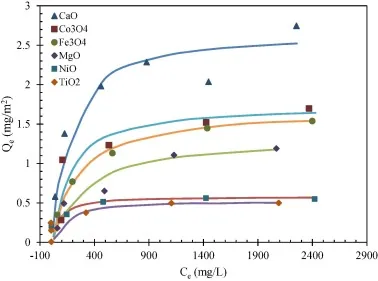
When you plot your data, you’re looking for a specific shape. At low concentrations, the curve is nearly linear, indicating that there are plenty of vacant sites. As you move toward the middle of the graph, the curve begins to bend. Finally, the curve plateaus at a horizontal line, which represents the point of saturation. This plateau is the maximum adsorption capacity, a critical value for any chemical engineer.
Factors Influencing Adsorption
Several external variables can force your system to deviate from the idealized Langmuir predictions.
- Temperature: Increasing the temperature typically decreases adsorption because desorption is an endothermic process.
- pH Levels: In aqueous solutions, pH affects the surface charge of the adsorbent and the ionization of the adsorbate.
- Surface Area: Materials with high porosity, like metal-organic frameworks, offer more sites per unit of mass.
- Adsorbate Size: Larger molecules may experience steric hindrance, preventing them from fitting into smaller pores.
Limitations of the Model
The Langmuir isotherm is a simplified representation of reality. It ignores the complex reality of surface defects and the varying energies of different crystal faces. If your research involves complex polymers or non-uniform surfaces, you should treat the Langmuir results as a preliminary estimate rather than a final design specification. It’s a powerful tool for initial screening, but it rarely accounts for the subtle, competitive binding dynamics found in complex, real-world chemical environments.
Frequently Asked Questions
Is the Langmuir model accurate for all materials?
No, it’s only accurate for ideal, homogeneous surfaces where monolayer adsorption is the dominant mechanism. For complex or porous materials, the model often fails to account for multilayer formation or variations in binding energy across different surface sites.
Can the Langmuir model predict desorption rates?
The model is based on the equilibrium between adsorption and desorption rates. While it provides the equilibrium constant, it doesn’t explicitly describe the kinetics or the time-dependent rate of desorption. You would need additional kinetic models to determine how quickly a molecule leaves the surface.
How do I calculate the Langmuir constant?
You calculate the constant by performing a linear regression of your experimental data. By plotting the inverse of the adsorbed amount against the inverse of the concentration, you can derive the constant from the slope and intercept of the resulting line.
What happens if the surface becomes fully saturated?
Once the surface is saturated, the adsorption rate effectively drops to zero because there are no vacant sites left for incoming molecules. Any further increase in the concentration of the adsorbate won’t result in a higher amount of material being captured on the surface, leading to a plateau in the isotherm curve.
Does the model work for liquid-phase systems?
Yes, it’s commonly used for liquid-phase adsorption, such as removing dyes or heavy metals from wastewater. However, you must modify the variables to account for the competitive presence of solvent molecules, which can occupy the same active sites as your target solute, effectively reducing the overall adsorption capacity of the material.
Conclusion
To move forward with your research, start by conducting a series of batch adsorption experiments at varying concentrations to generate your own data plot. Once you have your values, use a linear regression tool to calculate the equilibrium constant and verify if your specific material follows the monolayer behavior predicted by the Langmuir model for your intended application.
