
A mixed integer programming model is a mathematical tool that finds the best outcome for a plan where some variables must be whole numbers. It solves complex logistics and scheduling problems by balancing resources against strict constraints. This guide explains how these models work and how they help businesses make better decisions.
How mixed integer programming works
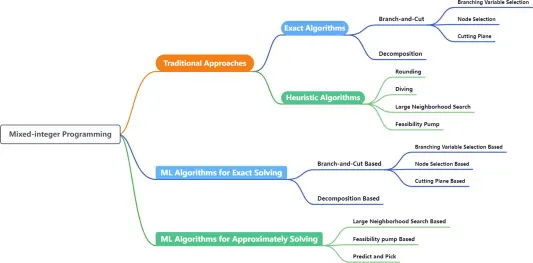
A mathematical model for planning is a way to represent real-world choices using numbers and logic. You use it when you need to make the most of limited resources, such as time, money, or raw materials. The “mixed” part of the name means the model handles two types of variables: continuous values, like weight or time, and integer values, like the number of trucks or workers.
People often think these models provide a “perfect” answer instantly. In truth, they provide an optimal solution based on the data you give them. If the data is wrong, the result will be wrong. This is why data quality is the most important part of the process. According to the INFORMS resource on operations research, these methods are standard practice for large-scale industrial efficiency.
Building a mathematical model
To create a functional model, you follow a structured process that turns business goals into equations.
- Define your objective function, which is the specific goal you want to reach, such as minimizing costs or maximizing profit.
- List your decision variables, which are the quantities you can change, like how many units to ship or which routes to take.
- Establish your constraints, which are the physical or logical limits you can’t cross, such as the total capacity of a warehouse.
- Set the domain for each variable, ensuring that quantities like “number of machines” are restricted to integers.
- Choose a solver software, such as Gurobi or CPLEX, to calculate the best possible combination of variables.
- Run a sensitivity analysis to see how small changes in your inputs affect the final result.
If your model has too many variables, the calculation time will grow exponentially; if it has too few, it may fail to represent reality. When the complexity exceeds what a standard office computer can handle, you should consult an operations research analyst to manage the computational load.
Model variables and constraints
| Component | Purpose | Example | Focus |
|---|---|---|---|
| Objective | The main goal | Maximize total profit | The primary target |
| Continuous Variable | Fluid measurements | Weight in kilograms | Precision and scale |
| Integer Variable | Discrete counts | Number of staff | Whole unit requirements |
| Constraint | Hard limit | Hours available per day | Resource boundaries |
| Slack | Buffer space | Extra inventory room | Flexibility margins |
Best practices for model accuracy
Experienced users always start by building a small, simple version of their problem. They verify that the model works with known data before adding complex rules. This allows them to catch logic errors early when they’re easy to fix. Beginners often try to build the entire system at once, which makes it nearly impossible to find the source of a bad result.
Another habit of experts is to keep the “integer” restrictions as loose as possible. If a variable doesn’t strictly need to be a whole number, treat it as a continuous variable. This makes the math much easier for the computer to solve. If you force everything to be an integer, you might wait hours for a result that could have taken seconds.
Addressing calculation errors

| What you notice | What it usually means | What to do first |
|---|---|---|
| No feasible solution | Constraints are conflicting | Relax one minor constraint |
| Long compute time | Too many integer variables | Set some as continuous |
| Unrealistic result | Missing a key constraint | Review your input data |
| Solver crashes | Memory limit reached | Simplify the equation |
When a solver returns no feasible solution, check your bounds. If your minimum requirement exceeds your maximum capacity, the model fails immediately.
Long compute times often stem from integer variables that don’t actually require whole numbers.
If your result is unrealistic, you likely have a missing logical constraint. Look for variables that should be bounded by zero but are drifting into negative territory. Adding a simple non-negativity rule often corrects these outliers instantly. Always verify your input units before running the model again.
Rules for valid modeling
Mathematical modeling must follow the laws of linear algebra and logical consistency. Most industrial standards for these models are set by the Institute for Operations Research and the Management Sciences. You must ensure that your objective function is truly representative of your business reality.
If you’re dealing with safety-critical systems or large-scale financial planning, you must have your model audited by a professional mathematician or a systems engineer. Attempting to build these systems without proper technical oversight can lead to severe financial or operational losses if the underlying logic contains a flaw.
Maintaining your model
Once your model is running, it requires regular updates to stay relevant. As your business changes, so do your costs, capacities, and customer demands.
If the model starts suggesting decisions that feel wrong, compare its results against a manual calculation from a past period. This “back-testing” confirms if the model still reflects current reality. When the model consistently disagrees with reality, it’s time to re-evaluate your constraints and update your data inputs to match current performance levels.
Choosing a different method

Sometimes, a mixed integer programming model isn’t the right choice. If your problem is highly uncertain and relies on random events, a simulation model might be better. If your problem involves millions of variables that change every second, a heuristic or “rule-of-thumb” approach will be faster than trying to find a perfect mathematical optimum. Use an exact model when you need the single best answer, but use simulation when you need to understand the range of possible outcomes.
Frequently Asked Questions
Is it safe to use for business decisions?
Yes, it’s safe, provided that a human expert reviews the output before taking action. The model provides a recommendation based on math, but it doesn’t account for external factors like sudden market shifts or human error.
How long does it take to solve?
It varies from a few milliseconds to several hours, depending on the number of integer variables and the power of your computer. You can estimate the time by running a test on a subset of your full dataset.
Can I build this in Excel?
Yes, you can use the built-in Solver add-in for small problems. For large-scale industrial projects, you’ll need professional-grade software designed to handle thousands of variables and complex constraint sets efficiently.
What happens if I have no feasible solution?
This means your constraints are physically impossible to meet at the same time. You must relax one or more constraints—such as increasing budget or time—until the model can find a valid path to your goal.
How do I know if the answer is the best one?
The solver software will provide a “gap” percentage, which tells you how close the current answer is to the theoretical best. A gap of 0% means the model has confirmed the absolute best possible outcome.
Do I need to be a mathematician?
No, but you do need to understand logic and algebra. You should focus on defining your business rules clearly, while the solver software handles the complex math required to find the optimal result.
What is the most common mistake?
The most common mistake is over-constraining the model with too many rigid rules. This often leads to a “no solution” error, forcing you to start over and remove rules until the model finds a valid result.
Conclusion
Choosing the right software is the best way to start applying these models to your own projects. You’ll find that even simple tools can handle complex tasks once you get the hang of them. Don’t be afraid to experiment with your data; it’s the quickest path to smarter, more efficient results.
