
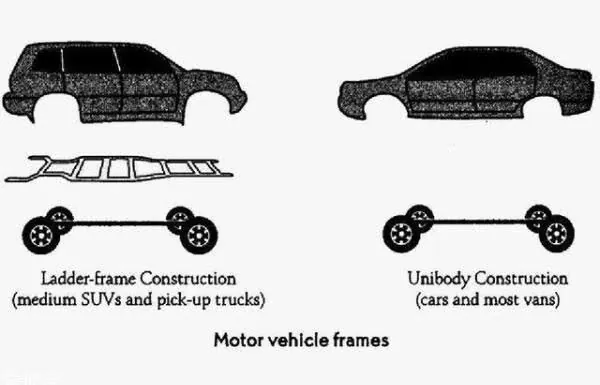
A ladder frame is a vehicle chassis design consisting of two long, parallel steel rails connected by several cross-members to look like a ladder. This structure acts as the primary skeleton for many trucks and heavy-duty vehicles, supporting the weight of the engine, drivetrain, and cabin. If the vehicle is meant for heavy towing, a thick, high-tensile steel frame is used; if it’s for light utility, a thinner, stamped steel design suffices.
Understanding the ladder frame design

The core of this chassis is its simplicity and strength. By using two rigid rails running the length of the vehicle, the frame can handle significant twisting forces without bending. This makes it the standard choice for work trucks and off-road vehicles that encounter uneven terrain.
- Rails are typically made from cold-rolled steel C-channels or box sections.
- Cross-members provide lateral stability and prevent the rails from twisting under load.
- The body sits on top of the frame, usually with rubber bushings to reduce vibration.
- Suspension components bolt directly to the frame rails for maximum durability.
- Standard frames use steel thickness ranging from 2mm to 6mm depending on the intended load.
- Rigidity varies by the number of cross-members; more members mean higher stiffness.
Why this chassis is built for heavy loads
Engineers use the ladder frame because it separates the structural load from the vehicle’s body. In this configuration, the frame bears all the weight of the cargo, the engine, and the towing force. Because the body isn’t a structural member, it can be repaired or replaced more easily if damaged during harsh work. This design also allows for high ground clearance, which is essential for off-road performance in trucks like the Toyota Tacoma or Ford Super Duty.
The primary benefit is torsional rigidity. When a truck pulls a heavy trailer, the frame absorbs the stress of the hitch weight. The structural integrity of these frames is a critical factor in how vehicles manage crash forces and heavy towing capacities. By keeping the frame separate from the body, manufacturers can also tune the suspension to carry heavy loads without the cabin feeling every bump in the road.
If you’re choosing a vehicle, look at the frame rails; if they’re fully boxed, the frame is designed for maximum strength, while open C-channels are often lighter and more flexible. This flexibility is a trade-off. A stiff frame is great for towing, but it can make the ride feel harsh when the vehicle is empty. For a driver who never tows, a unibody platform is usually more comfortable.
Situations where the design changes
| Situation | What changes | What to do instead |
|---|---|---|
| Heavy towing | Frame rail thickness | Choose fully boxed steel |
| Off-road use | Cross-member placement | Increase cross-member count |
| High-speed handling | Chassis rigidity | Switch to unibody design |
| Weight reduction | Material type | Use high-strength aluminum |
| Low cost production | Manufacturing method | Use stamped steel rails |
Move to fully boxed steel to eliminate this torsional twist.
Most builders mistake a stiff frame for better handling. If you prioritize cornering speed, unibody construction provides the necessary rigidity that bolt-on frames lack.
High-strength aluminum saves weight, but it fatigues faster than steel under vibration.
How the chassis is constructed
- Cut two main steel rails to the exact vehicle length using industrial plasma cutters or lasers.
- Bend or stamp the steel rails to create the desired profile, usually a C-shape or a closed box.
- Position 4 to 8 cross-members between the rails to ensure the width stays consistent under heavy pressure.
- Weld the cross-members into place using robotic MIG welding to ensure every joint has uniform penetration.
- Drill holes for engine mounts, suspension brackets, and body mounts using precise CNC templates for alignment.
- Apply a rust-resistant coating or powder coat to the entire frame to prevent corrosion from road salt and mud.
- Inspect the welds for structural integrity to confirm the frame can handle the rated gross vehicle weight.
Mistakes that ruin a ladder frame
Drilling extra holes into the frame rails creates stress risers where metal fatigue inevitably begins. If you must mount accessories, use bolt-on clamps that require no penetration of the steel.
Improper welding introduces excessive heat that alters the crystalline structure of the metal. This renders the steel brittle and prone to snapping under standard road vibrations. If a repair is mandatory, use a professional who utilizes low-heat TIG processes and fish-plate reinforcements.
Surface rust acts as a precursor to deep structural rot. If you can scrape the oxidation away with a wire brush to reveal clean metal, treat it immediately with an encapsulating primer. If the rust flakes off in layers, the frame has already lost its integrity. At that point, the section must be professionally cut out and replaced.
Frequently asked questions
Can a ladder frame be repaired after a crash?
Yes, a ladder frame can be repaired if the damage is minor, but it often requires a professional frame machine to pull the rails back into alignment. If the steel has developed deep cracks or the rails have buckled significantly, the structural integrity is permanently compromised. In these cases, the frame must be replaced to ensure the vehicle remains safe for road use.
Is a ladder frame safer than a unibody?
The safety of a ladder frame depends on the vehicle’s specific design, as they’re generally built for durability rather than crash energy absorption. While the heavy steel frame provides great protection in a collision with a smaller object, it lacks the crumple zones found in modern unibody cars. You should check the specific crash test ratings for any vehicle you’re considering.
Why do trucks use ladder frames?
Trucks use ladder frames because they provide the best platform for carrying heavy payloads and towing large trailers without damaging the body. The frame handles all the mechanical stress, allowing the truck to survive years of hard work in construction or farming. This design also makes it easier for manufacturers to build different body styles on the same base chassis.
How long does a ladder frame last?
A ladder frame can last for a long time if it’s kept clean and free of deep rust. The actual lifespan depends on your local climate; if you live in an area with heavy road salt usage, the frame will corrode much faster. You can check the condition of your frame by looking for flaking paint or soft spots in the metal.
Does a ladder frame make a vehicle heavier?
Yes, a ladder frame adds significant weight to a vehicle because it’s made of thick, solid steel. This extra weight is necessary to provide the rigidity required for heavy-duty tasks like hauling lumber or towing heavy equipment. If you don’t need this extra strength, a lighter vehicle design will typically offer better fuel efficiency and sharper handling on the road.
What happens if the frame rusts?
If the frame rusts through, the structural integrity of the entire vehicle is lost, which can cause the suspension to fail or the body to shift. You should inspect the frame annually for signs of deep scale or holes in the steel rails. If you find significant rust, consult a body shop to see if the frame is still safe to drive.
Conclusion
The construction of these chassis remains a fundamental part of heavy-duty vehicle engineering because it provides a reliable, rigid base for tough jobs. Always check the manufacturer’s maintenance manual for specific instructions on cleaning and inspecting your chassis to prevent long-term damage.
