
Electrical wiring uses specific insulation colors to identify the function of each conductor, ensuring safe installation and repair. In standard United States residential systems operating at 120 or 240 volts, black and red wires carry live current, white wires serve as neutral paths, and bare copper or green wires provide grounding. Understanding these designations prevents dangerous shocks and equipment damage during any electrical project.
Key Takeaways
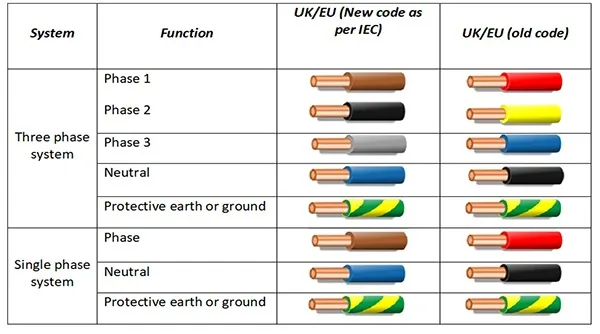
- Black and red wires are always hot conductors carrying live voltage in US residential systems.
- White or gray insulation identifies the neutral wire that returns current to the panel.
- Bare copper or green wires are dedicated ground conductors for safety fault paths.
- Three-phase commercial wiring uses brown, orange, and yellow for high-voltage lines.
- Older homes may use legacy color schemes that differ from modern National Electrical Code standards.
- Always test wires with a non-contact voltage tester before assuming their function based on color alone.
Color Codes for Wiring in Electrical Systems
The National Electrical Code establishes strict rules for identifying conductors by their insulation color. These standards apply to alternating current systems found in most American homes and businesses. Following these codes ensures electricians and homeowners can quickly distinguish between energized wires and those meant to safely carry fault currents away from people.
| Conductor Function | Standard US Color | Common Wire Gauge Examples |
|---|---|---|
| Hot (Line 1) | Black | 14 AWG, 12 AWG, 10 AWG |
| Hot (Line 2) | Red | 14 AWG, 12 AWG, 10 AWG |
| Neutral | White or Gray | 14 AWG, 12 AWG, 10 AWG |
| Ground | Green or Bare Copper | 14 AWG, 12 AWG, 10 AWG |
Manufacturers like Southwire and Cerrowire produce nonmetallic sheathed cables, commonly known as Romex, that bundle these colored conductors together inside a protective plastic jacket. The outer jacket color often indicates the gauge of the wires inside: white jackets typically hold 14-gauge wire, yellow holds 12-gauge, and orange holds 10-gauge.
What Do Black and Red Wires Mean?
Black and red wires are hot conductors that deliver power from the breaker panel to your outlets, switches, and appliances. A black wire is the primary line in almost every standard circuit. When you see a red wire, it usually acts as a secondary hot conductor in a 240-volt circuit or as a traveler wire in a three-way switch setup.
Never assume a black or red wire is safe just because a switch is turned off. These wires remain energized up to the point of the open switch. Working on them without shutting off the corresponding breaker risks severe injury.
Warning: Always verify that power is completely disconnected using a reliable tool like a Fluke non-contact voltage tester or a Klein Tools multimeter before touching any black or red conductor. Visual inspection of the breaker position isn’t sufficient proof that a circuit is dead.
Is the White Wire Always Neutral?
In standard residential wiring, white or gray insulation designates the neutral conductor. This wire completes the circuit by providing a return path for the electrical current back to the service panel. It connects to the grounded bus bar inside your breaker box.
However, there’s an important exception. In certain switch loops or cable assemblies, a white wire might be used to carry live voltage. When this happens, the National Electrical Code requires the installer to re-identify the wire by wrapping black or red electrical tape around both ends. If you see a white wire marked with dark tape, treat it as a hot conductor.
Why Are Green and Bare Wires Used?
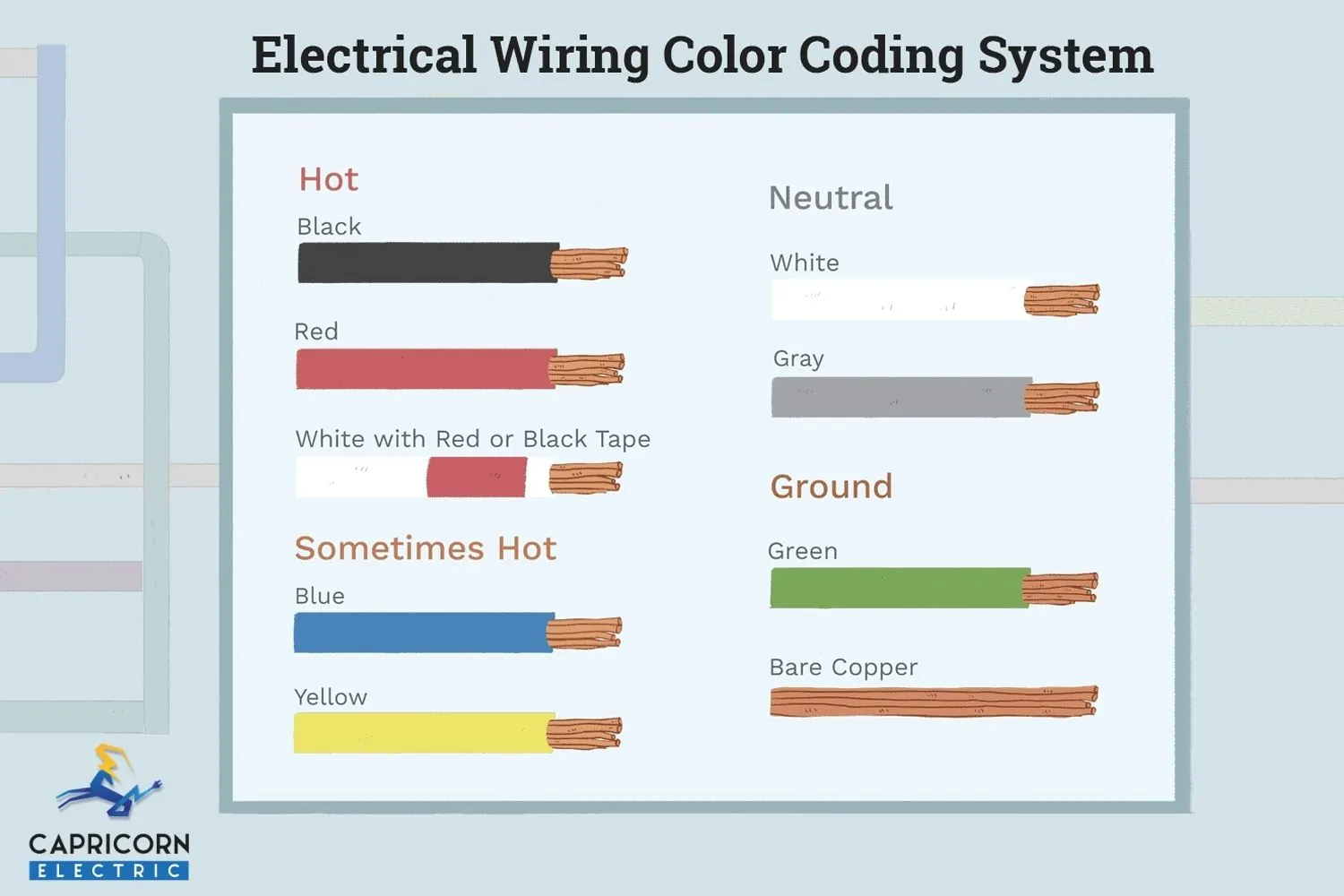
Green insulated wires and uninsulated bare copper wires serve exclusively as equipment grounding conductors. They don’t carry current under normal operating conditions. Instead, they provide a safe, low-resistance path for electricity to flow into the earth if a fault occurs, such as a loose hot wire touching a metal appliance casing.
This grounding mechanism trips the breaker instantly, preventing the metal surface from becoming electrified. You’ll find these wires connected to the green grounding screw on receptacles and switches, as well as tied together with a wire nut inside junction boxes. Brands like Ideal Industries manufacture specific green wire nuts designed to accommodate bare copper grounding pigtails efficiently.
How Does Three-Phase Wiring Differ?
Commercial buildings and industrial facilities frequently use three-phase power to run heavy machinery, large HVAC units, and high-capacity lighting. The color coding for these systems differs significantly from residential wiring to prevent accidental cross-connections between different voltage classes.
For standard 120/208-volt three-phase systems, the hot lines are brown, orange, and yellow. The neutral remains gray, and the ground stays green or bare. In higher voltage 277/480-volt systems, the phase colors change entirely to avoid confusion.
| Phase Designation | 120/208V System Color | 277/480V System Color |
|---|---|---|
| Phase 1 | Brown | Yellow |
| Phase 2 | Orange | Orange |
| Phase 3 | Yellow | Brown |
| Neutral | Gray | Gray |
| Ground | Green / Bare | Green / Bare |
Electricians working in commercial environments must memorize both sets of colors. Connecting a 120-volt device to a 277-volt phase line due to a color mix-up will instantly destroy the equipment and create a fire hazard.
Are Older Homes Wired Differently?
Homes built before the 1940s often utilized knob-and-tube wiring, which didn’t follow modern color conventions. Insulation was typically black for both hot and neutral wires, making identification purely dependent on physical tracing rather than visual color cues.
Later, in the mid-twentieth century, some installations used different schemes where white could occasionally be hot, or rubber-insulated wires degraded so severely that original colors became unreadable. If you own a house built before 1960, you can’t rely solely on modern color assumptions.
Pro Tip: When renovating older properties, hire a licensed electrician to map out existing circuits. Legacy wiring often lacks proper grounding, and attempting to retrofit modern grounded outlets onto ungrounded vintage cables violates current safety standards and creates hidden shock hazards.
What About Direct Current Systems?
Direct current wiring, common in automotive applications, solar panel arrays, and battery banks, follows its own distinct color palette. Unlike alternating current, DC systems have fixed positive and negative polarities that never alternate.
In North American DC systems, red typically represents the positive terminal, while black represents the negative terminal. For grounded DC systems, white is sometimes used for the grounded negative leg. Solar installations generally adhere to guidelines published by the National Electrical Code, which treats photovoltaic source circuits with specific labeling requirements. You can review official grounding and identification rules through the NFPA NEC information portal.
When working with brands like Renogy or Victron Energy for solar or RV setups, always consult the manufacturer’s manual, as European DC components might use brown for positive and blue for negative, reflecting international IEC standards rather than domestic ones.
Can You Trust Wire Colors Blindly?
Relying entirely on insulation color is a dangerous habit. Previous owners, amateur handymen, or careless contractors may have used whatever wire was available, ignoring code requirements. A white wire might be carrying 120 volts because someone used it as a switch leg without marking it.
Furthermore, dirt, heat exposure, and age can alter the appearance of wire insulation. A faded red wire might look orange or pink, while a dirty white wire could appear gray. Misidentifying a conductor based on degraded insulation is a leading cause of residential electrical accidents.
Always treat every wire as potentially energized until proven otherwise. Use personal protective equipment, including insulated gloves rated for the voltage you’re testing, when opening panels or junction boxes.
How Should You Identify Unknown Conductors?
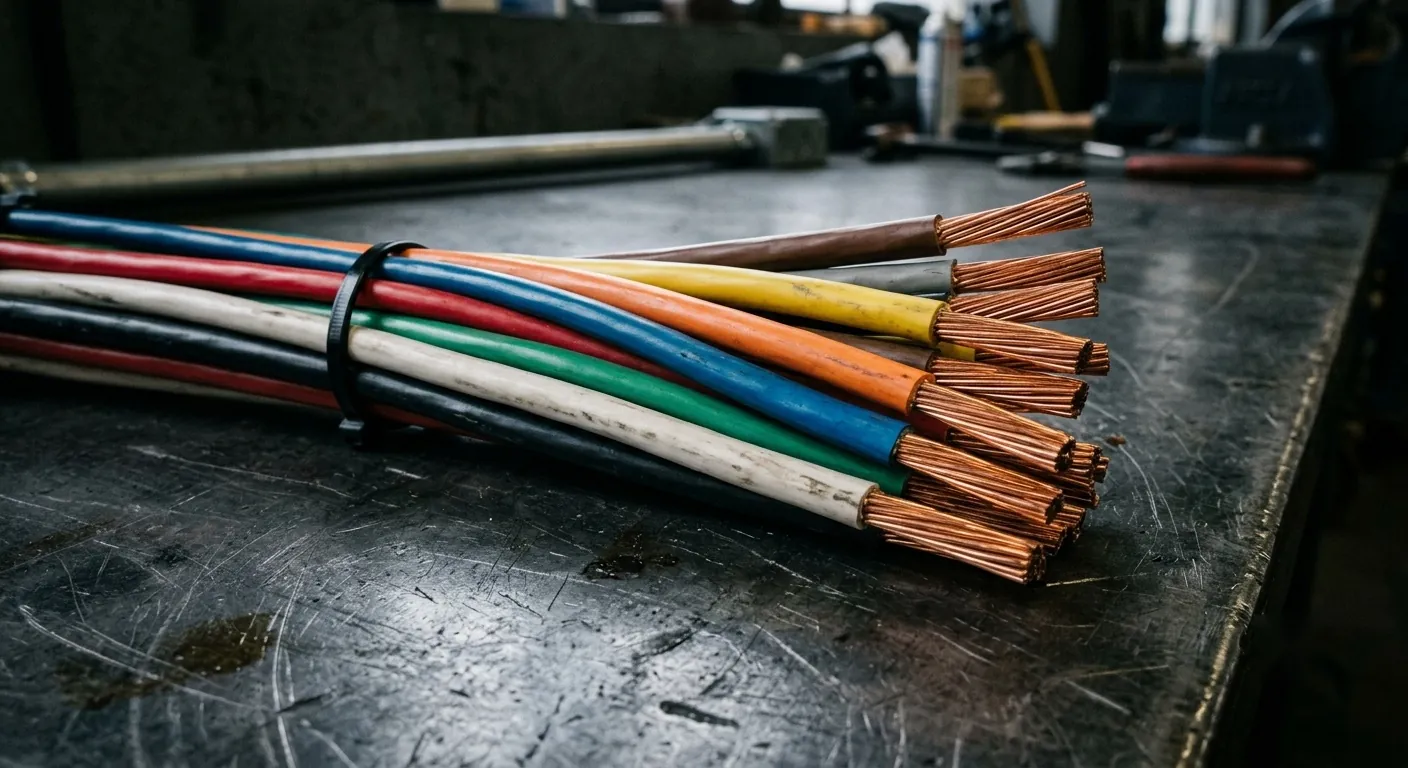
When facing unmarked or suspicious wiring, systematic testing is required. Start by turning off the main breaker to ensure a safe environment for initial visual inspection. Look for any tape markings, wire nuts, or physical routing clues that indicate a wire’s origin.
Once visually inspected, restore power carefully and use a digital multimeter to measure voltage between suspected hot wires and known grounds. Set your meter to AC voltage for household circuits. A reading of approximately 120 volts confirms a hot-to-ground relationship, while zero volts between two wires suggests they share the same potential.
Testing Steps for Unknown Wires
- Turn off the breaker controlling the circuit you intend to test.
- Expose enough copper at the wire ends to make solid contact with meter probes.
- Turn the breaker back on and keep your hands clear of exposed metal.
- Place one probe on the suspected hot wire and the other on the ground.
- Record the voltage reading and immediately turn the breaker off again.
Frequently Asked Questions
What color is the live wire in the US?
In the United States, the live or hot wire is typically black for single-phase 120-volt circuits. Red is used as a second live wire in 240-volt circuits or multi-way switching. Both carry dangerous voltage and must be handled with the breaker turned off.
Is blue wire hot or neutral?
In US residential wiring, blue is rarely used but can act as a hot traveler wire in three-way or four-way switch configurations. In commercial three-phase systems or international contexts, blue often serves as a neutral or a specific phase conductor depending on local codes.
Can I use any color wire for grounding?
No. The National Electrical Code strictly requires equipment grounding conductors to be bare copper, green, or green with yellow stripes. Using other colors for grounding creates severe confusion for future electricians and violates safety regulations, risking failed inspections.
What does a striped wire mean?
Striped wires, such as white with black or red stripes, are often used in appliance cords or specific cable assemblies to denote a switched hot leg or a designated neutral path. Always refer to the specific appliance schematic or manufacturer instructions to confirm the exact function.
Do wire colors change by country?
Yes, wire colors vary drastically worldwide. The UK and Europe follow IEC standards where brown is live, blue is neutral, and green-and-yellow is ground. Always verify the regional standard before working on imported equipment or traveling abroad for electrical projects.
Conclusion
Before starting any electrical work, purchase a quality non-contact voltage tester from a reputable hardware supplier like Home Depot or Lowe’s, and verify every single wire in your workspace is truly de-energized before letting your tools touch bare copper.
