
Repairing roll top desk tambours starts with freeing the stuck slats, cleaning the side channels, and gluing fresh canvas backing to the wood strips. The single most common cause of failure is dried, rotten fabric backing that tears apart, which lets individual wooden slats twist and jam inside the curved side tracks.
Why your roll top desk breaks
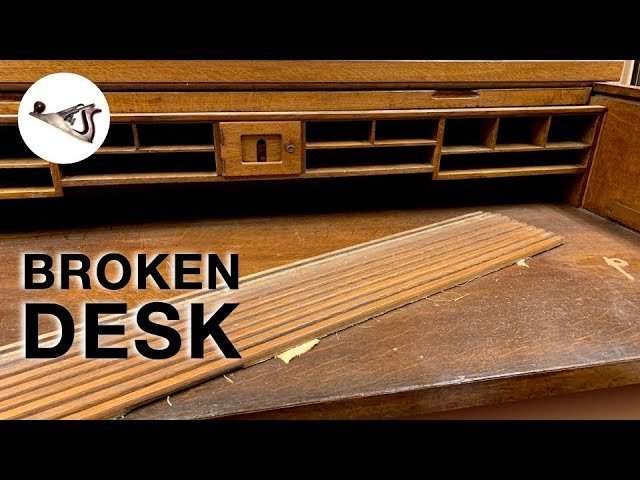 Photo: www.youtube.com on Google
Roll top desks move along curved wooden channels using a flexible door called a tambour. This door is made of thin wooden slats glued side by side onto heavy cloth.
Over time, seasonal changes cause wood to expand in humid summers and shrink in dry winters. The USDA Forest Products Laboratory notes in their wood handbook that wood continuously changes dimension with relative humidity. This regular movement stresses animal-hide glues until they crack.
At the same time, cotton canvas rots from age, dust, and dry indoor heat. When the fabric snaps, the slats drop out of square. Pushing the desk closed while slats are crooked forces the wood against the track walls, causing deep gouges and complete jams.
Clean and lubricate the side tracks
If the cloth backing is still fully intact but the door drags, don’t rebuild the tambour. Clear the tracks first. This fix is for sticky doors that fight you when opening.
- Pull the tambour gently into the open position to expose the side tracks. If it’s stuck midway, don’t yank the handle; tap the underside evenly with both palms.
- Scrape out hardened dirt and old wax using a flat-head screwdriver wrapped in a cotton rag.
- Rub a block of dry paraffin wax or pure beeswax directly inside both side channels. Apply 3 to 4 firm strokes along the entire track length.
A trade-off here is that wax gathers airborne dust over time, so you’ll need to wipe the tracks clean regularly. Slide the door back and forth five times. It should glide with light finger pressure.
Re-glue loose slats onto the cloth
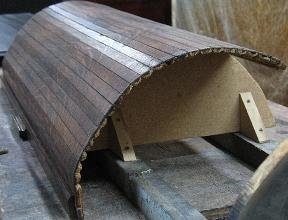 Photo: furniturerenewal.com on Google
This fix works when only 1 to 3 slats have separated from the fabric near the handle. It’s not for rolls where the cloth has rotted into crumbly threads.
- Lay the tambour flat on a wide table with the canvas facing up.
- Scrape away old, crusty glue from the loose wooden slats using 120-grit sandpaper until you see clean wood.
- Apply a thin, even coat of standard liquid hide glue or PVA wood glue across the back of the loose slats. Use about 1 tablespoon of glue per slat.
- Press the wood firmly against the canvas. Clamp the slats between two flat scrap boards for 24 hours.
If the fabric is torn through completely, patching single slats won’t hold under tension; you must replace the entire cloth backing instead. Check the bond by flexing the slats gently over your knee.
Replace the entire canvas backing
Re-cloth the tambour when the original fabric is brittle, torn across multiple slats, or missing completely. This project takes about 3 hours of active work plus overnight drying.
| Step | Action | Required Material or Setting |
|---|---|---|
| 1. Strip backing | Pull off old canvas and scrape dry glue smooth | Putty knife, damp cloth |
| 2. Square slats | Push slats tightly together against a straightedge | 2 parallel guide boards, clamps |
| 3. Cut canvas | Measure tambour width minus 1 inch (1/2-inch bare wood on each edge) | 10 oz to 12 oz unprimed duck canvas |
| 4. Glue down | Roll wood glue evenly over cloth backing | 1/2 cup PVA glue, paint roller |
| 5. Apply weight | Keep slats flat while drying for 24 hours | Plywood sheet, heavy books |
This process varies by model—check the label or maker’s stamp on your desk to see track depth. Where a desk is a signed 19th-century antique worth serious money, DIY re-gluing can hurt its resale value; let an antique furniture conservator handle it.
What not to do
- Don’t spray WD-40 or silicone oil into the wood tracks. Petroleum oils soak deep into raw wood, make it swell wider, and attract grit that acts like sandpaper.
- Don’t nail or staple slats to the canvas. Metal fasteners split thin tambour wood and scrape deep gouges along the desk’s internal guide tracks.
- Don’t leave the canvas hanging over the slat edges. Canvas must sit at least 1/2 inch away from both track edges, or the cloth will bunch up and lock the roll solid.
- Don’t use contact cement to attach the fabric. Contact cement grabs instantly without letting you square the slats, and it fails when the roll bends around tight corners.
How to stop it happening again
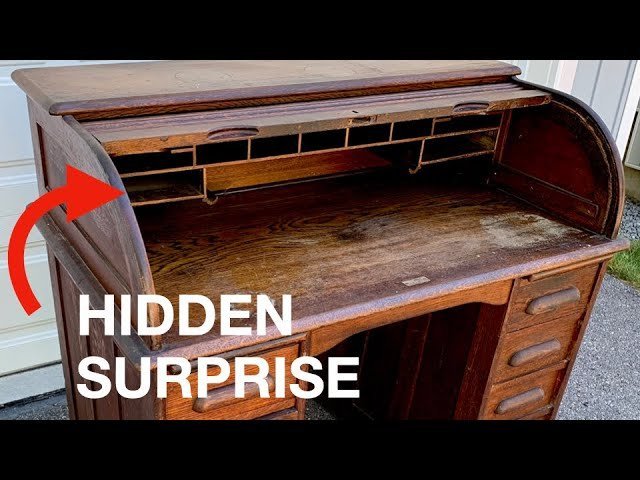 Photo: business.priyankalondon.com on Google
Proper habits prevent wooden tambours from warping and snapping their new backing cloth.
| If you’re doing this | Do this instead | Why |
|---|---|---|
| Pulling the desk closed using one side handle | Pull using the center handle or both hands evenly | Pulling from one side twists slats sideways in the tracks |
| Storing the desk next to a hot radiator | Place the desk along an interior wall away from heaters | Extreme dry heat makes canvas brittle and cracks glue joints |
| Forcing the roll past a stuck point | Stop immediately, back it up, and check for paper jams | Forcing the wood snaps delicate slat tongues inside the track |
| Using spray furniture polish inside the tracks | Apply solid beeswax or paraffin blocks twice a year | Aerosol polishes contain solvents that soften canvas glue |
Frequently asked questions
Can I use denim instead of duck canvas?
No. Denim stretches diagonally when pulled, which causes wooden slats to drift out of square and jam. Heavy 10-ounce to 12-ounce cotton duck canvas has a tight, stable plain weave that resists stretching under tension.
How do you get a stuck roll top desk open?
Remove the thin back panel of the desk frame with a screwdriver. You’ll gain direct access to the rolled tambour. Push gently upward against the bottom slats from behind rather than yanking the front handle.
Is candle wax safe to use on desk tracks?
Yes, plain uncolored paraffin candles work well as channel lubricant. Avoid scented or soft decorative candles because they contain added oils that soften wood fibers and trap dust inside the grooves.
What glue is best for desk tambours?
Standard PVA wood glue or liquid hide glue works best for securing slats to canvas. Hide glue allows future repairs with warm water, while PVA creates a permanent bond that withstands daily rolling.
Why does my roll top desk keep sticking at the curve?
The curved turn puts the highest bending stress on the tambour. Slats bind there if dried wax has built up in the track bend or if the canvas has started separating from the wood near the middle.
Related guides