
An acid gas removal unit, often referred to as an AGRU, functions as a chemical separation plant designed to scrub acidic impurities—primarily hydrogen sulfide and carbon dioxide—from natural gas streams. By utilizing a continuous absorption-regeneration cycle, these systems ensure that processed gas meets pipeline quality specifications and protects downstream equipment from corrosive damage. The process relies on the selective affinity of specific liquid solvents to bind with acid gases at high pressure, followed by the release of these contaminants through heating or pressure reduction.
Key Takeaways

- AGRUs primarily remove hydrogen sulfide (H2S) and carbon dioxide (CO2) to prevent pipeline corrosion and meet environmental regulations.
- The system operates on a cyclic process involving an absorber column and a regenerator (stripper) column.
- Amine-based solvents are the industry standard for chemical absorption due to their high efficiency and recyclability.
- Proper solvent management and heat integration are critical for minimizing operational costs and maximizing gas purity.
- Regular monitoring of solvent concentration and degradation products is essential to prevent foaming and corrosion within the unit.
How an Acid Gas Removal Unit Works
The operational core of an AGRU is the amine absorption process. Raw natural gas enters the bottom of the absorber tower, where it flows upward through a series of trays or structured packing. Simultaneously, a “lean” (clean) solvent enters the top of the tower and flows downward, creating a counter-current contact pattern.
As the gas and solvent meet, the acidic components are chemically absorbed into the liquid phase. The “sweet” gas, now free of H2S and CO2, exits from the top of the absorber, while the “rich” solvent, now saturated with acid gases, leaves from the bottom.
The Regeneration Cycle
After exiting the absorber, the rich solvent passes through a heat exchanger to be pre-heated by the hot lean solvent returning from the regenerator. It then enters the regenerator column, where it’s heated further—typically using steam in a reboiler. This heat breaks the chemical bond between the solvent and the acid gases.
The gaseous CO2 and H2S are stripped away and exit the top of the regenerator for further processing or disposal, leaving behind the regenerated lean solvent. This lean solvent is then cooled and pumped back to the absorber to repeat the cycle, ensuring a continuous operation.
Common Solvent Types
The efficiency of an AGRU depends heavily on the chemical properties of the solvent used. Different amines offer varying levels of selectivity and energy requirements.
| Solvent Type | Key Benefit | Typical Application |
|---|---|---|
| MEA (Monoethanolamine) | Strong reactivity | High-purity gas requirements |
| DEA (Diethanolamine) | Lower degradation | General purpose scrubbing |
| MDEA (Methyldiethanolamine) | High selectivity | CO2 removal with H2S slip |
| Specialty Blends | Reduced energy usage | Challenging gas compositions |
Why Is Solvent Management Critical?
Maintaining the chemical integrity of the solvent is vital for the longevity of the plant. Over time, heat and impurities in the feed gas cause the amine to degrade. These degradation products can increase the viscosity of the solution and promote corrosion of piping, which significantly raises maintenance expenses. Operators must perform routine solvent analysis to track the concentration of active amine and the accumulation of heat-stable salts.
Pro Tip: Always monitor the “lean loading” of your solvent, as an increase in acid gas content in the lean stream is the first indicator of regenerator inefficiency or reboiler fouling.
Essential Components of the AGRU
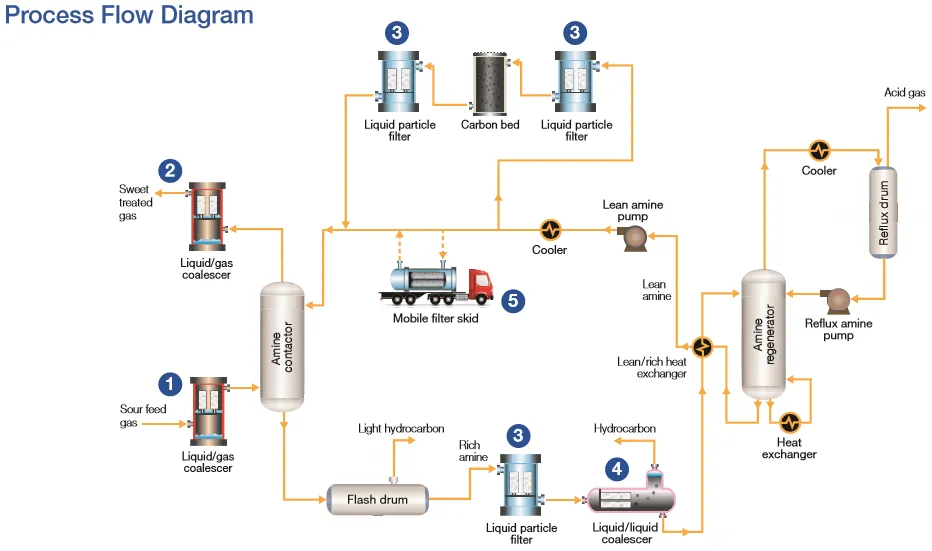
Every acid gas removal unit consists of several high-pressure vessels and thermal management systems working in unison. The absorber column is the vessel where the gas-liquid contact occurs, while the regenerator column acts as the thermal separation point. The reboiler provides the necessary heat to reverse the absorption, and the lean/rich heat exchanger serves to improve the overall thermal efficiency of the facility by recovering heat from the hot lean solvent.
Auxiliary Equipment
- Flash tanks: These vessels reduce the pressure of the rich solvent, allowing dissolved hydrocarbons to escape before they enter the regenerator.
- Filters: Mechanical and activated carbon filters remove particulate matter, liquid hydrocarbons, and degradation products from the solvent stream.
- Reflux condensers: Located at the top of the regenerator to recover water vapor and return it to the column.
- Pumps: High-pressure pumps move the solvent through the closed-loop circuit against the operating pressure of the absorber.
Managing Corrosion and Foaming
Corrosion is a primary concern in amine units, particularly in sections where rich solvent is heated. The presence of oxygen, organic acids, and suspended solids can accelerate the degradation of carbon steel components. To mitigate these risks, operators often utilize corrosion inhibitors or upgrade to stainless steel alloys in high-temperature zones.
Foaming is another common operational hurdle, often caused by the introduction of liquid hydrocarbons, compressor oils, or excessive degradation products. If foaming occurs, the differential pressure across the absorber will spike, leading to a loss of gas quality and potential solvent carryover.
Regulatory Standards for Gas Purity
Natural gas must adhere to strict quality standards to prevent pipeline integrity issues and ensure safe combustion. The United States Environmental Protection Agency provides specific guidelines regarding the management of greenhouse gases and volatile organic compounds associated with gas processing facilities.
These standards mandate that operators effectively capture and control acid gas emissions rather than venting them into the atmosphere. Compliance often requires the installation of acid gas injection wells or sulfur recovery units to process the waste stream exiting the regenerator.
Troubleshooting Common Unit Failures
When an AGRU fails to meet its sweetening targets, a systematic approach is necessary to isolate the cause. Common symptoms include high H2S content in the treated gas, solvent foaming, or excessive energy consumption in the reboiler.
| Symptom | Probable Cause | Corrective Action |
|---|---|---|
| High H2S in sweet gas | Low solvent circulation rate | Increase pump speed/flow |
| Persistent foaming | Hydrocarbon contamination | Use flash tank and filters |
| High reboiler temperature | Fouled heat exchanger | Clean or replace tube bundles |
| Solvent degradation | High oxygen or heat | Reduce reboiler setpoint |
Warning: Never attempt to open or bypass pressure relief valves during a foaming event, as the sudden release of pressure can lead to severe mechanical damage or uncontrolled solvent discharge.
Energy Efficiency Strategies
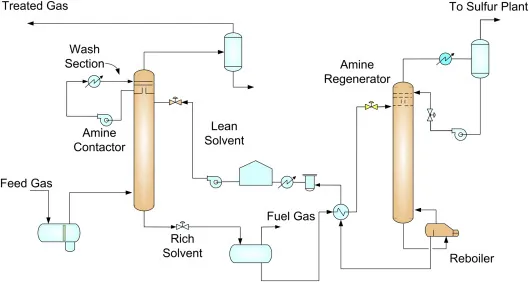
Modern units are designed to minimize the energy required for solvent regeneration. Because the reboiler is the largest consumer of energy, optimizing the lean/rich heat exchanger is the most effective way to reduce operating costs.
By maximizing the heat transfer between the hot lean stream and the cold rich stream, the facility can significantly lower the amount of steam needed for the reboiler. Additionally, using selective solvents, such as MDEA, allows for the removal of H2S while leaving a portion of the CO2 in the gas stream, which reduces the total volume of solvent that requires heating.
Related guides
- How to Get Rid of Mice in Sofa: Proven Removal Steps
- 10 Best Vented Gas Heaters for Safe and Efficient Heating
- How to Replace Gas Cylinder in Office Chair: A Simple Guide
Frequently Asked Questions
What is the difference between physical and chemical absorption?
Chemical absorption uses amines to form a reversible chemical bond with acid gases, making it highly effective at low partial pressures. Physical absorption, using solvents like Selexol, relies on the solubility of gases in a liquid at high pressure. Chemical solvents are preferred for low-pressure gas, while physical solvents are more energy-efficient for high-pressure, high-concentration acid gas streams.
How often should amine solvent be replaced?
Solvent replacement isn’t typically scheduled by time but by condition. Operators monitor the solvent for degradation products, heat-stable salts, and loss of active amine concentration. If the solvent becomes heavily contaminated with particulates or degradation products that can’t be removed by filtration, a partial or full “reclaim” or replacement is performed to restore the unit’s performance and prevent equipment damage.
Why does the absorber column foam?
Foaming is usually triggered by contamination. Common culprits include liquid hydrocarbons (condensate) entering with the feed gas, compressor lubricating oils, or fine particulate matter. When these contaminants mix with the amine, they create a stable foam that rises through the column, blocking gas flow and reducing contact surface area. Addressing the source of contamination through better upstream separation is the primary solution for sustained performance.
Can I remove both H2S and CO2?
Yes, most amine units are designed to remove both H2S and CO2 simultaneously. However, if the goal is to remove only the H2S while leaving the CO2 in the gas stream, operators use specialized selective amines like MDEA. This is often done to increase the heating value of the sales gas or to meet specific pipeline specifications that allow for higher CO2 content while limiting H2S.
What happens to the acid gas waste?
The acid gas stream exiting the regenerator must be handled responsibly. In many facilities, this gas is sent to a sulfur recovery unit to produce elemental sulfur. In other cases, it’s compressed and injected into deep underground geological formations for permanent sequestration. If the concentration of H2S is low, some facilities may use thermal oxidizers to convert H2S into sulfur dioxide before atmospheric release.
Conclusion
To ensure your unit remains optimized, begin by reviewing your most recent solvent analysis report and comparing the current amine concentration against the original design specifications provided by your system manufacturer. Checking the temperature gradient across your lean/rich heat exchanger is also a practical next step to determine if fouling is contributing to excessive energy consumption or poor acid gas removal performance.
