
No, you shouldn’t store gasoline in your garage. Gasoline releases flammable vapors that can ignite if they encounter a spark from a tool or appliance, making it a serious fire hazard for your home. You should move any fuel containers to a detached shed or a well-ventilated outdoor storage area far from your house immediately.
When you can store gasoline in the garage

The following table categorizes where you can and can’t keep gasoline based on safety guidelines.
| Your situation | Answer | Why |
|---|---|---|
| Attached garage | No | Vapor buildup causes fire risk |
| Basement or crawlspace | No | Vapors are heavy and sink |
| Detached shed | Yes | Good airflow reduces ignition risk |
| Kitchen or pantry | No | Heat sources trigger explosions |
| Inside your vehicle | No | Temperature changes increase vapor pressure |
| Far from home | Yes | Minimizes risk to living spaces |
Store fuel at least 50 feet from any structure or ignition source. If your property lacks a detached shed, a heavy-duty, fire-rated fuel locker placed on a concrete pad serves as a compliant alternative.
Many homeowners mistakenly store gas cans on concrete floors in attached garages, assuming the cold surface prevents ignition. This is a dangerous error. Gasoline vapors are heavier than air and will naturally pool in low spots, traveling along the floor until they reach a water heater pilot light or a spark from a freezer compressor. The resulting explosion often levels the garage before the homeowner realizes a leak occurred.
If you smell gas, don’t flip a light switch or operate any electrical device. The tiny spark generated by a wall switch is enough to ignite accumulated vapors. Instead, ventilate the area immediately by opening exterior doors and evacuate all occupants to a safe distance.
Why the garage is unsafe
The main reason for this restriction is the physical behavior of gasoline vapors. Unlike some other fuels, gasoline evaporates quickly at room temperature. These vapors are heavier than air, which means they don’t dissipate upward. Instead, they sink and collect along the floor of your garage, creating an invisible, highly flammable pool that can travel across the room.
A garage is full of hidden ignition sources that you might not consider. An electric garage door opener, a light switch, or even a small spark from a power tool can ignite these vapors instantly. Even if you don’t use the garage for work, the pilot light on a water heater or furnace often found in residential garages provides enough heat to cause a flash fire.
Most homeowners make the mistake of assuming a sealed plastic jug is enough to contain the threat. In reality, temperature fluctuations cause the plastic to expand and contract, which can compromise the seal and release vapors even when the lid is tight. If you smell even a faint trace of fuel, the concentration is already high enough to ignite.
The National Fire Protection Association states that you should never store gasoline inside a home or an attached garage. The risk of rapid combustion is too high for a residential structure not designed for hazardous material containment.
If you have no other choice, then store it in a detached building at least 50 feet from your home. If you have an attached garage, move all fuel containers outside immediately to ensure your family’s safety.
How to store fuel safely
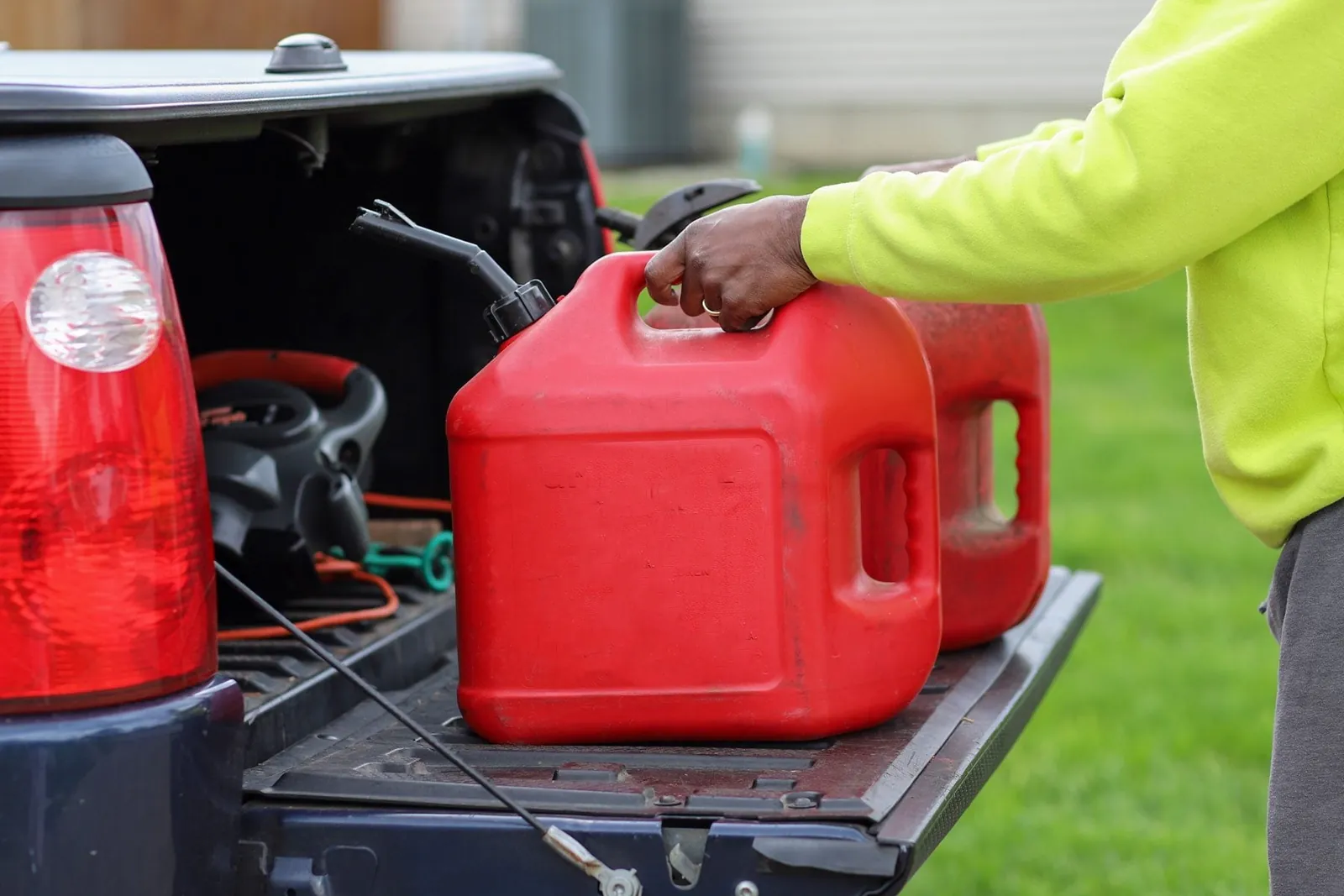
If you must keep a small amount of fuel for outdoor equipment, follow these steps to reduce your risk:
Use approved containers. Only store fuel in red, spill-proof containers that meet the standards set by the American National Standards Institute. You’ll know it’s correct if the container has a clear “UL” or “ASTM” safety label on the side. Never reuse plastic jugs from household cleaners, as the chemical reaction can degrade the plastic and lead to sudden, catastrophic leaks.
Limit the total volume. Don’t keep more than 5 gallons of gasoline on your property at one time. This amount is the upper limit for safe residential storage in a detached area. If you need more for a large property, store the excess in a dedicated, fire-rated fuel cabinet.
Ensure proper ventilation. Place the container in a detached shed that has cross-ventilation, such as vents near the floor and the roof. Fumes are heavier than air and will pool at ground level. You’ll know the ventilation is working if you can’t smell fuel fumes when you enter the shed.
Keep it away from heat. Store the container on a concrete or dirt floor, at least 50 feet away from any living space or ignition source. If your storage area exceeds this, move the container to a shaded, cooler location.
Check for leaks. Inspect the seal and the spout of the container every time you use it. If the plastic looks cracked or the gasket feels loose, replace the entire container immediately. A brittle seal is a fire hazard that costs far more to fix than the price of a new container.
The mistake people make
The most common mistake people make is storing fuel in a “safe” container inside a garage, thinking the plastic will hold the vapors. This mistake can cost you your entire home, as even a small leak from a worn gasket creates enough vapor to destroy a structure in seconds. People often assume that because the garage is “just for storage,” it’s safe.
You avoid this by performing a simple “nose check” every time you enter your storage area. If you can smell even a faint trace of gasoline, you have a leak or a failing seal. You must address the smell immediately by moving the container outside and checking the integrity of the lid. Never assume the smell will go away on its own.
If the container shows signs of age, replace the gasket or the entire unit regardless of how it looks. Plastic degrades when exposed to heat cycles, becoming brittle and prone to microscopic cracks. If you store fuel in a shed, ensure it’s at least 50 feet from your primary living space. A detached structure limits the damage if an ignition event occurs.
When to seek help
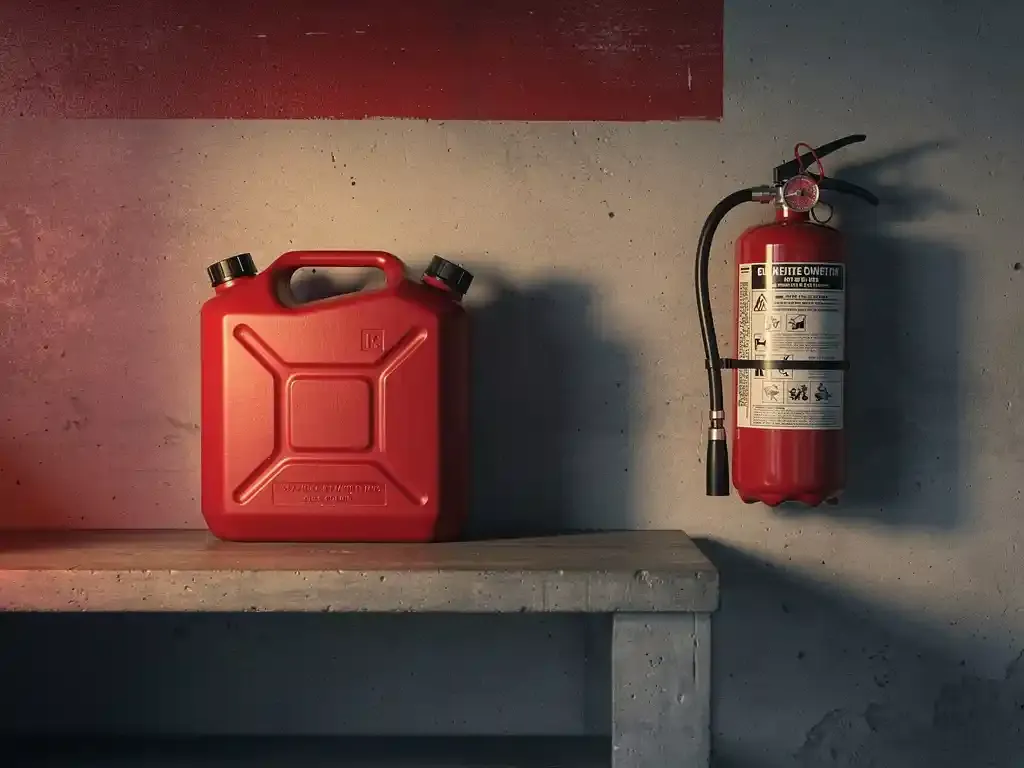
Sometimes, fuel management becomes too complex for a standard homeowner to handle safely. You should stop attempting to store fuel yourself if you notice the following signs:
The fuel container shows signs of physical damage, such as cracks or deep gouges. Even a hairline fracture can allow volatile vapors to escape, creating a silent fire hazard.
Storing larger quantities shifts your liability profile and often voids standard homeowner insurance policies.
The gasoline has sat in the container for more than 6 months, as it begins to degrade and may clog your equipment. If the fuel has turned a dark amber color or emits a sour, varnish-like odor, it’s already chemically compromised.
You don’t have a detached, ventilated structure, which is the only safe place for storage. Garages attached to your home are high-risk zones because fumes can travel through wall gaps to reach pilot lights on water heaters.
If you have old, degraded fuel that you no longer need, contact your local hazardous waste disposal facility. They have the specialized equipment to neutralize the chemicals and dispose of them without harming the environment or your property. Never pour gasoline down a drain or onto the ground. This is illegal in many jurisdictions and creates a severe groundwater contamination risk that can cost thousands in remediation fees.
Frequently asked questions
Can you store gasoline in a garage if it’s in a plastic jug?
You should only store gasoline in certified, spill-proof plastic or metal containers specifically designed and labeled for fuel. Plastic containers can degrade over time, and they aren’t designed for the long-term containment of volatile vapors inside an enclosed space. You must use a certified, red safety container and keep it in a detached, outdoor structure to ensure your home remains safe from fire hazards.
How long can you store gasoline before it goes bad?
You can store gasoline for 3 to 6 months before it begins to break down. If you add a fuel stabilizer immediately after purchase, you can extend this life to 12 months in most cases. You should check the label on your specific fuel stabilizer to see the exact time frame it guarantees for the type of fuel you’re using.
Is it safe to keep a gas can in a shed?
Yes, it’s safe to keep a gas can in a shed, provided the shed is detached from your home and well-ventilated. Ensure the shed is at least 50 feet away from any living area and that it doesn’t contain electrical outlets or appliances that produce sparks. You should also keep the container on a flat, stable surface where it can’t be knocked over.
What happens if you store gas in an attached garage?
If you store gas in an attached garage, you create a significant risk of a house fire. Gasoline vapors are heavier than air and will sink to the floor, where they can travel to pilot lights or electrical switches. Once these vapors reach an ignition source, they can cause a sudden, intense flash fire that spreads into your home’s living areas within seconds.
Does it matter if the gas container is full or empty?
Yes, it matters because an empty container often holds more concentrated vapors than a full one. An empty or partially empty jug has more “headspace” for gasoline to evaporate, which increases the pressure and the amount of flammable gas inside. You should always keep containers tightly sealed, regardless of how much fuel is inside, to prevent these dangerous vapors from escaping into your storage area.
How much gasoline is safe to keep at home?
You should keep no more than 5 gallons of gasoline on your property. This limit is the standard recommendation for residential storage to minimize the potential fire load in the event of an accident. If your equipment requires more than this amount to operate, you should plan to purchase fuel in smaller batches throughout the season rather than storing a large supply.
Conclusion
Always place your fuel container in a detached, well-ventilated shed before you do anything else. You’ll know your storage is safe when there’s no lingering smell of fuel and the container is stored on a flat, non-combustible surface away from direct sunlight. If you ever detect a strong smell of gasoline or notice the container is bulging, move the container to an open area immediately and contact your local fire department for safe disposal advice.
