
The most reliable way to maintain consistent water pressure in a home with a private well is to install best well pressure tanks that match your pump’s flow rate and your household’s daily water demand. These vessels use a compressed air cushion to push water through your pipes, which prevents your pump from turning on and off too frequently. Selecting the right size ensures your pump lasts longer by reducing mechanical wear, while the tank material determines how well it resists corrosion over time.
Comparison of common well pressure tanks

Every property needs a tank sized for its specific pump output and usage patterns. While some models prioritize space-saving designs, others offer superior durability for harsh water conditions.
| Type of tank | Best for | Typical material |
|---|---|---|
| Diaphragm tank | Standard residential systems | Steel with rubber |
| Bladder tank | High-mineral water | Steel with vinyl |
| Fiberglass tank | Corrosive water environments | Fiberglass composite |
| Galvanized tank | Large water storage needs | Zinc-coated steel |
Select a diaphragm tank if your primary goal is minimizing maintenance costs. These units use a flexible rubber membrane to separate air from water, preventing the waterlogging common in older systems. If your well water contains high levels of iron or manganese, opt for a bladder tank instead. The replaceable vinyl bladder prevents mineral buildup from compromising the tank wall, which saves you from a full system replacement when the internal lining inevitably degrades.
Check your water pH level before choosing a fiberglass model. If your test shows a pH below 6.5, the acidity will rapidly corrode steel tanks from the inside out. In this case, the higher upfront cost of a fiberglass composite tank pays for itself by eliminating the risk of pinhole leaks.
Avoid the mistake of oversizing your tank based on total property acreage. A tank that’s too large for your pump’s flow rate will cause the pump to short-cycle, burning out the motor within a few years. If your pump delivers 10 gallons per minute, stick to a tank with at least a 30-gallon drawdown capacity. This ratio provides the necessary run time to keep your motor cool and efficient during peak household demand.
Diaphragm tanks
A diaphragm tank features a flexible rubber membrane that separates the air charge from the water inside the steel shell. This design is ideal for most residential homes because it prevents water from touching the tank walls, which helps stop rust from forming. The rubber diaphragm expands and contracts as water enters or leaves, ensuring that the air pressure stays constant.
- It prevents pump cycling, which saves electricity and extends the life of your well motor.
- It provides a steady flow of water, so you don’t notice pressure drops when a faucet opens.
- It maintains a set air pressure, which you can check using a standard tire gauge at the top valve.
If your household has four people using two bathrooms, a 44-gallon tank is a common choice, but you must check your pump’s gallons-per-minute (GPM) rating to ensure the drawdown capacity matches your system’s needs. If you have a high-flow pump, you might need a larger tank to avoid short-cycling. Always consult the installation manual for the specific tank size required for your pump’s horsepower.
Bladder tanks
A bladder tank uses a replaceable bag, or bladder, that holds all the water inside the tank. This makes it a better choice for homes where the water quality is poor or contains high levels of iron, as the water never contacts the steel tank wall. If the bladder ever fails, you can simply replace the internal bag rather than buying a new unit.
- It protects the metal tank from internal corrosion caused by acidic or mineral-rich water.
- It allows for easier maintenance, as the bladder is a modular part of the assembly.
- It’s highly efficient for systems with fluctuating water demands throughout the day.
This tank is well-suited for rural properties where water quality varies significantly. To determine if this is right for you, test your well water for pH levels and iron content. If your water is highly corrosive, the bladder design will likely outlast a standard diaphragm model. You can find the specific water chemistry requirements for these tanks in the NSF International drinking water standards documentation.
Fiberglass tanks
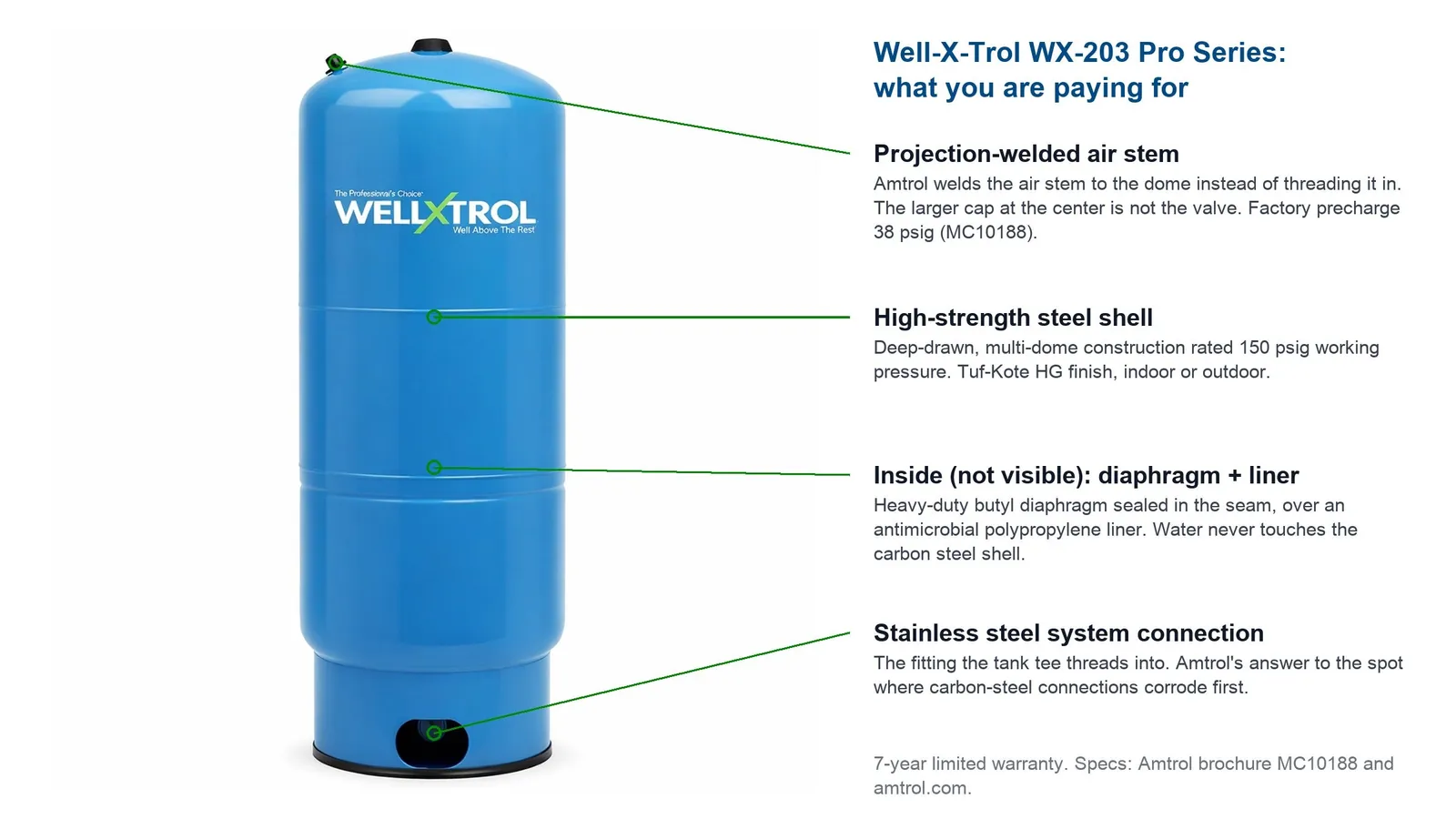
Fiberglass tanks are built using composite materials that don’t rust or dent, making them the most durable option for long-term use. They’re much lighter than steel tanks, which makes them easier to move and install in tight crawl spaces or basements. Because they’re non-metallic, they’re the preferred choice for areas with extremely soft or acidic water that would quickly eat through a steel shell.
They’re completely immune to external rust, even in humid basement conditions. They offer a lighter weight, making installation easier for a single person. They’re resistant to dents and physical damage that can compromise steel tanks.
If your local water pH level consistently tests below 6.5, the acidity will corrode a standard steel tank from the inside out within five to seven years. In these conditions, fiberglass is the only logical investment.
Many homeowners mistakenly assume that all fiberglass tanks are identical. You must look for the NSF/ANSI 61 certification stamp on the exterior housing. Without this verification, the resin used in the manufacturing process may leach chemicals into your drinking water supply.
When choosing between sizes, remember that fiberglass lacks the structural rigidity of steel under high pressure. Failing to do this often leads to hairline fractures in the tank’s gel coat.
These tanks aren’t for everyone; they’re usually more expensive than steel alternatives. If you live in a dry climate with neutral water, the extra cost of fiberglass might not be necessary. However, if your previous steel tank failed due to pinhole leaks after only a few years, switching to fiberglass will likely solve that issue permanently.
Galvanized tanks
Galvanized tanks are traditional, heavy-duty vessels made of zinc-coated steel that store a large volume of water without an internal bladder. They rely on an air-over-water system where the air and water are in direct contact. Because air can dissolve into the water over time, these tanks often require an air volume control to prevent the tank from becoming waterlogged.
These tanks provide massive storage capacity for high-demand agricultural or large-family needs. They feature a simple construction with no rubber parts to wear out or tear. They’re incredibly sturdy and can withstand high pressure levels for many years.
If your tank loses its air cushion, the pump will cycle on and off rapidly, a condition known as short-cycling. To check your status, tap the side of the tank from top to bottom. A hollow sound indicates air, while a dull thud indicates water. If the entire tank sounds like a dull thud, it’s waterlogged and needs to be drained and recharged.
Choose a galvanized tank if your well produces a low flow rate but you require high-volume bursts of water, such as for irrigation or livestock. The large volume of stored water acts as a buffer, allowing the pump to rest while you draw from the tank’s reserve. If you have a high-yield well that can keep up with demand in real-time, a smaller, modern bladder tank is more efficient.
Avoid galvanized steel if your water supply has a low pH level, typically below 6.5. Acidic water will strip the zinc coating, leading to rapid internal corrosion and metallic-tasting water. In these cases, a stainless steel or epoxy-lined tank is the only way to prevent premature failure.
These units are generally for people who need a high volume of water storage and have the space to house a large, heavy unit. If you aren’t familiar with adjusting air volume controls, you may find these tanks difficult to manage compared to modern pre-charged tanks. They aren’t suitable for homes with limited space or for those who want a “set it and forget it” solution.
Other pressure tank options
Stainless steel tanks serve as the gold standard for longevity. While a standard steel tank may succumb to internal corrosion, these units can endure for a very long time even in harsh, high-mineral water environments. Choose this material if your water is acidic, as these conditions aggressively eat through standard epoxy-lined steel.
Pre-charged vertical tanks utilize an internal rubber bladder to separate the air cushion from the water supply. This design prevents the air from absorbing into the water, which eliminates the need for periodic manual air recharging.
If your pump cycles on and off every time you open a faucet, your tank may be waterlogged or the pressure switch may be malfunctioning. When replacing these, match the tank volume to your pump’s flow rate; a tank that’s too small will force your pump to cycle too frequently, shortening its motor life by years.
Small inline tanks function as shock absorbers rather than primary storage. Install these directly before a dishwasher or a high-end filtration system to mitigate the pressure spikes that cause pipes to bang against wall studs. If you hear a loud thud when your appliances shut off, you have water hammer, which eventually cracks pipe joints and causes slow, hidden leaks.
Never rely on these as a substitute for a main pressure tank, as they lack the drawdown capacity to prevent pump strain. If you’re unsure which size you need, check the diameter of the pipe feeding your appliance; a 2-gallon inline tank is sufficient for most residential plumbing runs, but you’ll need a larger unit for multi-fixture lines.
How to choose between them
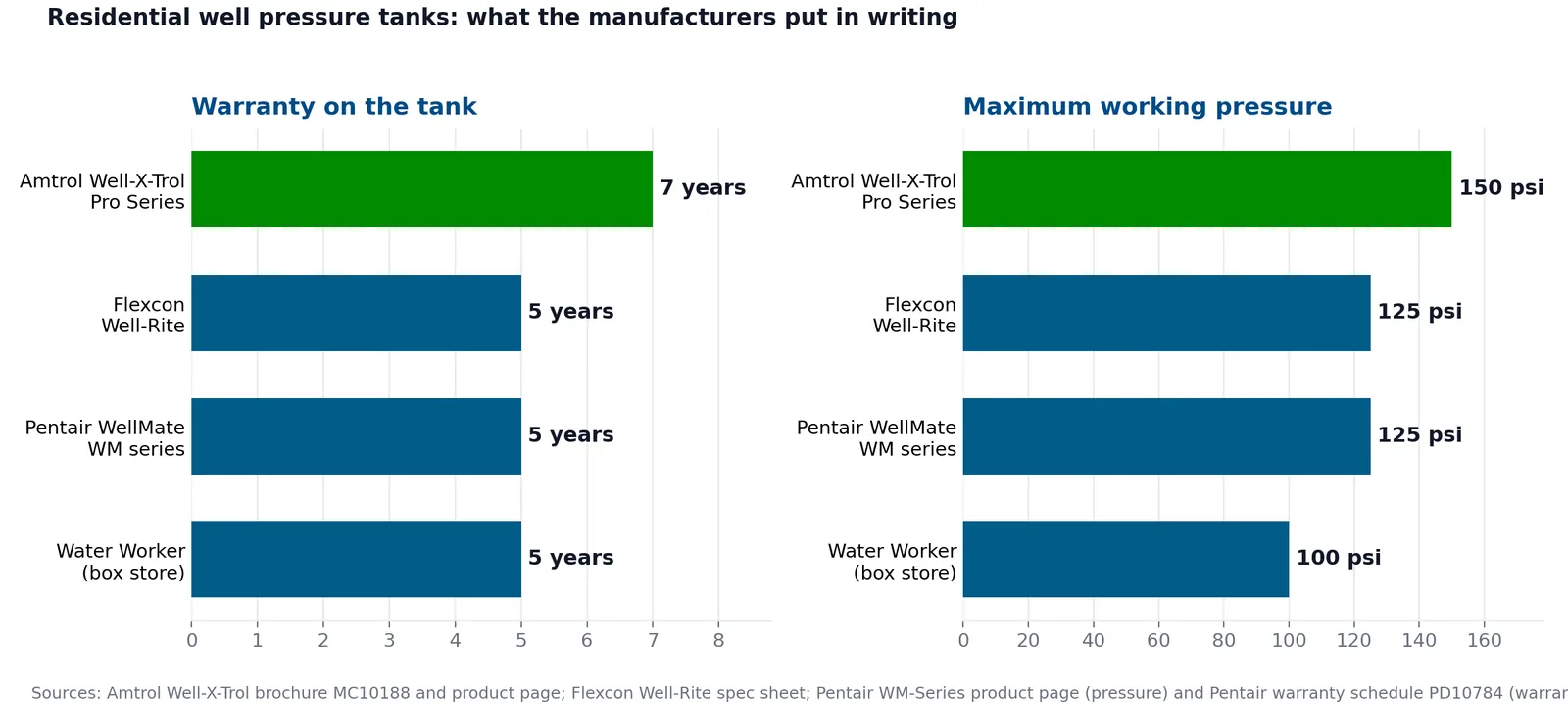
Choosing the right tank depends on your water chemistry, your available space, and your budget. If your water test shows a pH below 6.5 or iron levels exceeding 0.3 parts per million, you must choose a bladder or fiberglass tank to avoid internal corrosion.
If you have less than four square feet of floor space in your basement, a vertical diaphragm tank is the most efficient way to get the capacity you need. These units allow you to stack volume vertically, keeping your floor clear for other utilities. If you’re on a tight budget and have neutral, treated water, a standard steel diaphragm tank is perfectly fine for most homes.
Most homeowners make the mistake of buying based on the initial sticker price rather than the replacement cycle. A steel tank in acidic water might be inexpensive relative to the alternative, but it will cost significantly more in emergency plumbing fees when the shell ruptures prematurely.
These options generally can’t be combined into a single system; you should pick the one that fits your primary requirements. Selecting one type usually means you’re committing to that design for the life of the tank, as the plumbing connections are specific to the model you choose. If your home uses a variable speed pump, prioritize a bladder tank regardless of your budget. These pumps cycle frequently, and the reinforced bladder design prevents the rapid wear that destroys diaphragm membranes.
Related guides
Frequently asked questions
How long should a well pressure tank last?
Well pressure tanks typically last over a decade, depending on water quality and pump settings. If your water is highly acidic or contains sediment, internal components may fail sooner. Check the data plate to determine your tank’s age if you suspect it’s nearing the end of its life.
What happens if my pressure tank is too small?
If your pressure tank is too small, your pump will short-cycle, causing excessive wear on the motor. This leads to premature pump failure and noticeable fluctuations in water pressure. Ensure your tank has enough drawdown capacity to handle your household’s peak water usage without forcing the pump to restart immediately.
Can I fix a waterlogged pressure tank?
You can often fix a waterlogged tank by draining the system and recharging the air pressure, provided the internal bladder remains intact. After draining the water, use an air compressor to reach the manufacturer’s recommended pressure. If the tank becomes waterlogged again shortly after, the internal membrane is likely damaged.
Is it safe to use a tank with surface rust?
Minor surface rust is generally safe, but it indicates that the exterior protective coating is failing. If you see deep pitting or signs of leaks, the steel is compromised and the tank could rupture. Monitor rust spots closely, but never attempt to weld or patch a leaking pressure tank.
Does it matter if the tank is vertical or horizontal?
Vertical and horizontal tanks function identically, so the choice depends entirely on your available floor space and plumbing layout. Vertical tanks save floor area in tight corners, while horizontal tanks fit better under low ceilings or shelves. Choose the shape that best suits your mechanical room’s specific dimensions.
How do I know if my tank pressure is correct?
The correct air pressure is 2 PSI below your pump’s cut-in pressure, which you can find on the pressure switch label. You must check this pressure while the tank is completely empty of water. Maintaining this specific air pressure is essential for the tank to function correctly and prevent pump damage.
Conclusion
Start by checking the air pressure in your tank using a tire gauge, which you should do once every six months to ensure your system is working correctly. If the pressure is low, add air until it reaches the level specified on the tank’s instruction label.