
Pressure-balanced, thermostatic, and manual mixing units are the primary types of hardware that control water flow and temperature in your home, and finding the best shower valves depends on your specific plumbing system and safety needs. These devices regulate the blend of hot and cold water before it reaches your showerhead. While they all serve the same core function, they differ significantly in how they handle sudden pressure drops, such as when a toilet is flushed elsewhere in the house. Choosing the right one ensures a consistent temperature and helps prevent accidental scalding.
Popular shower control options
You should compare these systems based on how they maintain water temperature during pressure changes. The following table summarizes the main categories used in modern bathrooms.
| Valve Type | Best For | Concrete Example |
|---|---|---|
| Pressure-balanced | Family homes | Single-handle lever |
| Thermostatic | Luxury showers | Dual-control trim |
| Diverter | Multi-outlet setups | Integrated tub spout |
| Manual | Simple renovations | Two-handle faucet |
Pressure-balanced valves operate using a diaphragm that slides back and forth to equalize incoming hot and cold water pressure. If someone flushes a toilet elsewhere in the house, the valve instantly restricts the hot water flow to match the sudden drop in cold pressure. This prevents scalding, making them the standard safety choice for households with children.
Thermostatic valves go further by using a wax-filled element that physically expands or contracts to calibrate the exact temperature. These allow you to set a specific degree and keep it there regardless of how much water is being drawn elsewhere. If you have a high-flow showerhead or a multi-head system, choose this type to avoid the temperature drift inherent in simpler mechanical valves.
Avoid the mistake of choosing a manual two-handle faucet for a primary shower. While they’re cheap and easy to repair, they lack any internal regulation. You’ll waste gallons of water every morning manually hunting for the “sweet spot” between scalding and freezing. If your pipes rattle when you turn the water on, your system likely suffers from high pressure fluctuations; in this case, skip the diverter models and install a thermostatic valve with a built-in volume control.
If you’re renovating a basement or a guest bath that sees infrequent use, a pressure-balanced valve is the most cost-effective solution. However, if you’re installing a rain shower head, the higher flow rate requires a thermostatic valve to ensure the temperature remains stable during long sessions.
Pressure-balanced valves
A pressure-balanced valve keeps your shower temperature steady when someone uses water elsewhere in the building. It uses a floating spool or a flexible diaphragm that shifts instantly inside the valve body. This movement compensates for pressure drops, ensuring the ratio of hot to cold water remains constant.
Most homeowners choose this for its reliability and low cost. It prevents sudden temperature spikes when a toilet flushes or a dishwasher fills. By maintaining a stable mix, it eliminates the risk of thermal shock, which is vital for children and seniors. These valves fit standard wall depths, meaning you can upgrade your shower without tearing out tile or rerouting supply lines.
If your home has older plumbing with narrow pipes, this is your most practical upgrade. A standard unit installed in a 1/2-inch copper line will maintain water temperature within three degrees of your setting during a typical pressure surge.
You must distinguish these from thermostatic valves. A pressure-balanced valve only reacts to changes in water pressure, not temperature. If your water heater fluctuates in output, this valve won’t correct the heat—it only balances the force. Use a pressure-balanced valve if your primary issue is a cold blast when a faucet opens elsewhere. If you have a tankless water heater that struggles to maintain a consistent output temperature, choose a thermostatic valve instead.
Many installers make the mistake of failing to flush the lines before seating the new cartridge. Even a tiny grain of construction debris or pipe scale can lodge in the spool, causing the valve to stick. This leaves you trapped with either freezing or scalding water. Always run both hot and cold lines for at least thirty seconds before inserting the internal components.
If you notice the handle becoming increasingly difficult to turn, the internal seals have likely hardened due to mineral buildup. Don’t force the handle, as this can snap the plastic stem. Instead, soak the cartridge in a solution of white vinegar and water. This simple swap restores performance and is inexpensive compared to replacing the entire valve.
Thermostatic valves
A thermostatic valve uses a wax element or bimetallic coil to sense the actual temperature of the water and adjust the mix automatically. Unlike pressure-balanced models, these valves allow you to set a specific temperature and keep it there regardless of pressure or temperature changes in the supply lines. They’re ideal for users who want precise control and consistent heat during their entire shower.
- Maintains a precise temperature setting regardless of line pressure.
- Allows for higher flow rates for multiple showerheads or body sprays.
- Includes a safety stop to prevent water from getting dangerously hot.
- Provides separate controls for water temperature and water volume.
You might choose this if you’re building a custom walk-in shower with multiple outlets. If you have two overhead showerheads running at once, you’ll need the higher flow capacity that these larger valves offer. These units are more complex to install and require a deeper wall cavity than standard mixing valves.
Diverter valves
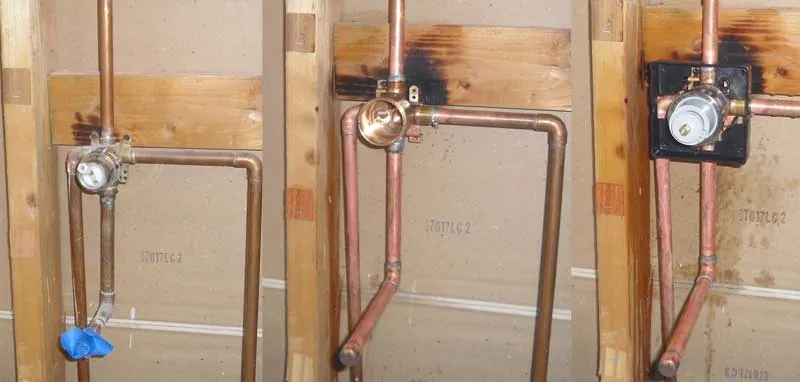
A diverter valve acts as a gatekeeper that redirects water flow between different outlets, such as a showerhead, a hand-held sprayer, or a tub spout. These are often used in conjunction with a main mixing valve to add versatility to your shower experience. They don’t control the temperature themselves but are essential for systems with more than one water exit point.
- Switches water flow between two or three different fixtures.
- Allows for the use of a hand-held shower for cleaning.
- Integrates easily into existing single-handle mixing systems.
- Features a simple push-button or lever mechanism for selection.
If you have a tub-shower combo, you likely already have a simple diverter on the spout. For a more modern setup, you can install a wall-mounted diverter to switch between a rainfall head and a hand-held wand. Note that these require an extra plumbing line for every outlet you want to control, so they’re best suited for new construction or full-scale bathroom remodels.
Manual mixing valves
A manual mixing valve provides basic control by blending hot and cold water based on the position of two separate handles. These are common in older homes or vintage-style bathroom designs where simplicity is preferred over automatic safety features. Because they lack internal pressure compensation, they’re sensitive to changes in supply pressure.
If someone flushes a toilet or starts the laundry while you’re in the shower, the sudden drop in cold water pressure will cause the temperature to spike instantly. You can test your system by running the kitchen faucet at full volume while using the shower. If the temperature shifts more than five degrees, your valve lacks the necessary balancing spool to handle household demand.
These valves are strictly mechanical, meaning they rely entirely on your manual adjustments to maintain a comfortable output. They offer a classic aesthetic with separate handles and require minimal maintenance because they lack complex internal sensors or diaphragms. You’ll rarely need to replace parts beyond the occasional rubber O-ring or washer.
If you’re renovating a historic home and want to keep a traditional look, this is your best choice. However, don’t assume these units protect against scalding. If you live in a household with young children or elderly residents, you must install a separate anti-scald limit stop on the hot water supply line. This physical barrier prevents the handle from turning far enough to reach dangerous, skin-damaging temperatures.
When choosing between a manual valve and a pressure-balanced alternative, look at your home’s plumbing age. If you have galvanized steel pipes, the internal scale buildup often creates natural flow resistance that masks minor pressure drops. In modern PEX or copper systems, the water moves faster, making the temperature fluctuations from a manual valve much more aggressive.
Other shower valve types
Volume control valves function as simple gates for your water flow. Install these when you have multiple outlets, such as a rain head and a handheld wand, to isolate each source. You can run one, both, or neither without touching the temperature handle. If you choose these, ensure they’re rated for the total gallons per minute your system produces. Undersized valves create a bottleneck that ruins the pressure of your main showerhead.
Stop valves, or integral service stops, act as the local kill switch for your plumbing. Without them, a simple cartridge replacement requires you to find the main water shut-off for your entire home. If you live in a multi-story house, this saves you from draining the pipes in the basement just to fix a dripping shower.
Check your valve body for two small, flat-head screw slots located on either side of the main inlet. If you see them, you have integrated stops. If your valve body is smooth, you lack this feature. In that case, you must install separate ball valves in the wall behind an access panel.
Never mistake a diverter for a volume control. A diverter merely redirects water from one port to another, while a volume control restricts the flow rate. If you want to save water or soften the spray intensity, you need the volume control.
If you only want to switch between a tub spout and a showerhead, a diverter is the correct tool. Always verify the flow capacity of your valve before finalizing your trim kit, as low-flow valves can cause significant pressure drops in larger systems.
How to choose the right valve
Your choice depends on three main factors: your current plumbing layout, your safety requirements, and the number of shower outlets you plan to use. If you’re keeping your existing wall configuration and just need a reliable, safe shower, a pressure-balanced valve is the standard choice. If you’re building a custom multi-head system and want maximum comfort, choose a thermostatic valve.
Pressure-balanced valves react to changes in water pressure, such as someone flushing a toilet, to prevent sudden temperature spikes. They’re ideal for single-shower setups where the plumbing infrastructure is already fixed. However, they struggle to maintain a precise temperature if the supply pressure fluctuates wildly.
If your home experiences frequent pressure drops, a thermostatic valve is the superior option. It uses a wax element to physically adjust the hot and cold water mix, maintaining your set temperature within one degree regardless of pressure shifts.
If you have young children or elderly family members, prioritize a valve that features an adjustable high-temperature limit stop. This physical setting prevents the handle from turning far enough to reach scalding temperatures. You can usually find this setting on the cartridge itself; check your manual to see how to adjust it during installation.
Many installers make the mistake of setting the limit stop to the maximum factory position. This leaves users vulnerable to burns if the water heater is set above 120 degrees Fahrenheit.
If you’re planning to run more than two outlets, such as a rain head and body sprays simultaneously, ensure your valve has a high-flow rating. A standard valve will restrict volume, leaving you with a weak, unsatisfying spray. Look for a valve with a 3/4-inch inlet rather than the standard 1/2-inch to ensure sufficient volume.
Frequently asked questions
Can I install a new shower valve myself?
You can install a new valve yourself if you’re experienced with soldering copper or using PEX crimp tools. A mistake can lead to hidden leaks and significant water damage. If you aren’t comfortable working inside a wall, hire a licensed professional to ensure the valve is properly installed.
How long do shower valves last?
Most high-quality shower valves last between 10 and 20 years before the internal cartridge needs replacement. Lifespan depends heavily on your local water quality and mineral content. If you notice a stiff handle or temperature fluctuations, you can usually fix this by replacing the inner cartridge instead of the valve body.
Why does my shower temperature change when a toilet flushes?
Your shower temperature changes because a toilet flush creates a drop in cold water pressure. This happens because your current valve lacks a pressure-balancing mechanism to counteract supply changes. Replacing your existing valve with a pressure-balanced model will automatically adjust the internal spool to maintain a stable water temperature.
Is it safe to use a thermostatic valve without a pressure-balanced one?
It’s safe to use a thermostatic valve on its own because it maintains a consistent temperature by automatically adjusting the hot and cold water mix. These units are highly accurate and often exceed the performance of pressure-balanced valves. However, they’re more expensive and require more space in the wall to function properly.
What happens if I choose the wrong valve size?
Choosing the wrong valve size will likely result in reduced water flow or difficulty fitting the trim plate. Most valves use standard 1/2-inch plumbing, but some high-flow models require 3/4-inch lines. Check the installation manual for the required pipe diameter and wall depth before purchasing your new valve.
Does it matter if I have hard water?
Hard water shortens the lifespan of your shower valve by causing mineral buildup on internal seals. Choose a model with easy cartridge access for cleaning or one featuring ceramic discs resistant to deposits. Check your local water quality report to determine if you need a heavy-duty valve.
Conclusion
Start your project by turning off the main water supply and confirming the pressure is gone by opening a low-level faucet. Once you install the new valve and turn the water back on, you should see a consistent temperature even when other fixtures are running.