
Permeable rock is defined as any geological material possessing interconnected pore spaces or fractures that allow fluids, such as water, oil, or natural gas, to move through its structure. Unlike impermeable rocks, which act as barriers to fluid migration, these porous formations function like natural sponges or highways for subterranean liquids. Understanding the distinction between porosity—the amount of empty space in the rock—and permeability—the ability of those spaces to connect—is essential for grasping how groundwater moves through our planet’s crust.
Key Takeaways
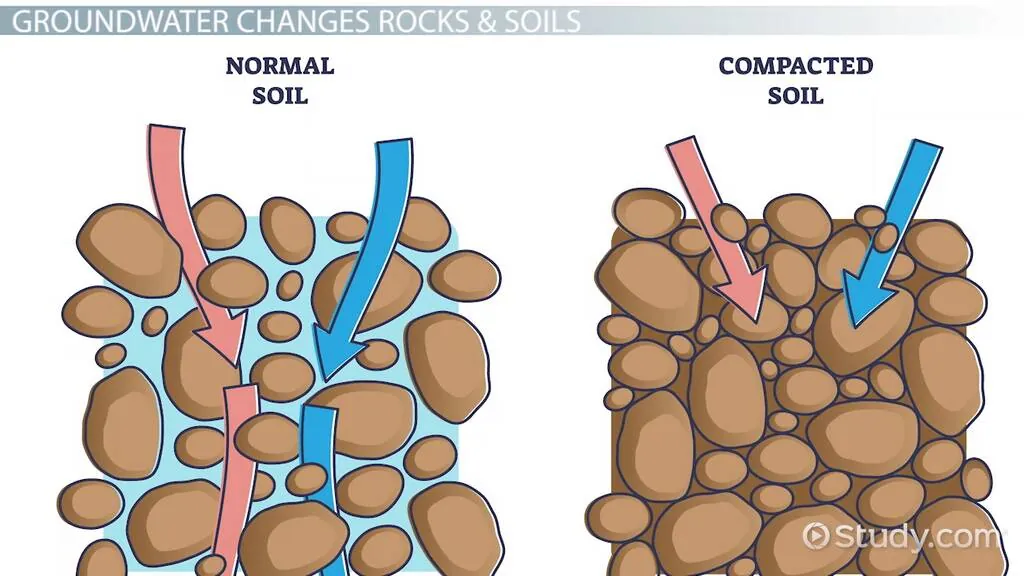
- Permeability is measured by how easily fluids flow through connected pores.
- Sandstone and limestone are the most common examples of permeable rock.
- Permeable layers often act as aquifers, providing essential drinking water supplies.
- Geologists use permeability ratings to determine if a site is suitable for well drilling.
- Rock structure, rather than just total pore space, dictates the actual flow rate.
Definition of Permeable Rock
At its core, a rock is considered permeable if its internal network of voids is linked sufficiently to permit fluid transport. While many rocks contain tiny holes, these holes must be connected for the rock to be truly permeable. If the pores are isolated, the rock may hold water (porosity) but won’t allow it to pass through (impermeability). This distinction is vital for industries ranging from civil engineering to petroleum exploration.
Hydraulic conductivity is the technical term scientists use to quantify this movement. High-permeability rocks allow rapid flow, while low-permeability rocks significantly impede it. When engineers design foundations or waste containment sites, they look for specific geological formations that either encourage drainage or act as a seal to prevent contamination.
Examples of Permeable Rock
Not all rocks are created equal when it comes to fluid transmission. Some are naturally gifted at moving water, while others are dense and solid. The following table highlights common types of permeable rocks and their physical characteristics.
| Rock Type | Pore Structure | Typical Use Case |
|---|---|---|
| Sandstone | Intergranular | Aquifer storage |
| Limestone | Vuggy/Fractured | Karst water systems |
| Conglomerate | Large gaps | Natural filtration |
| Pumice | Vesicular | Lightweight drainage |
The Role of Sandstone
Sandstone is perhaps the most famous example of a permeable rock. It’s composed of sand-sized grains cemented together, leaving significant space between the particles. Because these grains are relatively uniform in shape, the spaces between them create a consistent pathway for liquids.
Groundwater resources rely heavily on sandstone units because they can hold massive volumes of water while allowing it to be pumped out efficiently. In the petroleum industry, sandstone acts as a primary reservoir rock, capturing oil that has migrated from deeper source rocks. The sedimentary deposition process determines the size and sorting of these grains, which in turn dictates the rock’s long-term permeability.
Understanding Limestone and Karst
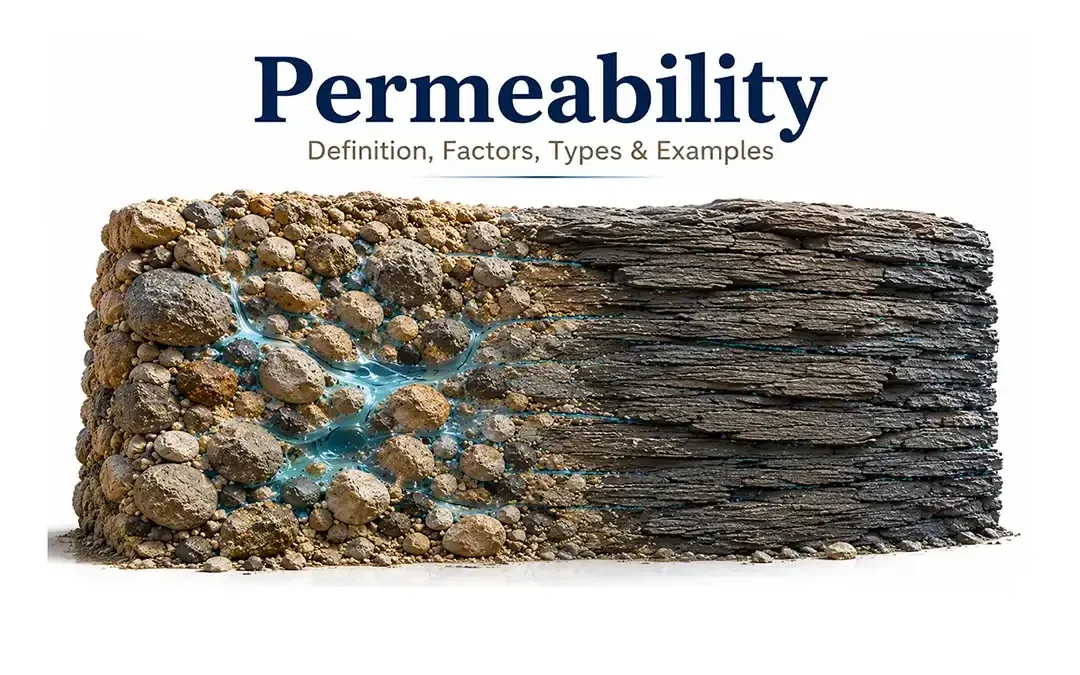
Limestone presents a unique case because it can transition from impermeable to highly permeable over time. As a chemical rock, it’s susceptible to dissolution by acidic groundwater. This process creates secondary permeability through the formation of cracks, joints, and caves.
This geological feature is known as karst topography. In these environments, water moves extremely fast, often through underground rivers rather than slow seepage. While this creates spectacular cave systems, it also makes the water supply highly vulnerable to surface pollution because the rock provides very little natural filtration.
Why Porosity Is Not Permeability
A common misconception is that a rock with high porosity must have high permeability. While they’re related, they aren’t the same. Imagine a rock filled with millions of tiny, sealed bubbles. That rock would have high porosity but zero permeability.
Effective porosity refers only to the connected voids that allow fluid movement. Factors that influence this include:
- Grain sorting: Well-sorted sand creates more open space than poorly sorted mixtures.
- Cementation: Minerals like calcite or silica can fill the gaps between grains, effectively “plugging” the rock.
- Compaction: Extreme pressure over millions of years squeezes pores shut, turning loose sediment into dense, solid stone.
How Permeability Affects Groundwater
The earth acts as a massive natural filter. As rain falls and infiltrates the soil, it passes through permeable layers of rock and sediment. This process is crucial for recharging aquifers, which are the primary source of drinking water for millions of people. The United States Geological Survey provides detailed data on how these underground reservoirs store and transmit water.
When rock layers are highly permeable, water tables can rise quickly after heavy rainfall. Conversely, in areas with low-permeability rock like shale, water tends to pool on the surface, leading to wetlands or increased runoff. Understanding these flow patterns is the first step in managing regional water security and preventing flooding.
Identifying Permeable Rock in Fieldwork
Geologists and engineers use several methods to identify whether a rock sample is permeable. In the field, a simple water-drop test can provide a rough estimate. If a drop of water vanishes into the rock surface within seconds, the permeability is likely high. If the water beads up and sits on the surface, the rock is likely impermeable.
Pro Tip: Use a magnifying hand lens to inspect the grain size and texture; rocks with visible, angular grains or visible cracks generally show higher permeability than fine-grained, smooth rocks.
For professional assessment, experts use well-logging tools that measure electrical resistivity. Because water conducts electricity better than solid rock, the resistivity of a formation tells geologists exactly how much fluid is present and how easily it can flow.
Comparison of Rock Characteristics
When evaluating potential sites for construction or water extraction, professionals categorize rocks based on their flow potential. The following table contrasts the different behaviors of common rock types under stress.
| Rock Category | Permeability Level | Flow Characteristic |
|---|---|---|
| Unconsolidated Sand | Very High | Rapid transmission |
| Fractured Granite | Moderate | Path-dependent flow |
| Shale | Very Low | Barrier to flow |
| Dense Basalt | Negligible | Impermeable base |
Is Your Rock Permeable?
If you’re trying to determine if a rock you found is permeable, consider its origin. Sedimentary rocks are almost always more permeable than igneous or metamorphic rocks. Igneous rocks, such as granite, are formed from cooled magma and are typically very dense. Unless they have been subjected to tectonic pressure that created fractures, they’re almost never permeable.
Metamorphic rocks are similarly dense, as they have been “baked” and squeezed under extreme heat and pressure. This process typically closes off any pre-existing pore spaces. If you find a rock that’s permeable, it’s almost certainly a sedimentary variety like sandstone, limestone, or conglomerate.
Frequently Asked Questions
What is the simplest way to test permeability?
The simplest field test involves placing a small amount of water on the rock’s surface. If the rock is permeable, the water will be absorbed into the matrix relatively quickly. If the water remains as a bead on the surface or runs off, the rock is likely impermeable. This method is qualitative and works best on porous stones like sandstone or limestone.
Why do some rocks hold water but not release it?
This occurs when a rock has high porosity but low permeability. The pores are present and can store water, but they aren’t connected to one another. Because there’s no pathway between the voids, the water remains trapped inside the rock structure, unable to flow out, even under pressure. This is common in certain types of clay-rich sedimentary rocks.
How does permeability affect building construction?
High permeability in foundation soil or rock can lead to drainage issues, potential sinkholes, and the migration of pollutants into groundwater. Engineers must conduct a geotechnical survey to determine if the rock can support the weight of a structure without shifting or if it will allow water to compromise the foundation. Impermeable layers are often preferred for creating stable base pads.
Can a rock change its permeability over time?
Yes, rock permeability is dynamic. Over geological time, processes like chemical weathering, tectonic fracturing, and mineral precipitation can significantly alter a rock’s flow characteristics. For instance, limestone can become more permeable as acidic water carves out channels, while sandstone can become less permeable if minerals precipitate into the pore spaces, a process known as cementation.
What is the difference between porosity and permeability?
Porosity refers strictly to the volume of empty space within a rock, expressed as a percentage of the total rock volume. Permeability is a measure of how well those spaces are connected and how easily a fluid can move through them. A rock can have high porosity and zero permeability, but it can’t have high permeability without having at least some porosity.
Conclusion
Knowing how to identify these geological materials will help you better understand the landscape around you. Whether you’re looking for water, planning a construction project, or simply interested in the science of the earth, identifying sandstone and limestone is your best starting point. Consult with a local geologist or your state’s geological survey department to get specific data on the rock formations in your immediate area.
