
Choosing the best primer for plaster walls depends on your wall condition and desired finish. Because plaster can be fragile or porous, the right base coat is essential to prevent peeling. For most users, the choice is between a versatile sealer like Zinsser Bulls Eye 1-2-3 or a high-performance bonding agent like INSL-X Stix Bonding Primer for challenging surfaces.
As an Amazon Associate, we earn from qualifying purchases. This post contains affiliate links – if you buy through them, we may earn a commission at no extra cost to you.
1. Zinsser Bulls Eye 1-2-3 Water-Base Primer & Sealer

Best for: A homeowner wanting a reliable, versatile primer for general interior use.
This primer is designed for both interior and exterior surfaces. It works well on plaster because its stain-blocking resins help create a uniform base for your paint.
It bonds to glossy surfaces without the need for scuff sanding, which saves time during prep work. You can even use it on ferrous metal, making it a handy choice for mixed-material projects. It isn’t designed for surfaces with active water leaks or severe structural damage.
Good if:
- You want one product for many different surfaces.
- You need to cover glossy paint without sanding.
- You’re working in cooler temperatures down to 35°F.
Skip it if:
- Your plaster has significant water damage or mold.
2. INSL-X SXA11009A-04 Stix Acrylic Waterborne Bonding Primer

Best for: Someone tackling difficult, non-porous, or very smooth surfaces.
This is a premium-quality, acrylic-urethane primer-sealer. It provides strong adhesion to challenging materials, including glossy tile, PVC, and pre-coated siding, making it effective for plaster that has been painted with high-gloss finishes.
The formula provides excellent enamel holdout, which ensures your topcoat looks even and professional. It’s easy to clean up with soap and water after the job is finished. It isn’t intended for use as a primary solution for structural wall repairs.
Good if:
- You’re painting over very smooth or glossy plaster.
- You want a high-quality base for a smooth topcoat.
- You need a versatile primer for interior or exterior use.
Skip it if:
- You’re looking for a specialized mold-killing product.
3. Zinsser Gardz Water-Based Problem Surface Sealer

Best for: Someone repairing plaster with torn paper or loose surface bits.
This sealer is specifically formulated to repair torn paper on damaged drywall or plaster. It locks down loose fibers and seals skim coats or spackling to provide a solid, uniform surface for your paint.
Because it’s clear and fast-drying, it’s a great choice for protecting new drywall or sealing old wallpaper adhesive. It acts as a stabilizer for surfaces that are otherwise too fragile to paint. It doesn’t hide dark colors or stains, as it’s a clear sealer.
Good if:
- You’re dealing with damaged plaster or torn paper.
- You want to seal chalky or porous skim coats.
- You need to stabilize a surface before painting.
Skip it if:
- You need a white primer to hide old wall colors.
4. Larsen Plaster-Weld Bonding Agent Quart

Best for: A professional or DIYer applying new plaster over an existing surface.
This is a specialized bonding agent designed to help new plaster stick to a variety of substrates. It creates a high-strength bond that keeps the new layer secure.
It’s a specific tool for a specific job, focusing on the mechanical bond between layers. It doesn’t function as a standard paint primer or a stain-blocking sealer.
Good if:
- You’re applying fresh plaster over an existing wall.
- You need a reliable bonding agent for masonry or concrete.
Skip it if:
- You’re simply trying to prime a wall for a new coat of paint.
5. Meoded Paint & Plaster

Best for: Someone applying decorative Venetian or lime-based plasters.
This is a 100% acrylic, textured primer designed to give decorative plasters something to grab onto. It’s perfect for professional-grade finishes like marmorino or concrete plasters.
The formula is quick-drying and intended for a single-layer application. It helps ensure that decorative plasters stick properly and look consistent. It isn’t meant for standard wall painting projects.
Good if:
- You’re applying Venetian or lime-based decorative plasters.
- You want a textured base for better adhesion.
Skip it if:
- You’re just doing standard wall painting with latex paint.
6. EVOLVE Drywall Primer & Sealer

Best for: Someone finishing new drywall or freshly skim-coated plaster walls.
This primer acts as both a sealer and a primer, which helps lock down porous surfaces. It’s engineered to prevent “flashing” or blotchy spots, which often happen when paint absorbs unevenly into new plaster.
It provides excellent hide for joint compound and tape lines. The low-VOC, low-odor formula makes it safer for use in occupied homes. It isn’t suitable for surfaces with active moisture issues.
Good if:
- You’re finishing new construction or major wall repairs.
- You want a professional, uniform look on new plaster.
- You prefer a low-odor, eco-friendly product.
Skip it if:
- You’re dealing with mold or significant water seepage.
7. Zinsser 373693 HIDZ Multi-Purpose Primer and Sealer

Best for: A user who needs to hide a previous, strong wall color.
This multi-purpose primer is designed to seal porous surfaces while blocking common stains. It dries to the touch in 30 minutes, allowing you to move to your topcoat in just one hour.
Its leveling properties make it easy to apply smoothly. It also adheres to difficult surfaces like aluminum or chalky materials. It isn’t as specialized for structural damage as the Gardz Sealer.
Good if:
- You need to cover up a dark or bold previous wall color.
- You’re on a tight schedule and need fast drying times.
- You want a versatile, multi-surface primer.
Skip it if:
- You’re dealing with peeling paint or significant surface damage.
8. Zinsser WaterTite White Damp Wall Primer

Best for: Someone dealing with damp basement or cellar walls.
This primer is formulated with Portland Cement to create a barrier against water intrusion. It’s designed to work on concrete and masonry that’s already damp, holding up against hydrostatic pressure.
It protects against efflorescence and can be applied to surfaces with a high pH. It’s a heavy-duty solution for moisture-prone areas. It isn’t meant for standard, dry interior walls.
Good if:
- You have persistent dampness or seepage in a basement.
- You need a high-strength barrier against water pressure.
Skip it if:
- You’re painting standard, dry interior plaster walls.
9. Zinsser Mold Killing Primer

Best for: Someone cleaning up walls after a mold or mildew issue.
This is an EPA-registered fungicidal protective coating. It allows you to paint directly over existing mold and mildew, which saves time on extensive pre-cleaning.
It’s ideal for bathrooms, basements, or any space where moisture has caused bacterial growth. It works under any coating, including Perma-White. It isn’t a structural repair product for damaged plaster.
Good if:
- You have visible mold or mildew on your walls.
- You need a product that kills odor-causing bacteria.
Skip it if:
- Your walls are clean and you just need to change the color.
10. Zinsser Peel Stop Triple Thick Binding Primer
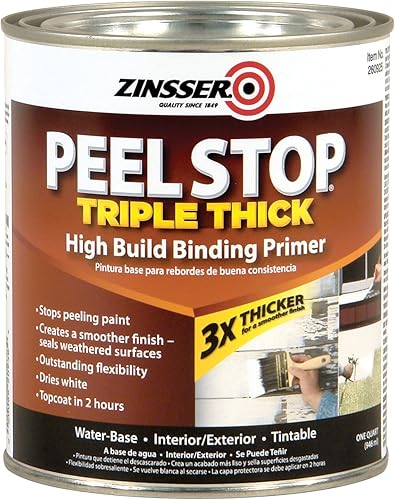
Best for: Surfaces where the old paint is starting to flake or peel.
This is a triple-thick binding primer designed to stop paint from peeling further. It creates a smooth, flexible surface that seals weathered areas.
It bridges the gaps between old paint layers to create a stable foundation for your new paint. It isn’t a standard primer for new, clean plaster.
Good if:
- Your existing paint is cracking or peeling.
- You need a flexible base to stabilize old surfaces.
Skip it if:
- Your walls are in good condition and just need a fresh coat.
Where These Overlap
Many of these primers, such as Zinsser Bulls Eye 1-2-3, INSL-X Stix, and Zinsser HIDZ, overlap significantly in their ability to bond to difficult surfaces and seal porous materials. For a standard plaster wall that’s clean and in good shape, any of these three will provide a solid base for your topcoat. The real difference arises when you encounter specific problems like mold, peeling, or dampness. If you’re just looking for a general-purpose product, the choice is less about the technical differences and more about your preference for brand or specific drying time.
Still Not Sure?
How often will I really use it?
If you’re doing a one-time project on a single wall, you want a product that’s easy to manage and covers well. For a first-time user, Zinsser Bulls Eye 1-2-3 is a straightforward choice that handles most common plaster needs without requiring complex application steps or specialized skills.
What do I already own that this has to work with?
Check what kind of topcoat paint you plan to use. Most water-based primers are compatible with standard latex paints. If you have a specific, high-gloss finish or a difficult material like PVC, you should choose a high-adhesion product like INSL-X Stix Bonding Primer to ensure your paint lasts.
What am I most likely to regret choosing?
Regret usually comes from choosing a “general” product for a “specific” problem. If you have mold, don’t try to cover it with a standard primer; use Zinsser Mold Killing Primer. If you have crumbling, peeling plaster, don’t skip the stabilization step—use Zinsser Peel Stop or Zinsser Gardz Sealer.
For standard walls, Zinsser Bulls Eye 1-2-3 is a reliable, all-around performer. If your plaster is in poor condition, damaged, or requires a specialty bond, look toward Zinsser Gardz Sealer or INSL-X Stix Bonding Primer. Always check the manufacturer’s official product label to confirm the primer is suited for your specific surface type and environmental conditions.
Frequently Asked Questions
What has to be replaced, refilled or renewed to keep it working?
However, if you choose a product for a damp wall, like Zinsser WaterTite, you must address the underlying moisture source, as no primer can stop a major, ongoing water leak.
What happens when it’s outgrown or used up?
If you’re using a primer for a specific repair, such as Zinsser Gardz Sealer for damaged paper, the product is consumed during the application. Once the surface is stable and painted, you’re finished.
Would the more capable one on this list have suited me better?
The “more capable” product is often just more specialized. If you bought a general-purpose primer but realized your plaster is actually soft or peeling, a specialized product like Zinsser Peel Stop would have been better. Always assess the state of your plaster before you buy to ensure you have the right tool for the job.
Final Thoughts
Once you’ve selected the right product, don’t rush the application process. Take your time to ensure an even, thin coat across the entire surface so your topcoat adheres perfectly. You’ll be glad you put in the extra effort when you see how smooth and professional your finished walls look.