
Shafts are long, straight rotating parts that carry power from a motor to wheels, gears, or blades in machines such as cars, pumps, and factory equipment.
What shafts actually are

A shaft is a rotating metal rod that transmits torque and power from one part of a machine to another. It sits inside bearings and usually carries gears, pulleys, or couplings along its length. You’ll find shafts in car drive trains, electric motors, pumps, conveyors, and hand tools.
The one misconception people bring to shafts is that any straight rod will do the job. In reality, a shaft must handle twisting forces without bending or breaking, and its material, diameter, and surface finish are chosen for the specific load and speed. If you aren’t sure about load ratings for your machine, check the equipment manufacturer’s technical manual before buying anything.
Choosing the right shaft
- Find the torque the shaft must carry, usually listed in pound-feet or newton-meters on the motor or gearbox nameplate.
- Pick the material: mild steel for light duty, alloy steel for high stress, and stainless steel where rust is a risk.
- Select the diameter using the torque formula for your material, then check the next standard size up.
- Choose a solid shaft for steady loads or a hollow shaft when you need to save weight and the center carries no load.
- Match the shaft ends to the coupling or keyway on the driven machine.
- Check the critical speed so the shaft doesn’t vibrate at operating rpm.
- Specify the surface finish and any heat treatment needed for wear resistance.
The single judgement call is whether the shaft stays straight under full load. A shaft that looks fine on paper can whip or bend in service if the span between bearings is too long or the material is too soft.
Shaft types, sizes, and settings at a glance
| Situation | What to use | How long | What to watch for | | Light-duty power transmission | Mild steel solid shaft | Standard catalog length | Bending under overload | | High-torque industrial drives | Alloy steel solid shaft | Made to span | Critical speed at full rpm | | Weight-sensitive equipment | Hollow alloy shaft | Made to span | Lower torque capacity than solid | | Corrosive or wet areas | Stainless steel shaft | Standard catalog length | Galling at keyways | | High-speed spindles | Precision ground alloy shaft | Short, made to order | Runout and balance |
Details that separate good results from bad ones
Experienced machinists check the shaft runout with a dial indicator before assembly, because even a slight bend causes vibration that wrecks bearings. They also verify the keyway fit by hand: the key should slide in snugly without hammering, and there should be no visible gap between the key and the keyway sides.
During assembly they heat the hub or gear slightly so it slides on smoothly, rather than forcing it cold and damaging the shaft surface. They leave the shaft ends untouched by hammers or pry bars, since a nicked journal can start a crack that leads to failure. Finally, they align the driving and driven shafts within the coupling manufacturer’s tolerance before tightening anything.
Shaft problems and quick fixes
| What you notice | What it usually means | What to do first | | Vibration at certain speeds | Shaft is out of balance or near critical speed | Check balance and bearing support span | | Squealing or grinding noise | Worn bearing or misalignment | Inspect bearings and realign shafts | | Visible bend or wobble | Overload or impact damage | Replace the shaft; don’t straighten it yourself | | Key slipping or chewing up | Loose keyway or undersized key | Replace the key and check keyway fit |
If your shaft vibrates only at high RPMs, the issue is likely harmonic resonance rather than simple imbalance. Increasing the support span by even two inches often shifts the critical speed outside your operating range.
Straightening a bent shaft with a press requires subsequent stress relief and inspection, as cold working can introduce residual stresses that reduce fatigue life.
For slipping keys, check the keyway walls for tapering. If the slot has widened by more than 5% of its original width, a standard oversized key won’t hold. A qualified machinist may machine a new keyway at an angle specified by engineering guidance to restore structural integrity. Ignoring this can lead to a sheared shaft and total drive failure.
Rules and limits that apply
Shaft design follows published engineering standards that set stress limits, keyway dimensions, and balancing grades. The American Society of Mechanical Engineers publishes shaft and coupling design guidance that machine builders use as a reference.
Those standards specify fatigue endurance limits for common steel grades under reversed bending. A designer who ignores the surface finish factor in those tables overestimates fatigue life. That mistake costs unplanned downtime when a polished shaft outlasts a rough-turned one by orders of magnitude.
Where a shaft lifts, moves, or supports people, or where failure could cause injury, the work belongs to a qualified engineer or the equipment manufacturer’s service team. Never guess at a shaft for a safety-critical machine.
If the drive powers a fan in an open field, standard commercial tolerances apply. If it spins inside a pressurized housing near workers, stricter rules govern every dimension.
Keeping shafts in service
Store spare shafts horizontally on V-blocks spaced at one-third intervals along the length to prevent permanent bowing under their own weight. Apply a thin coat of rust-preventative oil and wrap them in vapor-corrosion-inhibitor paper.
Record the shaft diameter, alloy grade, and keyway tolerances in your maintenance log. If the logs are missing, measure the existing shaft with a micrometer rather than calipers to ensure a press-fit match.
Check alignment and bearing wear every 2,000 operating hours. If you detect a sudden increase in vibration, stop the machine immediately. Running a shaft through a resonance frequency for even ten minutes can cause micro-fractures that lead to catastrophic fatigue failure later. If the coupling shows fretting marks, replace the hardware immediately. A minor misalignment costs a few hours of labor, but a snapped shaft destroys the entire drive train.
When a shaft isn’t the right choice
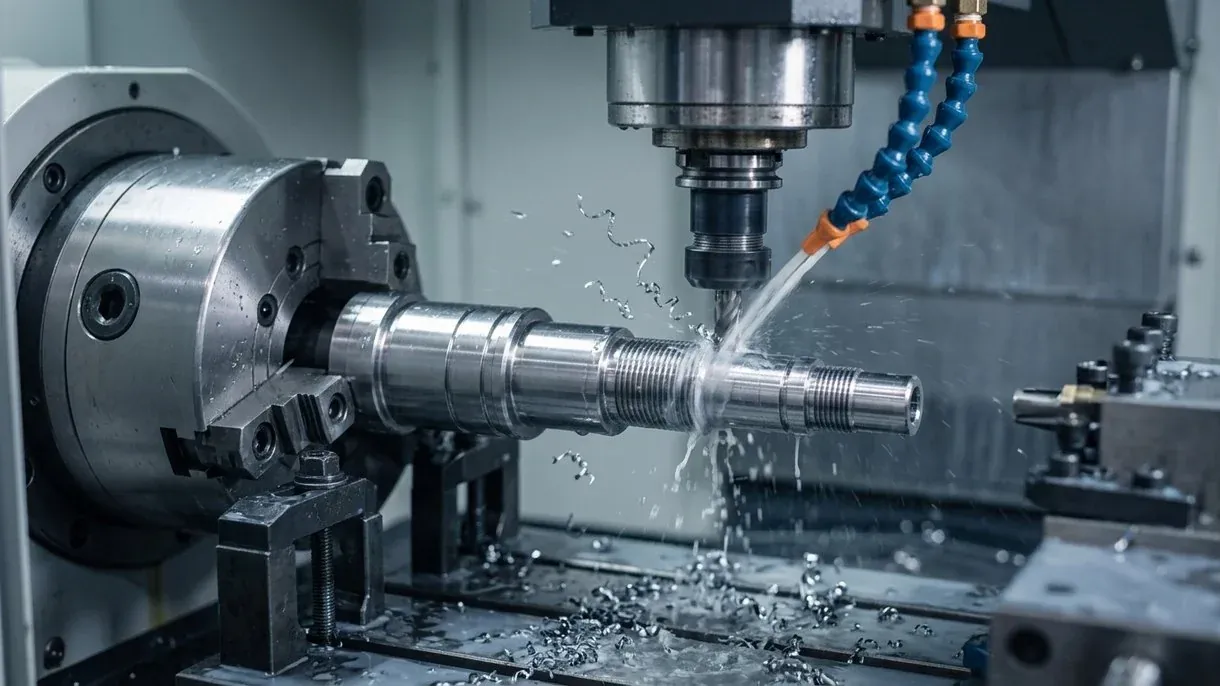
Some jobs don’t need a shaft at all. A flexible coupling can connect two closely spaced motors without a shaft between them, and a belt or chain drive works better when the driver and driven machine are far apart or at different heights.
If the load reverses direction constantly or the shaft would need to bend around an obstacle, use a gear train or a hydraulic line instead. For high-precision positioning, a ballscrew or linear actuator usually beats a rotating shaft.
Use a gear train when torque output must remain constant despite frequent stops and starts.
Related guides
- How to Hide Office in Living Room: 5 Fast Design Solutions
- 5 Best Kids Bed With Fun Designs: Our Top Picks for Bedrooms in 2026
- 10 Best Unfinished RTA Cabinets for Your Custom Kitchen Design in 2026
Frequently asked questions
What materials are shafts made from?
Common shaft materials include mild steel, alloy steel, and stainless steel. The right choice depends on the load, speed, and whether the shaft will face moisture or chemicals. Check your equipment manual for the specified grade.
Can a bent shaft be straightened?
No. A bent shaft should be replaced, not straightened, because straightening can weaken the metal and cause it to fail later. Fit a new shaft matched to the original diameter and material.
How long does a shaft last?
There’s no fixed lifespan; it depends on load, speed, lubrication, and alignment. Inspect it at the intervals in your equipment manufacturer’s maintenance schedule, and replace it if you see wear, scoring, or runout.
Is it safe to install a shaft yourself?
Only for low-power, non-safety-critical equipment. If the shaft drives a lift, a vehicle, or anything where failure could injure someone, have a qualified engineer or the manufacturer’s service team do the work.
What happens if a shaft breaks in service?
The driven machine stops, and broken pieces can damage gears, bearings, or the housing. Shut the machine down immediately and inspect all connected parts before fitting a replacement shaft.
Conclusion
Shafts fail most often because of poor alignment, overload, or a skipped maintenance check. Get the material and diameter right, align everything carefully, and inspect on schedule, and a good shaft will run for years without attention.
