
A relay acts as an electrical switch that uses a small current to control a much larger one. By sending power through a tiny electromagnet, it pulls a metal lever to connect or disconnect two separate circuits. This is how the device works to keep high-voltage systems safe while allowing low-power signals, such as those from a computer or a simple sensor, to manage heavy machinery or lights without physical human contact.
The components that build a relay
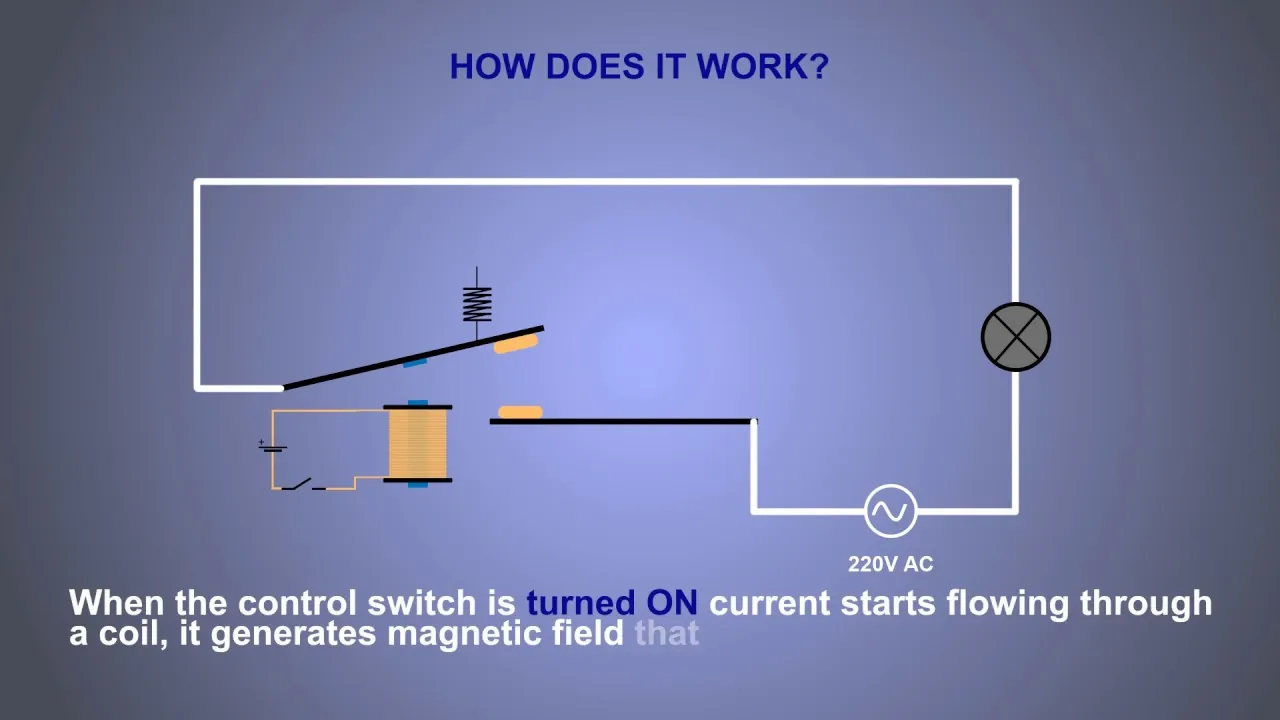
A relay is made of a few specific parts that work together to move electricity. When you look at a relay, you can usually see these elements inside its clear or plastic case.
| Part or input | What it does | What you notice when it goes wrong |
|---|---|---|
| Coil | Creates magnetic force | Relay doesn’t click |
| Armature | Moves to close contact | Power doesn’t flow |
| Contacts | Carry the main current | Flickering or no power |
| Spring | Pulls armature away | Relay stays stuck on |
| Terminals | Connect wires to device | Loose wires or corrosion |
The coil is the heart of the operation, turning electrical signals into physical motion. If the voltage drops even slightly below the rated pick-up value, the magnetic field will be too weak to pull the armature. This causes a chattering sound rather than a solid click. The armature acts as the mechanical bridge. It must move freely without binding against the frame. Any dirt or warping here creates resistance that prevents the contacts from meeting fully.
Contacts bear the brunt of the electrical load. Over time, arcing pits their surfaces. Silver alloys resist this wear better than copper, but they still degrade. If you see black soot on the contact points, the relay is failing to switch cleanly. The spring provides the necessary return force. It must be strong enough to break the arc quickly when power is cut.
A weak spring leads to welded contacts that stay closed even after the signal stops. Terminals often get overlooked during maintenance. Corrosion builds up silently under insulation, increasing resistance and generating heat. Tighten them to the manufacturer’s specified torque to ensure a stable connection that lasts.
How relays work to switch power
The operation of a relay follows a predictable path that takes only a few milliseconds to complete. This cycle ensures the control circuit stays isolated from the dangerous high-voltage side of the operation.
- A low-voltage signal enters the input terminals, which sends a small amount of electricity directly into the internal copper wire coil.
- The coil energizes and creates an electromagnetic field, which exerts a physical pull on the nearby metal armature inside the relay case.
- The armature moves toward the coil, which forces the electrical contacts to touch and creates a solid bridge for the main current.
- Electricity flows through the main contacts to power the connected device, such as a motor or a heater, until the input signal stops.
- Once the input signal is cut, the electromagnetic field collapses and the internal spring pulls the armature back to its original resting position.
- The contacts pull apart, which instantly breaks the main circuit and stops the flow of power to the high-voltage load safely.
Safety and electrical circuit isolation
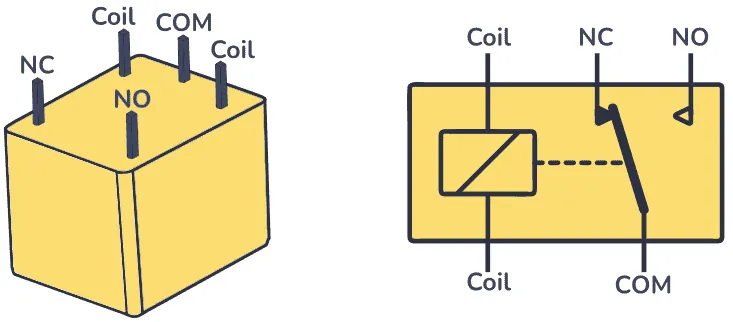
Using a relay is essential when you need to keep a low-power control system, like a micro-controller, away from high-voltage hazards. The primary advantage is physical isolation, as the control circuit and the high-voltage circuit never touch. This design ensures that normal faults on the high-voltage side don’t travel back into your sensitive electronics through the control wiring.
A common mistake is ignoring the contact rating printed on the side of the relay housing. If you exceed the rated current, the internal contacts will weld together due to extreme heat. This failure means the switch can no longer turn off, which leaves your connected equipment running constantly. Verifying these ratings is a job for a technician, especially for heaters or motors that need to shut down to prevent fires.
Different relays are built for different loads. If your project uses an inductive load like a large motor, you need a relay with a higher surge rating to handle the initial spike of energy. If you use a standard relay for this, the contacts will pit or erode very quickly. Always match the relay specification to the specific motor or light fixture you plan to power.
Controls and design limits
Things you can control
- The voltage of the signal sent to the coil.
- The physical placement of the relay in a dry area.
- The gauge of the wire used for the main load.
- The frequency of the switching cycles per minute.
Things fixed by design
- The maximum amperage the internal contacts can carry.
- The voltage threshold required to energize the coil.
- The speed at which the armature physically moves.
If you’re working with high-voltage systems, you must be extremely careful to avoid electric shock. Any work involving mains electricity requires a licensed electrician to ensure the connections meet local building codes. Never attempt to open a sealed relay case, as doing so compromises its environmental protection and voids its safety ratings.
Habits for reliable operation
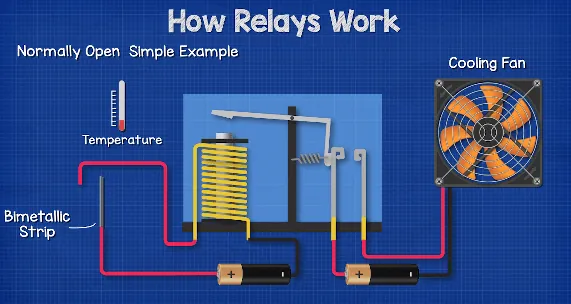
To keep your relays working for years, you must ensure the coil voltage stays within the range listed on the device label. If the voltage is too low, the armature will vibrate, which causes the contacts to arc and burn out prematurely. Aim for the exact voltage specified by the manufacturer to ensure the armature snaps into place firmly. If your supply line fluctuates by more than ten percent, install a dedicated voltage regulator to prevent erratic switching.
Keep the relay away from high-vibration areas. Constant shaking can cause the armature to move when it should be still, leading to intermittent power to your devices. If you must mount a relay near a motor, use a rubber dampening pad to absorb the movement. Orient the relay so the armature moves perpendicular to the primary axis of vibration. This simple adjustment prevents the contacts from chattering during heavy machine operation.
Check the terminal screws every six months to ensure they stay tight. Heat from the current can cause metal to expand and contract, which loosens connections over time. A loose wire creates heat, which eventually melts the plastic housing of the relay and causes a total failure. If you find discoloration on the wire insulation, replace the terminal lug immediately to prevent a fire.
Related guides
- 10 Best Dimmer Switches for Precise Light Control in 2026
- 7 Best Drill Bits for Electrical Rough In: Expert Picks in 2026
- 10 Best Bathroom Exhaust Fan Timer Switches for Your Home in 2026
Frequently asked questions
How long does a relay last?
A relay typically lasts for 100,000 to 1,000,000 cycles, but the exact number depends on the electrical load passing through the contacts. You can find the specific mechanical and electrical life ratings for your unit by checking the datasheet provided by the manufacturer on their official website.
Is it safe to touch a relay while it’s on?
No, it isn’t safe to touch a relay because the high-voltage terminals are often exposed and carry enough power to cause a severe shock. Always disconnect the main power source before you touch any part of the relay or the wires connected to it.
What happens if the relay clicks but the device doesn’t turn on?
The contacts inside the relay are likely pitted or burned, which prevents the electricity from crossing the gap. If you hear the click, the coil is working, but the internal metal bridge is too damaged to conduct power; you must replace the entire relay unit.
Can I use a relay to switch AC and DC at the same time?
Yes, you can use a relay to control a DC device with an AC signal, or the other way around, because the circuits remain physically isolated. The relay only cares about the voltage and current limits of the contacts, not the type of electricity passing through them.
Does it matter which way the wires go into the relay?
It depends on the relay type, but for most standard mechanical relays, the main contacts work in either direction. However, you must always follow the specific wiring diagram printed on the relay case to ensure you connect the coil and the load terminals correctly.
How do I know if my relay is rated for my project?
You must have a technician compare the maximum voltage and amperage ratings on the relay label to the power draw of your device. Matching the load to the relay’s capacity is a job for a technician, who will ensure the chosen relay provides a safe margin.
