
LEDs are small semiconductor lights that turn electricity directly into light instead of heating a wire until it glows. They use far less power than old incandescent bulbs and last much longer, which makes them the default choice for home lighting, screens, indicators and car lights today. This guide covers what LEDs are, how to choose them, how to install them safely, and what to expect once they’re running.
What an LED actually is
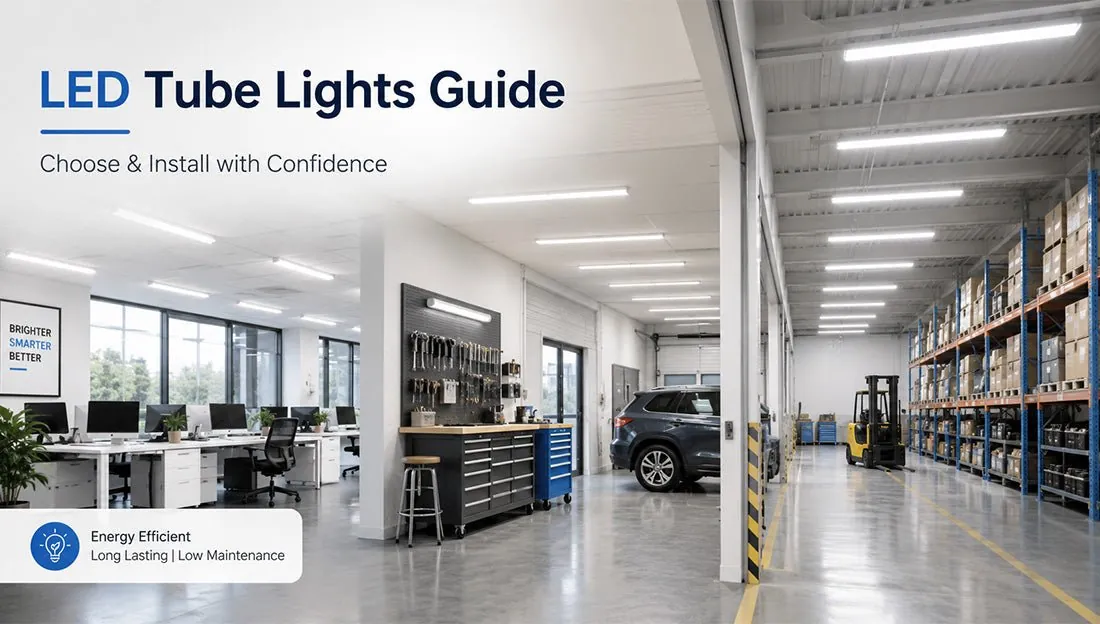
An LED, or light-emitting diode, is a tiny electronic part that gives off light when current passes through it in one direction. Unlike an old incandescent bulb, it has no filament to burn out, and unlike a fluorescent tube it contains no mercury.
People use LEDs for room lighting, flashlights, signage, TV backlights, indicator lights and vehicle headlights because they run cool, switch on instantly and sip electricity. The common misconception is that all LEDs are the same — in reality they differ wildly in brightness, color and the kind of fixture they fit.
A complete guide to choosing LEDs
- Check the fitting on your old bulb or fixture — common sizes are E26, E12 and GU10 — and buy an LED with the same base.
- Look at lumens, not watts, for brightness; an 800-lumen LED replaces a traditional 60-watt bulb while drawing about 8 to 10 watts.
- Pick the color temperature: 2700 to 3000 kelvin gives warm, yellowish light for living rooms, while 4000 to 5000 kelvin suits kitchens and workspaces.
- Confirm the LED is dimmable if your switch is a dimmer, since standard LEDs often flicker on dimmer circuits.
- Make sure the fixture is rated for enclosed use if the bulb will sit inside a sealed glass housing, because trapped heat shortens LED life.
- Turn the power off at the breaker before swapping bulbs in hard-wired fixtures.
The single judgement call is matching the bulb to the fixture: an LED that works in an open lamp can overheat and fail early inside an enclosed light. If your wiring is old or you’re unsure about a hard-wired fitting, have a licensed electrician handle it rather than guessing.
LED brightness, color and life at a glance
| Situation | What to use | How long | What to watch for | | Living room lamp | 800 lumens, 2700–3000 K | 15,000–25,000 hours | Fits the socket and shade | | Kitchen or office | 800–1,100 lumens, 4000–5000 K | 15,000–25,000 hours | Dimmable if on a dimmer switch | | Enclosed ceiling light | LED rated for enclosed fixtures | 10,000–15,000 hours | Heat buildup shortens life | | Outdoor security | Weather-rated LED, 3000–5000 K | 15,000–25,000 hours | Fixture must be outdoor-rated | | Indicator or night light | Low-lumen LED, any color | 25,000–50,000 hours | Correct voltage for the circuit |
The Department of Energy publishes guidance on LED lighting quality and efficiency, including how to read Lighting Facts labels, at energy.gov LED lighting.
What makes an LED last
Good results start with matching the bulb to the place it will live. Experienced buyers check the fixture rating before they buy, because an LED sealed inside a housing with no airflow cooks itself from the inside out. They also check whether the switch is a dimmer before choosing a bulb, since a non-dimmable LED on a dimmer circuit flickers, buzzes and dies early.
Partway through installation they confirm the base size and the voltage, and once the light is on they leave it alone rather than constantly switching it on and off, which stresses the driver electronics more than steady use does.
Problems you might see and what to do

| What you notice | What it usually means | What to do first | | Light flickers | Non-dimmable bulb on a dimmer switch | Replace with a dimmable LED | | Bulb dies in months | Enclosed fixture without airflow rating | Use an LED rated for enclosed use | | Light too harsh | Color temperature too high | Switch to 2700–3000 kelvin | | Light too dim | Lumens too low for the room | Move up to 800–1,100 lumens | | Buzzing sound | Incompatible dimmer or cheap driver | Try a different dimmable brand |
Rules and safety limits
LED bulbs must meet safety standards for the markets they’re sold in, and in the United States the Consumer Product Safety Commission oversees product safety for consumer goods including lighting. Look for the UL or ETL mark on the package; without it, insurance may deny a claim if that bulb starts a fire.
Hard-wired LED fixtures and any new circuit work should be done by a licensed electrician, because electrical mistakes can cause shock or fire. If you swap a fixture yourself and damage the wiring inside the wall, you’ll pay far more to open the drywall than the electrician would have charged initially.
If you’re renting, check your lease before changing built-in fixtures, since some landlords require you to leave original fittings in place. Store the original hardware in a labeled box immediately after removal so you can reinstall it exactly as found when you move out.
Keeping your LEDs working
LEDs need almost no maintenance once installed. Dust the fixture and bulb gently with a dry cloth as needed to ensure heat can escape, following the owner’s manual for specific care instructions, and never use spray cleaners on a warm bulb. Trapped dust acts as insulation, raising internal temperatures and shortening the driver’s life significantly.
If a light starts to dim or change color, that’s the sign it’s nearing the end of its useful life and should be replaced. Check the switch too. Flickering often points to an incompatible dimmer rather than a bad bulb. Standard switches work fine, but older rotary dimmers designed for incandescent loads will cause LEDs to strobe or fail early. Swap to an LED-rated dimmer to fix this.
Because LEDs contain no mercury, you can dispose of them with ordinary household trash in most areas, though some local recycling programs accept electronics. Always separate the bulb from the fixture if possible. This prevents damage to the socket contacts during disposal and makes future recycling easier if your municipality updates its e-waste rules later on.
When an LED is the wrong choice
For an oven light, an LED usually can’t take the heat inside the cooking chamber, so an appliance-rated incandescent bulb is the safer pick. Standard LEDs fail once ambient temperatures exceed 150 degrees Fahrenheit, causing the internal driver to melt.
In a dimly lit closet used only for seconds at a time, the long life of an LED matters less than the low upfront cost of a simple bulb. You’ll never recoup the price premium of an LED if the light stays on for less than ten hours per year.
If you need light that renders colors exactly as daylight does, check the Color Rendering Index on the box. Aim for a CRI of 95 or higher for paint matching or detailed craft work. Many cheap LEDs hover at 80, which makes reds and skin tones look flat. If the packaging omits the CRI, assume the color quality is poor.
Related guides
- 5 Best Foosball Tables with LED Lights for Your Game Room in 2026
- Pentair Globrite Alternatives: Jandy and Hayward LED Picks in 2026
Frequently asked questions
How long does an LED last?
Most quality LEDs are rated for 15,000 to 25,000 hours of use, assuming normal room temperature and a fixture with adequate airflow.
Can I put an LED in any fixture?
No — only use an LED in an enclosed fixture if the packaging says it’s rated for enclosed use; otherwise heat buildup will kill it early.
Why does my LED flicker?
It usually means a non-dimmable bulb is on a dimmer switch, or the dimmer isn’t compatible with LED loads.
Is it safe to touch an LED bulb?
Yes — LEDs run much cooler than incandescent bulbs, though the base can still be warm after extended use.
What happens if I use the wrong wattage?
LEDs draw far less power than their incandescent equivalent, so an 800-lumen LED is safe in a fixture marked for 60 watts or less.
How do I choose the right color?
Use 2700–3000 kelvin for warm, relaxing light and 4000–5000 kelvin for kitchens, offices and task lighting.
Conclusion
LEDs have become the standard for good reason: they use less electricity, last years longer than older bulbs, and turn on at full brightness the instant you flip the switch.
